
Guides
Studio Monitors vs Regular Speakers for Music Listening
Studio monitors are built for accuracy, while regular speakers are built for enjoyment and convenience. Both can sound great for music. This guide compares them on sound, features, setup and listening comfort, and helps you decide which fits your room and habits.
Quick Answer
Studio monitors give a flatter, more accurate sound, which many people enjoy for music and is essential for mixing. Regular home speakers are usually tuned warmer, with fuller bass, and add features like Bluetooth and remote controls. For pure listening, choose by taste and convenience. For recording or mixing, choose studio monitors.
How this guide was put together
This guide is based on manufacturer manuals, published specifications and widely used audio reference standards. Mandrillis does not run hands-on tests for these guides, so treat figures as typical values and check the manual for your own gear before changing settings.
What Studio Monitors Are Built For
Studio monitors are speakers designed for people who record and mix music. Their goal is to play back sound as accurately as possible, so engineers can spot problems and make good decisions.
To do this, they aim for a fairly flat frequency response, low distortion and a clear stereo image. Most are powered, with an amplifier built into each speaker.
- Neutral tuning without big bass or treble boosts.
- Professional inputs such as XLR and TRS.
- Controls to adjust for room placement.
- Designed for near-field listening, close to the listener.
What Regular Speakers Are Built For
Home speakers are built for enjoyment and ease. Many are tuned with a little extra bass and smooth treble that sounds pleasant at many volumes.
They often include features studio monitors skip, such as Bluetooth, remote controls, optical inputs and phono inputs for turntables.
- Warmer, fuller tuning for relaxed listening.
- Consumer inputs such as Bluetooth, RCA and optical.
- Remote controls and simple volume setup.
- Styling that blends into living rooms.
Studio Monitors vs Regular Speakers at a Glance
Typical differences. Many models fall between the two.
| Feature | Studio monitors | Regular home speakers |
|---|---|---|
| Sound tuning | Flat and accurate | Often warmer, more bass |
| Inputs | XLR, TRS, sometimes RCA | Bluetooth, RCA, optical, phono |
| Remote control | Rare | Common |
| Best listening distance | Close, near field | Across a room |
| Main goal | Accuracy for mixing | Enjoyment and convenience |
How They Compare on Sound
The biggest difference is tuning. Studio monitors play bass, mids and treble at roughly equal levels. Home speakers often lift the bass to sound full at lower volumes.
Detail and Clarity
Studio monitors tend to reveal more detail, such as reverb tails, breath noises and the texture of instruments. Well recorded music can sound very clear and lifelike.
Poorly recorded music can sound harsher, because monitors do not smooth over flaws.
Bass
Small studio monitors, such as 5 inch models, have limited deep bass. Many people add a subwoofer for full-range listening.
Home speakers of the same size may sound bassier, because of their tuning rather than deeper reach.
Setup and Placement Differences
Studio monitors are designed for near-field use, about 3 to 5 feet from your ears, often on a desk. They sound best in an equal triangle with your head.
Home speakers are often designed for wider rooms and longer distances. They are more forgiving of casual placement on shelves.
- Monitors: tweeters at ear height, equal triangle, away from walls.
- Home speakers: shelf or stand placement, angled toward the seating area.
- Both: avoid corners, which make bass boomy.
- Both: use isolation pads or stands on hollow furniture.
Connections and Convenience
Studio monitors usually need an audio interface or the right cables to connect to a computer. They rarely have Bluetooth or a remote.
Home speakers are easier to plug and play. Bluetooth, a remote and multiple inputs suit TVs, phones and turntables.
Using Monitors for a TV or Turntable
You can use studio monitors with a TV or turntable, but you may need a small preamp, a phono stage or a converter. Plan the inputs before you buy.
Some newer monitors add RCA inputs or Bluetooth, which makes home use easier.
Room Size and Volume
Your room changes how both kinds of speakers sound. Small studio monitors are designed for close listening, so they can sound thin across a large living room.
Home speakers are often made to fill a room from several feet away. In a small bedroom or office, monitors on a desk can sound more focused and detailed.
Matching Size to Your Room
A rough guide helps you pick the right size. Woofer size, the large driver, shapes how much bass and volume a speaker can deliver.
- Desk or small room: 4 to 5 inch monitors or compact speakers.
- Medium room: 6 to 7 inch monitors or larger bookshelf speakers.
- Large room: 8 inch monitors, floorstanding speakers or adding a subwoofer.
- Sitting far away: home speakers usually spread sound better.
Room Treatment Helps Both
Bare walls and hard floors make any speaker sound harsher and boomier. Rugs, curtains, bookshelves and soft furniture absorb some reflections.
You do not need expensive panels to hear a difference. Even a rug between you and the speakers helps.
Which Is Better for Music Listening?
Neither is better for everyone. It depends on your taste and your setup.
Choose Studio Monitors If
Monitors suit people who value accuracy and listen close to their speakers.
- You like a clear, natural, uncolored sound.
- You listen at a desk, close to the speakers.
- You also record, mix or edit audio.
- You do not need Bluetooth or a remote.
Choose Regular Speakers If
Home speakers suit people who want easy, relaxed listening across a room.
- You prefer warmer, bassier sound.
- You want Bluetooth, a remote or a phono input.
- You listen from a sofa across the room.
- You want speakers that blend into home decor.
Common Myths
A few ideas about monitors and home speakers are often repeated. Here is what is closer to the truth.
- Myth: monitors are only for professionals. Many people enjoy them for music.
- Myth: monitors always sound better. They sound more accurate, which is different.
- Myth: home speakers cannot be accurate. Some are tuned quite neutrally.
- Myth: bigger is always better. Room size and distance matter more.
The Bottom Line
Studio monitors give honest, detailed sound and are the right choice for recording and mixing. Regular home speakers give warmer, easier listening with more features.
If you mostly listen at a desk and like clarity, monitors are a great choice. If you listen across a room and want convenience, home speakers suit you better.
Studio Monitors and Home Speakers From Our Reviews
Two popular studio monitors and two powered home speakers, so you can compare the two styles.
Yamaha HS7 100-Watt 6.5"
Mentioned
Who Should Buy It
- Mix engineers who want the honest HS series balance plus low end extension
- Electronic and hip hop producers who need to hear sub bass below 43 Hz
- Buyers who prefer a matched sub from the same maker as their monitors
- Home studios with room to place a sub properly
Skip It If
- You want a forgiving, musical playback speaker rather than a critical monitor
- Your room is too small to integrate an 8 inch subwoofer
- You need balanced inputs on the subwoofer
We may earn a commission at no extra cost to you.
Last verified: October 2026

Kanto YU4MB
Mentioned
Who Should Buy It
- Listeners building a compact stereo or desktop system with a turntable
- Those who want a powered speaker with a remote and auto standby
- Buyers who prefer a simple matte black aesthetic
- Users who value lower mid-range pricing with brand recognition
Skip It If
- You require detailed driver and frequency response data for critical listening decisions
- You need multiple analog and digital inputs beyond Bluetooth and phono
- You want floorstanding or high-output speakers for a large room
We may earn a commission at no extra cost to you.
Last verified: October 2026
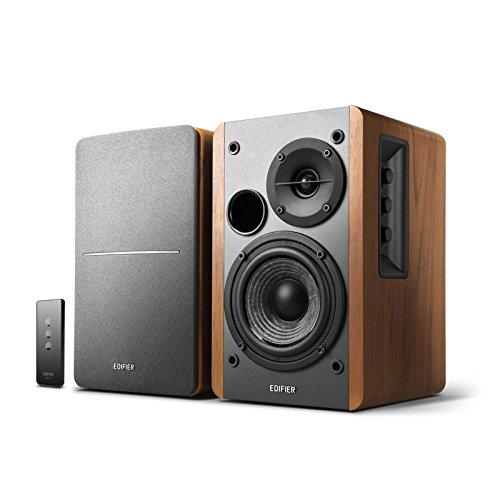
Edifier R1280T
Mentioned
Who Should Buy It
- Desktop listeners who want powered speakers for a computer or laptop
- Users with analog sources like a TV headphone jack, turntable with built-in preamp, or game console
- Small room listeners who prefer physical tone controls over apps
- Budget conscious buyers who do not need wireless or digital audio
Skip It If
- You need Bluetooth or Wi-Fi streaming from a phone or tablet
- You want strong sub bass or high volume output without adding a subwoofer
- You require optical, coaxial, or USB digital inputs for a TV or computer
We may earn a commission at no extra cost to you.
Last verified: October 2026

JBL 308P MkII 8-Inch
Mentioned
Who Should Buy It
- Home or project studio owners wanting a larger 8 inch woofer for fuller low end
- Buyers placing a monitor near a wall or on a desk, thanks to the boundary EQ
- Producers who want balanced professional inputs with a sensitivity switch
Skip It If
- You need confirmed wattage or frequency response before buying
- You want to receive a complete stereo pair in a single purchase
- You need published cabinet dimensions for a tight space
We may earn a commission at no extra cost to you.
Last verified: November 2026
Keep Reading
Related guides and picks on Mandrillis:
- Best Studio Monitors : accurate picks for mixing and listening
- Best Bookshelf Speakers Under 500 : home speakers for relaxed listening
- How to Connect Studio Monitors to a Laptop : cables and setup
FAQs
About This Guide
Mandrillis Team
The Mandrillis editorial team researches and compares audio and music gear using manufacturer documentation, verified specs and real buyer feedback, so you can make a confident purchase without wading through marketing claims.
Read our full research methodology.