Best Microphones for Vocals: Eight Picks for Singing and Recording
This guide is for singers, podcasters and voice-over artists choosing a vocal microphone for a home studio, broadcast booth or stage rather than relying on a laptop's built-in capsule. Picks were narrowed from 356 researched microphones by comparing sound quality, pickup pattern and noise handling, build quality, connectivity and setup, features and extras, and overall value, so each entry reflects a documented score rather than a marketing claim, with every spec traced directly back to its own listing.
Quick Answer
The Shure SM7B is the best overall pick as the broadcast standard dynamic microphone with a cable included in the box. The Audio-Technica AT4040 is the best value choice as a true externally polarized condenser with high SPL handling. The Sennheiser Pro XSW 1-825-A is the best budget pick as a wireless handheld system with an evolution series capsule, while the Electro-Voice RE20 stands out as the best dynamic option with a bundled mic activator and Variable-D proximity control built directly in.
Why You Can Trust This Guide
We compared products using verified manufacturer specifications, available manuals and documentation, retailer listings, owner feedback, and editorial research.
We focus on measurable differences such as performance, compatibility, usability, build quality, features, and value.
Mandrillis presents editorial research as editorial research, not as laboratory testing, unless physical testing was actually performed.
Read our full research methodology.
Quick Picks
Comparison Table
| Model | Type | Polar pattern | Connection | Frequency response | Best For | Main Advantage | Score |
|---|---|---|---|---|---|---|---|
| Shure SM7B | Dynamic (XLR) | N/A | N/A | N/A | podcasters and streamers who want a broadcast-quality voice | Rejects room noise exceptionally well | 87/100 |
| Audio-Technica AT4040 | Large-diaphragm true condenser, externally polarized (DC bias) | Cardioid | Not published in listing | Not published in listing | Home and project studios that want one serious large-diaphragm condenser for vocals, acoustic instruments and loud sources alike. | True externally polarized condenser with a large diaphragm | 86/100 |
| Sennheiser Neumann TLM 102 MT | Large-diaphragm condenser, pressure gradient transducer | Cardioid | Not published in listing | Not published in listing (slight presence boost above 6 kHz stated) | Home and project studios that want one refined condenser for vocals, voice-over and loud instruments alike. | Large-diaphragm cardioid condenser with Neumann consistency | 85/100 |
| Electro-Voice RE20 | Large-diaphragm dynamic broadcast announcer microphone, bundled with a mic activator and an XLR cable | Cardioid | XLR, with a cable included in this bundle | Not published in listing as a specific numeric range | Broadcasters and podcasters who want the industry standard RE20 dynamic microphone ready to use with a bundled mic activator and cable, plus a built-in tone-shaping switch. | An industry standard dynamic cardioid microphone, a firm favorite for broadcasting, podcasting and sound engineering worldwide | 85/100 |
| Rode NT1 | Large-diaphragm cardioid condenser microphone | Cardioid | Not published in listing | Not published in listing | Home studio vocalists and voice-over artists with an audio interface who want one quiet, neutral condenser plus the mount and pop screen in a single kit. | Extremely low noise claim suits quiet vocal and voice-over work | 80/100 |
| Heil PR 40 | Large dynamic element microphone, Champagne finish, bundled with an inline mic preamp and a 20 foot XLR cable | Cardioid | 3-pin XLR, with a 20 foot cable included in this bundle | Not published in listing | Vocalists and drum recordists who want the Heil PR 40 ready to use with a bundled inline preamp and a 20 foot XLR cable, with no additional gear needed to get started. | Large dynamic element with a steel housing for durability | 79/100 |
| Shure J11 | Dual-channel UHF wireless system with two BLX2 handheld transmitters (SM58 dynamic capsules) and a BLX88 receiver | Cardioid (SM58 capsule) | Wireless UHF on the J11 band, 596 to 620 MHz; receiver output connectors not published in listing | Not published in listing | Bands, churches and event companies in regions where 596 to 620 MHz is authorized who need two dependable SM58 wireless channels. | Two SM58 cardioid capsules with a proven live vocal sound | 78/100 |
| Sennheiser Pro XSW 1-825-A | Handheld UHF wireless vocal system with 825 evolution series capsule; capsule transducer type not published in listing | Not published in listing | UHF wireless, A range 548 to 572 MHz; receiver output connectors not published in listing | Not published in listing | Singers and presenters who want a Sennheiser stage capsule on a UHF handheld with automatic setup and diversity reception. | Evolution series 825 capsule from Sennheiser's stage line | 78/100 |
#1. Shure SM7B (Best Overall)

Mandrillis Research Score: 87/100
This is an editorial research score, not a customer rating or laboratory test score.
Who Should Buy It
- You want a broadcast-quality voice for podcasting or streaming
- You record in an untreated room and need strong noise rejection
- You have or plan to add a clean-gain boost like a Cloudlifter
Skip It If
- Your interface or preamp can't provide enough clean gain
- You want the most affordable entry point into XLR microphones
Pros
- Rejects room noise exceptionally well
- Smooth, broadcast-ready sound
- Built-in pop filter
- Industry standard for podcasting and streaming
Cons
- Needs a lot of clean gain, most interfaces need a boost like a Cloudlifter
- More expensive than entry mics
Key Specs
Type: Dynamic (XLR)
Connectivity: XLR, needs a strong preamp
Pattern: Cardioid
Why We Picked It
The SM7B earns best overall as a dynamic cardioid vocal microphone with a smooth, flat, wide-range sound described in the listing, plus shock isolation and a built-in pop filter. Bass rolloff and presence boost switches let a singer shape tone, and a 20-foot XLR cable, windscreen and two-year warranty are included, though its low output needs a strong preamp to really sing.
Check Price on AmazonWe may earn a commission at no extra cost to you.
Last verified: September 2026
Why This Product Ranks Best Overall
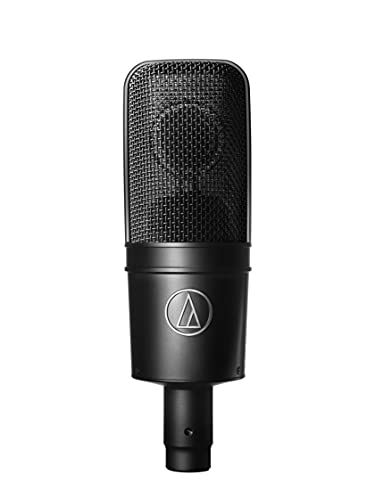
#2. Audio-Technica AT4040 (Best Value)
Mandrillis Research Score: 86/100
This is an editorial research score, not a customer rating or laboratory test score.
Who Should Buy It
- Vocalists and voice-over artists recording in a treated or quiet room
- Project studios upgrading from an entry-level condenser
- Engineers who need one microphone for vocals, guitar amps and overheads
- Buyers who value published design detail over marketing gloss
Skip It If
- You record in an untreated, noisy space where a dynamic would be more forgiving
- You need figure-eight or omnidirectional patterns
- You want a USB connection without an audio interface
Pros
- True externally polarized condenser with a large diaphragm
- Transformerless circuitry for low-frequency clarity and fast transients
- Described as exceptionally low noise with wide dynamic range
- High-SPL capability suits loud sources as well as vocals
- Nickel-plated brass baffle for element stability
- Long-established studio reputation at a lower mid-range price
Cons
- Frequency response, self-noise and max SPL figures not published in listing
- Accessories, mount and connector not stated
- Cardioid only, no multi-pattern option
- Requires phantom power and a quiet room to shine
Key Specs
Type: Large-diaphragm true condenser, externally polarized (DC bias)
Polar pattern: Cardioid
Frequency response: Not published in listing
Connection: Not published in listing
Phantom power: Required for an externally polarized condenser; voltage not published in listing
Max SPL or sensitivity: Not published in listing; described as high-SPL capable with exceptionally low noise
Controls: Not published in listing
Mount and stand: Not published in listing
Weight: Not published in listing
Included accessories: Not published in listing
Why We Picked It
This pick takes best value as a true externally polarized condenser with a large diaphragm and transformerless circuitry for low-frequency clarity and fast transients. The listing describes it as exceptionally low noise with a wide dynamic range and high-SPL capability, useful for vocals and loud sources alike, though frequency response, self-noise and max SPL figures are left unpublished, and phantom power is required.
Read our full Audio-Technica AT4040 review →
Check Price on AmazonWe may earn a commission at no extra cost to you.
Last verified: October 2026
Why This Product Ranks Best Value
#3. Sennheiser Neumann TLM 102 MT (Best Condenser)

Mandrillis Research Score: 85/100
This is an editorial research score, not a customer rating or laboratory test score.
Who Should Buy It
- Vocalists stepping up from an entry-level condenser
- Voice-over artists and narrators wanting a clean, airy sound
- Multi-instrumentalists recording guitar cabinets, brass and acoustic sources
- Video creators who want a non-reflective studio microphone
Skip It If
- Your interface cannot supply phantom power
- You need a pad, low-cut switch or switchable patterns
- A dynamic would suit your noisy room better
Pros
- Large-diaphragm cardioid condenser with Neumann consistency
- 144 dB maximum sound pressure level handles loud sources
- Slight presence boost above 6 kHz flatters vocals
- Compact body fits tight spaces
- Matte black finish suits stage and video
Cons
- No pad or low-cut switch
- Connector, phantom power and self-noise not published in listing
- Accessories not confirmed
- Picks up more room sound than a dynamic
Key Specs
Type: Large-diaphragm condenser, pressure gradient transducer
Polar pattern: Cardioid
Frequency response: Not published in listing (slight presence boost above 6 kHz stated)
Connection: Not published in listing
Phantom power: Not published in listing
Max SPL or sensitivity: 144 dB maximum sound pressure level
Controls: Not published in listing
Mount and stand: Not published in listing
Weight: Not published in listing
Included accessories: Not published in listing
Why We Picked It
Rated Best Condenser, this pick combines a large-diaphragm cardioid design with Neumann's typical consistency and a confirmed 144 dB maximum sound pressure level that resists distortion on dynamic vocal performances. A slight presence boost above 6 kHz flatters most voices, and a compact body fits tight spaces, though there is no pad or low-cut switch, and connector type is left unstated.
Read our full Sennheiser Neumann TLM 102 MT review →
Check Price on AmazonWe may earn a commission at no extra cost to you.
Last verified: October 2026
Why This Product Ranks Best Condenser
#4. Electro-Voice RE20 (Best Dynamic)

Mandrillis Research Score: 85/100
This is an editorial research score, not a customer rating or laboratory test score.
Who Should Buy It
- Broadcasters and podcasters who want the industry standard RE20 with no additional accessory shopping
- Buyers who want a mic activator included to help drive this dynamic microphone with sufficient gain
- Voice talent who want a built-in mid-bass tone-shaping switch for on the fly tonal adjustment
- Buyers who value Variable-D design for minimizing proximity effect during close-in voice work
Skip It If
- You already own an RE20 and only need a mic activator or XLR cable separately
- You need a confirmed numeric frequency response or sensitivity figure before purchase
- You need the mic activator's specific power requirement confirmed before buying
Pros
- An industry standard dynamic cardioid microphone, a firm favorite for broadcasting, podcasting and sound engineering worldwide
- Variable-D design minimizes proximity effect for close-in voice work
- Heavy-duty internal pop filter and internal element shock mount built in
- Mid-bass tone-shaping switch to alter vocal tone on the go
- Bundle includes a mic activator and XLR cable, ready to use out of the box
Cons
- No stated numeric frequency response, sensitivity or maximum SPL figures
- No stated power requirement for the included mic activator
- No stated microphone weight
- As a dynamic microphone, it may still benefit from additional clean gain even with the bundled activator
Key Specs
Type: Large-diaphragm dynamic broadcast announcer microphone, bundled with a mic activator and an XLR cable
Polar pattern: Cardioid
Frequency response: Not published in listing as a specific numeric range
Connection: XLR, with a cable included in this bundle
Phantom power: Not required for the microphone itself; the included mic activator is an inline preamp booster whose own power requirement is not stated in the listing
Max SPL or sensitivity: Not published in listing as a specific numeric figure
Controls: A mid-bass tone-shaping switch built into the microphone
Mount and stand: An internal element shock mount is built in, along with a heavy-duty internal pop filter
Weight: Not published in listing
Included accessories: A mic activator and an XLR cable are included in this bundle
Why We Picked It
The RE20 earns Best Dynamic as a large-diaphragm broadcast announcer microphone with a Variable-D design that minimizes proximity effect for close-in voice work, a genuine advantage for a singer who moves while performing. A heavy-duty internal pop filter and shock mount are built in, and the bundle includes a mic activator and XLR cable, though no numeric frequency response figures are published in the listing.
Read our full Electro-Voice RE20 review →
Check Price on AmazonWe may earn a commission at no extra cost to you.
Last verified: November 2026
Why This Product Ranks Best Dynamic
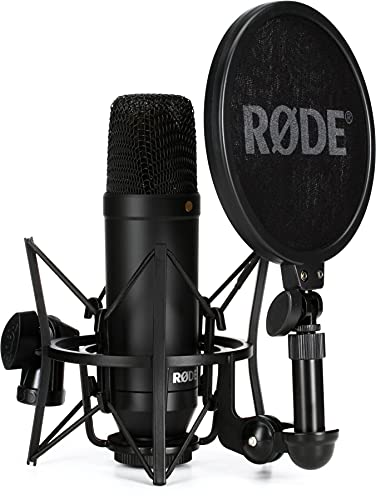
#5. Rode NT1 (Best for Live)
Mandrillis Research Score: 80/100
This is an editorial research score, not a customer rating or laboratory test score.
Who Should Buy It
- Singers and rappers recording one voice at a time in a quiet room
- Voice-over artists and audiobook narrators who need a very low noise floor
- Home producers upgrading from an entry-level condenser
- Buyers who want the shock mount and pop screen bundled rather than bought separately
Skip It If
- You do not own an audio interface or mixer with a microphone preamp
- You stream from an untreated room with keyboard and fan noise
- You need omnidirectional or figure-eight patterns
Pros
- Extremely low noise claim suits quiet vocal and voice-over work
- Large-diaphragm cardioid condenser from a trusted studio brand
- SM6 combination shock mount and pop screen included in the kit
- Neutral character that takes equalization well
- Simple fixed-pattern design with nothing to misconfigure
Cons
- Frequency response, sensitivity and max SPL not published in listing
- Connector and phantom power requirement not stated
- Cardioid only, no pattern switching
- Needs an interface with a preamp, not a plug-in USB option
Key Specs
Type: Large-diaphragm cardioid condenser microphone
Polar pattern: Cardioid
Frequency response: Not published in listing
Connection: Not published in listing
Phantom power: Not published in listing
Max SPL or sensitivity: Not published in listing; described as extremely low-noise
Controls: Not published in listing
Mount and stand: SM6 combination shock mount with pop screen
Weight: Not published in listing
Included accessories: SM6 combination shock mount and pop screen, per the kit listing
Why We Picked It
Labeled Best for Live, this large-diaphragm cardioid condenser is described as extremely low-noise, suited to quiet vocal work where self-noise would otherwise be audible in the mix. An SM6 combination shock mount and pop screen ship included, saving a separate purchase, though frequency response, sensitivity and phantom power requirement are left unpublished, so a capable interface is still required.
Read our full Rode NT1 review →
Check Price on AmazonWe may earn a commission at no extra cost to you.
Last verified: October 2026
Why This Product Ranks Best for Live
#6. Heil PR 40 (Best for Studio)

Mandrillis Research Score: 79/100
This is an editorial research score, not a customer rating or laboratory test score.
Who Should Buy It
- Vocalists and podcasters who want the PR 40 ready to use with a bundled gain-boosting preamp
- Drum recordists who want a durable, cardioid dynamic microphone specifically suited to kick drum
- Buyers who want a 20 foot XLR cable included rather than needing to source one separately
- Buyers who value an internal shock mount built directly into the microphone body
Skip It If
- You already own a PR 40 and only need the bundled preamp or cable separately
- You need a confirmed numeric frequency response or sensitivity figure before purchase
- You need the bundled preamp's power requirement confirmed before buying
Pros
- Large dynamic element with a steel housing for durability
- Internal Sorbothane shock mount built in
- Cardioid pattern confirmed, specifically recommended for vocals and kick drums
- Bundle includes an sE Electronics DM1 Dynamite mic preamp and a 20 foot XLR cable, ready to use
Cons
- No stated frequency response, sensitivity or maximum SPL figures
- No stated power requirement for the bundled DM1 preamp
- No stated microphone weight
- As a dynamic microphone, it still benefits from the bundled preamp's extra gain for optimal performance
Key Specs
Type: Large dynamic element microphone, Champagne finish, bundled with an inline mic preamp and a 20 foot XLR cable
Polar pattern: Cardioid
Frequency response: Not published in listing
Connection: 3-pin XLR, with a 20 foot cable included in this bundle
Phantom power: Not required for the microphone itself; the bundled sE Electronics DM1 Dynamite inline preamp is designed to boost gain for low-output dynamic microphones and its own power requirement is not stated in the listing
Max SPL or sensitivity: Not published in listing
Controls: Not published in listing
Mount and stand: An internal Sorbothane shock mount is built in
Weight: Not published in listing
Included accessories: An sE Electronics DM1 Dynamite mic preamp and a 20 foot XLR cable are included in this bundle
Why We Picked It
Rated Best for Studio, this large dynamic element microphone in a Champagne finish ships bundled with an sE Electronics DM1 Dynamite inline preamp and a 20-foot XLR cable, ready to use without extra gear. An internal Sorbothane shock mount is built in, and the listing recommends it for vocals and kick drums, though frequency response and maximum SPL figures are not stated.
Read our full Heil PR 40 review →
Check Price on AmazonWe may earn a commission at no extra cost to you.
Last verified: November 2026
Why This Product Ranks Best for Studio
#7. Shure J11 (Best Premium)

Mandrillis Research Score: 78/100
This is an editorial research score, not a customer rating or laboratory test score.
Who Should Buy It
- Vocal duos and small bands performing in J11-authorized regions
- Worship teams wanting a lead and a speaking channel
- Schools and rental fleets that need plug-and-play wireless
- Users already invested in Shure BLX gear
Skip It If
- You cannot confirm J11 is legal in your area
- Your vocalists do not move and wired SM58s would do
- You require app control or networked monitoring
Pros
- Two SM58 cardioid capsules with a proven live vocal sound
- Up to 14 hours per transmitter on AA batteries
- 300-foot line-of-sight range per the listing
- QuickScan simplifies frequency selection
- Complete box with clips, power supply and batteries
- Scales to 12 systems per band
Cons
- J11 band is not authorized everywhere
- Receiver outputs and diversity design not published in listing
- Transmitter controls not described
- No carrying case listed
Key Specs
Type: Dual-channel UHF wireless system with two BLX2 handheld transmitters (SM58 dynamic capsules) and a BLX88 receiver
Polar pattern: Cardioid (SM58 capsule)
Frequency response: Not published in listing
Connection: Wireless UHF on the J11 band, 596 to 620 MHz; receiver output connectors not published in listing
Phantom power: Not published in listing (handhelds are battery powered)
Max SPL or sensitivity: Not published in listing
Controls: QuickScan frequency selection; transmitter controls not published in listing
Mount and stand: Microphone clips included; no stand listed
Weight: Not published in listing
Included accessories: BLX88 dual-channel receiver, two BLX2 handheld transmitters with SM58 capsules, microphone clips, power supply, batteries, user guide
Why We Picked It
This dual-channel UHF wireless system earns Best Premium by pairing two BLX2 handheld transmitters with genuine SM58 dynamic capsules and a BLX88 receiver, giving a proven live vocal sound without a cable. Up to 14 hours of battery life per transmitter and a 300-foot line-of-sight range support touring or event use, though the J11 band is not authorized everywhere, and receiver output connectors are not detailed in the listing.
Read our full Shure J11 review →
Check Price on AmazonWe may earn a commission at no extra cost to you.
Last verified: October 2026
Why This Product Ranks Best Premium
#8. Sennheiser Pro XSW 1-825-A (Best Budget)

Mandrillis Research Score: 78/100
This is an editorial research score, not a customer rating or laboratory test score.
Who Should Buy It
- Vocalists who prefer Sennheiser's evolution series sound to the Shure alternatives
- Venues and churches that want automatic frequency setup for volunteer operators
- Bands running several wireless channels who need up to 10 systems at once
- Event companies that value diversity reception in difficult rooms
Skip It If
- You need two handhelds on a single receiver
- Your region does not authorize 548 to 572 MHz UHF operation
- You want a wired microphone for recording or podcasting
Pros
- Evolution series 825 capsule from Sennheiser's stage line
- Antenna-switching diversity reception for fewer dropouts
- Automatic frequency management and synchronization
- Selectable UHF frequencies across a large bandwidth
- Up to 10 simultaneous channels per the listing
Cons
- Polar pattern, frequency response and SPL not published in listing
- Range, battery life and included accessories not stated
- A range of 548 to 572 MHz is region dependent
- Single channel per receiver
Key Specs
Type: Handheld UHF wireless vocal system with 825 evolution series capsule; capsule transducer type not published in listing
Polar pattern: Not published in listing
Frequency response: Not published in listing
Connection: UHF wireless, A range 548 to 572 MHz; receiver output connectors not published in listing
Phantom power: Not required; handheld transmitter is battery powered, battery type not published in listing
Max SPL or sensitivity: Not published in listing
Controls: Automatic frequency management and synchronization; selectable UHF frequencies; control layout not published in listing
Mount and stand: Not published in listing
Weight: Not published in listing
Included accessories: Not published in listing
Why We Picked It
This pick takes best budget as a handheld UHF wireless vocal system built around an 825 evolution series capsule from Sennheiser's established stage line, with antenna-switching diversity reception to cut dropouts during a performance. Automatic frequency management and selectable UHF frequencies across a large bandwidth simplify setup before a show, though polar pattern, frequency response, range and included accessories are all left unpublished in the listing itself.
Read our full Sennheiser Pro XSW 1-825-A review →
Check Price on AmazonWe may earn a commission at no extra cost to you.
Last verified: October 2026
Why This Product Ranks Best Budget
Which One Should You Buy?
These eight picks split cleanly into wired dynamic and condenser microphones for a fixed studio setup, and UHF wireless handheld systems for a singer who needs to move freely on stage. The Shure SM7B, Audio-Technica AT4040, Sennheiser Neumann TLM 102 MT, Electro-Voice RE20, Rode NT1 and Heil PR 40 are all wired studio microphones, differing mainly in whether they are dynamic or condenser and how much is bundled alongside the capsule itself. The Shure J11 and Sennheiser Pro XSW 1-825-A are wireless systems built around proven handheld capsules for live performance instead. A home studio vocalist should focus on the six wired picks and weigh dynamic versus condenser character, while a touring or event singer should compare the two wireless systems on battery life, range and regional frequency authorization before buying either one.
Buy the Shure SM7B if
you want the broadcast standard dynamic vocal microphone with a smooth, flat sound, built-in shock isolation and a pop filter, and you already own or plan to add a strong preamp to compensate for its naturally low output level.
Buy the Audio-Technica AT4040 if
you want one serious large-diaphragm condenser for vocals and loud sources alike in a treated room, and you already have an interface or mixer that reliably supplies phantom power to every connected channel you use.
Buy the Sennheiser Neumann TLM 102 MT if
you want a refined condenser with a confirmed 144 dB maximum sound pressure level for dynamic vocal performances, and you do not specifically need a built-in pad or low-cut switch on the microphone body itself.
Buy the Electro-Voice RE20 if
you are a broadcaster or podcaster who wants the industry standard RE20 dynamic microphone ready to use out of the box, complete with a bundled mic activator, an XLR cable and genuine Variable-D proximity control built right in.
Buy the Rode NT1 if
you are a home studio vocalist or voice-over artist with a capable audio interface who wants one extremely quiet, neutral condenser plus a matching shock mount and pop screen included together in a single kit.
Buy the Heil PR 40 if
you want a large dynamic element microphone ready to use immediately, with a bundled inline preamp and a long XLR cable included, so no additional outboard gear is needed to get started recording vocals right away.
Buy the Shure J11 if
you run a band, church or event company in a region where the 596 to 620 MHz J11 band is authorized and need two dependable wireless SM58 vocal channels with a long battery life each.
Buy the Sennheiser Pro XSW 1-825-A if
you want a Sennheiser evolution series stage capsule on a UHF handheld with automatic frequency setup and diversity reception, and you are comfortable with several specs, such as range and polar pattern, being left unconfirmed in the listing.
Buying Guide
Dynamic versus condenser vocal microphones
A dynamic microphone, like the Shure SM7B, Electro-Voice RE20 and Heil PR 40 here, needs no external power, tolerates loud sources well, and tends to reject more room noise, making it a common choice for untreated rooms and broadcast work. A condenser microphone, such as the Audio-Technica AT4040, Sennheiser Neumann TLM 102 MT and Rode NT1, generally captures more detail and a wider frequency range, but requires phantom power and is more sensitive to room noise, breathing and plosives up close during a vocal take.
Polar pattern and proximity effect
Every microphone named specifically in this guide uses a cardioid polar pattern, meaning it picks up sound mainly from the front while rejecting much of what arrives from the sides and rear, which helps isolate a voice from room noise or other instruments nearby. Proximity effect, the bass boost that happens when a singer moves close to a microphone, is specifically addressed by the Electro-Voice RE20's Variable-D design, which the listing states minimizes that effect for close-in vocal work during an energetic performance.
Phantom power, connection and setup
Condenser microphones generally require phantom power supplied through an XLR connection from an interface, mixer or inline booster, while dynamic microphones like the SM7B, RE20 and PR 40 need no external power at all to function correctly. Several picks in this guide bundle a cable, and two even include an inline preamp specifically to boost a naturally low-output dynamic signal, which matters because a dynamic vocal microphone without enough clean gain upstream can sound thin or noisy once recorded.
Wireless systems and frequency bands
The two wireless picks in this guide operate on licensed or coordinated UHF frequency bands, and the exact band matters directly to whether a system is legally usable in a given country or region. The Shure J11 operates in the 596 to 620 MHz J11 band, which the listing notes is not authorized everywhere, while the Sennheiser Pro XSW 1-825-A uses a different A range, so buyers should confirm local frequency rules before purchasing either wireless system for touring or regular event use.
Build quality and included accessories
What ships with a vocal microphone changes its real starting cost, since an XLR cable, a shock mount, a pop filter or an inline preamp can either come bundled or need separate purchase afterward. Several picks here include a cable and mount directly in the box, while others leave mounts and cables completely unconfirmed in the listing despite naming detailed specifications elsewhere, so checking the accessory list carefully before buying avoids an unplanned second purchase just to get a microphone fully working.
Max SPL, sensitivity and noise handling
Maximum sound pressure level and sensitivity figures describe how a microphone behaves at the extremes, whether that is a very loud scream close to the capsule or a very quiet, breathy delivery that needs low self-noise to capture cleanly. Only a couple of picks here publish a specific SPL figure, such as the 144 dB confirmed on one condenser, while several listings instead describe noise handling in general terms like exceptionally low noise, leaving the exact numeric figures for a buyer to confirm directly before committing to a purchase.
How We Compared
- Each pick was scored out of 100 across sound quality, pattern and noise handling, build, connectivity, features and value.
- Only specifications, pros, cons and best-for notes published in each product listing were used to build these profiles.
- Where a listing left a spec such as frequency response or max SPL unstated, that gap is reported rather than guessed.
- Picks were drawn from a pool of 356 researched microphones and related recording gear in this category.
- Role labels such as best value or best budget reflect how each pick scored relative to price and features in its own listing.
- Rank labels assigned to each pick are carried over directly from the underlying research data used to build this guide.
FAQ
Related Guides


About This Guide
Mandrillis Team
The Mandrillis editorial team researches and compares audio and music gear using manufacturer documentation, verified specs and real buyer feedback, so you can make a confident purchase without wading through marketing claims.
Read our full research methodology.