Best Large Studio Monitors: Eight Pairs With Bigger Woofers for More Low End
This guide is for producers and mixing engineers who want more low-frequency extension than a small desktop monitor can offer, whether that means an 8 inch or 10 inch woofer, a vertical bi-amplified design, or a three-way system built for bigger rooms. Picks were narrowed from 356 researched studio monitor listings by scoring accuracy and sound, driver and power specifics, room fit and controls, build and design, connectivity, and value, then checking each listing's published specs, pros, cons and best-fit notes so every recommendation rests on the facts each manufacturer actually states.
Quick Answer
The Sennheiser Neumann KH 80 DSP is the best overall pick, pairing a DSP engine with network control and a bundled Neumann MA 1 alignment microphone for fast calibration, even though its woofer is 4 inches rather than the largest in this group. Buyers chasing the biggest low end should consider the Focal Alpha 80, with an 8 inch Slatefiber woofer rated to 38Hz, or the JBL 30, a three-way design built around a 10 inch woofer for larger or installed spaces. For strong value with high amplifier power, the ADAM Audio S2V 7 pairs a 7 inch woofer with a 300 watt amplifier and a ribbon tweeter.
Why You Can Trust This Guide
We compared products using verified manufacturer specifications, available manuals and documentation, retailer listings, owner feedback, and editorial research.
We focus on measurable differences such as performance, compatibility, usability, build quality, features, and value.
Mandrillis presents editorial research as editorial research, not as laboratory testing, unless physical testing was actually performed.
Read our full research methodology.
Quick Picks
Comparison Table
| Model | Woofer | Power | Frequency response | Inputs | Best For | Main Advantage | Score |
|---|---|---|---|---|---|---|---|
| Sennheiser Neumann KH 80 DSP 4" Active 2-Way | 4 inch, driver material not published in listing | Not published in listing, described as powerful highly efficient amplifiers with large headroom | Not published in listing | Analog input, network control for the DSP engine, connector types not published in listing | Engineers in small rooms who want a professional reference with DSP room alignment and a bundled measurement microphone, ready to calibrate out of the box. | DSP engine with network control for room alignment | 87/100 |
| ADAM Audio S2V 7 | 7 inch woofer | 300W woofer amplifier, 50W tweeter amplifier | Not published in listing | Not published in listing | Professional mixing and mastering engineers who want a 7 inch nearfield with high power bi-amplification, a ribbon tweeter and onboard processing. | 300W amplifier on the 7 inch woofer | 85/100 |
| Focal Alpha 80 | 8 inch Slatefiber woofer | 115 W RMS bi-amp, 80 W low frequency plus 35 W high frequency Class D; 106 dB SPL peak at 1 m | 38 Hz to 22 kHz | TRS, XLR and RCA, up to three sources connected at once | Producers and engineers in a medium room who want a high output 8 inch monitor with a deep floor, three inputs and room shelving, bought one cabinet at a time. | 8 inch Slatefiber woofer with a published 38 Hz floor | 85/100 |
| Yamaha HS8 8-Inch | 8 inch cone woofer | 75 W LF plus 45 W HF bi-amp system, 120 W total per monitor | 38 Hz to 30 kHz | Not published in listing | Producers and mix engineers with a medium sized room who want a full range 8 inch bi-amped pair that reaches 38 Hz without a subwoofer. | Published 38 Hz to 30 kHz response from an 8 inch two-way | 84/100 |
| JBL 30 | 250 mm (10 in) fiberglass/Kevlar cone with neodymium magnet | 150 W transformer for 70 V or 100 V lines, with 8 ohm thru; direct power handling not published in listing | Not published in listing (described only as extended bandwidth with smooth response) | Not published in listing (70 V or 100 V line operation with 8 ohm thru is stated; connector type is not) | Installers and venue owners who need a weather tolerant three-way loudspeaker for 70 V or 100 V distributed systems or a conventional 8 ohm amplifier. | Three-way coaxial design with a 10 inch woofer, 5 inch midrange and 1 inch compression driver | 82/100 |
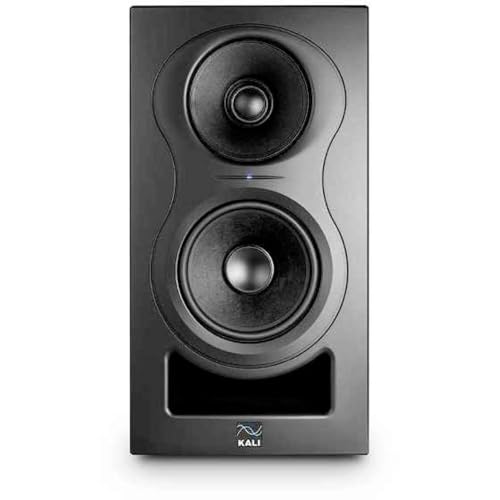
| Kali Audio IN-5 5-Inch | 5 inch (per the listing title); cone material not published | 160 W tri-amplified, one amplifier per driver | Described as neutral; figures not published in listing | XLR, TRS and RCA | Small-room producers who want tri-amped three-way imaging, boundary EQ and balanced plus consumer inputs in a 5 inch monitor. | Coaxial point-source midrange and tweeter | 81/100 |
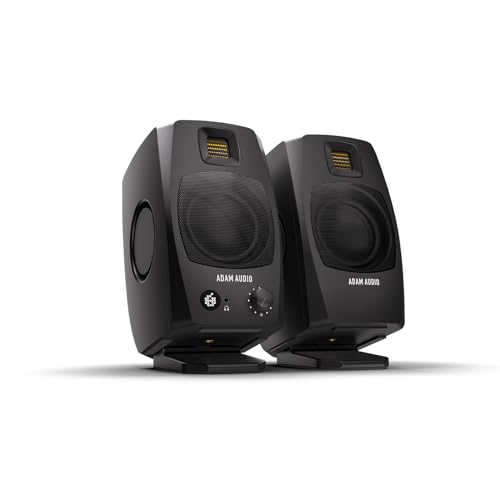
| ADAM Audio D3V Active | 3.5 inch aluminum woofer with ferrite magnet system, plus dual-sided 3.5 inch passive radiators | 240W stated in the listing title; bullets describe woofers driven by 80 W amplifiers; 97 dB SPL | 45 Hz to 23 kHz | USB-C, balanced 1/4 inch TRS inputs on the left speaker backplate, front panel headphone output | Laptop based songwriters, producers and creators who want ribbon tweeter accuracy and a headphone hub on a desk over USB-C. | 1.5 inch D-ART ribbon tweeter at desktop scale | 81/100 |
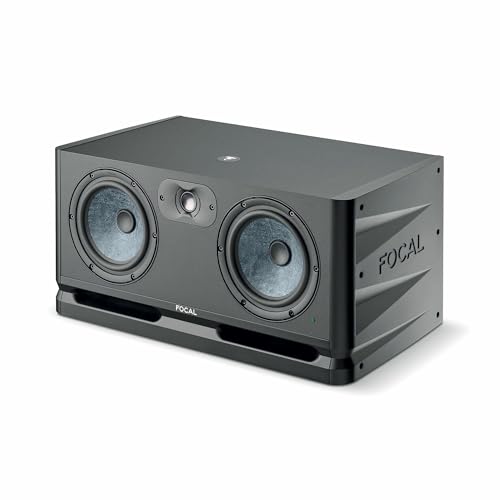
| Focal Alpha-Twin-EVO 2.5-Channel Studio | Slatefiber cone manufactured in France; diameter and driver count not published in listing | Not published in listing | Not published in listing | Up to 3 audio sources can be connected; connector types not published in listing | Mix engineers who want a French built 2.5-channel active monitor with wide dispersion and multiple source inputs, and who will confirm the specification separately. | 2.5-channel active design for extended low end from a nearfield footprint | 80/100 |
#1. Sennheiser Neumann KH 80 DSP 4" Active 2-Way (Best Overall)

Mandrillis Research Score: 87/100
This is an editorial research score, not a customer rating or laboratory test score.
Who Should Buy It
- Mix and post engineers working in compact, acoustically difficult rooms
- Studios building small multichannel systems that need matched front and rear monitors
- Buyers who want measurement based alignment without buying a separate microphone
- Broadcast and edit suites that need accurate nearfields in a small footprint
Skip It If
- You need deep bass from the monitors alone and do not plan to add a subwoofer
- You prefer analog controls over software based alignment
- Your budget targets an entry tier pair
Pros
- DSP engine with network control for room alignment
- Neumann MA 1 alignment microphone included in the bundle
- Mathematically Modeled Dispersion waveguide for smoother off axis response
- Modeling techniques aimed at minimizing non linear distortion
- Compact polycarbonate composite cabinet with extensive mounting options
- Sold as a matched pair
Cons
- Amplifier power is not published in the listing
- Frequency response is not stated
- A 4 inch woofer limits low frequency extension without a subwoofer
- Connector types are not published
- No dimensions or weight in the listing
Key Specs
Type: Active bi-amplified 2-way nearfield studio monitor with DSP, sold as a gray pair bundled with the Neumann MA 1 alignment microphone
Woofer: 4 inch, driver material not published in listing
Tweeter: Not published in listing, mounted in a Mathematically Modeled Dispersion waveguide
Power: Not published in listing, described as powerful highly efficient amplifiers with large headroom
Frequency response: Not published in listing
Inputs: Analog input, network control for the DSP engine, connector types not published in listing
Room controls: DSP engine with network control, wide range input gain and output level controls, MA 1 alignment microphone in the bundle
Dimensions: Not published in listing
Weight: Not published in listing
Included accessories: Neumann MA 1 Monitor Alignment Mic
Why We Picked It
The Sennheiser Neumann KH 80 DSP takes best overall honors for its DSP engine with network control and a bundled Neumann MA 1 alignment microphone, which lets engineers calibrate the room right out of the box. A Mathematically Modeled Dispersion waveguide smooths off axis response. Its woofer measures 4 inches, smaller than most picks here, and amplifier power, frequency response, and dimensions are not published.
Read our full Sennheiser Neumann KH 80 DSP 4" Active 2-Way review →
Check Price on AmazonWe may earn a commission at no extra cost to you.
Last verified: October 2026
Why This Product Ranks Best Overall
#2. ADAM Audio S2V 7 (Best Value)

Mandrillis Research Score: 85/100
This is an editorial research score, not a customer rating or laboratory test score.
Who Should Buy It
- Mix engineers upgrading from entry level nearfields to a professional reference
- Mastering rooms that value ribbon tweeter detail in the top octave
- Studios that want DSP based tuning on the monitor itself
- Buyers who already know and like the ADAM Audio ribbon sound
Skip It If
- Your room is small and untreated, where 300W on a 7 inch woofer is excessive
- You need confirmed input types and response figures before ordering
- A pair at this tier exceeds your total studio budget
Pros
- 300W amplifier on the 7 inch woofer
- Dedicated 50W amplifier for the S-ART folded ribbon tweeter
- Custom DSP engine built in
- Vertical 2-way nearfield layout for a compact footprint
- ADAM Audio S Series professional positioning
Cons
- Frequency response not published in the listing
- Input types not stated
- DSP controls and room adjustment details not described
- No dimensions or weight published
- Upper mid-range tier for a single monitor
Key Specs
Type: Active vertical 2-way nearfield studio monitor
Woofer: 7 inch woofer
Tweeter: S-ART folded ribbon tweeter
Power: 300W woofer amplifier, 50W tweeter amplifier
Frequency response: Not published in listing
Inputs: Not published in listing
Room controls: Custom DSP engine, specific controls not published in listing
Dimensions: Not published in listing
Weight: Not published in listing
Included accessories: Not published in listing
Why We Picked It
The ADAM Audio S2V 7 earns best value with a 7 inch woofer driven by a 300 watt amplifier and an S-ART folded ribbon tweeter powered by its own dedicated 50 watt amplifier, plus a custom built-in DSP engine. Its vertical 2-way layout keeps the footprint compact. Frequency response, input types, and specific DSP controls are not published, and this sits at an upper mid-range price for one monitor.
Read our full ADAM Audio S2V 7 review →
Check Price on AmazonWe may earn a commission at no extra cost to you.
Last verified: October 2026
Why This Product Ranks Best Value
#3. Focal Alpha 80 (Best Low End)

Mandrillis Research Score: 85/100
This is an editorial research score, not a customer rating or laboratory test score.
Who Should Buy It
- Electronic and hip hop producers who need bass reach and high output
- Engineers who switch between an interface, a console and a consumer source
- Studios that want wall-mount inserts for a fixed install
- Buyers building a pair or adding a matching third monitor
Skip It If
- Your desk is small or your room is untreated and small
- You want the quietest possible bedroom setup rather than high SPL
- You need a pair with cables and pads in one box
Pros
- 8 inch Slatefiber woofer with a published 38 Hz floor
- 115 W RMS Class D bi-amp, 80 W low and 35 W high
- 106 dB SPL peak at 1 m for high output nearfield work
- TRS, XLR and RCA inputs usable with three sources at once
- LF and HF shelving plus sensitivity control
- MDF cabinet with laminar port, wall-mount inserts and protective grills
Cons
- Sold individually, so a pair costs two purchases
- Dimensions and weight are not published
- An 8 inch monitor needs a medium or larger room
- Top end stated to 22 kHz, lower than some rivals
Key Specs
Type: Active two-way Class D bi-amplified nearfield studio monitor, sold individually
Woofer: 8 inch Slatefiber woofer
Tweeter: 1 inch aluminum tweeter
Power: 115 W RMS bi-amp, 80 W low frequency plus 35 W high frequency Class D; 106 dB SPL peak at 1 m
Frequency response: 38 Hz to 22 kHz
Inputs: TRS, XLR and RCA, up to three sources connected at once
Room controls: Adjustable LF and HF shelving plus sensitivity control
Dimensions: Not published in listing
Weight: Not published in listing
Included accessories: Protective grills per the listing; no cables or pads listed; sold as a single monitor
Why We Picked It
The Focal Alpha 80 delivers an 8 inch Slatefiber woofer rated down to 38Hz, a 115 watt RMS Class D bi-amp split 80 watts low and 35 watts high, and 106dB SPL peak output at 1 meter. TRS, XLR, and RCA inputs handle three sources at once, with LF and HF shelving for room tuning. It sells individually, so a stereo pair means two purchases, and dimensions are not published.
Read our full Focal Alpha 80 review →
Check Price on AmazonWe may earn a commission at no extra cost to you.
Last verified: October 2026
Why This Product Ranks Best Low End
#4. Yamaha HS8 8-Inch (Best for Large Rooms)

Mandrillis Research Score: 84/100
This is an editorial research score, not a customer rating or laboratory test score.
Who Should Buy It
- Mix engineers who want bass extension without adding a subwoofer
- Producers in bass heavy genres with a medium or large room
- Studios that value the plain, revealing HS series balance
- Buyers who want a matched pair in one purchase
Skip It If
- Your room is small or untreated
- You need the input types confirmed in the listing before buying
- You prefer a warm, forgiving monitor for casual listening
Pros
- Published 38 Hz to 30 kHz response from an 8 inch two-way
- 120 W bi-amp power per monitor, 75 W low and 45 W high
- 8 inch cone woofer and 1 inch dome tweeter
- Large magnets in an Advanced Magnetic Circuit design
- Sold as a matched pair
Cons
- Inputs are not published in the listing
- Room controls are not described in the listing
- Dimensions and weight are not published
- An 8 inch monitor needs a larger room than a 5 inch or 6.5 inch design
Key Specs
Type: Active bi-amped 2-way powered studio monitor, sold as a pair, black
Woofer: 8 inch cone woofer
Tweeter: 1 inch dome tweeter
Power: 75 W LF plus 45 W HF bi-amp system, 120 W total per monitor
Frequency response: 38 Hz to 30 kHz
Inputs: Not published in listing
Room controls: Not published in listing
Dimensions: Not published in listing
Weight: Not published in listing
Included accessories: Not published in listing; bundle is a pair of two monitors
Why We Picked It
The Yamaha HS8 8-Inch pairs an 8 inch cone woofer with a 1 inch dome tweeter and a 120 watt bi-amp system split 75 watts low and 45 watts high, reaching a published 38Hz to 30kHz response. Large magnets in an Advanced Magnetic Circuit design support that range, and it sells as a matched pair. Inputs, room controls, dimensions, and weight are not published in the listing.
Read our full Yamaha HS8 8-Inch review →
Check Price on AmazonWe may earn a commission at no extra cost to you.
Last verified: October 2026
Why This Product Ranks Best for Large Rooms
#5. JBL 30 (Best Power)

Mandrillis Research Score: 82/100
This is an editorial research score, not a customer rating or laboratory test score.
Who Should Buy It
- Commercial installers running 70 V or 100 V speaker lines
- Bars, gyms, patios and houses of worship that need high output from one cabinet
- Live sound operators who want a passive monitor with wide coverage
- Buyers who already own a suitable power amplifier
Skip It If
- You need an active monitor with built-in amplification
- You rely on published frequency response data to plan a system
- You want desktop nearfield speakers for a home studio
Pros
- Three-way coaxial design with a 10 inch woofer, 5 inch midrange and 1 inch compression driver
- Fiberglass and Kevlar woofer cone with a neodymium magnet
- 150 W transformer for 70 V or 100 V distributed lines plus 8 ohm thru
- Wide 120 by 110 degree high frequency coverage
- Sonic Guard overload protection for unattended installs
- Rated for indoor and outdoor use
Cons
- Passive design, so it needs an external amplifier
- Frequency response figures are not published in the listing
- Dimensions and weight are not published in the listing
- Sold individually, so a stereo pair doubles the cost
- No room correction or trim controls are mentioned
Key Specs
Type: Three-way high output indoor/outdoor monitor speaker, passive, sold individually
Woofer: 250 mm (10 in) fiberglass/Kevlar cone with neodymium magnet
Tweeter: 25 mm (1 in) titanium diaphragm compression driver, coaxial with a 125 mm (5 in) anodized aluminum cone midrange
Power: 150 W transformer for 70 V or 100 V lines, with 8 ohm thru; direct power handling not published in listing
Frequency response: Not published in listing (described only as extended bandwidth with smooth response)
Inputs: Not published in listing (70 V or 100 V line operation with 8 ohm thru is stated; connector type is not)
Room controls: Not published in listing; Sonic Guard overload protection is included
Dimensions: Not published in listing
Weight: Not published in listing
Included accessories: Not published in listing
Why We Picked It
The JBL 30 is a three-way indoor and outdoor monitor built around a 10 inch fiberglass and Kevlar woofer with a neodymium magnet, a 5 inch midrange, and a 1 inch titanium compression driver. A 150 watt transformer supports 70V or 100V lines with 8 ohm thru, and Sonic Guard protects against overload. It is passive, needs an external amplifier, and sells individually, so a pair doubles the cost.
Check Price on AmazonWe may earn a commission at no extra cost to you.
Last verified: October 2026
Why This Product Ranks Best Power
#6. Kali Audio IN-5 5-Inch (Best Build)
Mandrillis Research Score: 81/100
This is an editorial research score, not a customer rating or laboratory test score.
Who Should Buy It
- Mixers who prioritize a stable center image and depth
- Home studios connecting both an interface and consumer sources
- Buyers assembling a stereo or surround set one unit at a time
- Anyone who wants repeatable DIP-switch room settings
Skip It If
- You mix bass-heavy genres without a sub
- You want a complete published spec sheet
- A two-way 5 inch monitor already meets your needs
Pros
- Coaxial point-source midrange and tweeter
- 160 W tri-amplified power, one amplifier per driver
- Rear-panel DIP switch boundary EQ
- XLR, TRS and RCA inputs
- Sold as a single, so arrays can be built one at a time
Cons
- Midrange and tweeter sizes not published in this listing
- Frequency response figures and maximum SPL not published
- Dimensions and weight not published
- 5 inch woofer limits bass reach without a sub
Key Specs
Type: Active three-way studio monitor with coaxial midrange and tweeter, tri-amplified, sold as a single unit in black
Woofer: 5 inch (per the listing title); cone material not published
Tweeter: Coaxial tweeter mounted in the midrange driver; size and dome material not published in listing
Power: 160 W tri-amplified, one amplifier per driver
Frequency response: Described as neutral; figures not published in listing
Inputs: XLR, TRS and RCA
Room controls: Rear-panel DIP switches for boundary EQ
Dimensions: Not published in listing
Weight: Not published in listing
Included accessories: Not published in listing
Why We Picked It
The Kali Audio IN-5 5-Inch is a tri-amplified three-way design with a coaxial tweeter mounted inside the midrange driver for point-source imaging, plus 160 watts split across three dedicated amplifiers. XLR, TRS, and RCA inputs cover professional and consumer sources, and rear-panel DIP switches add boundary EQ. The 5 inch woofer limits bass reach without a subwoofer, and frequency response figures are not published.
Read our full Kali Audio IN-5 5-Inch review →
Check Price on AmazonWe may earn a commission at no extra cost to you.
Last verified: October 2026
Why This Product Ranks Best Build
#7. ADAM Audio D3V Active (Best Premium)
Mandrillis Research Score: 81/100
This is an editorial research score, not a customer rating or laboratory test score.
Who Should Buy It
- Songwriters and producers working from a laptop without an interface
- Content creators and streamers who want accurate desktop sound
- Owners of larger ADAM Audio monitors wanting a matching writing desk pair
- Anyone who wants a front volume knob and headphone socket within reach
Skip It If
- You need a traditional midfield or large nearfield monitor
- You require XLR connections
- You produce sub bass heavy music without a subwoofer
Pros
- 1.5 inch D-ART ribbon tweeter at desktop scale
- Published 45 Hz to 23 kHz response from a 3.5 inch system
- USB-C input removes the need for an interface
- Balanced TRS inputs and front headphone output
- DSP placement switches plus 15 degree angled stands included
- Auto sleep can be disabled with the latest firmware
Cons
- 97 dB SPL suits close listening only
- Power figures differ between the listing title and bullets
- No XLR or RCA input
- Dimensions and weight not published
Key Specs
Type: Fully active desktop studio monitor system, black, pair, with inputs and controls on the left speaker
Woofer: 3.5 inch aluminum woofer with ferrite magnet system, plus dual-sided 3.5 inch passive radiators
Tweeter: 1.5 inch D-ART (Desktop Accelerated Ribbon Tweeter)
Power: 240W stated in the listing title; bullets describe woofers driven by 80 W amplifiers; 97 dB SPL
Frequency response: 45 Hz to 23 kHz
Inputs: USB-C, balanced 1/4 inch TRS inputs on the left speaker backplate, front panel headphone output
Room controls: DSP-powered switches on the left speaker backplate for placement related acoustic issues
Dimensions: Not published in listing
Weight: Not published in listing
Included accessories: Detachable monitor stands angled 15 degrees toward the listener
Why We Picked It
The ADAM Audio D3V Active brings a 1.5 inch D-ART ribbon tweeter to a desktop-scale pair with a published 45Hz to 23kHz response from 3.5 inch aluminum woofers and passive radiators. USB-C input removes the need for a separate interface, and DSP placement switches plus 15 degree angled stands handle room placement. At 97dB SPL it suits close listening only, and dimensions remain unpublished.
Read our full ADAM Audio D3V Active review →
Check Price on AmazonWe may earn a commission at no extra cost to you.
Last verified: October 2026
Why This Product Ranks Best Premium
#8. Focal Alpha-Twin-EVO 2.5-Channel Studio (Best Upgrade)
Mandrillis Research Score: 80/100
This is an editorial research score, not a customer rating or laboratory test score.
Who Should Buy It
- Producers who want more low end than a two-way nearfield without a subwoofer
- Engineers who switch between an interface, a laptop and a second source at the desk
- Studios that value wide dispersion for collaborative listening
- Buyers who trust the Focal reputation for cone technology
Skip It If
- You need every specification published before purchase
- You want a matched pair in one purchase
- Your budget is better spent on a proven entry level pair
Pros
- 2.5-channel active design for extended low end from a nearfield footprint
- Slatefiber cone manufactured in France, aimed at neutrality and low distortion
- Wide dispersion for consistent sound across the room
- Listing claims identical tonal balance at low and high volume
- Accepts up to 3 audio sources
Cons
- Driver sizes, tweeter type and amplifier power are not published in the listing
- Frequency response is not published
- Connector types for the three sources are not stated
- Dimensions and weight are not published
- Sold as a single unit
Key Specs
Type: Active 2.5-channel studio monitor
Woofer: Slatefiber cone manufactured in France; diameter and driver count not published in listing
Tweeter: Not published in listing
Power: Not published in listing
Frequency response: Not published in listing
Inputs: Up to 3 audio sources can be connected; connector types not published in listing
Room controls: Not published in listing
Dimensions: Not published in listing
Weight: Not published in listing
Included accessories: Not published in listing
Why We Picked It
The Focal Alpha-Twin-EVO 2.5-Channel Studio is the best upgrade pick, using a 2.5-channel active design and a France-made Slatefiber cone aimed at extended low end and wide, consistent dispersion across the room. The listing claims identical tonal balance at low and high volume and accepts up to three audio sources. Driver sizes, tweeter type, amplifier power, frequency response, and connector types are unpublished, so treat the spec sheet as incomplete.
Read our full Focal Alpha-Twin-EVO 2.5-Channel Studio review →
Check Price on AmazonWe may earn a commission at no extra cost to you.
Last verified: October 2026
Why This Product Ranks Best Upgrade
Which One Should You Buy?
Bigger studio monitors trade desk space for low-frequency extension, but "bigger" covers a wide range in this group, from the Sennheiser Neumann KH 80 DSP's 4 inch woofer with DSP room alignment to the JBL 30's three-way 10 inch design built for larger or installed spaces. The Focal Alpha 80 and Yamaha HS8 8-Inch both center on classic 8 inch two-way layouts with published bass extension to around 38Hz, while the ADAM Audio S2V 7 adds high amplifier power and a ribbon tweeter in a 7 inch package. Smaller-footprint options like the Kali Audio IN-5 5-Inch and ADAM Audio D3V Active trade low end for tri-amplified imaging or desktop convenience, and the Focal Alpha-Twin-EVO 2.5-Channel Studio rounds out the list with extended low end from an unspecified driver size that buyers should confirm directly.
Buy the Sennheiser Neumann KH 80 DSP if you want DSP room alignment out of the box
You want a DSP engine with network control, a bundled Neumann MA 1 alignment microphone, and a Mathematically Modeled Dispersion waveguide for smooth off axis sound. The 4 inch woofer is smaller than most picks here, and amplifier power and dimensions are not published.
Buy the ADAM Audio S2V 7 if you want high amplifier power on a 7 inch woofer
You want a 300 watt amplifier driving the 7 inch woofer plus a dedicated 50 watt amplifier for the ribbon tweeter, with a custom DSP engine onboard. Frequency response and input types are not published, so confirm those before relying on it for critical work.
Buy the Focal Alpha 80 if you want the deepest published bass floor here
You want an 8 inch Slatefiber woofer rated to 38Hz, 115 watts RMS of Class D bi-amp power, and three usable input types including TRS, XLR, and RCA. It sells individually, so a stereo pair means buying two, and dimensions are not published.
Buy the Yamaha HS8 8-Inch if you want a matched 8 inch pair with published response
You want an 8 inch cone woofer paired with a 1 inch dome tweeter, a 120 watt bi-amp system, and a stated 38Hz to 30kHz frequency response sold as a matched pair. Inputs, room controls, and dimensions are not published in the listing.
Buy the JBL 30 if you need a weather tolerant three-way for a larger or installed space
You want a passive three-way design with a 10 inch woofer, 5 inch midrange, and 1 inch compression driver rated for indoor or outdoor installation on 70V or 100V lines. You will need an external amplifier, and it sells individually, so a pair means two purchases.
Buy the Kali Audio IN-5 5-Inch if you want tri-amped imaging in a small room
You want a coaxial point-source tweeter and midrange, 160 watts split across three dedicated amplifiers, and XLR, TRS, and RCA inputs in a single compact cabinet. The 5 inch woofer limits deep bass without a subwoofer, and frequency response figures are not published.
Buy the ADAM Audio D3V Active if you want a ribbon tweeter desktop system over USB-C
You want a 1.5 inch D-ART ribbon tweeter, a published 45Hz to 23kHz response, and a USB-C input that skips a separate audio interface entirely. Angled stands and DSP placement switches help on a desk, though 97dB SPL suits close listening, not a larger room.
Buy the Focal Alpha-Twin-EVO 2.5-Channel Studio if you want extended low end from a French-built design
You want a 2.5-channel active design with a France-made Slatefiber cone aimed at low distortion, wide dispersion, and up to three connected sources. Nearly every hardware spec, including driver size, power, and frequency response, is unpublished, so you should confirm specifics directly before buying.
Buying Guide
Woofer Size and Low-Frequency Extension
A monitor's woofer diameter is the biggest factor in how low it can reach without a subwoofer, and this group spans from a 3.5 inch desktop design to a 10 inch three-way cabinet. Larger woofers, like the 8 inch drivers in the Focal Alpha 80 and Yamaha HS8 8-Inch, move more air and extend further into the low-frequency range, but they need more space and a bigger room to sound balanced. Smaller woofers, such as the 4 inch driver on the Sennheiser Neumann KH 80 DSP, trade low end for a compact footprint and rely on DSP processing to compensate.
Bi-amp, Tri-amp, and Passive Power Delivery
Active monitors like the ADAM Audio S2V 7 and Kali Audio IN-5 5-Inch build the amplifier into the cabinet, with a separate amp stage for each driver in a bi-amp or tri-amp design, which keeps the signal path matched to the speaker without an external power amp. The JBL 30, by contrast, is a passive design that needs its own amplifier and a 70V, 100V, or 8 ohm connection, which suits installed or distributed sound systems more than a typical desktop or nearfield setup. Checking whether a listing says active or passive before buying avoids an unplanned amplifier purchase.
Frequency Response Numbers and What Is Missing
A published frequency response, such as the Yamaha HS8 8-Inch's stated 38Hz to 30kHz or the ADAM Audio D3V Active's 45Hz to 23kHz, gives a concrete range to compare against other monitors. Several listings in this group, including the ADAM Audio S2V 7 and Focal Alpha-Twin-EVO 2.5-Channel Studio, do not publish a frequency response figure at all, which means the low end and treble extension cannot be verified from the listing alone. Treat an unpublished frequency response as a gap in the available information rather than assuming it matches a similarly priced competitor.
Room Controls: Shelving, DIP Switches, and DSP
Nearly every monitor benefits from some way to compensate for where it sits in a room, since bass tends to build up near walls and corners. The Focal Alpha 80 offers adjustable LF and HF shelving plus a sensitivity control, the Kali Audio IN-5 5-Inch uses rear-panel DIP switches for boundary EQ, and the Sennheiser Neumann KH 80 DSP and ADAM Audio D3V Active rely on a full DSP engine with network or placement switches. Monitors that publish none of these controls, like the Yamaha HS8 8-Inch in this listing, may still include basic trims that simply were not detailed.
Input Types: XLR, TRS, RCA, and USB-C
Professional balanced inputs, XLR and quarter inch TRS, are the standard for studio gear and appear on monitors like the Focal Alpha 80 and Kali Audio IN-5 5-Inch, which also add RCA for consumer sources. The ADAM Audio D3V Active instead leans on USB-C, letting a laptop connect directly without a separate audio interface, alongside a balanced TRS option for anyone who already owns one. A monitor with only one input type limits setup flexibility, so matching input type to existing gear, an interface, a mixer, or a laptop, matters before buying.
Sold as a Pair vs Sold Individually
Several listings in this group, including the Focal Alpha 80, JBL 30, and Kali Audio IN-5 5-Inch, are sold as single units, which means a stereo setup requires buying two separate listings rather than one bundled pair. Others, like the Yamaha HS8 8-Inch and ADAM Audio D3V Active, are sold as a matched pair in one purchase. This distinction affects total cost and matching, since two separately purchased single units are still built to the same specification, but checking the listing for pair versus single wording avoids an unexpected reorder.
How We Compared
- Each of 356 researched studio monitor listings was scored on accuracy and sound, drivers and power, room fit and controls, build, connectivity, and value.
- Specs, pros, cons, and best-fit notes were taken directly from each listing rather than from outside reviews or marketing pages.
- Woofer and tweeter sizes were recorded exactly as published, without rounding or assuming a standard size for any brand.
- Any unpublished spec, such as frequency response or dimensions, is reported as not published rather than estimated from similar models.
- Each candidate was confirmed as an actual studio monitor before scoring, removing any mismatched product categories from consideration.
- Final order weighs accuracy and power most heavily, then room fit, build quality, connectivity, and overall value.
FAQ
Related Guides


About This Guide
Mandrillis Team
The Mandrillis editorial team researches and compares audio and music gear using manufacturer documentation, verified specs and real buyer feedback, so you can make a confident purchase without wading through marketing claims.
Read our full research methodology.