Studio Gear Review
Rode NT1 Review: Quiet Studio Condenser Kit
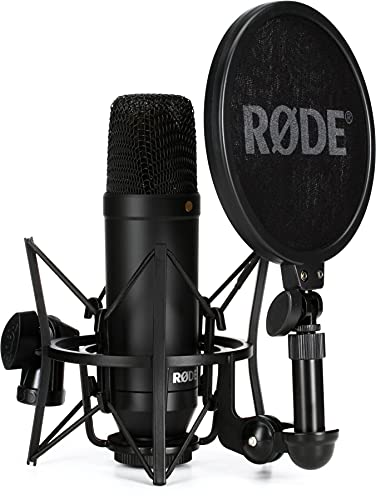
The Rode NT1 is a large-diaphragm cardioid condenser microphone sold as a kit with the SM6 combination shock mount and pop screen. The listing identifies it as the 4th generation of the design and leads with an extremely low noise claim, making it a budget-tier candidate for vocals, voice-over and acoustic instruments in a home studio.
Our Verdict
Research Score 80/100The Rode NT1 kit is a sensible way to buy a quiet studio condenser. The microphone's long reputation, the clear low-noise focus in the listing, and the inclusion of the SM6 shock mount with pop screen add up to a package that answers the needs of most home vocal recording setups in one purchase. The weakness is the listing itself, which publishes no frequency response, sensitivity, maximum SPL, weight, connector or power requirement, so buyers must trust the brand and verify those details elsewhere. For a singer, narrator or home producer with an interface and a reasonably quiet room, it earns a strong recommendation at the budget tier. Streamers in noisy rooms and anyone without a preamp should look at a dynamic or USB alternative instead.
Editorial research score based on published specifications and documented features, not a customer rating or lab test.
Rode
Rode NT1
Best for: Home studio vocalists and voice-over artists with an audio interface who want one quiet, neutral condenser plus the mount and pop screen in a single kit.
Skip it if: You need a USB microphone, record in a noisy untreated room, or want switchable polar patterns and onboard controls.
Check Price on AmazonWe may earn a commission at no extra cost to you.
Listing verified: October 2026
Who Should Buy It
Buy it if
- Singers and rappers recording one voice at a time in a quiet room
- Voice-over artists and audiobook narrators who need a very low noise floor
- Home producers upgrading from an entry-level condenser
- Buyers who want the shock mount and pop screen bundled rather than bought separately
Skip it if
- You do not own an audio interface or mixer with a microphone preamp
- You stream from an untreated room with keyboard and fan noise
- You need omnidirectional or figure-eight patterns
Key Specifications
| Type | Large-diaphragm cardioid condenser microphone |
| Polar pattern | Cardioid |
| Frequency response | Not published in listing |
| Connection | Not published in listing |
| Phantom power | Not published in listing |
| Max SPL or sensitivity | Not published in listing; described as extremely low-noise |
| Controls | Not published in listing |
| Mount and stand | SM6 combination shock mount with pop screen |
| Weight | Not published in listing |
| Included accessories | SM6 combination shock mount and pop screen, per the kit listing |
Overview
The Rode NT1 is a large-diaphragm cardioid condenser microphone sold here as a kit, and the listing identifies this version as the 4th generation of the design. It bundles the microphone with Rode's SM6 combination shock mount and pop screen, so the package covers the two accessories most studio condensers leave out. It sits in the budget tier.
Rode has built the NT1 name over many years as a quiet, neutral studio condenser aimed at home and project studios. The headline claim on this listing is extremely low noise, which matters most for soft sources such as quiet vocals, fingerpicked guitar and spoken word. The black finish is the only cosmetic detail the listing mentions.
Beyond those points the product data is sparse. No frequency response, sensitivity, self-noise figure, maximum SPL, connector type, weight or power requirement is published in the listing, so this review focuses on what the stated design choices mean in practice and flags every gap.
Sound Quality
A large-diaphragm condenser capsule is the classic choice for lead vocals because it captures detail and air without the proximity thickness of a handheld dynamic. The NT1 line has long been described by owners as neutral and uncolored, closer to a clean window on the source than a flattering vocal microphone. That character suits singers who plan to shape the tone later with equalization.
Extremely low noise is the one performance claim the listing makes, and it is a meaningful one. Self-noise shows up as a faint hiss under quiet passages, and a condenser with a very low noise floor lets you raise the gain on whisper-level sources without that hiss becoming audible. Voice-over artists and ASMR creators tend to value this more than any other specification.
Because no frequency response curve or sensitivity number is published in the listing, buyers cannot confirm the exact top-end lift or low-frequency extension from the data alone. On paper, a modern large-diaphragm Rode condenser is expected to reach well into the high frequencies and to need no special treatment on acoustic instruments. Treat the tonal description here as general knowledge of the type rather than a measured result.
Pickup Pattern and Noise Handling
The NT1 is a fixed cardioid microphone, so it is most sensitive to sound arriving at the front of the capsule and rejects most of what arrives from behind. That makes it the right pattern for a single vocalist or instrument in a small room, and the wrong pattern for round-table podcasts or stereo room capture. There is no pattern switch, which keeps the design simple.
Cardioid condensers are more sensitive than dynamic microphones, so they pick up more of the room. In an untreated bedroom the NT1 will capture reflections, computer fans and traffic noise along with the voice, and the low self-noise figure does nothing to hide those sounds. Acoustic treatment, or at least a thick duvet behind the singer, improves results more than any setting on the microphone.
The included SM6 combination shock mount addresses mechanical noise rather than acoustic noise. It isolates the capsule from stand vibration, desk thumps and footsteps, while the attached pop screen blocks the bursts of air from plosive consonants. Together they remove the two most common causes of ruined vocal takes on a condenser.
Build Quality
Rode has a strong reputation for solid metal bodies and long warranties, and the NT1 has historically been one of the sturdier large-diaphragm condensers in its class. The listing does not state the body material or the weight of this 4th generation version, so those details should be confirmed from the manufacturer's own specification sheet. Visually it is a black cylindrical body with a fixed capsule orientation.
The SM6 is a combination shock mount that suspends the microphone in an elastic cradle and carries a detachable pop screen on an adjustable arm. This design keeps the shield at a consistent distance from the capsule and avoids a separate clamp on the stand. Shock mounts of this style are generally robust, though elastic bands do eventually need replacing.
Nothing in the listing addresses the finish durability, the connector housing or whether a storage pouch or case is supplied beyond the mount. Studio condensers are not built for touring abuse in the way a handheld dynamic is, and the NT1 should be treated as a stay-on-the-stand microphone that deserves careful handling.
- Large-diaphragm cardioid condenser capsule
- Black finish on a cylindrical body
- SM6 combination shock mount included
- Detachable pop screen on the SM6 arm
- Body material and weight not published in listing
Connectivity and Setup
The listing does not state the output connector or the power requirement for the Rode NT1. As a large-diaphragm condenser of this design it would normally be expected to connect through a balanced XLR cable and to draw phantom power from an audio interface, mixer or preamp, but neither detail is confirmed in the product data. Buyers working from a USB-only setup should verify this before purchase.
Setup for a kit of this type follows a familiar routine: thread the SM6 onto a stand, clip the microphone into the cradle, position the pop screen a few centimeters in front of the capsule and connect the cable. If phantom power is required, it is switched on at the interface after the cable is connected. Gain is then set so that loud phrases peak comfortably below clipping.
There is no mention in the listing of a USB output, headphone monitoring or any bundled cable. A buyer moving from a USB microphone will therefore need an interface with a microphone preamp, which adds to the total cost and should be budgeted for alongside the kit.
Features, Controls and Extras
The NT1 is a minimalist microphone. The listing mentions no onboard pad, no high-pass filter switch and no pattern selector, which is consistent with Rode's approach to this model over several generations. Everything about the sound is decided at the preamp and in the recording software rather than on the body.
The genuine extras are the SM6 shock mount and the pop screen, and bundling them is the main reason to buy the kit rather than a bare microphone. A quality shock mount and shield bought separately can cost a meaningful fraction of a budget-tier microphone, so the kit is where much of the value sits.
The model field identifies this as the 4th generation NT1, but the listing does not describe what changed from earlier versions, so no new-feature claims can be made from the data. Anyone interested in generation-specific capabilities should check the manufacturer's documentation rather than relying on the listing copy.
Use Cases: Vocals, Streaming, Podcasting and Instruments
Vocals are the primary job for the Rode NT1. Its large diaphragm, cardioid pattern and very low self-noise make it a natural fit for singers, rappers and voice-over artists recording one voice at a time in a reasonably quiet room. The pop screen that ships in the kit handles the plosives that vocal work generates.
For streaming and podcasting the NT1 can sound excellent, but it is less forgiving than a dynamic such as the Shure MV7 or SM7B. It will hear keyboard clicks and room echo clearly, so it rewards streamers who have treated their space and penalizes those who have not. A shock mount and a careful gain setting are essential, and the kit supplies the former.
On instruments, a low-noise large-diaphragm condenser is a strong choice for acoustic guitar, piano, strings and percussion played at moderate levels. The listing publishes no maximum SPL figure, so very loud sources such as close-miked drums or cranked guitar cabinets cannot be confirmed as safe from the data, and buyers should check that number elsewhere.
Who Should Buy It
Home studio owners who already own an audio interface and want one serious vocal condenser are the ideal buyers. The kit saves them from shopping separately for a mount and a shield and gives them a quiet, neutral microphone that will not need replacing as their skills improve.
Voice-over artists and audiobook narrators are a second strong match, because the extremely low noise claim is precisely the characteristic their work demands. Long narration sessions expose any hiss in the chain, and a quiet capsule removes one variable from the troubleshooting list.
It is a weaker choice for anyone without a preamp, for mobile creators who need a USB connection, and for streamers in noisy shared rooms. Those buyers will get more usable results from a dynamic USB microphone or a dedicated streaming microphone.
Alternatives Worth Considering
The Audio-Technica AT2020 is the most obvious budget rival, another cardioid condenser widely used in home studios. It is generally regarded as a little brighter and slightly noisier than the NT1 family, and it is usually sold without a shock mount or pop screen, so the kit bundle here is a real differentiator.
If the room is the problem rather than the microphone, the Shure SM7B or Shure MV7 solve a different equation. Both are dynamic microphones that reject room sound far better than any condenser, at the cost of needing more preamp gain and giving up some of the airy detail a condenser offers.
Buyers who want a condenser without buying an interface should look at the Audio-Technica AT2020USB+ or the Blue Yeti, which plug straight into a computer. They trade the upgrade path of an XLR studio microphone for immediate convenience, and that trade is the correct one for many first-time creators.
Verdict
The Rode NT1 kit is a straightforward recommendation for anyone who wants a quiet studio condenser without assembling the accessories piece by piece. The microphone's reputation, the low-noise emphasis and the SM6 mount with pop screen cover the needs of most home vocal setups in one box.
The listing's silence on specifications is the main caveat. Frequency response, sensitivity, maximum SPL, weight, connector and power requirement are all absent, so a careful buyer will confirm those with the manufacturer before committing.
For a singer, narrator or home producer with an interface and a reasonably quiet room, it is an easy choice at the budget tier. For streamers in noisy rooms or anyone without a preamp, one of the dynamic or USB alternatives above will serve better.
Strengths and Limitations
Strengths
- Extremely low noise claim suits quiet vocal and voice-over work
- Large-diaphragm cardioid condenser from a trusted studio brand
- SM6 combination shock mount and pop screen included in the kit
- Neutral character that takes equalization well
- Simple fixed-pattern design with nothing to misconfigure
Limitations
- Frequency response, sensitivity and max SPL not published in listing
- Connector and phantom power requirement not stated
- Cardioid only, no pattern switching
- Needs an interface with a preamp, not a plug-in USB option
How We Scored It
Scores reflect published specifications, documented features and value against the alternatives below. They are editorial research scores, not laboratory measurements.
Alternatives to Consider

Sennheiser E 945
Lead singers and vocalists on loud stages who want tighter isolation than a cardioid handheld and a microphone that resists handling noise and hum.
Read the Sennheiser E 945 review →
Shure SM58
Bands, worship teams, venues and duos who need two rugged, consistent cardioid dynamic vocal microphones for live use.
Read the Shure SM58 review →
Rode NTG-1
Filmmakers, documentary crews and videographers who want a light, transparent boom shotgun with a high-pass filter and a standard XLR output.
Read the Rode NTG-1 review →Questions Buyers Ask
Rode NT1
See the current listing, price and included accessories.
About This Review
Mandrillis Team
The Mandrillis editorial team researches and compares audio and music gear using manufacturer documentation, verified specs and real buyer feedback, so you can make a confident purchase without wading through marketing claims.
Read our full research methodology.