Studio Gear Review
Rode NTG-1 Review: Lightweight Shotgun for Film and Boom Work
The Rode NTG-1 is a lightweight supercardioid shotgun condenser microphone for film, television and broadcast field work. The listing specifies an XLR-3M output, a weight of just 105 grams, a switchable 80 Hz high-pass filter and an included WSVM foam windshield, and it describes full frequency response, low noise and transparency. It sits in the budget tier.
Our Verdict
Research Score 80/100The Rode NTG-1 is one of the few shotgun microphones at this tier whose listing actually publishes the numbers that matter: 105 grams, an XLR-3M output, a switchable 80 Hz high-pass filter and a supercardioid shotgun pattern, plus an included foam windshield. Those facts describe a boom microphone that will not tire an operator, that cleans up traffic rumble at the flick of a switch, and that plugs into any standard field mixer or recorder. The gaps are the usual ones, with no frequency response range, sensitivity, self-noise or maximum SPL figure stated, and phantom power is implied rather than specified. For filmmakers, documentary crews and voice-over work at the budget tier it is an easy recommendation.
Editorial research score based on published specifications and documented features, not a customer rating or lab test.

Rode
Rode NTG-1
Best for: Filmmakers, documentary crews and videographers who want a light, transparent boom shotgun with a high-pass filter and a standard XLR output.
Skip it if: You need a desk microphone for podcasting or sung vocals, or your camera cannot supply phantom power and you have no recorder or mixer.
Check Price on AmazonWe may earn a commission at no extra cost to you.
Listing verified: October 2026
Who Should Buy It
Buy it if
- Independent filmmakers and short-film crews booming dialogue
- Documentary and wedding videographers with a field recorder or mixer
- Voice-over artists who want an overhead microphone that rejects the room
- Streamers who need a microphone that stays out of the camera frame
Skip it if
- You record at a desk and want a broadcast dynamic or large condenser
- Your only input is an unpowered 3.5 millimeter camera jack
- You shoot mostly in strong wind and will not buy the furry cover
Key Specifications
| Type | Shotgun condenser microphone |
| Polar pattern | Supercardioid |
| Frequency response | Described as full frequency response; range not published in listing |
| Connection | XLR-3M output |
| Phantom power | Not stated in listing; a condenser shotgun of this type would normally require it |
| Max SPL or sensitivity | Not published in listing; described as low noise |
| Controls | Switchable 80 Hz high-pass filter |
| Mount and stand | Not published in listing |
| Weight | 105 grams |
| Included accessories | WSVM foam windshield; furry windcover available separately |
Overview
The Rode NTG-1 is a supercardioid shotgun condenser microphone built for film, television and electronic news gathering, and the listing is unusually specific for a product in the budget tier. It states a weight of 105 grams, an XLR-3M output, a switchable 80 Hz high-pass filter and an included WSVM foam windshield, with a furry windcover available separately.
Rode describes the microphone as lightweight and transparent, with full frequency response and low noise, and names filmmaking, voice-over and streaming as applications alongside broadcast work. The emphasis on low weight is deliberate: this is pitched first as a boom microphone, where every gram matters over a long shooting day.
What the listing does not provide is the frequency response range in hertz, the sensitivity, the self-noise figure, the maximum SPL or the phantom power requirement, and it does not describe a shock mount or clip. This review treats those as unknown and builds its assessment on the published facts and the general behavior of shotgun condensers.
Sound Quality
Full frequency response and transparency are the listing's tonal claims, which distinguish the Rode NTG-1 from camera shotguns that deliberately shape their response against handling noise. A transparent shotgun captures dialogue with natural weight and air, and it also serves for voice-over and location sound effects where a colored response would be a liability.
Low noise is the second claim, and it matters on a boom because dialogue is often recorded at a distance of a foot or more, which demands more gain than a desk microphone. A quiet capsule and electronics keep hiss below the level of the room tone, so that quiet lines and pauses stay clean rather than fizzing.
None of this is quantified in the listing, so the exact self-noise in decibels and the response extremes remain unconfirmed. Shotgun microphones also show some off-axis coloration by nature, since the interference tube cancels side sound unevenly across frequencies, and a boom operator keeping the capsule aimed at the speaker's mouth is the standard way to avoid it.
Pickup Pattern and Noise Handling
The listing specifies a supercardioid pattern, which for a shotgun means a tight forward lobe with strong side rejection and a small lobe of sensitivity directly behind. The interference tube extends that directionality at higher frequencies, giving the Rode NTG-1 the reach that lets a boom sit just above the frame while still isolating dialogue.
The rear lobe is the one pattern trait boom operators must manage. Sound arriving directly from behind the microphone, such as a generator or a crew member, is rejected less than sound from the sides, so angling the boom so that the rear points at nothing important is standard practice.
The switchable 80 Hz high-pass filter is the main noise-handling control. Engaging it rolls off the low frequencies where traffic rumble, air conditioning, wind buffeting and boom handling noise live, and the listing specifically names traffic rumble as a target. The included foam windshield handles light breeze and plosives, while the optional furry windcover is intended for stronger wind.
Build Quality
At 105 grams the Rode NTG-1 is genuinely light for a shotgun, and the listing frames that weight as a fatigue reducer on long shoots. Light microphones also put less strain on boom pole shock mounts and camera shoe mounts, and they are easier to balance on small camera rigs.
The body material and finish are not published in the listing beyond the black color. Rode's shotgun microphones have a reputation for metal construction and long warranties, and the brand's broadcast line is widely used by working crews, but the specific material of this model should be confirmed from the manufacturer's documentation.
The foam windshield is the only accessory listed, so a shock mount or pistol grip, a boom clip and a storage pouch are not confirmed. A shotgun on a boom pole lives or dies by its shock mount, and buyers should plan to add one if it is not in the box.
- Weight of 105 grams stated in the listing
- Black finish
- XLR-3M output connector
- Switchable 80 Hz high-pass filter on the body
- WSVM foam windshield included
- Body material and shock mount not published in listing
Connectivity and Setup
The listing specifies an XLR-3M output, the standard three-pin male XLR found on professional microphones. That connects directly to field mixers, portable recorders, camera XLR inputs and studio interfaces, which makes the Rode NTG-1 compatible with virtually every professional audio chain without adapters.
Phantom power is not stated in the listing, but a condenser shotgun of this type would normally require it from the device it connects to. Cameras with built-in XLR inputs, field mixers and interfaces supply it as standard, while a compact camera with only a 3.5 millimeter jack will need an external recorder or a powered adapter.
Setup on a boom is a matter of fitting the microphone in a shock mount, sliding on the foam windshield or furry cover as conditions dictate, running an XLR cable down the pole, engaging phantom power at the mixer and deciding whether the 80 Hz filter should be on. For voice-over or streaming use, the same microphone mounts on a desk stand above and slightly in front of the speaker.
Features, Controls and Extras
The switchable 80 Hz high-pass filter is the single onboard control the listing describes, and it is the right one to have. A fixed roll-off would compromise the full response the microphone is designed to deliver, while a switchable one lets the operator choose transparency in a quiet interior and rumble rejection on a busy street.
The WSVM foam windshield is included, and the listing points out that a furry windcover is available for adverse conditions. That distinction is honest: foam copes with indoor air movement and light breeze, but any real wind outdoors calls for the furry cover, so exterior shooters should treat it as a necessary extra purchase.
Beyond the filter and windshield there are no pads, pattern switches or digital extras, which is normal for a professional shotgun. The 105 gram weight is itself a feature for a boom operator, and the XLR-3M output is the connectivity standard that keeps the microphone relevant across cameras and recorders for years.
Use Cases: Vocals, Streaming, Podcasting and Instruments
Film and television dialogue is the primary use for the Rode NTG-1, on a boom pole or a camera-mounted shock mount, and every published specification serves that role. Documentary crews, short-film makers, wedding videographers and news teams will all find the weight, pattern and filter aimed at their daily problems.
Voice-over is named in the listing, and a transparent shotgun with a high-pass filter is a legitimate narration microphone when positioned above the speaker, where it rejects much of an untreated room. Streaming is also named, and the same overhead placement keeps the microphone out of the camera frame while picking up a presenter clearly.
Podcasting at a desk and sung vocals are less natural fits, since a broadcast dynamic or large-diaphragm condenser such as the Rode NT1 handles close voice work with more body. On instruments a shotgun is an occasional tool for distant ambience or specific effects rather than a first choice.
Who Should Buy It
Independent filmmakers and documentary crews who need a boom microphone that will not tire the operator are the ideal buyers. The 105 gram weight, supercardioid reach and 80 Hz filter cover the core requirements of location dialogue at the budget tier.
Videographers upgrading from an on-camera microphone to a true shotgun will find the XLR-3M output ready for their field mixer or recorder, and the included foam windshield means they can start shooting indoors immediately. The furry cover should go on the shopping list for the first exterior day.
Voice-over artists and streamers who want a microphone that stays out of frame and rejects their room are a secondary match. Desk podcasters and singers should look at a dynamic or large-diaphragm condenser instead.
Alternatives Worth Considering
The Audio-Technica AT875R is the obvious budget rival, a short shotgun designed for compact cameras with a response tailored against camera noise. It is the better fit for the smallest camera rigs, while the Rode NTG-1 is the more transparent and more flexible boom microphone, with a high-pass filter the Audio-Technica listing does not mention.
Rode's own higher shotgun models add features such as onboard batteries, adjustable filters and digital outputs for buyers who need more than one connection type or who shoot without phantom power. They cost more and sit in higher tiers, but they remove the power dependency that the NTG-1 carries.
For interviews where the subject can wear a microphone, a lavalier system delivers more consistent dialogue than any boom, and many crews pair a lavalier for the primary track with a shotgun for ambience and safety. For desk-based voice work, the Shure MV7 or a large-diaphragm condenser is the more conventional choice.
Verdict
The Rode NTG-1 earns its place as a default budget shotgun through published facts rather than slogans: 105 grams, a supercardioid pattern, an XLR-3M output, a switchable 80 Hz high-pass filter and an included foam windshield. Those are the specifications a boom operator actually asks about.
The missing frequency response range, sensitivity, self-noise and maximum SPL figures, and the unstated phantom power requirement, are the only gaps in an otherwise clear listing. Buyers should confirm the power detail against their camera or recorder.
For filmmakers, documentary crews, videographers and voice-over work it is an easy recommendation at the budget tier. For desk podcasting or music it is the wrong type of microphone.
Strengths and Limitations
Strengths
- Low weight of 105 grams for long boom sessions
- Supercardioid shotgun pattern for dialogue at distance
- Switchable 80 Hz high-pass filter against rumble
- Standard XLR-3M output works with any field mixer or recorder
- Foam windshield included
- Described as transparent with full frequency response and low noise
Limitations
- Frequency response range, sensitivity and self-noise not published in listing
- Phantom power requirement implied but not stated
- No shock mount or boom clip listed as included
- Furry windcover for outdoor wind is a separate purchase
How We Scored It
Scores reflect published specifications, documented features and value against the alternatives below. They are editorial research scores, not laboratory measurements.
Alternatives to Consider

Audio-Technica AT875R
Videographers and broadcast crews who need a compact camera-mounted shotgun for clear dialogue at distance with minimal camera noise.
Read the Audio-Technica AT875R review →
Audio-Technica AT2020USB+
Creators and home musicians who want a plug-in USB condenser with proper no-delay monitoring and a mix control for recording to backing tracks.
Read the Audio-Technica AT2020USB+ review →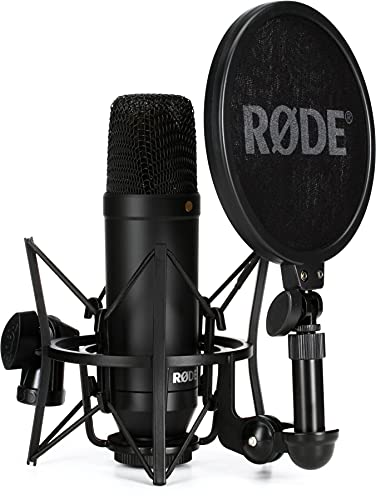
Rode NT1
Home studio vocalists and voice-over artists with an audio interface who want one quiet, neutral condenser plus the mount and pop screen in a single kit.
Read the Rode NT1 review →Questions Buyers Ask
Rode NTG-1
See the current listing, price and included accessories.
About This Review
Mandrillis Team
The Mandrillis editorial team researches and compares audio and music gear using manufacturer documentation, verified specs and real buyer feedback, so you can make a confident purchase without wading through marketing claims.
Read our full research methodology.