Studio Gear Review
Sennheiser Neumann TLM 102 MT Review: Compact Neumann for Home Studios
The Sennheiser Neumann TLM 102 MT is a compact large-diaphragm cardioid condenser with a 144 dB maximum sound pressure level and a slight presence boost above 6 kHz. This review covers what the listing confirms, what it leaves out, and where this accessible Neumann fits for vocals, streaming and instruments.
Our Verdict
Research Score 85/100The Sennheiser Neumann TLM 102 MT is the accessible Neumann, and the listing's facts explain why it has become a project studio favorite. A large-diaphragm cardioid pressure gradient capsule, a compact body, a 144 dB maximum sound pressure level and a slight presence boost above 6 kHz add up to a condenser that flatters vocals and shrugs off loud instruments. The matte black finish suits stage and video work. The listing does not publish the connector, phantom power requirement, self-noise, weight or accessories, and there are no onboard switches. For buyers who want one refined, consistent condenser at a mid-range price, it remains a benchmark.
Editorial research score based on published specifications and documented features, not a customer rating or lab test.

Sennheiser
Sennheiser Neumann TLM 102 MT
Best for: Home and project studios that want one refined condenser for vocals, voice-over and loud instruments alike.
Skip it if: You record in a noisy untreated room or need onboard pads, filters and multiple polar patterns.
Check Price on AmazonWe may earn a commission at no extra cost to you.
Listing verified: October 2026
Who Should Buy It
Buy it if
- Vocalists stepping up from an entry-level condenser
- Voice-over artists and narrators wanting a clean, airy sound
- Multi-instrumentalists recording guitar cabinets, brass and acoustic sources
- Video creators who want a non-reflective studio microphone
Skip it if
- Your interface cannot supply phantom power
- You need a pad, low-cut switch or switchable patterns
- A dynamic would suit your noisy room better
Key Specifications
| Type | Large-diaphragm condenser, pressure gradient transducer |
| Polar pattern | Cardioid |
| Frequency response | Not published in listing (slight presence boost above 6 kHz stated) |
| Connection | Not published in listing |
| Phantom power | Not published in listing |
| Max SPL or sensitivity | 144 dB maximum sound pressure level |
| Controls | Not published in listing |
| Mount and stand | Not published in listing |
| Weight | Not published in listing |
| Included accessories | Not published in listing |
Overview
The Sennheiser Neumann TLM 102 MT is a large-diaphragm condenser microphone with a cardioid pattern, sold under Sennheiser's distribution and bearing the Neumann name that has defined studio microphones for decades. The MT suffix is the designation Neumann uses for its matte black finish. The listing places it in the mid-range price tier, which is unusually accessible for the brand.
Four facts anchor the listing: a large-diaphragm pressure gradient transducer, a compact Neumann design, a very high maximum sound pressure level of 144 dB, and a slight presence boost above 6 kHz intended to help vocals shine in a mix. Those four points describe the microphone's purpose precisely. It is a vocal and instrument condenser built to take loud sources without complaint.
What the listing does not state includes the connector, phantom power requirement, self-noise, sensitivity, weight and included accessories. For a Neumann those are well documented elsewhere, but this review sticks to the published data. The gaps are noted so that buyers know what to verify.
Sound Quality
The listing's description of a slight presence boost above 6 kHz is the single most useful sonic clue. A lift in that region adds air and articulation to a voice without making the midrange harsh, which is why so many vocal microphones carry a similar curve. Neumann's version is described as slight, suggesting a flattering nudge rather than a hyped top end.
Below that region, a large-diaphragm pressure gradient capsule typically delivers a full, detailed low midrange with natural proximity effect when a singer works close. Buyers report the TLM 102 as clean and modern rather than vintage and colored, with less low-mid thickness than some classic large-diaphragm designs. The listing does not publish a frequency response chart, so those impressions remain reports rather than measurements.
The 144 dB maximum sound pressure level is remarkable at this tier and widens the microphone's usefulness considerably. Guitar cabinets, brass, snare drums and loud singers that overload lesser condensers stay clean on paper. Compared with the Audio-Technica AT2020 or the Rode NT1, which are the usual home studio entry points, the Neumann is positioned as the step up in refinement and headroom.
Pickup Pattern and Noise Handling
Cardioid is the only pattern on offer, and for a compact single-capsule design that is the right choice. The microphone captures what is in front of it and rejects what is behind, which keeps room reflections and monitor spill down in a typical home studio. The listing describes the transducer as a pressure gradient type, which is the standard construction for a directional condenser.
Rear rejection is the practical benefit for vocalists recording in untreated rooms. Facing the singer toward the microphone and the microphone away from the loudest reflective surface uses the pattern to best effect. Side rejection is partial with any cardioid, so a reflection filter or some absorption still helps.
Self-noise is not published in the listing, which matters for quiet sources like soft vocals or acoustic guitar at a distance. Neumann condensers are generally regarded as quiet, but this review will not quote a figure that is not in the data. Handling noise is rarely a concern with a stand-mounted studio condenser, though a shock mount is advisable and is not confirmed as included.
Build Quality
Compact Neumann design is the listing's phrase, and it captures the appeal of the TLM 102 for crowded desks and small vocal booths. The body is noticeably smaller than classic large-diaphragm studio microphones, which makes it easier to position close to an instrument or tuck beside a screen. Weight is not published in the listing.
The matte black MT finish is intended for stage and video work where a reflective nickel body would catch light. Housing material is not stated in the listing, though Neumann's construction reputation is among the strongest in the industry. Buyers report the finish wears well with normal studio handling.
A condenser capsule is more delicate than a dynamic element, so the usual care applies: avoid humidity extremes, keep a cover on it between sessions and do not drop it. The listing does not mention a case or a pouch. The lack of onboard switches also means fewer mechanical parts to fail.
- Large-diaphragm pressure gradient condenser capsule
- Compact Neumann body, matte black MT finish
- 144 dB maximum sound pressure level per the listing
- Weight and housing material not published in listing
- Case and shock mount not confirmed in listing
Connectivity and Setup
The output connector is not published in the listing, although a studio condenser of this class is normally fitted with a balanced XLR output. Plan for a standard microphone cable and an interface or preamp with an XLR input. There is no USB option described, so a computer connection requires an audio interface.
Phantom power is not mentioned in the listing either. Condenser microphones of this type generally require 48 volt phantom power from the interface or preamp to operate, so confirm your interface provides it before buying. Nearly all modern interfaces do, but some budget mixers and portable recorders only supply it on certain channels.
Gain requirements are modest for a condenser, since the capsule produces a much stronger signal than a dynamic or ribbon. That makes the TLM 102 easy to drive from an entry-level interface without a booster. Setup is otherwise simple: mount it, apply phantom power, set the gain so loud passages stay clear of clipping, and record.
Features, Controls and Extras
No controls are published in the listing, and the TLM 102 is known for having none. There is no pad switch and no low-cut filter, which keeps the body compact and the signal path simple. The 144 dB maximum sound pressure level means a pad is rarely missed, and a high-pass filter can be applied in the interface or software.
Included accessories are not published in the listing. Neumann has sold this model with a stand mount in some configurations and with a shock mount in others, but nothing here confirms which arrives. Budget for a shock mount and a pop filter if the seller cannot confirm them, since both matter for vocal recording.
The extra is the name and the consistency it implies. Neumann microphones are built to tight tolerances so that two units sound alike, which matters for studios that may buy a second later. That consistency is part of what the mid-range price buys over cheaper large-diaphragm condensers.
Use Cases: Vocals, Streaming, Podcasting and Instruments
Vocals are the primary target, as the listing's reference to helping vocals shine in the mix makes plain. Singers of most styles will find the slight presence boost flattering, and the high sound pressure handling means belters and screamers do not need to back away. Voice-over and narration benefit from the same clarity.
Streaming and podcasting are realistic uses for people who want a studio-grade condenser rather than a broadcast dynamic. The cardioid pattern helps in a home office, though a condenser will capture more room sound and keyboard noise than a Shure MV7 or SM7B. A quiet space and a boom arm make the difference.
Instruments are where the 144 dB figure pays off. Acoustic guitar, piano, strings, brass, percussion and guitar cabinets are all within reach, and the compact body fits into tight spots around a drum kit or inside a piano lid. Many project studios use a single TLM 102 as the one condenser that handles everything.
Who Should Buy It
Home and project studio owners ready to move beyond an entry-level condenser, and who want a genuine Neumann at a mid-range price, are the core audience. Vocalists, voice-over artists and multi-instrumentalists who record loud and quiet sources alike will appreciate the headroom. Anyone shooting video will value the matte finish.
Buyers who need a pad, a low-cut switch or multiple patterns should look at other models. Those recording in a noisy, untreated room may be happier with a dynamic. Confirm phantom power on your interface and plan for a shock mount if one is not included.
Alternatives Worth Considering
The Audio-Technica AT2020 and the Rode NT1 are the budget large-diaphragm condensers most buyers compare against. Both are capable, and the NT1 in particular is known for very low noise, but neither carries Neumann's consistency or the compact body. The TLM 102 asks more money for refinement rather than for extra features.
The Shure SM7B is the dynamic alternative for vocals, streaming and podcasting in imperfect rooms. It rejects more room sound and tolerates plosives better, but it needs far more preamp gain and lacks the airy top end of a condenser. Many studios own one of each.
Within Neumann's own range, larger and costlier models add switchable patterns, pads and filters. For a first Neumann, or a second microphone that must handle everything from vocals to guitar cabinets, the TLM 102 is the sensible entry point.
Verdict
The Sennheiser Neumann TLM 102 MT earns its reputation as the accessible Neumann. The listing's four facts, a large-diaphragm cardioid pressure gradient capsule, a compact body, a 144 dB maximum sound pressure level and a slight presence lift above 6 kHz, describe a microphone that handles vocals and loud instruments with equal composure.
The listing leaves connector, phantom power, self-noise, weight and accessories unstated, and the microphone has no onboard switches. None of that detracts from its core strength, which is clean, flattering, consistent sound in a small package. For a mid-range studio condenser, it remains a benchmark purchase.
Strengths and Limitations
Strengths
- Large-diaphragm cardioid condenser with Neumann consistency
- 144 dB maximum sound pressure level handles loud sources
- Slight presence boost above 6 kHz flatters vocals
- Compact body fits tight spaces
- Matte black finish suits stage and video
Limitations
- No pad or low-cut switch
- Connector, phantom power and self-noise not published in listing
- Accessories not confirmed
- Picks up more room sound than a dynamic
How We Scored It
Scores reflect published specifications, documented features and value against the alternatives below. They are editorial research scores, not laboratory measurements.
Alternatives to Consider

Shure J11
Bands, churches and event companies in regions where 596 to 620 MHz is authorized who need two dependable SM58 wireless channels.
Read the Shure J11 review →
Shure BLX288/SM58 Dual Vocal
Bands, worship teams and event companies that need two dependable wireless SM58 vocal channels in one simple package.
Read the Shure BLX288/SM58 Dual Vocal review →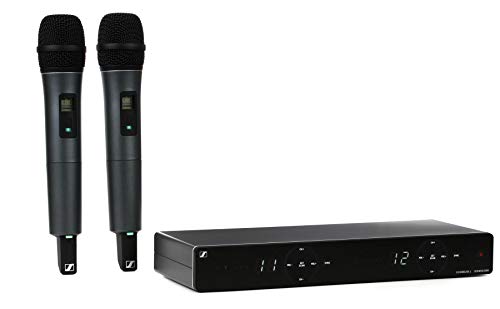
Sennheiser XSW 1-835
Worship teams, schools and gigging duos who want two wireless e835 vocal channels with the simplest possible setup.
Read the Sennheiser XSW 1-835 review →Questions Buyers Ask
Sennheiser Neumann TLM 102 MT
See the current listing, price and included accessories.
About This Review
Mandrillis Team
The Mandrillis editorial team researches and compares audio and music gear using manufacturer documentation, verified specs and real buyer feedback, so you can make a confident purchase without wading through marketing claims.
Read our full research methodology.