Guitar & Bass Review
Epiphone J-200 Studio EC Review: Classic Jumbo, Modern Fishman
The Epiphone J-200 Studio EC brings the iconic jumbo silhouette to a mid-range price point with layered maple construction, a SlimTaper mahogany neck, and Fishman Presys II electronics. The listing highlights vintage sunburst finish and a standard gig bag. Some neck and hardware specs remain unpublished.
Our Verdict
Research Score 71/100The Epiphone J-200 Studio EC is a mid-range jumbo acoustic electric with a clear nod to the classic Gibson J-200. The listing describes a layered maple body, a mahogany neck with SlimTaper D profile, and Fishman Presys II electronics with an under-saddle pickup. These features are promising for amplified strumming and vocal accompaniment. The lack of published details for fingerboard, scale length, nut width, and tuners keeps the evaluation cautious. On paper, this guitar suits players who want the J-200 look and Fishman reliability without a premium price. It is not an all-solid instrument, so tone purists may look elsewhere. The score reflects a solid mid-range option with unknown handling details.
Editorial research score based on published specifications and documented features, not a customer rating or lab test.

Epiphone
Epiphone J-200 Studio EC
Best for: Players wanting an affordable jumbo acoustic electric with classic looks and Fishman electronics.
Skip it if: You need a solid-top or all-solid acoustic with published neck dimensions.
Check Price on AmazonWe may earn a commission at no extra cost to you.
Listing verified: October 2026
Who Should Buy It
Buy it if
- Players who like the J-200 body shape but not the premium price of a Gibson
- Singers and strummers who need a big, present acoustic voice amplified
- Gigging musicians who want a mid-range acoustic electric with a usable preamp
- Beginners upgrading from a starter guitar who want classic styling
Skip it if
- You want solid tonewoods or a hand-built acoustic
- You need detailed specifications before purchasing
- You prefer a smaller body such as a parlor or concert
Key Specifications
| Body shape | Jumbo |
| Top | Layered maple |
| Back and sides | Layered maple |
| Neck and fingerboard | Mahogany neck; fingerboard not published in listing |
| Scale length | Not published in listing |
| Nut width | Not published in listing |
| Electronics | Fishman S-Core under-saddle pickup with Fishman Presys II preamp; volume, bass, treble, phase controls |
| Tuners | Not published in listing |
| Finish | Vintage Sunburst |
| Included accessories | Standard gig bag |
Overview
Epiphone positions the J-200 Studio EC as part of its reimagined Studio Acoustic Collection, drawing directly from the iconic Gibson J-200 silhouette. The listing lists a jumbo body with a layered maple top, back, and sides, plus a Vintage Sunburst finish and four-ply top binding. A standard gig bag is included at a mid-range price point. The build uses a mahogany neck with a glued-in tapered dovetail joint.
The headline feature is the Fishman electronics package, which includes an S-Core under-saddle pickup and a Presys II preamp with side-mounted volume, bass, treble, and phase controls. This makes the guitar ready for live performance without modification. The listing does not publish several key measurements, including scale length, nut width, fingerboard material, or tuners. That absence keeps the on-paper evaluation cautious. Compared to Yamaha FG800 or Fender CD-60S, which use solid spruce tops at a lower price, the J-200 Studio EC relies on layered maple for the entire body. The jumbo size brings greater acoustic volume potential, but the laminate top may sacrifice some dynamic range. The Epiphone name and Gibson inspired design give this model a distinct identity in the mid-range acoustic electric market.
Body, Neck and Playability
The jumbo body shape is the defining physical characteristic here. It is the same general footprint as the classic J-200, which typically produces a big, commanding acoustic voice. The layered maple construction is described for the entire body, not just the back and sides, so players should not expect the resonant complexity of a solid top. The large body may feel bulky for smaller players, but seated players often find the lower bout sits comfortably against the ribs.
The neck is mahogany and uses a glued-in tapered dovetail neck-to-body joint, a traditional build method. Epiphone lists the profile as a 1960s SlimTaper D, which is generally a slimmer carve that many players find fast and comfortable. However, the listing does not state the scale length, nut width, or fingerboard material. Those missing specs make it difficult to predict string spacing and overall feel for individual hand sizes.
Buyers report that the SlimTaper D profile feels familiar if they have played other Epiphone or Gibson style instruments. On paper, the combination of a large body and a slimmer neck could suit strummers who want reach across a wide lower bout without a thick neck. Compared to Martin LX1 or Taylor GS Mini, which have shorter scales and compact bodies, the J-200 Studio EC is a full size jumbo. That means more volume but also more physical commitment. Anyone with strict preferences for nut width or fingerboard radius should try the guitar in person or verify those details before purchase.
Tone and Projection
A jumbo body with layered maple tends to produce a bright, focused response with strong upper midrange presence. The large internal air volume can add low-end fullness, but the laminate construction typically limits sustain and overtone bloom compared to solid spruce or solid mahogany. The listing does not specify if the top has a laminate or solid layer under the finish, but the phrase layered maple body suggests laminate throughout.
For amplified tone, the Fishman S-Core under-saddle pickup is designed to capture string vibration directly at the saddle. The Presys II preamp allows basic EQ shaping, and the phase control can help reduce low-frequency feedback on stage. Those features are practical for live use, but they do not replace the acoustic voice of the guitar itself. On paper, this guitar should produce a clear, even amplified tone suitable for singer-songwriter sets.
The Vintage Sunburst finish and multiple binding layers do not affect tone, but they contribute to the classic jumbo aesthetic. Buyers report that the guitar sounds balanced when plugged in, though the acoustic projection is less complex than higher-priced solid wood instruments. Players who value a dry, vintage, woody tone may find the layered maple too bright or tight. Seagull S6 with its solid cedar top produces a warmer acoustic tone in a similar price range, but lacks the jumbo body and built-in electronics.
Hardware and Electronics
The electronics are the strongest spec in the listing. Fishman is a respected name in acoustic amplification, and the S-Core pickup is a common under-saddle piezo design. The Presys II preamp includes side-mounted volume, bass, treble, and phase controls, which are easy to adjust while playing. The phase switch is particularly useful for taming feedback in live settings.
The listing does not mention the tuner brand, nut material, saddle material, or bridge type. Those components affect tuning stability, tone transfer, and long-term durability. Without those details, the hardware evaluation is incomplete. The included standard gig bag is a useful extra but offers only light protection. Players who need a hard case will have to purchase one separately.
- Fishman S-Core under-saddle pickup
- Fishman Presys II preamp with volume, bass, treble, and phase
- Side-mounted controls on the upper bout
- Standard gig bag included
- Tuner brand and nut or saddle material not published in listing
Build Quality and Finish
The listing describes a layered maple body with four-ply binding on the top and single-ply binding on the back. That binding treatment echoes the premium look of the original J-200 but at a lower material cost. The Vintage Sunburst finish is a classic look that should hide minor wear well. Epiphone's Studio Acoustic Collection is marketed as a reimagined line, though the listing does not detail internal bracing or glue types.
The glued-in tapered dovetail neck joint is a traditional choice that suggests careful assembly. Mahogany is a stable neck wood common in this price range. However, the absence of published specifications for the fingerboard, bridge, and tuners makes it hard to assess the overall build quality beyond the visible materials. Buyers report that the finish is generally clean for the price, but we cannot verify long-term reliability from the listing alone.
Setup Out of the Box
The out-of-box setup is not detailed in the listing. It does not state the factory string gauge, action height, neck relief, or any setup measurements. Many mid-range acoustic guitars leave the factory with a conservative setup that is playable for average players, but not optimized for every style. The included gig bag suggests the guitar is meant to be transported, not just stored.
Players who prefer low action for fast lead playing or higher action for aggressive flatpicking may need a professional setup after purchase. The unknown nut width and scale length add another variable. Without testing time with the instrument, we cannot comment on the out-of-box action or fretwork. On paper, the guitar offers the hardware for decent playability, but the setup may still require adjustment.
Daily Use and Practice
The jumbo body can be a challenge for daily couch practice or small practice rooms. It is not a compact guitar, and the wide lower bout may feel cumbersome for younger players or those used to parlor or concert shapes. However, the SlimTaper D neck is intended to reduce hand fatigue during longer sessions. The included gig bag makes it easier to take the guitar to lessons or rehearsals.
The Fishman preamp includes volume and tone controls that are mounted on the side, so players can make quick adjustments without reaching into the soundhole. This is convenient for practice with an amplifier or PA. The listing does not mention a headphone output, so silent practice would require an external device such as an amp with a headphone jack or a dedicated headphone amp.
Because the body is large, standing players may want a strap. The listing does not mention strap buttons or a pre-installed strap button on the heel. Many acoustic jumbos include only one strap button and require a second for standing use. Confirm this detail if you plan to play standing up.
Versatility and Styles
The J-200 shape is historically associated with strumming, flatpicking, and vocal accompaniment. The large body can fill a room acoustically, and the Fishman electronics make it stage ready for country, folk, pop, and rock. The under-saddle pickup tracks strumming well, and the phase control helps in louder band settings.
Fingerstyle players may find the layered maple body less responsive to light touch than a solid top instrument. The jumbo size also produces more low-end bloom, which can sound boomy when playing delicate arpeggios. The listing does not mention a cutaway, so upper fret access may be limited for lead playing beyond the 14th fret.
For players who want a big, present acoustic voice and plan to plug in often, this guitar covers a lot of ground. It is less suited to intimate solo fingerstyle or vintage-style roots music where a dry, woody tone is preferred. The versatility score reflects strength in amplified strumming and moderate capability elsewhere.
Who Should Buy It
This model fits players who want the classic Gibson J-200 look and jumbo body without paying a premium price. The mid-range cost and included Fishman electronics make it attractive for gigging musicians on a budget. Singers who strum and need a reliable stage acoustic will appreciate the simple preamp controls.
Upgrading players moving from a beginner guitar like Epiphone DR-100 or a basic starter pack may find the SlimTaper neck and familiar Epiphone brand appealing. The standard gig bag is a practical bonus for students who need to carry the guitar. However, players who want detailed published specs or solid tonewoods should look elsewhere. The listing leaves too many unknowns for highly selective buyers.
Verdict
The Epiphone J-200 Studio EC earns a score of 71 out of 100, reflecting its strong concept and electronics but limited published specifications and laminate body. The Fishman S-Core and Presys II package is a real advantage for amplified use, and the SlimTaper D neck is a proven shape. The layered maple jumbo body looks the part, but it will not satisfy players seeking solid wood resonance.
Missing details for scale length, nut width, fingerboard, and tuners keep the build and playability scores moderate. The included gig bag is useful but not a substitute for a hard case. On paper, this is a reasonable mid-range acoustic electric for strummers and singers who prioritize stage sound over acoustic purism.
Strengths and Limitations
Strengths
- Iconic jumbo body shape inspired by Gibson SJ-200
- Mid-range price includes Fishman electronics
- SlimTaper D neck profile familiar to many players
- Layered maple body with vintage sunburst finish
- Includes a standard gig bag
- Side-mounted preamp controls are easy to reach
Limitations
- Layered maple body, not solid wood
- Scale length and nut width not published in listing
- Fingerboard material not published in listing
- Tuner brand not published in listing
- Gig bag is standard, not a hard case
How We Scored It
Scores reflect published specifications, documented features and value against the alternatives below. They are editorial research scores, not laboratory measurements.
Alternatives to Consider
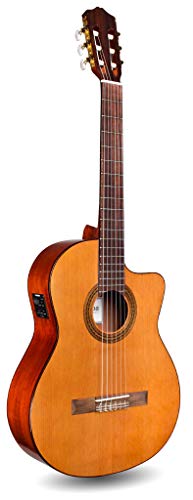
Cordoba C5CE
Players seeking a mid-range nylon-string acoustic-electric with a solid cedar top, cutaway, and built-in electronics for practice and performance.
Read the Cordoba C5CE review →
Guild DS-240
Intermediate players seeking a solid top dreadnought with a traditional look and purely acoustic performance at a mid-range price.
Read the Guild DS-240 review →
Epiphone J-200 Studio
A player who wants a jumbo acoustic electric with Fishman electronics and a gig bag in the mid-range price tier.
Read the Epiphone J-200 Studio review →Questions Buyers Ask
Epiphone J-200 Studio EC
See the current listing, price and included accessories.
About This Review
Mandrillis Team
The Mandrillis editorial team researches and compares audio and music gear using manufacturer documentation, verified specs and real buyer feedback, so you can make a confident purchase without wading through marketing claims.
Read our full research methodology.