Guitar & Bass Review
Fender Mini Tonemaster Review: Tiny Battery Powered Practice Amp
The Fender Mini Tonemaster is a budget mini amp built for portability and silent practice. It runs without an electrical outlet, offers gain, tone, and volume controls, and includes a headphone jack. The listing leaves speaker size, weight, and exact battery details unpublished, but its 1 watt output suggests a focused practice tool.
Our Verdict
Research Score 62/100The Fender Mini Tonemaster makes sense for a very specific player: someone who wants a tiny, battery powered amp for quiet practice and travel. The listing confirms a 1 watt output, simple controls, a tilt back leg, and a headphone jack. It does not include effects, amp models, Bluetooth, or app support. The lack of published speaker size, weight, and battery type is a drawback for spec oriented buyers. Still, for the budget price, this amp delivers Fender styling and honest portability. It is not a substitute for a larger practice amp or stage rig, but it fills a useful niche. Score: 62.
Editorial research score based on published specifications and documented features, not a customer rating or lab test.

Fender
Fender Mini Tonemaster
Best for: Electric guitar players who want a simple battery powered practice amp for travel and quiet home use.
Skip it if: You need built in effects, digital amp models, or enough volume to play with other musicians.
Check Price on AmazonWe may earn a commission at no extra cost to you.
Listing verified: October 2026
Who Should Buy It
Buy it if
- Beginners who want a no frills first practice amp
- Travelers and apartment dwellers who need headphone practice
- Fender enthusiasts looking for a budget mini amp
- Players who prefer analog controls over menu diving
Skip it if
- You need a stage ready amplifier with band level volume
- You want built in reverb, delay, or other effects
- You require Bluetooth streaming or app based preset editing
Key Specifications
| Power output | 1 watt |
| Speaker | Not published in listing |
| Amp models or channels | Not published in listing |
| Effects | None listed in product listing |
| Inputs and outputs | 1/8-inch headphone output; guitar input implied but not detailed |
| Headphone and line out | 1/8-inch headphone output |
| Bluetooth and app | Not published in listing |
| Weight | Not published in listing |
| Dimensions | Not published in listing |
| Included accessories | Not published in listing |
Overview
The Fender Mini Tonemaster is a compact practice amplifier positioned in the budget tier. The product listing describes it as a petite amp with a 1 watt output, designed for portability and quiet playing. It carries the classic Fender Tonemaster name but in a much smaller, battery friendly format. The blonde cosmetic gives it a vintage inspired look that matches larger Fender amps.
The listing highlights pure portability as a core selling point, noting that no electrical outlet is required. That suggests the amp runs on batteries, although the specific type and quantity are not published. For electric guitar players who want a grab and go solution, this mini amp is aimed at travel, hotel rooms, and late night practice.
Because this is a single product review based on the listing, the exact speaker size, weight, and dimensions are not stated. The feature set is intentionally minimal, with gain, tone, and volume controls, plus a headphone output. The overall impression is a simple analog practice tool rather than a feature packed modeling amp.
Amp Models and Tone
The Fender Mini Tonemaster does not advertise multiple amp models or digital modeling channels. The listing says players can explore many tones from crunch to clean using the gain, tone, and volume controls. On paper, this points to a traditional solid state or analog circuit that relies on gain adjustment rather than preset voicings.
The gain control allows the amp to move from cleaner sounds at lower settings to more distorted crunch tones as it is turned up. The tone control likely shapes the high end, while volume sets the overall level. Because no specific amp models are mentioned, the tonal character is best understood as a simplified Fender influenced voice rather than a collection of iconic amp simulations.
Without in-person testing, it is impossible to say exactly how the overdrive sounds or how much headroom the tiny speaker provides. Buyers report that mini amps of this class tend to sound boxy and somewhat compressed, which is an expected trade off at this size and price. The listing does not mention any speaker size, so the low end response and overall fullness remain unpublished.
Effects and Features
The listing does not include built in effects such as reverb, delay, chorus, or modulation. The only tone shaping controls are gain, tone, and volume. This keeps the amp extremely straightforward and eliminates menu diving, but it also means players who want ambient textures will need external pedals or a different amp.
One notable feature is the metal tilt back leg, which lets the player angle the small cabinet upward. This can help direct sound toward the ears when the amp is placed on a desk or floor. The blonde covering and mini Tonemaster styling give it a familiar Fender aesthetic that stands out among budget mini amps.
The headphone output is another practical feature, allowing silent practice through an eighth inch jack. The listing describes this as a way to practice in silence. No speaker emulated line out or USB audio is mentioned, so the headphone jack is the only quiet playing option.
Power, Speaker and Volume
The Fender Mini Tonemaster is rated at 1 watt of output, which is extremely low by conventional guitar amp standards. The listing describes this as a punch, but in real terms it is best suited for intimate practice volumes, not for competing with drums or a full band. The speaker size is not published in the listing, which makes it difficult to assess low end and projection.
Battery operation is implied by the statement that no electrical outlet is required. This is a major convenience for travel and outdoor use, though the battery type and expected runtime are not provided. The volume ceiling will be modest, so players should keep expectations in check for any setting beyond bedroom level.
Compared to larger practice amps like the Boss Katana 50 or Fender Mustang LT25, this Mini Tonemaster has a fraction of the output and no digital features, but it costs much less and is far more portable. The 1 watt rating puts it in the micro amp category, where the goal is convenience rather than room filling sound.
- 1 watt power output rated by the listing
- Runs without an electrical outlet, battery details not published
- 1/8 inch headphone output for silent practice
- Gain, tone, and volume controls for simple tone shaping
- Metal tilt back leg for angled placement
Build and Portability
The Fender Mini Tonemaster is designed for portability above all else. Its small footprint makes it easy to toss in a backpack or carry along with a guitar. The listing emphasizes travel use and calls it an excellent travel companion. Because the exact weight and dimensions are not published, the physical size can only be inferred from marketing photos and the mini descriptor.
The blonde cosmetic and metal tilt back leg suggest a degree of attention to style and practicality. The cabinet material is not specified, so it is unclear whether the shell is made of wood, plastic, or a composite. Most budget mini amps use lightweight materials, and the absence of a power cord further reduces carry weight.
Durability is also unknown. The listing does not claim roadworthy construction or ruggedness. For home and travel use, a simple mini amp like this is usually adequate, but players should not expect the heavy duty build of a larger Fender tube amp.
Connectivity and Apps
Connectivity on the Fender Mini Tonemaster appears minimal based on the listing. The only explicitly mentioned port is an eighth inch headphone output. There is no mention of Bluetooth, USB, auxiliary input, or footswitch support. This is expected for a budget analog mini amp, but it limits integration with modern practice setups.
The absence of Bluetooth and app control means there is no wireless audio streaming or preset editing. The listing does not mention any companion app, so the amp operates entirely from its three front panel controls. For players who enjoy backing tracks via phone, a separate speaker or wired auxiliary would be needed, and such an input is not confirmed.
The headphone output is the sole connectivity highlight. It allows fully silent practice, which is useful for late night sessions. However, the listing does not specify whether the headphone output includes speaker emulation or a simple signal tap, so the headphone tone may differ from the speaker tone.
Setup and Daily Use
Setting up the Fender Mini Tonemaster should be nearly effortless. The listing describes only three rotary controls: gain, tone, and volume. There are no menus, presets, or digital screens to navigate. A player simply plugs in an electric guitar, adjusts the knobs, and plays.
The battery operation means there is no power cable to manage, but players will need to keep spare batteries on hand if the amp is used frequently. The headphone jack lets a player practice without disturbing others. The metal tilt back leg can be deployed to angle the amp upward, which may improve clarity when sitting close.
Daily use is likely limited to practice, warm up, and casual jamming. The 1 watt output and unknown speaker size mean the amp will not fill a room with deep lows, but it should provide enough volume for a quiet room. The simplicity is a strength for beginners who might be overwhelmed by complex modeling amps.
Home Practice Versus Stage
The Fender Mini Tonemaster is clearly a home practice amplifier, not a stage amp. The 1 watt rating places it among the least powerful guitar amps available. The listing markets it for travel and silent practice, which reinforces its intended use case. Playing with a drummer or in a band would quickly overwhelm this amp.
For home use, the small size and headphone output are major advantages. Apartment dwellers and dorm residents can practice at low volume or in silence. The battery operation also makes it suitable for impromptu sessions on a porch, at a park, or in a hotel room, as long as the expectations are modest.
The mini amp category often sacrifices headroom and low end for portability. This Fender appears to follow that pattern. It should not be compared to larger solid state combos or tube amps, and the listing does not suggest otherwise. Stage use would require a microphone or direct solution, but such features are not included.
Who Should Buy It
This amp suits electric guitar beginners who want a simple, inexpensive first amp for practice. It is also a good fit for traveling musicians who need a battery powered option that fits in a bag. Fender fans who like the blonde cosmetic and are curious about the Tonemaster name may find it appealing as a novelty or backup.
Players who value silent practice through headphones will appreciate the dedicated output. Those who want a no frills analog control set will also feel at home. The amp is not for anyone expecting digital modeling, effects, or significant volume.
Verdict
The Fender Mini Tonemaster is a niche product that prioritizes portability and simplicity over performance. The published specification of 1 watt and battery operation, along with the headphone output, tells a clear story of a travel friendly practice tool. The blonde styling and tilt back leg add some charm, but the lack of detailed specs on speaker, weight, and battery life leaves a few unknowns.
For the budget asking price, this amp is unlikely to disappoint a player who understands its limits. It is not a modeling powerhouse like the Boss Katana or Positive Grid Spark, nor is it a serious tone machine. Instead, it is an honest mini amp for quiet moments and on the go playing.
Players should weigh the extreme portability against the very low power and minimal features. If silent practice and travel are the priorities, this Fender is a sensible buy. If you need effects, connectivity, or louder output, other budget practice amps will serve better.
Strengths and Limitations
Strengths
- Extremely portable and battery powered
- Simple gain, tone, and volume controls
- Headphone output for silent practice
- Metal tilt back leg for better projection
- Classic Fender blonde styling
- Budget friendly price tier
Limitations
- Very low 1 watt output limits volume
- No built in effects or amp models
- Speaker size and weight not published
- No Bluetooth, USB, or app support
How We Scored It
Scores reflect published specifications, documented features and value against the alternatives below. They are editorial research scores, not laboratory measurements.
Alternatives to Consider

Flatsons FBA-20
Beginners and casual home players who want a lightweight cordless practice amp with basic effects and easy phone recording.
Read the Flatsons FBA-20 review →
Marshall MS-4
The Marshall MS-4 is best for a player who wants a simple battery powered micro amp with classic Marshall stack looks for quiet practice and travel.
Read the Marshall MS-4 review →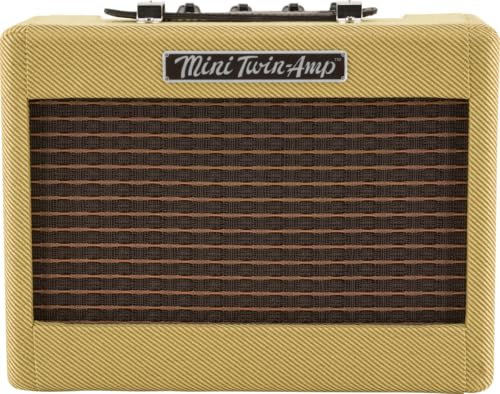
Fender Mini Deluxe
Beginners and travelers who want a small battery-powered Fender-style practice amp for headphone or quiet home use.
Read the Fender Mini Deluxe review →Questions Buyers Ask
Fender Mini Tonemaster
See the current listing, price and included accessories.
About This Review
Mandrillis Team
The Mandrillis editorial team researches and compares audio and music gear using manufacturer documentation, verified specs and real buyer feedback, so you can make a confident purchase without wading through marketing claims.
Read our full research methodology.