Guitar & Bass Review
Guild OM 120 Westerly Orchestra Acoustic Review: Solid Mahogany Value
The Guild OM 120 Westerly Orchestra Acoustic is a mid range all solid mahogany guitar with a 1 3/4 inch nut, bone nut and saddle, and an included polyfoam case. The listing omits scale length and fingerboard material, but the known features point to a warm, fingerstyle friendly acoustic.
Our Verdict
Research Score 80/100The Guild OM 120 Westerly Orchestra Acoustic offers a compelling set of known features: all solid African mahogany, bone nut and saddle, a vintage shaped neck, and a case, all in a mid range price tier. The orchestra body and 1 3/4 inch nut width point toward fingerstyle and light strumming use. The biggest drawbacks are the lack of electronics and the missing published specifications for scale length, fingerboard, bridge, and tuners. Even with those gaps, the known hardware and tonewood choices support a score of 80. This is a focused acoustic instrument for players who value solid wood and traditional appointments over built in amplification.
Editorial research score based on published specifications and documented features, not a customer rating or lab test.
Guild
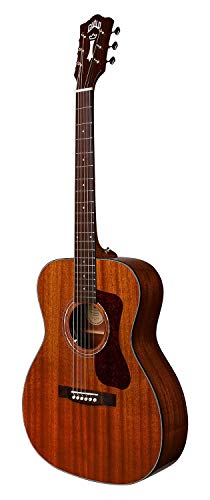
Guild OM 120 Westerly Orchestra Acoustic
Best for: Fingerstyle and strumming players who want an all solid mahogany orchestra acoustic with traditional appointments and a case included at a mid range price.
Skip it if: You need built in electronics, a cutaway, or detailed published specs for scale length and fingerboard material.
Check Price on AmazonWe may earn a commission at no extra cost to you.
Listing verified: October 2026
Who Should Buy It
Buy it if
- Players upgrading from a laminate beginner guitar
- Fingerstyle guitarists who want a 1 3/4 inch nut width
- Singer songwriters and folk players who prefer warm mahogany tone
- Acoustic players who want a hard case included
Skip it if
- You plan to plug in on stage without adding an aftermarket pickup
- You want a cutaway for higher fret access
- You require a full spec sheet before buying
Key Specifications
| Body | Solid African mahogany top, back and sides; mid sized orchestra body |
| Neck and fingerboard | Vintage shaped Guild neck; 1 3/4 inch nut width; fingerboard material not published in listing |
| Scale length | Not published in listing |
| Strings | Not published in listing |
| Pickups | None listed; acoustic guitar |
| Controls | None listed |
| Bridge | Bone saddle; bridge material not published in listing |
| Tuners | Not published in listing |
| Finish | Natural gloss |
| Included accessories | Lightweight polyfoam case; listing title also mentions a premium gig bag |
Overview
Guild positions the OM 120 Westerly Orchestra Acoustic as a mid range, all solid wood acoustic guitar with a traditional orchestra body. Published details include a solid African mahogany top, back and sides, a natural gloss finish, bone nut and saddle, mother of pearl rosette, tortoiseshell pickguard, and a vintage shaped Guild neck. It ships with a lightweight polyfoam case, and the listing title also mentions a premium gig bag.
This model sits between beginner laminate instruments and higher priced all solid American guitars. The feature set emphasizes natural materials and vintage inspired appointments over modern electronics. Several important specifications, including scale length, fingerboard material, bridge wood, and tuners, are not published in the listing, which limits a full paper evaluation.
The Westerly Collection name positions this model within Guild's more affordable all solid line. The known materials and case suggest strong value for a mid range acoustic, but the unknown specs leave room for caution. Buyers who prioritize solid wood and traditional looks over detailed technical documentation will find the most to like.
Body, Neck and Playability
The body is a mid sized orchestra shape made from solid African mahogany top, back and sides. An orchestra body generally offers a comfortable seated and standing feel compared to a large dreadnought, and the listing describes the guitar as equally suited for strumming and fingerpicking. Solid mahogany typically produces a warm, mid focused voice with less high frequency shimmer than spruce.
The neck is a vintage shaped Guild design with a 1 3/4 inch nut width. That wider string spacing gives fingerstyle players more room between strings and can reduce accidental muting, but it may feel large for players accustomed to a 1 5/8 inch electric guitar nut. The listing does not state the fingerboard material, neck wood, fret count, or scale length, so comfort and reach details cannot be fully confirmed.
The absence of a listed scale length is notable because scale length affects string tension and fret spacing. A 1 3/4 inch nut on an orchestra guitar often pairs well with fingerstyle, but without the scale measurement, players cannot compare reach to a familiar model. The listed solid mahogany body still gives a strong starting point for tone expectations.
Pickups and Tone
No pickups, preamp, or output jack are listed. This is an acoustic only instrument, unlike many mid range guitars that include an under saddle transducer or soundhole pickup. Players who want to amplify will need an aftermarket pickup or a microphone, and the listing provides no details on any installed electronics.
The expected tone from an all solid mahogany orchestra guitar is warm, sweet, and balanced, with a strong fundamental and a smooth midrange. The bone nut and saddle listed by Guild may contribute to clearer note definition and better tuning stability than synthetic materials. The orchestra body can add focus and balance, making it workable for both light strumming and fingerpicking.
The listing does not state string brand or gauge, so the factory string feel and brightness are unknown. Players may need to experiment with phosphor bronze or 80/20 strings to shape the tone.
Hardware and Electronics
Listed hardware includes a bone nut and saddle, mother of pearl rosette, a period correct tortoiseshell pickguard, and the iconic Chesterfield headstock emblem. These are traditional appointments that give the guitar a vintage oriented look. The piece that has the largest practical effect on tone is the bone saddle, because it transfers string vibration to the soundboard.
Missing from the published details are bridge material, tuner brand or ratio, strap buttons, and any electronic controls. Without tuner and bridge specs, tuning stability and intonation adjustments are harder to evaluate on paper. The absence of electronics is notable for a mid range instrument, but it keeps the design simple and acoustic.
The included lightweight polyfoam case is a meaningful addition at this price. Many mid range acoustics ship with only a gig bag, so a rigid case improves protection for humidity shifts and transport. The listing title mentions a premium gig bag, but the bullet describes a polyfoam case, which is likely the more protective option.
- Solid African mahogany top, back and sides
- Bone nut and saddle
- 1 3/4 inch nut width
- Vintage shaped Guild neck
- Mother of pearl rosette
- Lightweight polyfoam case included
Build Quality and Finish
Guild lists a natural gloss finish over the solid wood body. Natural wood varies in color richness and grain, so the delivered guitar may appear lighter or darker than product photos. This is typical for solid tonewoods and not a defect. The use of all solid wood generally allows the guitar to open up and respond over time.
The mother of pearl rosette and Chesterfield emblem suggest attention to vintage detail. However, the listing does not publish fingerboard radius, neck joint type, bracing pattern, or internal construction details. That makes a complete build quality assessment impossible without physical inspection, which this review does not claim.
Because the finish is gloss, minor surface reflections and fingerprints are normal. The all solid construction means the guitar will react to seasonal humidity changes, so a case humidifier is worth considering. The absence of bracing details prevents a deeper assessment of top stiffness and long term structural stability.
Setup Out of the Box
The listing does not state the factory action, string gauge, relief, or nut slot depth. For that reason, setup out of the box cannot be verified from the published information. The included lightweight polyfoam case is helpful, because it offers more protection than a basic gig bag during shipping and storage.
Acoustic guitars often need minor adjustments for personal playing style and local climate. A bone saddle is simple for a qualified tech to lower or replace. Without a listed scale length or truss rod type, players should plan for a professional setup after purchase if they prefer very low or very high action.
Without a listed string gauge, players cannot know if the factory setup favors light or medium strings. Most acoustic guitars arrive with a moderate action that suits average playing, but personal preference varies. A setup at a local shop can adjust nut slots, saddle height, and truss rod relief to match a player's style.
Daily Use and Practice
The orchestra body is likely comfortable for daily practice on a couch or at a desk, and the wider nut provides extra space for fingerpicking exercises. The all solid mahogany voice is easy on the ears, which suits long practice sessions and songwriting. The guitar is acoustic only, so quiet practice with headphones is not possible.
The included lightweight polyfoam case makes it practical to take the guitar to lessons, jams, or small acoustic gigs with a microphone. Since the finish is gloss and the wood is solid, basic humidity and temperature care matters more than with a laminate guitar. The listing does not mention a cutaway, so access to frets above the body joint is limited.
Because this is an acoustic only guitar, practice is limited to acoustic volume, which is fine for solo and small room use. The orchestra body may sit lower on the lap than a dreadnought, which some players find more comfortable for long sessions. The included case makes it easy to store the guitar safely between practice sessions.
Versatility and Styles
According to the product listing, the OM 120 is equally suited for strumming and fingerpicking. That suggests it works for folk, blues, singer songwriter, worship, and light flatpicking. The orchestra size and mahogany tonewood generally produce a balanced voice that does not overwhelm vocals, making it a good companion for singers.
It is not the obvious choice for bluegrass flatpicking where a dreadnought body often provides more projection. The lack of a pickup reduces plug and play stage versatility, though an aftermarket soundhole pickup can be added. The vintage inspired natural gloss appearance fits traditional and modern settings.
For recording or home studio use, the balanced orchestra voice and lack of built in electronics mean a condenser microphone can capture the natural tone without preamp coloration. The all mahogany body often records well with minimal equalization. Players who want a direct line to a PA will need to factor in an aftermarket pickup installation.
Who Should Buy It
This guitar is best for players who want an all solid wood acoustic with traditional features and a case included at a mid range price. Fingerstyle players will likely appreciate the 1 3/4 inch nut width, while strummers who want a warm, balanced tone may also like the mahogany orchestra body.
The Guild OM 120 suits acoustic players who do not need built in electronics or a cutaway. It is a practical upgrade from a laminate beginner guitar for someone who wants solid woods and better hardware details like a bone nut and saddle. Buyers who are comfortable with unknown specs such as scale length and fingerboard material will be less frustrated.
The Guild OM 120 is not aimed at beginners who need a low cost starter pack, but it is attainable for committed students. The wider nut and all solid woods make it a step up from typical beginner guitars. Owners should be prepared to maintain solid wood with proper humidity control.
Verdict
The Guild OM 120 Westerly Orchestra Acoustic offers a compelling set of known features: all solid African mahogany, bone nut and saddle, a vintage shaped neck, and a case, all in a mid range price tier. The orchestra body and 1 3/4 inch nut width point toward fingerstyle and light strumming use.
The biggest drawbacks are the lack of electronics and the missing published specifications for scale length, fingerboard, bridge, and tuners. Even with those gaps, the known hardware and tonewood choices support a score of 80. This is a focused acoustic instrument for players who value solid wood and traditional appointments over built in amplification.
In a crowded mid range acoustic market, the OM 120 stands out for its all solid mahogany build and included case. The missing specifications prevent a perfect score, but the known features align well with fingerstyle and singer songwriter work. Overall, this is a well positioned acoustic for players who know what they want from a traditional orchestra guitar.
Strengths and Limitations
Strengths
- Solid African mahogany top, back and sides
- Bone nut and saddle
- 1 3/4 inch nut width for fingerstyle comfort
- Vintage shaped Guild neck with Chesterfield emblem
- Includes lightweight polyfoam case
- Natural gloss finish with mother of pearl rosette
Limitations
- No built in pickup or electronics
- Fingerboard, scale length, bridge and tuner specs not published
- Only one finish listed
- No cutaway mentioned, so upper fret access limited
- All solid wood requires humidity care
How We Scored It
Scores reflect published specifications, documented features and value against the alternatives below. They are editorial research scores, not laboratory measurements.
Alternatives to Consider

Gretsch G5420T Electromatic Classic Hollow Bigsby
Players seeking a mid-range hollowbody electric guitar with a Bigsby vibrato and classic Gretsch visual identity.
Read the Gretsch G5420T Electromatic Classic Hollow Bigsby review →Questions Buyers Ask
Guild OM 120 Westerly Orchestra Acoustic
See the current listing, price and included accessories.
About This Review
Mandrillis Team
The Mandrillis editorial team researches and compares audio and music gear using manufacturer documentation, verified specs and real buyer feedback, so you can make a confident purchase without wading through marketing claims.
Read our full research methodology.