Guitar & Bass Review
Jackson JS3 Spectra Bass Review: Versatile Active EQ
The Jackson JS3 Spectra Bass is a lower mid range four string with a compound radius neck, dual humbuckers with coil split, active three band EQ with bypass, and a HiMass bridge. This review evaluates the published specifications and expected performance for versatile bass players.
Our Verdict
Research Score 77/100The Jackson JS3 Spectra Bass offers an unusually broad feature set for a lower mid range instrument. The listing highlights a poplar body, a graphite reinforced maple neck with a compound radius fingerboard, dual passive humbuckers with coil split, a blend control, and an active three band EQ that can be bypassed. A HiMass bridge rounds out the package. Missing details such as tuner quality, string brand, and factory setup prevent a complete assessment. On paper, it scores well for versatility and value, making it a strong candidate for players who need modern tonal options without spending more. The lack of an included case is a minor drawback. Overall, the JS3 is a sensible choice for those who prioritize flexibility and playability.
Editorial research score based on published specifications and documented features, not a customer rating or lab test.

Jackson
Jackson JS3 Spectra Bass
Best for: Players seeking a versatile lower mid-range four string with active EQ and coil split options.
Skip it if: You want a traditionally simple passive bass or prefer a package that includes a case.
Check Price on AmazonWe may earn a commission at no extra cost to you.
Listing verified: October 2026
Who Should Buy It
Buy it if
- Beginners wanting room to grow with modern features
- Intermediate players needing a flexible backup bass
- Bassists who use both active and passive tones
- Players who appreciate a 24 fret neck
Skip it if
- You require a known high end hardware set
- You want a bass with an included case
- You prefer a simple control layout without active EQ
Key Specifications
| Body | Poplar |
| Neck and fingerboard | Bolt-on maple neck with graphite reinforcement and scarf joint; 12 to 16 inch compound radius, 24 fret laurel fingerboard |
| Scale length | 34 inches |
| Strings | 4-string bass; string gauge and brand not published in listing |
| Pickups | Passive Jackson medium-output humbucking bridge and neck pickups |
| Controls | Pickup coil split, blend control, 3-band EQ (active only), volume control with push/pull selector to bypass active circuit |
| Bridge | HiMass bridge |
| Tuners | Not published in listing |
| Finish | Snow White |
| Included accessories | Case not included |
Overview
The Jackson JS3 Spectra Bass is a lower mid range four string built around a poplar body and a bolt on maple neck. The listing highlights a 34 inch scale, a 24 fret laurel fingerboard with a compound radius, and a pair of Jackson medium output humbucking pickups. The control set includes coil split, a blend, a three band active EQ, and a push pull volume to bypass the active circuit. A HiMass bridge rounds out the hardware package.
This specification set is more ambitious than many basses in the same price tier. The active EQ with true bypass, coil splitting, and 24 fret access are features often found on more expensive instruments. On paper, the JS3 Spectra Bass appears designed for players who want a flexible modern tone without moving up to a premium price bracket. The listing positions it as a versatile workhorse for practice, rehearsal, and gigging.
Body, Neck and Playability
The body is listed as poplar, a common tonewood in affordable basses known for its relatively light weight and balanced sound. The listing does not provide the exact weight, so players who prioritize a lightweight instrument cannot confirm that from the published data. The body shape is part of the Spectra series, which typically has a contoured, modern offset design, but the listing does not detail the body carve or thickness.
The neck is a bolt on maple construction with graphite reinforcement and a scarf joint. Graphite rods are intended to add rigidity and reduce warping from temperature or humidity changes. A scarf joint is often used to strengthen the angled headstock area. These are practical build details that suggest attention to neck stability. The fingerboard is laurel with 24 frets and a compound radius of 12 to 16 inches.
A compound radius means the fingerboard is rounder near the nut and flatter as you move up the neck. This can feel more natural for chording in lower positions while allowing lower action and easier bends in the upper register. The 34 inch scale length is standard for long scale basses, providing familiar string tension and spacing. The listing does not specify nut width or neck profile, so individual hand fit remains an unknown.
Pickups and Tone
The JS3 Spectra Bass uses two passive Jackson medium output humbucking pickups, one in the bridge position and one in the neck position. The listing describes them as medium output, which typically means they produce a strong signal without being overly hot. Passive pickups do not require battery power, so the bass can still produce sound if the active preamp is bypassed or the battery is dead.
The coil split feature allows each humbucker to be split into a single coil. This expands the tonal range from thick, warm humbucker sounds to brighter, thinner single coil tones. A blend control lets you mix the two pickups continuously, so you can favor the punchy bridge pickup, the rounder neck pickup, or any balance between them.
The active three band EQ operates only when the active circuit is engaged, as noted in the listing. This gives you independent boost and cut for bass, mid, and treble frequencies. Combined with coil split and blend, the JS3 can cover a broad range of tones, from deep and smooth to aggressive and cutting. The listing does not publish the center frequencies or Q of the EQ bands, so the exact tonal shaping character is not fully specified.
Hardware and Electronics
The bridge is a HiMass design, which the listing names as a feature for sustain, balance, and versatility. A high mass bridge typically uses more metal than a standard bent plate bridge, which can improve string vibration transfer and sustain. The listing does not state the bridge material, saddle type, or string spacing.
The control layout includes a volume control with a push pull selector to bypass the active circuit, a blend control, and a three band EQ. Coil split is listed as a feature, but the listing does not explicitly say which control engages it. It may be a push pull on another knob or a separate switch. The listing also does not mention the battery type or battery compartment location.
- HiMass bridge for sustain and stability
- Push pull active bypass on volume control
- Three band EQ for bass, mid, and treble shaping
- Coil split for single coil tones
- Blend control for pickup mixing
- No included case
Build Quality and Finish
The listed build materials are consistent with a lower mid range bass: a poplar body, a maple neck, and a laurel fingerboard. The graphite reinforcement and scarf joint are welcome construction details that can improve long term neck stability. The finish is Snow White, a solid gloss color that gives the bass a clean, modern look.
The listing does not state the finish type on the neck or the back of the body, nor does it mention any binding or cosmetic upgrades. Without a in-person inspection, we cannot assess the quality of fretwork, nut slots, or overall fit and finish. Jackson has a reputation for producing consistent budget instruments, but individual examples can vary.
The lack of published details on tuners and other hardware leaves some uncertainty about long term durability. The HiMass bridge is a positive sign, but the tuning machines are not described. Buyers should expect that this bass, like many at this price point, may benefit from a professional setup and possibly minor hardware upgrades over time.
Setup Out of the Box
The product listing does not describe the factory setup specifications for string action, neck relief, or intonation. Lower mid range basses often ship with a playable but not perfectly adjusted setup, but we cannot confirm that for this specific model. The 34 inch scale and 24 fret fingerboard are standard, so most guitar techs can set it up easily.
The HiMass bridge and the graphite reinforced neck should hold adjustments well, based on typical design principles, but the listing does not mention the truss rod type or adjustment location. We cannot state whether the bass arrives with a tool kit or setup instructions.
If you buy this bass, it is wise to budget for a professional setup or learn to adjust the truss rod, bridge saddles, and intonation yourself. A well adjusted JS3 will likely play much better than one straight from the box, but that is true for most instruments in this price range.
Daily Use and Practice
For daily practice, the active bypass is a practical feature. Since the pickups are passive, you can play without a battery if you pull the volume knob to bypass the preamp. This is useful if you forget to unplug the cable, which drains the battery in many active basses. The listing does not state whether the bass has an active passive LED indicator.
The compound radius fingerboard and 24 frets make the upper register accessible, which is nice for practice routines that span the whole neck. The poplar body is likely moderate in weight, but without a published figure, players who stand for long periods cannot be certain. The bass does not come with a case, so you will need a gig bag or hard case for safe transport.
The blend and EQ controls allow you to shape your practice tone quickly, whether you want a clean fundamental or a scooped midrange. The coil split adds another layer of variety without needing to change basses. Overall, the JS3 should be a practical daily player for those who do not mind the missing case and potential setup work.
Versatility and Styles
The feature set of the JS3 Spectra Bass is geared toward versatility. The dual humbuckers with coil split cover both thick, modern humbucker tones and brighter single coil sounds. The blend control lets you dial in everything from a soloed bridge bark to a round neck thump.
The active three band EQ allows you to boost or cut specific frequencies, which is useful for fitting into a band mix. You can add low end for a modern R&B tone, boost mids for rock, or cut mids for a scooped metal sound. The passive bypass gives you a more traditional response if you prefer a simpler signal path.
On paper, the JS3 can handle funk, pop, rock, metal, and many other styles. The medium output pickups should not be so hot that they distort a clean amp, but they can drive an overdrive pedal nicely. The listing does not include sound clips, so the exact tonal character of the Jackson pickups remains an unknown, but the control options are extensive for the price.
Who Should Buy It
The Jackson JS3 Spectra Bass is a strong option for a player who wants a modern, flexible four string without spending a lot of money. The compound radius neck, 24 frets, active EQ, and coil split are features usually found on basses costing more. Beginners who want room to grow will appreciate the tonal variety.
Intermediate players looking for a backup bass or a mod platform may also find value here. The bolt on neck and standard body shape make it easy to work on. The active bypass means you can still use it if the preamp has an issue, and the passive pickups will work with any amp or pedal.
This bass is less suitable for traditionalists who want a simple, no frills passive instrument with a vintage voice. If you need a case included or demand a known high end hardware package, you should consider other options. But for the price tier, the JS3 offers a lot of versatility on paper.
Verdict
The Jackson JS3 Spectra Bass delivers an impressive list of specifications for a lower mid range instrument. The combination of a poplar body, a graphite reinforced maple neck with a compound radius fingerboard, dual humbuckers with coil split, a blend control, an active three band EQ with bypass, and a HiMass bridge is compelling.
The main unknowns are the quality of the tuners, the factory setup, and the actual sonic character of the pickups. The listing does not provide those details, and without in-person testing we cannot confirm them. That said, the published features point to a bass that should be highly flexible and playable after a proper setup.
The lack of an included case is a minor inconvenience, and the unspecified hardware leaves some risk. Despite that, the JS3 Spectra Bass earns a solid score for its feature set and value. It is a smart choice for players who want modern tonal options without moving up to a premium price bracket.
Strengths and Limitations
Strengths
- Compound radius fingerboard enhances playability
- Active 3-band EQ with passive bypass
- Coil split for single coil tones
- 24-fret access for upper register
- HiMass bridge for added sustain
- Lower mid-range price
Limitations
- No case included
- Tuner quality not specified
- String brand and gauge not published
- Factory setup details not provided
- Pickup character not fully known from listing
How We Scored It
Scores reflect published specifications, documented features and value against the alternatives below. They are editorial research scores, not laboratory measurements.
Alternatives to Consider

Fender CB-60SCE Acoustic Bass
Acoustic bass players who need a plug-in capable instrument for practice, songwriting, and light stage use in the lower mid-range tier.
Read the Fender CB-60SCE Acoustic Bass review →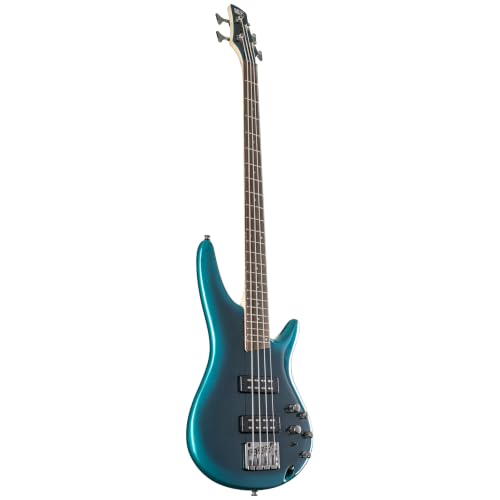
Ibanez SR300E
Players seeking a lower midrange 4-string bass with a contoured body and dual humbucking pickups for modern styles.
Read the Ibanez SR300E review →
Jackson JS2 Concert Bass
Players who want a modern, rock oriented lower mid-range bass with 24 frets, high output humbuckers, and a satin black finish.
Read the Jackson JS2 Concert Bass review →Head-to-Head Comparisons
- Jackson JS3 Spectra Bass vs Fender CB-60SCE Acoustic Bass Compare →
Questions Buyers Ask
Jackson JS3 Spectra Bass
See the current listing, price and included accessories.
About This Review
Mandrillis Team
The Mandrillis editorial team researches and compares audio and music gear using manufacturer documentation, verified specs and real buyer feedback, so you can make a confident purchase without wading through marketing claims.
Read our full research methodology.