Guitar & Bass Review
Luna Aurora Borealis 3/4 Review: Compact Starter Value
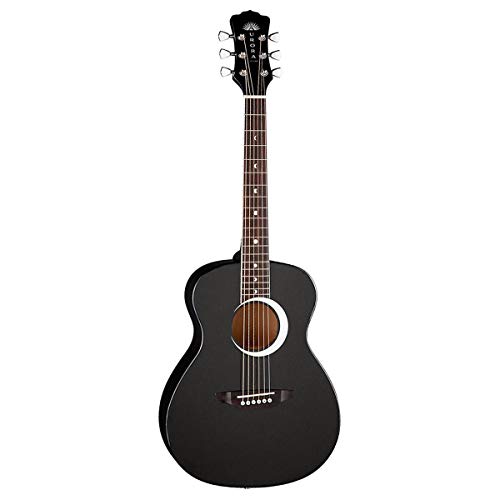
The Luna Aurora Borealis 3/4 is a lower mid-range cutaway acoustic aimed at young or small framed players. The listing highlights easy playability, moon phase fretmarkers, and a crescent rosette, but leaves out most material and hardware details. This review examines what is known and what remains unpublished.
Our Verdict
Research Score 61/100The Luna Aurora Borealis 3/4 positions itself as an approachable, styled entry point for beginning guitarists. Its compact cutaway body and moon phase inlays give it visual and ergonomic appeal, especially for younger players. However, the listing omits almost every meaningful specification, from top wood to scale length to tuner type. That makes an objective assessment difficult. Buyers are essentially betting on Luna's brand reputation and the promise of easy playability rather than any verifiable specs. For a lower mid-range price, it competes against more transparent options like the Yamaha FG800 or Fender CD-60S, but its smaller size and unique look may be exactly what some players want. If you accept the unknowns and prioritize comfort and style, this could work as a practice guitar.
Editorial research score based on published specifications and documented features, not a customer rating or lab test.
Luna
Luna Aurora Borealis 3/4
Best for: Young beginners or smaller players who want an affordable, visually distinctive 3/4 acoustic with a cutaway.
Skip it if: You need a full-size acoustic with detailed published specs, onboard electronics, or a guitar for aggressive strumming and performance.
Check Price on AmazonWe may earn a commission at no extra cost to you.
Listing verified: October 2026
Who Should Buy It
Buy it if
- Young players starting lessons
- Adults with smaller hands or a preference for a compact body
- Buyers who like Luna's moon phase aesthetic
- Those seeking an affordable second guitar for travel or practice
Skip it if
- You require a full-size dreadnought or grand auditorium
- You need published tonewood and hardware specifications before buying
- You want an acoustic-electric with a preamp and pickup
Key Specifications
| Body shape | Cutaway, 3/4 size (exact body shape not published in listing) |
| Top | Not published in listing |
| Back and sides | Not published in listing |
| Neck and fingerboard | Not published in listing |
| Scale length | Not published in listing |
| Nut width | Not published in listing |
| Electronics | Not published in listing |
| Tuners | Not published in listing |
| Finish | Black Pearl (specific finish material not published in listing) |
| Included accessories | Not published in listing |
Overview
The Luna Aurora Borealis 3/4 is a compact acoustic guitar designed primarily for beginners and young players. According to the product listing, this model belongs to Luna's Aurora line, which the brand describes as offering an affordable entry point paired with easy to play design features. The guitar has a petite cutaway body and a black pearl finish, and it carries Luna's signature visual touches, specifically moon phase fretmarkers and a crescent moon rosette. These details give the Aurora the same aesthetic identity as Luna's larger models.
The listing positions this guitar as a student instrument, not a professional tool. It emphasizes comfort and accessibility over high end specifications. That is a common approach for lower mid-range acoustics, where the focus is on getting a playable instrument into a beginner's hands without overwhelming them with technical details. However, that also means the listing omits almost every spec that a more experienced buyer might want to evaluate.
In this review, we work strictly with the information provided in the listing. We will not guess at tonewoods, scale length, nut width, or hardware components. Instead, we will explain what the published details suggest about the guitar, and we will clearly flag the areas where the listing is silent. This approach is intended to help you decide whether the Aurora Borealis 3/4 is worth considering without pretending we know more than the data allows.
Body, Neck and Playability
The body is described as petite and cutaway, and the title confirms it is a 3/4 size instrument. A 3/4 body is noticeably smaller than a full-size dreadnought or grand auditorium, which can make it easier for a young player to reach around the upper bout and hold the guitar comfortably. The cutaway design allows the fretting hand to access the higher frets more easily than a traditional non-cutaway shape. The listing does not state the exact body shape, such as concert, parlor, or mini dreadnought, so buyers cannot know the precise internal volume or waist profile.
The neck is likely intended to be beginner friendly because the listing highlights easy to play design features. However, the published information does not include scale length, nut width, neck profile, or fingerboard material. Those are important factors for playability. A shorter scale length, for example, would reduce string tension and make fretting easier, but we cannot confirm that from the listing. The moon phase fretmarkers are a visual feature only; they do not affect feel or performance.
On paper, the combination of a small body and a cutaway suggests a guitar that should be comfortable for a smaller person or a child. But without knowing the nut width or string spacing, it is impossible to say how cramped or roomy the fretboard will feel. Buyers who have very small hands may find it workable, while those with larger fingers might struggle if the neck is narrow. The listing does not provide enough data for a definitive playability rating.
Tone and Projection
The listing says the petite cutaway bodies deliver true sound, but it does not specify the top wood, back and sides wood, or bracing pattern. Those are the primary drivers of acoustic tone. Without that information, any detailed tone prediction would be speculation. In general, a 3/4 body produces less low end and overall volume than a full-size dreadnought. It may have a more focused midrange and a quicker decay, which can be pleasant for fingerpicking and light strumming but less satisfying for heavy flatpicking or aggressive rhythm work.
The cutaway itself reduces the internal air volume slightly, which can further reduce bass response compared to a non-cutaway of the same size. Many small guitars compensate with a brighter, more articulate voice. Buyers report that small bodied acoustics often excel at melody and arpeggiated parts, even if they lack the projection needed for a jam session. But again, without knowing if the top is solid or laminate, or what wood is used, any assessment remains general.
The listing's claim of true sound is a marketing phrase, not a technical description. It suggests the guitar is not a toy, but an actual musical instrument. That is fair for a beginner model, but it does not tell us whether the tone leans warm, bright, or balanced. Compared to a Martin LX1 or Taylor GS Mini, which publish their tonewoods and scale lengths, the Luna Aurora Borealis 3/4 is far more opaque. That lack of transparency makes it hard to place the guitar in a tonal hierarchy.
Hardware and Electronics
The listing does not publish any details about the tuners, bridge, saddle, nut, or other hardware. It also does not mention any electronics, preamp, or pickup. In the lower mid-range price tier, acoustic guitars often come with die cast tuners and a basic plastic nut and saddle, but we must not assume that here. The absence of any electronics note strongly suggests this is an acoustic only model, but it is not explicitly stated as such.
Without tuner specifications, it is impossible to evaluate tuning stability or gear ratio. Beginner guitars sometimes suffer from tuners that slip or feel imprecise, but some budget models now include surprisingly smooth sealed tuners. The moon phase markers and crescent rosette are decorative elements, not hardware, though they do contribute to the guitar's overall appeal.
We can list what the guitar does have based on the listing: a cutaway body, a neck with moon phase fretmarkers, and a sound hole rosette shaped like a crescent moon. Everything else is unpublished.
- Cutaway 3/4 body
- Moon phase fretmarkers on the neck
- Crescent moon rosette around the sound hole
- No electronics or pickup mentioned
- Tuner type and material not published
- Black Pearl finish noted in the listing title
Build Quality and Finish
The listing title includes the phrase Black Pearl, which likely refers to the color or finish of the guitar. However, the listing does not state whether the finish is gloss, satin, or matte, nor does it specify the type of finish material. The body wood and neck wood are also unpublished, as are the construction methods. This makes it impossible to assess durability or long term stability from the data provided.
Luna Guitars has built a reputation for producing visually distinctive instruments at accessible prices. Many of their models use attractive inlay work and artistic rosettes, which this Aurora model clearly echoes with its moon phase design. But aesthetic appeal does not guarantee structural quality. Without knowing whether the top is solid or laminate, or whether the neck joint is dovetail or bolt on, we cannot evaluate build integrity.
In this price tier, buyers should expect basic but functional construction. The guitar may be made in a factory overseas with cost saving measures like laminated woods and simplified bracing. That can still produce a perfectly usable beginner instrument. The risk is in the unknown: if the listing does not publish materials, there is no way to verify quality control or predict how the guitar will hold up over time.
Setup Out of the Box
The listing does not mention any factory setup specifications, such as string action height at the 12th fret, neck relief, or string gauge. Many budget acoustic guitars ship with action that is slightly high, which can make fretting more difficult for a beginner. Higher action also increases finger soreness, which is already a challenge for new players. Some brands deliberately set their beginner models with lower action to improve comfort, but we cannot verify that here.
The Luna Aurora line is marketed as easy to play, which suggests the company may pay attention to the initial setup. However, that is an inference, not a published fact. Temperature and humidity changes during shipping can also affect neck relief and action, so even a well set up guitar may need a tweak after arriving. Buyers should consider budgeting for a professional setup if the guitar feels uncomfortable out of the box.
Without knowing the scale length or string gauge, it is hard to predict how the guitar will feel. A short scale with light strings would be gentler on young fingers. If the scale is standard and the strings are medium, the smaller body may not fully offset the tension. The listing's silence on these points means setup and playability are a roll of the dice.
Daily Use and Practice
For a young player, the Luna Aurora Borealis 3/4 has several practical advantages. The compact body is easier to hold on a lap or with a strap, and the cutaway makes it less awkward to reach the upper frets during lessons. The moon phase fretmarkers can serve as a fun visual guide for learning positions, and the distinctive look may encourage a child to pick up the instrument more often.
As a practice guitar, the 3/4 size is also convenient for travel or for playing in tight spaces. It will not be as loud as a full-size acoustic, but that can be a benefit in a family home or dorm room. The lack of electronics means this guitar is purely acoustic, so practice does not require an amp or cable. That keeps things simple for a beginner.
The main drawback for daily use is the unknown action and string feel. If the guitar arrives with high action, a young player may become frustrated quickly. Likewise, if the neck is too narrow or too wide for the player's hands, practice sessions will be less productive. These are not dealbreakers, but they are risks that cannot be evaluated from the listing alone.
Versatility and Styles
A 3/4 body is inherently less versatile than a full-size guitar because it cannot produce the same bass response or projection. That limits its usefulness for bluegrass flatpicking, heavy strumming, or performing with other acoustic instruments. However, for fingerstyle, light strumming, and learning basic chords and melodies, a small cutaway can work very well. The cutaway also makes it viable for lead playing up the neck, which some small guitars without a cutaway struggle to offer.
The listing does not specify the nut width or string spacing, so it is unclear how well the guitar will handle fingerstyle versus flatpicking. A narrower nut may make fingerstyle cramped, while a wider nut would be better for that style. Given that the guitar is aimed at beginners, it is likely set up for general purpose playing rather than any specific genre. Players who want to explore alternate tunings or slide may find a full-size model more suitable.
Compared to a Taylor GS Mini or Martin LX1, both of which are known for their surprising tonal versatility despite their small size, the Luna Aurora Borealis 3/4 has no published specs to support any such claim. It may be equally capable, but we cannot say so without more information. On paper, it is best suited to learning, practice, and informal playing rather than recording or performance.
Who Should Buy It
This guitar is clearly aimed at young beginners and smaller players who want a comfortable, affordable instrument with a distinctive look. The moon phase fretmarkers and crescent rosette set it apart from plain budget guitars, which may appeal to a player who wants something personal. Parents shopping for a child's first guitar might appreciate the 3/4 size and the lower mid-range price.
Adults who prefer a smaller body for couch playing or travel could also find this guitar useful, provided they are willing to accept the unknown specifications. The cutaway adds a bit of upper fret access that some other small guitars lack. If you already own a full-size acoustic and want a compact second instrument for practice, this could be a reasonable option.
However, this guitar is not for players who need detailed specs before buying. If you want to know the top wood, scale length, nut width, or tuner type, the listing will frustrate you. It also is not ideal for anyone who needs an acoustic-electric for gigging or recording with a direct signal. In those cases, more transparent models like the Yamaha FG800 or an entry level Ibanez or Fender would be easier to evaluate.
Verdict
The Luna Aurora Borealis 3/4 offers an appealing package for a specific buyer: a young or small framed beginner who values comfort, style, and affordability. The compact cutaway body, moon phase inlays, and crescent rosette give it a personality that many budget guitars lack. The listing's emphasis on easy playability suggests the company is aware of the needs of new players.
But the listing leaves too many critical specifications unpublished. Without knowing the top wood, back and sides material, scale length, nut width, or hardware quality, we cannot responsibly give this guitar a higher score. It may turn out to be a perfectly good beginner instrument, but the data does not prove it. Buyers who prioritize transparency and verifiable specs should look elsewhere.
In the lower mid-range price tier, there are established full-size models from Yamaha and Fender that publish their materials and have strong reputations. The Luna Aurora Borealis 3/4 competes on size, style, and brand identity rather than documented specs. If those factors matter to you, and you are willing to accept the unknowns, it could be a satisfying first guitar. Otherwise, proceed with caution.
Strengths and Limitations
Strengths
- Compact 3/4 cutaway body suited to younger or smaller players
- Distinctive Luna moon phase fretmarkers and crescent rosette
- Positioned as an affordable entry point into the Luna brand
- Cutaway design may improve access to upper frets
- Lower mid-range price tier for a styled beginner guitar
Limitations
- Listing does not publish tonewoods or neck materials
- No included electronics or preamp mentioned
- Scale length and nut width are not stated
- Tuner quality and setup out of the box are unknown
- Small body may limit bass response and projection
How We Scored It
Scores reflect published specifications, documented features and value against the alternatives below. They are editorial research scores, not laboratory measurements.
Alternatives to Consider

Yamaha FS800J
Fingerstyle players, smaller framed players, and beginner to intermediate acoustic guitarists who want a solid spruce top in a compact concert body at a lower mid range price.
Read the Yamaha FS800J review →
Yamaha FS800
Players who want a lower mid-range solid top acoustic with a comfortable concert body for fingerstyle, practice, and songwriting.
Read the Yamaha FS800 review →
Luna Safari Tattoo
Players who want a compact all-mahogany acoustic with a simple feature set.
Read the Luna Safari Tattoo review →Head-to-Head Comparisons
- Epiphone J-45 Express vs Luna Aurora Borealis 3/4 Compare →
Questions Buyers Ask
Luna Aurora Borealis 3/4
See the current listing, price and included accessories.
About This Review
Mandrillis Team
The Mandrillis editorial team researches and compares audio and music gear using manufacturer documentation, verified specs and real buyer feedback, so you can make a confident purchase without wading through marketing claims.
Read our full research methodology.