Guitar & Bass Review
Marshall MS-2 Review: Tiny Battery Powered Practice Amp
The Marshall MS-2 is a 1 watt battery powered micro amplifier with a 2 inch speaker, volume and tone controls, an overdrive option, and a headphone jack. It is extremely light and best suited to quiet practice and desktop use rather than stage or band settings.
Our Verdict
Research Score 72/100The Marshall MS-2 is a purpose built micro practice amp that succeeds by keeping things simple. The listing describes a 1 watt output, a 2 inch speaker, volume and tone controls, an overdrive option, and a headphone jack, all in a 0.34 pound package. It is not a modeling amp, and it will not fill a room with stage volume or deep low end. However, for quiet practice, headphone use, and grab and go playing, it offers genuine Marshall branding and a recognizable crunch character. The lack of published dimensions, exact input type, and included accessories leaves some practical questions open. Buyers should view it as a specialized desktop practice tool rather than a primary amplifier.
Editorial research score based on published specifications and documented features, not a customer rating or lab test.

Marshall
Marshall MS-2
Best for: Best for guitarists who want a battery powered, desk friendly Marshall practice amp with a headphone jack and a simple overdrive character.
Skip it if: Avoid if you need a stage amp, deep bass response, app based modeling, or any kind of live band volume.
Check Price on AmazonWe may earn a commission at no extra cost to you.
Listing verified: October 2026
Who Should Buy It
Buy it if
- Beginners who want a first practice amp
- Players needing a quiet headphone amp for apartments
- Marshall fans wanting a collectible desktop piece
- Travelers who need a battery powered amp
Skip it if
- You need a speaker larger than 2 inches
- You expect built in effects or amp models
- You play with a drummer or full band
- You want app or Bluetooth integration
Key Specifications
| Power output | 1 watt |
| Speaker | 2 inch |
| Amp models or channels | Not published in listing |
| Effects | Overdrive control mentioned in listing title |
| Inputs and outputs | Guitar input and headphone jack; connector types not specified in listing |
| Headphone and line out | Headphone jack only |
| Bluetooth and app | Not published in listing |
| Weight | 0.34 lbs |
| Dimensions | Not published in listing |
| Included accessories | Not published in listing |
Overview
The Marshall MS-2 is a compact battery powered micro amplifier aimed at guitarists who want a recognizable Marshall sound at very low volume. The product listing positions it as a 1 watt amp with a 2 inch speaker, volume and tone controls, an overdrive option, and a headphone jack. It weighs 0.34 pounds, which makes it one of the lightest guitar amplifiers available. The listing also mentions both 9 volt battery and AC power options, though the included power accessories are not detailed.
This is a budget tier item, and the MS-2 has long been treated as a novelty or desktop practice tool rather than a serious stage amplifier. The published specifications focus on simplicity, which means there are no amp models, digital effects, or app based features. Buyers should expect a stripped down analog circuit with just enough control to shape a usable practice tone. The listing does not include dimensions or the exact type of input jack, so some practical details remain unknown.
For this review, no physical product testing was performed. The evaluation is based on the listing data and general knowledge of micro amplifier design. The MS-2 competes more with other battery powered mini amps than with full size modeling combos. Its main appeal is portability and brand recognition, not versatility or output. With those expectations set, the MS-2 can be a fun and functional addition to a practice space.
Amp Models and Tone
The MS-2 does not publish any amp models or channels, so players should not expect a menu of voicings. The listing title mentions overdrive controls, but the feature bullets only list volume and tone. This suggests a basic preamp with a switch or knob for adding grit, rather than a multi-channel amp. The published information does not clarify whether the overdrive is a toggle or a continuous control, but it is enough to hint at a classic Marshall crunch.
The 2 inch speaker imposes a fundamental limit on the tonal range. Bass frequencies are physically difficult for a driver that small to reproduce, so the sound will lean toward midrange and treble. The tone control can likely roll off some high end or add brightness, but it will not transform the amp into a full range monitor. On paper, the MS-2 should produce a narrow, lo-fi voice that suits quiet practice and headphone use.
The absence of published amp models means the MS-2 is not a substitute for a modeling amp. It cannot mimic a clean Fender or a high gain modern metal stack. Instead, its identity comes from the Marshall name and the simple overdrive flavor. Players who want variety should look elsewhere, but those who enjoy a single usable crunch tone may find the MS-2 charming. The listing leaves the exact circuit character unspecified, but the brand association is likely the main tone selling point.
Effects and Features
The MS-2 offers very few effects beyond the overdrive control mentioned in the listing title. There is no reverb, delay, chorus, or modulation, and no built in tuner. The feature set is focused on the essentials of practice: a volume control, a tone control, and a headphone output. This simplicity can be a benefit for players who want to plug in and play without navigating menus, but it is limiting for those who expect modern digital practice amps.
The listing states that the amp can run from a 9 volt battery, with a note that it works best with Polaroid 9V batteries. The product title also mentions AC power, which implies there may be a DC input for an adapter, but the listing does not specify which adapter is included or required. Buyers should check the physical product or seller details before assuming an AC adapter is in the box. The headphone jack is the only listed output for silent practice, and there is no mention of an auxiliary input for backing tracks.
Feature wise, the MS-2 is in a different category from app based modeling amps. It does not include Bluetooth, USB recording, or firmware updates. The lack of these features keeps the amp affordable and simple, but it also means users cannot shape tones through a phone or load impulse responses. For a budget micro amp, this is not a major criticism, but it is an important distinction from the broader practice amp market.
Power, Speaker and Volume
The published power output is 1 watt, which is very low even by practice amp standards. The 2 inch speaker further reduces the amp's ability to produce room filling sound. This combination is intended for close range playing, such as on a desk, bedside table, or in a small room. It will not keep up with acoustic drums, and it should not be considered for rehearsal with other amplified instruments.
Volume is relative in this design. In a quiet room, the MS-2 can be enough to hear your playing clearly, especially with the overdrive engaged. However, the small speaker will compress and distort quickly if pushed. The headphone jack becomes important here, because it bypasses the speaker and lets the player hear the amp's signal without disturbing others. The listing does not specify whether the headphone output also mutes the speaker, which is a practical detail worth checking.
- 1 watt power output
- 2 inch speaker
- Volume and tone controls
- Overdrive option for crunch
- Headphone jack for silent practice
- 9V battery or AC power per listing title
Build and Portability
At 0.34 pounds, the MS-2 is exceptionally light and portable. The listing does not state the enclosure material, so it is not possible to confirm whether the shell is plastic, metal, or a composite. Given the weight and product class, a lightweight plastic chassis is likely, but that should not be assumed. The small size makes it easy to toss in a backpack or leave on a desk without taking up space.
The absence of published dimensions is a minor drawback for buyers who want to know the exact footprint. General knowledge of the MS-2 suggests it is roughly the size of a large smartphone or small radio, but the listing does not confirm this. Build quality is also not described in detail. The amp is a budget item, so buyers should not expect reinforced corners or heavy duty hardware. It is best treated as a grab and go practice tool rather than a road worthy piece of gear.
Portability is the strongest build related feature. The battery option means it can be used anywhere without a wall outlet, and the headphone jack adds to its usefulness in hotels, dorm rooms, or backstage areas. The light weight is a trade off, as it may feel less substantial than larger amps. Without published dimensions or materials, the physical durability remains an open question, but the design clearly prioritizes convenience.
Connectivity and Apps
Connectivity on the MS-2 is minimal. The listing confirms a headphone jack, which is the primary way to practice silently. There is no mention of a line output for recording or connecting to a PA system. The headphone jack may double as a line out in practice, but the listing does not state this, so buyers should not assume it will drive a mixer or audio interface at proper levels.
The amp has no Bluetooth, no USB port, and no companion app. This is expected for a budget micro amp, but it contrasts sharply with modern practice amps that offer wireless audio streaming and deep editing. The MS-2 is an analog device with a simple signal path. There is no footswitch input, no effects loop, and no auxiliary input listed for jamming along with tracks.
The lack of connectivity keeps the amp easy to use and inexpensive, but it also limits its role. Players who want to record direct or integrate the amp into a digital setup will need additional gear, such as a microphone on the speaker or a separate audio interface. For pure headphone practice, the single jack is sufficient. The listing's silence on Bluetooth and app support means buyers should treat the MS-2 as an offline practice tool.
Setup and Daily Use
Setting up the MS-2 should be straightforward. Based on the listing, the player inserts a 9 volt battery or connects the appropriate AC adapter, plugs in the guitar, and adjusts volume and tone. The overdrive control, if it is a separate switch or knob, adds crunch without menu diving. There are no presets to save, no firmware to update, and no paired devices to manage.
Daily use is likely to be convenient for short practice sessions. The amp's small size means it can stay on a desk or nightstand without becoming clutter. The battery operation removes the need for a nearby outlet, which is useful for moving between rooms. The headphone jack allows late night playing without disturbing others, and the low output is appropriate for focused practice at arm's length.
One practical concern is battery consumption. The listing notes the amp works best with Polaroid 9V batteries, but it does not state expected battery life. Users may want to keep a spare battery on hand if they play often. If an AC adapter is used, the cable can tether the amp and reduce its portable appeal. The exact power input type is not published in the listing, so buyers should verify before purchasing a separate adapter.
Home Practice Versus Stage
The MS-2 is clearly designed for home practice, not stage use. With 1 watt and a 2 inch speaker, it cannot project enough volume for a live performance, even in a small coffee shop. The tone will be narrow and lacking in bass, which is fine for quiet guitar noodling but not for filling a room. Players should think of it as a personal monitor rather than an amplifier for an audience.
In a home environment, the MS-2 can shine as a low volume solution. It works well for running scales, learning songs, or testing pickups without moving a larger amp. The headphone output makes it suitable for apartments and shared spaces. The overdrive character gives it a fun, rock oriented voice that can make practice more engaging than a sterile clean tone.
Compared to a typical modeling practice amp, the MS-2 sacrifices stage potential and tonal range for extreme portability. A larger combo may offer more power, effects, and speaker area, but it cannot match the MS-2's grab and go convenience. The choice depends on whether the player values mobility over versatility. For stage use, any full size amp is a better fit, but for a desk amp, the MS-2 has a clear niche.
Who Should Buy It
The MS-2 is best suited to beginners who want an affordable first practice amp with a respected brand name. It is also a good fit for experienced players who need a quiet headphone amp for home or travel. Marshall fans may buy it as a collectible or novelty piece, and the battery operation makes it a fun travel companion for casual playing.
Players who already own a main amplifier might add the MS-2 as a secondary practice tool for late night use. It is not a replacement for a full size amp or a modeling unit. The simple controls appeal to those who dislike complex digital menus, and the headphone jack is a practical feature for silent practice. However, buyers should understand that the amp will not produce a full range sound.
The listing's incomplete information about AC power and dimensions may frustrate buyers who like to know exact specifications before purchasing. Those who want app integration, multiple amp models, or built in effects should skip the MS-2 entirely. Its appeal is narrow, but within that narrow role it offers a recognizable Marshall experience in a tiny package.
Verdict
The Marshall MS-2 is a specialized practice amp that succeeds by being small, simple, and battery powered. The published specs are modest: 1 watt, a 2 inch speaker, volume and tone controls, an overdrive option, and a headphone jack. It will not replace a stage amp or a full featured modeling combo, but it can serve as a quiet desktop tool for daily practice.
The main drawbacks are the limited speaker size, lack of effects and connectivity, and the absence of published dimensions and exact input details. These omissions make it harder to evaluate the amp fully without seeing it in person. Still, the budget tier price and the Marshall branding give it a clear identity that many buyers will find appealing.
Overall, the MS-2 earns its place as a fun, portable micro amp. It is best for players who need a simple headphone practice solution and appreciate the Marshall look and crunch character. Buyers who expect modern digital features or serious volume should look elsewhere. Within its intended use, it is a competent and charming little amplifier.
Strengths and Limitations
Strengths
- Iconic Marshall look in a tiny package
- Battery powered for grab and go use
- Headphone jack for silent practice
- Simple volume and tone controls
- Overdrive control for crunchy sounds
- Very light at 0.34 pounds
Limitations
- Two inch speaker limits low end and clean headroom
- No built in tuner or effects beyond overdrive
- No Bluetooth, app, or USB connectivity
- Power output is only 1 watt
- Listing omits dimensions and exact input type
How We Scored It
Scores reflect published specifications, documented features and value against the alternatives below. They are editorial research scores, not laboratory measurements.
Alternatives to Consider
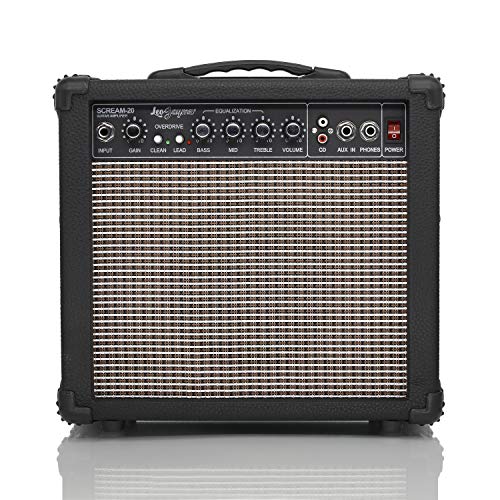
Leo Jaymz 20W Guitar Amp
Best for beginners and casual players who want a low-cost home practice amp with clean and crunch channels and an aux input for playing along with tracks.
Read the Leo Jaymz 20W Guitar Amp review →
Fender Mini Tonemaster
Electric guitar players who want a simple battery powered practice amp for travel and quiet home use.
Read the Fender Mini Tonemaster review →
Marshall MS-4
The Marshall MS-4 is best for a player who wants a simple battery powered micro amp with classic Marshall stack looks for quiet practice and travel.
Read the Marshall MS-4 review →Questions Buyers Ask
Marshall MS-2
See the current listing, price and included accessories.
About This Review
Mandrillis Team
The Mandrillis editorial team researches and compares audio and music gear using manufacturer documentation, verified specs and real buyer feedback, so you can make a confident purchase without wading through marketing claims.
Read our full research methodology.