Guitar & Bass Review
Orangewood Dana Review: Compact Budget Travel Acoustic
The Orangewood Dana is a baby concert travel acoustic with layered spruce and mahogany, a natural satin finish, and a new setup before shipping. Its gig bag and adjustment tools add value for beginners, but key dimensions and hardware stay unpublished in the listing.
Our Verdict
Research Score 65/100The Orangewood Dana succeeds as a budget mini acoustic for beginners and travelers. The listing describes a baby concert body with layered spruce and layered mahogany, a natural satin finish, a premium gig bag, and adjustment tools. The promise of a professional setup before shipping is a strong point at this tier, and the compact size should fit couch practice, lessons, and light travel. However, the published specifications leave scale length, nut width, neck wood, fingerboard wood, tuners, and electronics unstated. That makes it hard to predict exact feel, hardware longevity, or amplified potential. The layered top is stable but less expressive than solid spruce. On paper this is a sensible starter or travel guitar, not a full-voiced stage instrument. It earns a score of 65 out of 100.
Editorial research score based on published specifications and documented features, not a customer rating or lab test.

Orangewood
Orangewood Dana
Best for: Beginner players, travelers, and casual musicians who want a compact acoustic guitar with a budget price and a setup promise.
Skip it if: Avoid it if you need a full-size dreadnought voice, stage-ready electronics, or published detailed specifications before buying.
Check Price on AmazonWe may earn a commission at no extra cost to you.
Listing verified: October 2026
Who Should Buy It
Buy it if
- Beginners who want an affordable acoustic that arrives ready to play
- Travelers and students who need a smaller guitar for tight spaces
- Casual players who prioritize a gig bag and setup tools
- Those curious about Orangewood without spending beyond the budget tier
Skip it if
- Players who need a pickup or onboard tuner
- Buyers who require an all-solid tonewood guitar
- Shoppers who want a full-size body with deeper bass
Key Specifications
| Body shape | Baby Concert style, 3/4 travel size |
| Top | Layered spruce |
| Back and sides | Layered mahogany |
| Neck and fingerboard | Not published in listing |
| Scale length | Not published in listing |
| Nut width | Not published in listing |
| Electronics | Not published in listing |
| Tuners | Not published in listing |
| Finish | Natural satin |
| Included accessories | Premium gig bag and adjustment tools |
Overview
The Orangewood Dana is a baby concert style acoustic guitar aimed at students, travelers, and casual players. The product listing positions it as a junior 3/4 size instrument with a compact body and a natural satin finish. On paper this makes it a practical first guitar or a travel companion for players who want a small, easy to store acoustic.
The listing describes a layered spruce top with layered mahogany back and sides. Layered tonewoods are common in the budget tier because they are stable and less sensitive to humidity changes than solid wood. The Dana package includes a premium gig bag and adjustment tools, and the listing states that every Orangewood instrument receives a professional setup before shipping.
Because the listing does not publish scale length, nut width, neck wood, fingerboard wood, tuners, or electronics, this review can only evaluate the Dana as a specification set and a value proposition. The compact baby concert shape and setup promise are the main talking points. Players who need exact measurements or amplified sound should look carefully at what is not stated.
Body, Neck and Playability
The body of the Orangewood Dana is described as baby concert style, which suggests a smaller and shorter body than a standard concert or dreadnought. The 3/4 size designation in the listing points to a travel-oriented instrument that should be easier to hold for younger players, smaller adults, and anyone sitting on a couch or in a tight practice space. The exact overall length and body depth are not published in the listing.
The top is layered spruce, and the back and sides are layered mahogany. These materials are common in budget acoustics because they can be pressed into stable laminated sheets without the cost of solid tonewood. From a playability perspective, the guitar should feel compact, but the neck shape, fingerboard radius, and neck finish are not stated. The listing does not list scale length or nut width, so the actual string spacing and reach cannot be confirmed.
The natural satin finish on the body may provide a smooth feel without excessive gloss on the neck or soundboard. The listing promises a professional setup before shipping, which should address action height, nut slots, and neck relief at least at the factory. However, seasonal movement during shipping can alter setup, and the included adjustment tools imply that some player-side tweaks may be needed.
Tone and Projection
With a layered spruce top and layered mahogany back and sides, the Orangewood Dana is built around a balanced entry-level tonewood combination. Spruce typically provides a bright and clear attack, while mahogany adds a warmer midrange and some rounded character. Because the top and body are laminated rather than solid, the guitar will likely have a more compressed dynamic range and less overtone complexity than solid wood alternatives.
The baby concert body is smaller than a full-size acoustic, so players should expect a lighter low end and less projection than a dreadnought. The small chamber will usually produce a focused, boxy voice that suits fingerpicking and light strumming better than heavy flatpicking. The listing does not state bracing details or body depth, so exact tonal behavior remains a matter of general design expectation rather than published specification.
For practice, songwriting, and travel, the Dana should produce enough volume to fill a small room when played with a normal touch. Players who want a loud rhythm guitar for bluegrass or unamplified ensemble work may find it limited. On paper the layered construction favors consistency and durability over the richer tonal ceiling of a solid spruce top, which is a fair trade at this budget tier.
Hardware and Electronics
The Orangewood Dana has no listed electronics, so it appears to be an acoustic-only instrument. The listing does not mention a preamp, undersaddle pickup, or onboard tuner. Players who want to plug into an amplifier or PA system would need an aftermarket pickup or an external microphone.
The tuners are not identified in the listing. This is common for budget guitars, but it means their gear ratio, button material, and long-term stability cannot be verified. The hardware appears limited to the tuning machines, strap buttons, and bridge pins, though the listing does not call out specific brands or alloys.
The included accessories are a highlight. A premium gig bag and adjustment tools add practical value for a beginner or traveler. On a budget acoustic, a padded gig bag can protect the instrument during storage and light transit. The adjustment tools suggest that the truss rod is accessible and that Orangewood expects owners to make small maintenance tweaks.
- Acoustic-only design with no onboard electronics listed
- Premium gig bag included for storage and light travel
- Adjustment tools included for basic neck and action care
- Tuner brand and hardware type not published
- Professional setup promised before the guitar ships
Build Quality and Finish
The published build consists of layered spruce and layered mahogany with a natural satin finish. These laminates are less expensive to produce than solid tonewood, but they are also more resistant to cracking in changing humidity. For a travel or beginner guitar, that stability is a practical benefit, especially if the instrument moves between a car, dorm room, or practice space.
All Orangewood instruments receive a professional setup before shipping, according to the listing. That suggests some level of quality control, but it does not state where the guitar is built or what internal bracing is used. Budget instruments can vary in fretwork, glue joints, and final finishing, and the Dana's actual construction quality cannot be confirmed from the published specification alone.
The natural satin finish should hide minor fingerprints and reduce glare better than a high gloss surface. Satin finishes are also generally thinner, though the listing does not state finish thickness. Overall, the Dana appears to be a no frills acoustic built for function, with the finish and laminated wood choices supporting durability over visual flash.
Setup Out of the Box
The strongest setup signal in the listing is the statement that every Orangewood instrument gets a professional setup before it ships to the buyer. For a budget acoustic, this is a meaningful promise because many entry-level guitars arrive with high action or sharp fret ends. A factory setup may include truss rod adjustment, nut filing, and saddle height correction.
Exact string gauge, brand, and target action measurements are not included in the listing. Because the scale length and nut width are unpublished, players cannot compare those numbers to their current guitar. The included adjustment tools allow small tweaks, but a player without setup experience may still need a local technician if the guitar shifts during transit.
On paper, the setup promise gives the Orangewood Dana an edge over budget guitars that ship without any adjustment. Buyers should still check the action, neck relief, and tuning stability after delivery. Humidity and temperature changes during shipping can move a neck slightly, so the setup should be viewed as a solid starting point rather than a permanent guarantee.
Daily Use and Practice
The compact baby concert shape should make the Orangewood Dana easy to keep next to a desk, sofa, or bed. The listing calls it a junior 3/4 size travel guitar, which implies a shorter and lighter footprint than a full-size dreadnought. The exact weight is not published, but the smaller body and laminated construction should not feel burdensome for most players.
The included premium gig bag supports daily carrying to lessons, a friend's house, or a weekend trip. The natural satin finish is likely to handle minor handling without showing every smudge. With no electronics to maintain, the Dana is a simple acoustic that only requires string changes and occasional truss rod adjustments.
During practice sessions, the smaller body may encourage longer playing for younger students or players with shorter arms. The volume should be enough for personal practice without being overly boomy in a small room. Players who prefer a big strumming platform or deep low end may find the Dana feels less satisfying for vigorous daily rhythm work.
Versatility and Styles
The Orangewood Dana is best suited to fingerstyle, folk, pop, and light strumming. The smaller body and balanced tropical tonewood combination can handle melodic picking and moderate chord work without overpowering a room. It is not designed as a bluegrass cannon or a bold stage guitar, so players should match their expectations to the travel size.
Without electronics, the Dana is not a direct choice for open mics or amplified performances unless an external microphone or aftermarket pickup is added. The lack of a cutaway also limits access to the highest frets, which may matter for lead players. The listing does not mention a cutaway, so the upper fret reach is standard for a baby concert body.
For songwriting, practice, and casual recording with a microphone, the Dana should work well in rooms where a full-size acoustic might be too loud or cumbersome. Its small size and stable laminate construction make it a good knockaround option. Overall, the guitar is practical and limited, which is exactly what many players need in a budget travel instrument.
Who Should Buy It
The Orangewood Dana should appeal to beginners who want an affordable first acoustic that arrives with a setup promise and a gig bag. The compact body reduces the physical barrier for younger players, smaller adults, and anyone who finds full-size dreadnoughts uncomfortable. The included tools also make it easier to learn basic maintenance.
Travelers and students will likely appreciate the 3/4 size and included soft case. Dorm rooms, small apartments, and car trips favor smaller instruments that do not take up much space. The layered wood construction adds peace of mind when the guitar moves between environments with different humidity levels.
Casual players who do not need amplification and simply want a reliable couch guitar may find the Dana to be a sensible impulse purchase. The combination of a budget tier, setup support, and accessories makes it a low risk entry point. However, buyers who need detailed specifications or a richer tone may be better served by saving for a solid top model.
Verdict
The Orangewood Dana is a focused budget travel acoustic with a clear purpose. It uses layered spruce and mahogany to keep the price low and the build stable, while the baby concert body keeps the guitar compact and easy to handle. The included gig bag, adjustment tools, and promised professional setup are significant extras in this tier.
On the other hand, the listing leaves several important facts unpublished. Scale length, nut width, neck wood, fingerboard wood, tuner type, and electronics are not stated. That makes it difficult to assess exact playability and hardware durability without seeing the guitar in person. The layered top will not satisfy players seeking the dynamic response of solid spruce.
The Dana earns a score of 65 out of 100. It is a sensible option for a beginner or traveler who wants a cheap, practical acoustic with a setup promise, not a serious tonewood or stage instrument. If you can accept the unknown specifications and the compact voice, the package is competitive for its tier.
Strengths and Limitations
Strengths
- Compact 3/4 travel size is easy to carry and store
- Layered spruce and mahogany build resists humidity changes
- Professional setup before shipping is included in the budget tier
- Premium gig bag and adjustment tools add real value
- Natural satin finish looks clean and resists fingerprints
Limitations
- Scale length, nut width, neck and fingerboard materials are not published
- Tuner quality and hardware type are not specified in the listing
- No onboard electronics for amplified performance
- Layered top may lack the dynamic range of a solid spruce top
- Small body produces less low-end projection than a full-size dreadnought
How We Scored It
Scores reflect published specifications, documented features and value against the alternatives below. They are editorial research scores, not laboratory measurements.
Alternatives to Consider

Jasmine JM10
A budget acoustic for small-handed players and beginners who want a short scale and slim neck without spending above the entry tier.
Read the Jasmine JM10 review →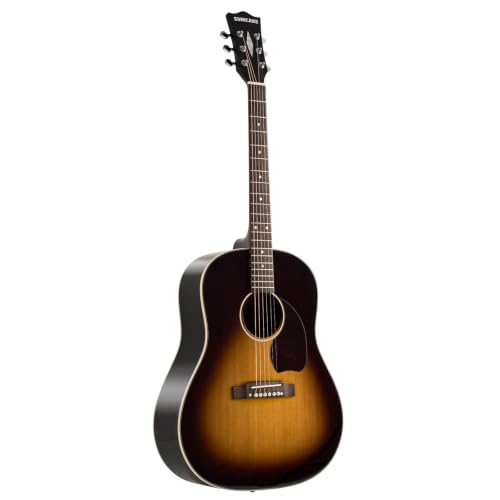
Sonicake 41-Inch Solid Spruce Acoustic
Beginners and students who want a budget acoustic with a solid spruce top and traditional sunburst look.
Read the Sonicake 41-Inch Solid Spruce Acoustic review →
Orangewood Victoria
A player seeking a budget friendly acoustic with a comfortable body size and a pre shipment setup, especially if they value included accessories and do not need onboard electronics.
Read the Orangewood Victoria review →Questions Buyers Ask
Orangewood Dana
See the current listing, price and included accessories.
About This Review
Mandrillis Team
The Mandrillis editorial team researches and compares audio and music gear using manufacturer documentation, verified specs and real buyer feedback, so you can make a confident purchase without wading through marketing claims.
Read our full research methodology.