Guitar & Bass Review
Peavey Max 100 Review: Simple Bass Practice with Tone Control
The Peavey Max 100 is a lower midrange bass combo with a three band EQ, overdrive, contour, mid shift, bright, and Kosmos C switches. It includes an aux input and headphone output. The listing leaves wattage and speaker size unpublished. It suits practice focused bassists who want analog simplicity.
Our Verdict
Research Score 72/100The Peavey Max 100 is a lower midrange bass combo focused on practice convenience. It offers a three band EQ, overdrive, contour, mid shift, bright, and Kosmos C switches, plus an aux input and headphone output. The unique cabinet design is a thoughtful touch for tight spaces. However, the listing does not publish power output, speaker size, weight, or dimensions, making it hard to judge real world volume and portability. For bassists who want a simple analog amp with headphone practice, this is a solid candidate at its price tier. Those who need verified stage power, direct outputs, or app based features should look elsewhere. Overall, it is a capable but under documented practice combo.
Editorial research score based on published specifications and documented features, not a customer rating or lab test.
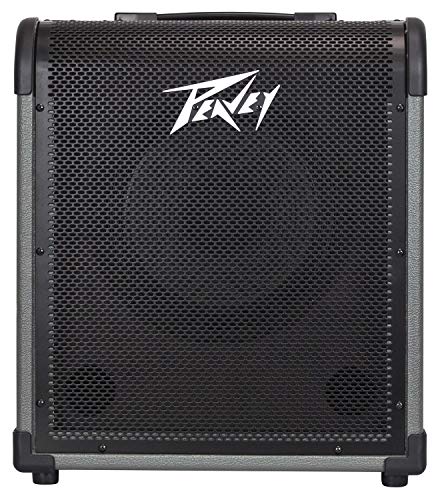
Peavey
Peavey Max 100
Best for: Bass players who want a simple lower midrange combo with useful tone shaping and headphone practice.
Skip it if: You need verified wattage, speaker specs, direct PA output, or app based preset management.
Check Price on AmazonWe may earn a commission at no extra cost to you.
Listing verified: October 2026
Who Should Buy It
Buy it if
- Bedroom and home practice bassists
- Players who like analog tone controls
- Musicians who use aux backing tracks
- Buyers seeking a lower midrange Peavey combo
Skip it if
- You need confirmed stage volume
- You want extensive digital effects or amp models
- You require Bluetooth or USB recording
Key Specifications
| Power output | Not published in listing |
| Speaker | Not published in listing |
| Amp models or channels | Not published in listing |
| Effects | Overdrive, contour, mid shift, bright, Kosmos C |
| Inputs and outputs | 1/8 inch aux input, 1/8 inch headphone output |
| Headphone and line out | 1/8 inch headphone output |
| Bluetooth and app | Not published in listing |
| Weight | Not published in listing |
| Dimensions | Not published in listing |
| Included accessories | Not published in listing |
Overview
Peavey Max 100 is a bass amplifier combo positioned in the lower midrange price tier. The product listing describes a compact unit with a three band EQ, overdrive, contour, mid shift, bright, and Kosmos C switches. It also includes a 1/8 inch aux input and a 1/8 inch headphone output. The listing highlights a unique cabinet design intended to improve high frequency dispersion in tight spaces.
Several core specifications are not stated in the listing, including power output, speaker size, weight, and dimensions. Buyers who need exact wattage or driver details will not find them in the published material. The feature set suggests a practice friendly amplifier with tone shaping tools, but the overall performance envelope remains unclear from the listing alone.
Amp Models and Tone
The Peavey Max 100 does not advertise digital amp models or channel switching in the listing. Instead, the tone shaping comes from an analog style control set. The three band EQ provides low, mid, and high adjustment, while the contour and mid shift switches offer additional midrange sculpting. These controls can help a bassist move between rounded, scooped, or punchy sounds.
The bright switch and Kosmos C switch add further tonal options. Bright likely emphasizes upper harmonics for clank and articulation, while Kosmos C is a Peavey technology often associated with enhanced low end and perceived loudness. The listing also mentions a pre gain control with TransTube gain boost, which suggests a tube inspired overdrive texture. Without playing the amp, the exact character of these controls is hard to define.
Effects and Features
The only drive effect called out in the listing is overdrive, accessed through the pre gain control and TransTube gain boost. The contour, mid shift, bright, and Kosmos C switches are better described as tone filters rather than traditional modulation, delay, or reverb effects. There is no mention of a tuner, compressor, or digital effects suite.
For a lower midrange bass combo, this is a straightforward set of features. The focus appears to be on core bass tone and practice convenience rather than deep editing. Players who want a large palette of amp models or studio style effects would need external pedals or a different amplifier. The listing does not publish a full effects list, so any additional processing is unknown.
Power, Speaker and Volume
The listing title includes the number 100, which may imply a 100 watt power rating, but the actual power output is not published in the feature bullets. The speaker size, number of speakers, and cabinet tuning are also not stated. Because of this, the maximum clean volume and low frequency extension cannot be confirmed from the listing data.
What the listing does describe is a unique cabinet design intended to improve high frequency dispersion in tight spaces. This could make the amp useful in small rooms where a typical bass amp might sound muffled or beamy. Input options include a 1/8 inch aux input for playing along with music, and a 1/8 inch headphone output for silent practice.
- Power output: not published in listing
- Speaker size and configuration: not published
- 1/8 inch aux input for music playback
- 1/8 inch headphone output for quiet practice
- Unique cabinet design for high frequency dispersion
- No DI, line out, or extension speaker output listed
Build and Portability
Peavey has a long reputation for building rugged bass gear, but the listing for the Max 100 does not provide specific materials, weight, or dimensions. Without those numbers, portability is difficult to assess. The lower midrange price typically includes a manageable combo, but this unit could still be heavy for a small practice amp.
The unique cabinet design suggests some attention to acoustic performance rather than pure lightweight construction. The inclusion of a headphone output and compact design language implies the amp is intended for home or bedroom use, but the absence of published weight means buyers should verify before purchase. On paper, it is a straightforward analog combo with no obvious premium build claims.
Connectivity and Apps
The published connectivity is limited to a 1/8 inch aux input and a 1/8 inch headphone output. There is no mention of Bluetooth, USB audio, app control, or wireless editing. For many practice scenarios, the aux input and headphone output are enough for playing along with tracks or practicing quietly.
The listing does not mention a footswitch jack, effects loop, XLR direct output, or balanced line out. This limits integration with larger PAs or recording interfaces unless an external microphone is used. Players who need app based preset management or firmware updates should look elsewhere, because the Max 100 appears to be a traditional analog amplifier.
Setup and Daily Use
The Peavey Max 100 should be easy to set up because it relies on physical knobs and switches rather than software menus. The pre gain, three band EQ, and tone switches are all immediately accessible on the control panel. There is no app to download or account to create, which makes the amp friendly for beginners and players who want to plug in and play.
Daily practice is supported by the headphone output for silent playing and the aux input for connecting a phone or music player. The overdrive and tone switches allow quick changes between clean and driven sounds without deep editing. Since the listing does not mention a power cable, instrument cable, or other accessories, buyers may need to provide their own.
Home Practice Versus Stage
As a lower midrange bass combo, the Max 100 is most obviously suited to home practice and small rehearsals. The headphone output and aux input make it convenient for bedroom use, and the unique cabinet design aims to keep sound clear in tight rooms. However, the lack of a published power rating makes stage volume hard to guarantee.
If the model name reflects a 100 watt rating, the amp could handle small gigs with moderate stage volume, especially when paired with a PA via microphone. Without a direct output or extension speaker jack, larger venues would require additional gear. The listing does not state that the amp includes a balanced line out, so silent recording or direct PA feed is not assured.
Who Should Buy It
The Peavey Max 100 is a reasonable option for bass players who want a simple analog combo with useful tone controls and a headphone output. It may appeal to students, bedroom players, and musicians who practice with aux backing tracks. The lower midrange price makes it an accessible step up from no name practice amps.
Buyers who value proven Peavey build quality and do not require digital modeling or app control may find this amp appealing. However, those who need exact specifications or stage ready connectivity should confirm details before purchase. The listing is best treated as an introduction rather than a complete technical document.
Verdict
The Peavey Max 100 offers a focused feature set for bass practice, with a three band EQ, overdrive, contour, mid shift, bright, Kosmos C, aux input, and headphone output. The unique cabinet design is a differentiator for small room clarity. The lower midrange price is attractive, but the listing leaves key specs like wattage, speaker size, and weight unpublished.
Given the unknown performance envelope, this amp earns a moderate score. It is a sensible choice for a simple home practice bass combo, especially for players who do not need extensive connectivity or digital effects. Bassists who need verified power for gigs or direct PA integration should seek more detailed specifications or a more feature rich model.
Strengths and Limitations
Strengths
- Three band EQ with contour and mid shift switches
- Overdrive with TransTube gain boost
- 1/8 inch aux input for music playback
- 1/8 inch headphone output for silent practice
- Unique cabinet design for high frequency dispersion
- Lower midrange price tier
Limitations
- Power output not published
- Speaker size and configuration not published
- No Bluetooth, app, or USB connectivity
- No direct output or effects loop listed
- Weight and dimensions not published
How We Scored It
Scores reflect published specifications, documented features and value against the alternatives below. They are editorial research scores, not laboratory measurements.
Alternatives to Consider

Blackstar ID:X-50
Players who want a lower mid-range 50 watt modeling combo with power scaling for home and stage, and who can verify missing specs elsewhere.
Read the Blackstar ID:X-50 review →
Boss Dual Cube LX
A portable stereo practice amp for guitarists and modeler users who want battery power and saved settings at home or in small jams.
Read the Boss Dual Cube LX review →
Peavey Vypyr X1
Players seeking a lower mid range modeling amp for home practice with a wide assortment of amp models and effects.
Read the Peavey Vypyr X1 review →Questions Buyers Ask
Peavey Max 100
See the current listing, price and included accessories.
About This Review
Mandrillis Team
The Mandrillis editorial team researches and compares audio and music gear using manufacturer documentation, verified specs and real buyer feedback, so you can make a confident purchase without wading through marketing claims.
Read our full research methodology.