Guitar & Bass Review
Peavey Max 158 Review: Straightforward Bass Practice
The Peavey Max 158 is a budget bass combo with 20 watts, an 8 inch speaker, and a simple EQ. The listing highlights a Transtube distortion boost and psycho-acoustic low end enhancement, but leaves many connectivity details unpublished. This review breaks down the published specifications and the gaps a buyer should investigate.
Our Verdict
Research Score 60/100The Peavey Max 158 is a focused practice amp for bassists who want a small, affordable combo without modeling complexity. The published specifications show a 20 watt solid state design with an 8 inch speaker, three band EQ, and two notable features: a Transtube distortion boost and psycho-acoustic low end enhancement. Those additions give a slight edge over bare bones practice amps. However, the listing omits weight, dimensions, inputs, outputs, and headphone capability, making it hard to judge portability and connectivity. For beginner or home player, the Max 158 should work well for quiet practice. Anyone needing stage volume, silent practice, or extensive effects should look elsewhere. On paper, it is a reasonable budget choice with some Peavey character, but the missing specifications demand a careful look before buying.
Editorial research score based on published specifications and documented features, not a customer rating or lab test.

Peavey
Peavey Max 158
Best for: Beginners and home practice bassists who want a simple, budget-friendly combo with basic tone shaping.
Skip it if: You need stage volume, extensive effects, confirmed headphone or line outputs, or app-based control.
Check Price on AmazonWe may earn a commission at no extra cost to you.
Listing verified: October 2026
Who Should Buy It
Buy it if
- New bass players who need a straightforward practice amp
- Home players who want an affordable Peavey combo
- Musicians who prefer analog simplicity over modeling menus
- Bedroom practice spaces where 20 watts is enough
Skip it if
- You play with a loud drummer or full band
- You require a headphone output for silent practice
- You want built-in effects beyond one distortion boost
Key Specifications
| Power output | 20 watts RMS into 4 ohms |
| Speaker | 8 inch speaker |
| Amp models or channels | Single channel, no amp models |
| Effects | Transtube distortion boost and psycho-acoustic low end enhancement |
| Inputs and outputs | Not published in listing |
| Headphone and line out | Not published in listing |
| Bluetooth and app | Not published in listing |
| Weight | Not published in listing |
| Dimensions | Not published in listing |
| Included accessories | Not published in listing |
Overview
The Peavey Max 158 is a compact bass combo amplifier positioned in the budget tier. The listing provides a handful of core specifications: 20 watts RMS into 4 ohms, an 8 inch speaker, low, mid, and high EQ controls, a volume control with Transtube distortion boost, and psycho-acoustic low end enhancement. These specs point to a practice focused amp rather than a stage rig. The listing does not publish weight, dimensions, inputs, outputs, or included accessories, so those remain open questions for any buyer comparing models.
Peavey has a long reputation for building durable entry level guitar and bass gear, and this amp appears to fit that mold. Unlike modeling practice amps from Boss or Fender, the Max 158 does not advertise app control, presets, or USB connectivity. Its published feature set is deliberately simple: you get a basic bass preamp, a distortion boost, and a low end enhancement circuit. That simplicity may appeal to beginners who want to plug in and play, but it also means the amp will not satisfy players seeking deep tone editing or recording features.
Amp Models and Tone
The Max 158 does not include multiple amp models or channels. It is a single channel design with a three band EQ that covers low, mid, and high frequencies. The published specification does not give center frequencies or cut and boost ranges, so the exact voicing is unknown. On paper, this setup gives a bass player the essential tools to shape a fundamental clean tone. The psycho-acoustic low end enhancement is a notable addition because it is designed to create a perception of deeper bass without a larger speaker or more power.
The Transtube distortion boost is Peavey's analog approach to tube like warmth and grit. The listing describes it as part of the volume control, which suggests that pushing the volume or a dedicated boost can introduce harmonic drive. Without in-person testing, the character of that distortion is difficult to confirm. It is unlikely to replace a dedicated bass overdrive pedal, but for practice it can add some edge to a clean bass line. The 8 inch speaker will naturally limit extreme low frequency output, so the psycho-acoustic enhancement is a practical workaround.
Effects and Features
The published feature set is minimal. The only effect beyond the amplifier itself is the Transtube distortion boost, which is a gain driven overdrive rather than a multi effects suite. There is no reverb, chorus, compressor, tuner, or looper mentioned. The psycho-acoustic low end enhancement is more of a tone shaping circuit than an effect, but it does alter the perceived sound. For bass players who want a clean and simple platform, this is fine. For anyone expecting built in effects like those in a modeling amp, the Max 158 will feel sparse.
The control layout is straightforward: volume, low, mid, high, and the distortion boost. The listing does not mention a separate gain control, so the Transtube boost likely operates in conjunction with the volume knob or as a switch. There is no effects loop, no line out, and no footswitch input in the published data. That means the amp is intended for direct, basic use. The simplicity can be a strength for beginners, but it also limits flexibility for more advanced players who want to integrate effects pedals without driving the preamp.
Power, Speaker and Volume
The power rating of 20 watts RMS into 4 ohms is modest by bass amp standards. That is enough for bedroom practice, home recording of a direct signal if a line out exists, and very small rehearsals. It will not compete with an acoustic drum kit or a full electric band. The 8 inch speaker further limits overall volume and low end projection. A larger speaker, such as a 10 or 12 inch, would move more air and produce deeper lows, but the Max 158 prioritizes cabinet size and price.
The psycho-acoustic low end enhancement is designed to make the amp sound bigger than its physical limitations. Without published details on how the circuit works, buyers should expect a perceived bass boost rather than true sub bass output. For home practice, the combination of 20 watts and an 8 inch speaker is often acceptable. For any gig or band setting, the amp would likely be overwhelmed unless the player is using a very quiet backing track or an acoustic ensemble.
- 20 watts RMS into 4 ohms
- 8 inch speaker
- Volume control with Transtube distortion boost
- Psycho-acoustic low end enhancement
- Low, Mid, and High EQ controls
Build and Portability
The listing does not provide weight or dimensions, so a precise portability assessment is impossible. However, the presence of an 8 inch speaker strongly suggests a small cabinet footprint. Peavey's budget combos are typically built with simple, rugged materials, but this specific listing does not mention cabinet construction, covering, or handle design. Buyers who need to carry the amp frequently should check the physical specs before purchase.
The control panel appears minimal, with only a few knobs, which helps keep the amp easy to use. There is no mention of a headphone output, aux input, or speaker extension jack, so the amp is likely a closed system. The absence of published weight and dimensions is a notable gap because it makes it difficult to compare against competitors like the Fender Rumble 15 or the Orange Crush Bass 25, although those amps also have their own published specs. Without the numbers, the Max 158 remains a bit of an unknown for travel and storage.
Connectivity and Apps
The product listing does not publish any input or output specifications. There is no mention of a headphone jack, auxiliary input, line out, effects loop, or USB connection. This is a significant limitation for a practice amp because many players rely on headphone outputs for quiet practice. The listing also does not include Bluetooth or app support, so the Max 158 is strictly an analog amplifier with no digital editing or streaming capabilities.
The lack of connectivity details means a buyer cannot confirm whether the amp can be used with headphones or connected to a recording interface. If silent practice is a priority, this amp may not be the right choice unless further research confirms a headphone output. The absence of an app or Bluetooth is not surprising at this price tier, but it does place the Max 158 behind modeling practice amps that offer those conveniences. For a pure plug and play bass amp, however, the simpler design may be acceptable.
Setup and Daily Use
Setting up the Peavey Max 158 is straightforward based on the published controls. A player plugs in, sets the volume, adjusts the three EQ knobs, and optionally engages the Transtube boost for added grit. There are no menus, presets, or digital screens to navigate. For a beginner, this reduces the learning curve and encourages attention to fundamental playing rather than effect tweaking.
Daily practice with the Max 158 should be uncomplicated. The amp is likely small enough to sit on a desk or floor without taking much space. The psycho-acoustic low end enhancement works automatically, assuming it is always on, but the listing does not specify whether it can be bypassed. If a player wants a clean, flat tone, the EQ controls can be set to neutral. The lack of a published headphone output is the biggest daily use concern for apartment dwellers or late night practice.
Home Practice Versus Stage
The Max 158 is clearly designed for home practice. With 20 watts and an 8 inch speaker, it will produce enough volume for solo practice, playing along with recorded tracks at moderate levels, and perhaps a very quiet rehearsal. The distortion boost adds some fun for rock and punk bass lines, while the EQ helps tailor the tone to a small room. The psycho-acoustic low end enhancement is particularly useful in a home setting where deep bass can be problematic for neighbors.
Stage use is not realistic for most band contexts. Without published line out or speaker extension options, the amp cannot easily be connected to a PA or larger cabinet. Even if a line out exists, the small speaker would serve only as a monitor. A drummer and electric guitarist would easily drown out 20 watts. For open mics or acoustic groups, the Max 158 could work as a personal monitor, but that is the extent of its stage potential. Players who regularly gig should consider a higher wattage combo with a larger speaker.
Who Should Buy It
The Peavey Max 158 is best suited to beginners and home practice players who want a no frills bass combo. Its three band EQ and distortion boost give enough flexibility for learning different styles without overwhelming options. The budget price tier makes it an accessible first amp, and the Peavey brand carries a reputation for reliability in entry level gear. The compact size implied by the 8 inch speaker makes it convenient for bedrooms and dorm rooms.
This amp is also a reasonable choice for a backup practice amp or a second amp for a rehearsal space. Players who already own a larger rig might appreciate having a simple, quiet combo for warming up. However, anyone who needs specific connectivity such as a headphone output or aux input should be cautious because the listing does not confirm those features. Those who want a built in tuner, effects, or app based presets will be disappointed.
Verdict
The Peavey Max 158 is a focused practice amp with a few useful twists. The published specs reveal a 20 watt solid state combo with an 8 inch speaker, a three band EQ, a Transtube distortion boost, and psycho-acoustic low end enhancement. For a budget bass amp, those features provide a little more character than a completely bare bones unit. The simple control set is friendly for beginners, and the compact size implied by the small speaker is encouraging for home use.
The biggest weakness is the absence of published details. Weight, dimensions, inputs, outputs, and included accessories are all missing from the listing, which makes an informed purchase difficult. Connectivity such as a headphone jack or line out cannot be assumed. The amp scores modestly on features and connectivity, but its tone shaping and value for a beginner are acceptable. Overall, the Peavey Max 158 earns a score of 60 out of 100, reflecting its strengths as a simple practice amp and its limitations as a versatile tool.
Strengths and Limitations
Strengths
- Simple control layout with low, mid, high EQ
- Transtube distortion boost adds useful grit
- Psycho-acoustic low end enhancement helps perceived lows
- Compact 8 inch speaker keeps the cabinet small
- Peavey branding suggests dependable budget build
Limitations
- No published weight, dimensions, or input/output details
- Limited features beyond a single distortion boost
- 20 watts and an 8 inch speaker will not fill a stage
- No listed headphone or line output for silent practice
- No Bluetooth or app-based editing
How We Scored It
Scores reflect published specifications, documented features and value against the alternatives below. They are editorial research scores, not laboratory measurements.
Alternatives to Consider
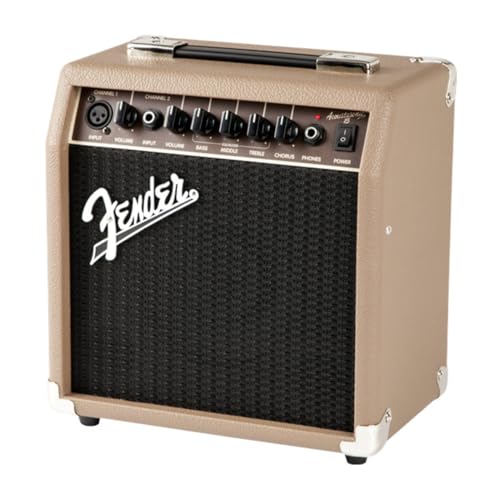
Fender Acoustasonic 15
Singer-songwriters and acoustic players who need a simple portable amp for home practice and small quiet gigs.
Read the Fender Acoustasonic 15 review →
Orange Micro Terror
Guitarists seeking an affordable tube flavored amp head for practice with headphones or a small speaker cabinet.
Read the Orange Micro Terror review →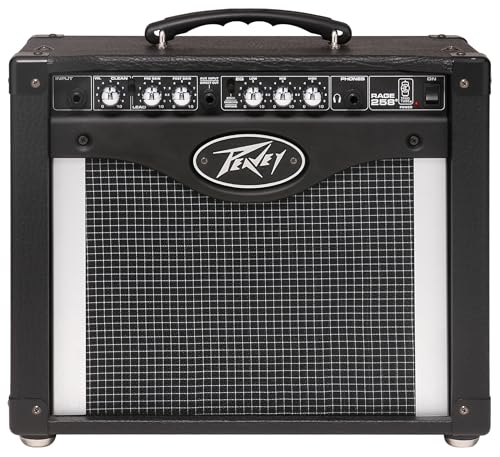
Peavey Rage 258
Players seeking a simple, low cost analog practice combo with clean and lead channels and a tape CD input for home jamming.
Read the Peavey Rage 258 review →Questions Buyers Ask
Peavey Max 158
See the current listing, price and included accessories.
About This Review
Mandrillis Team
The Mandrillis editorial team researches and compares audio and music gear using manufacturer documentation, verified specs and real buyer feedback, so you can make a confident purchase without wading through marketing claims.
Read our full research methodology.