Guitar & Bass Review
Pyle 40W Portable Guitar Amp Review: Budget Dual Speaker Combo
The Pyle 40W Portable Guitar Amp is a budget friendly combo with dual 6 inch and 8 inch speakers, overdrive, digital delay, and dual inputs. This review examines the published specifications, practical strengths, and limitations without in-person testing for home practice and small gigs.
Our Verdict
Research Score 62/100The Pyle 40W Portable Guitar Amp is a budget-oriented practice combo that stands out with its dual 6 inch and 8 inch speaker configuration and closed-back wood cabinet. These features should produce a fuller low end than many entry-level amps. The inclusion of overdrive, digital delay, and dual inputs adds practical utility without a steep learning curve. However, the amp has no Bluetooth, no app, no line out, and no published weight or dimensions, making it harder to assess portability and connectivity. It is best suited to home practice, casual jams, and light busking rather than loud band stages. For players who want a simple analog-style amplifier at a low price, it is a reasonable option. Those needing modern features should look elsewhere.
Editorial research score based on published specifications and documented features, not a customer rating or lab test.

Pyle
Pyle 40W Portable Guitar Amp
Best for: Budget-conscious electric guitar players who want a simple analog style combo with dual speakers, basic overdrive, delay, and headphone practice.
Skip it if: Players who need modern app integration, a wide range of amp models, or detailed published specifications for travel and connectivity.
Check Price on AmazonWe may earn a commission at no extra cost to you.
Listing verified: October 2026
Who Should Buy It
Buy it if
- Beginner electric guitarists looking for an affordable first amp with basic effects
- Practice players who want dual inputs for jamming with a friend
- Street performers or buskers needing a portable, simple amplifier
- Players who prefer physical knobs over app or menu driven controls
Skip it if
- You require Bluetooth streaming or a companion app
- You need a broad selection of amp models and effects
- You need a line out for direct recording or front of house
Key Specifications
| Power output | 40 watts |
| Speaker | Two high-definition speaker cones: one 6 inch and one 8 inch as listed |
| Amp models or channels | Not published in listing; single channel with variable gain, boost select switch, and EQ controls |
| Effects | Overdrive and digital delay are listed; no additional effects are published |
| Inputs and outputs | Dual inputs and a headphone jack are listed; line out and other outputs are not published |
| Headphone and line out | Headphone jack is listed; line out is not published in listing |
| Bluetooth and app | Not published in listing |
| Weight | Not published in listing |
| Dimensions | Not published in listing |
| Included accessories | Not published in listing |
Overview
The Pyle 40W Portable Guitar Amp is a budget priced combo aimed at electric guitar practice and small performance settings. The product listing positions it as a portable and feature-rich solution for beginners and advancing players, with a closed-back wood cabinet, dual speaker cones, and a straightforward control panel. This review is based on the published feature set and does not reflect in-person testing. The listing highlights a 40 watt power output, two high-definition speaker cones in 6 inch and 8 inch sizes, and a frequency response from 50 Hz to 20 kHz.
Pyle is known for affordable audio gear, and this amp follows that pattern with a focus on practical utility over premium materials or app-driven extras. The price tier is firmly budget, which makes it an option for players who need a basic amplifier without investing in more advanced modeling units. The listing does not specify the amplifier type, such as solid state or digital, but the feature set suggests a traditional analog style control surface with added digital delay. Buyers should approach this as a simple grab and go practice amp rather than a deep modeling platform.
The main selling points are the dual speaker arrangement, built-in overdrive and delay, and dual inputs. These features are uncommon at this price and could appeal to players who want a bit more low end and the ability to plug in two sources. At the same time, several important specifications are not published, including weight, dimensions, and Bluetooth or app support. That lack of detail makes it harder to assess portability and connectivity without seeing the unit in person.
Amp Models and Tone
The listing does not mention any specific amp models or channel voicings. Instead, the Pyle 40W Portable Guitar Amp appears to be a single channel amplifier with a set of tone shaping controls: gain, bass, middle, treble, and volume. There is also a boost select switch and a control labeled grind, which likely provides additional saturation or overdrive character. Because no amp models are published, players should not expect Fender or Marshall style simulations, but rather a basic platform that can be shaped with the onboard EQ.
Tone quality is hard to judge without in-person testing, but the published frequency response of 50 Hz to 20 kHz is reasonably wide for a budget guitar combo. The closed-back wood cabinet and dual 6 inch and 8 inch speakers should produce a fuller low end than a typical small open-back practice amp. The bass and middle controls allow some tailoring, while the treble control can add clarity or reduce harshness. The overdrive feature is minimal but may be enough for practice and casual jams.
Because the amp has no listed amp models or channel switching, players who want clean and dirty tones at the push of a button may need to adjust the gain and boost switch manually. The grind control likely interacts with the gain to deliver a range from mild edge to heavier distortion, but the exact voicing is not described. On paper, this amplifier is best suited to blues, classic rock, and simple practice tones rather than high gain metal or pristine acoustic amplification.
Effects and Features
The built-in effects are limited to overdrive and digital delay, according to the listing. Overdrive is handled through the gain and grind controls, while the digital delay appears to be a fixed or simple adjustable effect. The listing does not mention reverb, chorus, tremolo, or any modulation effects, so players seeking ambient or experimental sounds will need external pedals. The boost select switch adds another level of gain or volume, which can help push the front end for soloing.
The control layout is entirely knob-based, with no screen or menu system. This makes the amp easy to operate for beginners and quick to adjust during practice. The listing mentions complete control with multiple adjustable dials, a built-in speaker, and a headphone jack. There is no built-in tuner, looper, or rhythm function, which are commonly found in digital modeling amps at similar price points from other brands.
The closed-back design is listed as a feature for heavier bass response. While not an effect, it does shape the overall sound. The dual inputs are a practical feature for a practice amp, allowing two instruments or a microphone and instrument to share the amp, though the listing does not specify the input types or whether they have independent level controls. Overall, this is a sparse but functional feature set focused on core guitar amplification.
Power, Speaker and Volume
The amplifier is rated at 40 watts, which is a solid output for home practice and small venues. The listing promotes it for electric guitar practice, street performances, karaoke with friends, band performances, and outdoor playing. With a 6 inch and an 8 inch speaker, the amp may produce a broader frequency range than a single small speaker, but 40 watts through two compact drivers will not compete with a full band on a loud stage. It should be adequate for living room practice, small rehearsals, and busking.
The dual speaker cones are described as high-definition, but the listing does not provide their individual wattage ratings, sensitivity, or impedance. The frequency response range of 50 to 20 kHz suggests decent low end and sparkle, at least on paper. The closed-back cabinet helps to reinforce bass frequencies, which is an advantage for rhythm playing and solo practice. However, without actual testing, the perceived loudness and headroom remain unknown.
Volume control is straightforward, with a dedicated volume knob and gain staging through the boost switch. Players can use the headphone jack for silent practice, which bypasses the speaker. The amp does not list any power attenuation or speaker output for an extension cabinet.
- 40 watts of rated power for home and small venue use
- Dual 6 inch and 8 inch speaker cones for a wider frequency response
- Closed-back wood cabinet emphasizes low end
- Dedicated volume and gain controls for quick level setting
- Headphone jack for silent practice
Build and Portability
The listing describes a heavy duty wood construction cabinet that is denser and more densely packed than typical budget amps, resulting in a more satisfying bass response. A closed-back design is also highlighted. This suggests a cabinet that is sturdier than many entry-level plastic or particle board options, though the actual wood type is not published. Without a in-person inspection, it is hard to comment on the quality of the tolex, corners, or hardware.
Portability is a key claim in the listing, which says the amp is lightweight but sturdy and can be carried in cars or other transportation. However, the listing does not provide the weight or dimensions, which are crucial for assessing how easy it is to move. Dual 6 inch and 8 inch speakers plus a wood cabinet likely add more weight than a single 8 inch practice amp, so potential buyers should not expect ultra-light plastic amp portability. It may still be manageable for short trips.
The closed-back cabinet may be more durable than an open-back design, and the wood construction should reduce unwanted resonance. Still, this remains a budget product, and the long term reliability of the jacks, pots, and speaker mounts is not documented. Players who plan to travel frequently should consider a padded cover or case, which is not mentioned in the listing.
Connectivity and Apps
The Pyle 40W Portable Guitar Amp has limited connectivity. The listing specifies dual inputs and a headphone jack. The dual inputs allow two instruments or audio sources to be connected at once, which is useful for practice or small jams. The headphone jack enables silent practice, which is a practical feature for apartment dwellers. There is no mention of any line out, effects loop, or auxiliary input beyond the dual inputs.
Bluetooth and app support are not published in the listing. This means players cannot stream backing tracks wirelessly or edit presets from a phone. For a modern practice amp, that is a notable omission, as many competing budget amps from brands like Fender, Boss, and Positive Grid include Bluetooth and companion apps. The Pyle amp appears to be a purely analog style device with a simple digital delay, no USB recording, and no firmware updates.
The lack of a line out or USB audio interface limits direct recording and connecting to a PA system. Players can only capture the amp with a microphone, which adds complexity. The headphone jack may double as a line out in some amps, but the listing does not state that, so buyers should not assume it works as a recording output. Overall, connectivity is basic and best suited to old school practice.
Setup and Daily Use
Setup is simple: plug in the guitar, set the gain, tone, and volume, and play. The absence of menus, presets, and apps means there is almost no learning curve. The dual inputs are handy for a student and teacher or two friends practicing together. The headphone jack allows late-night practice without disturbing others.
Daily use as a home practice amp should be straightforward. The overdrive and delay can be dialed in quickly, though players who want a variety of sounds may need external pedals. The boost switch is a quick way to add more presence for lead lines. Because the amp has no built-in tuner, players will need a clip-on tuner or pedal tuner.
One practical consideration is the unknown weight and footprint. Without dimensions, it is hard to know how much space it takes on a desk or floor. The closed-back wooden cabinet may need more room than a compact model. But the top-mounted control panel seems easy to reach, and the lack of rear-facing tubes keeps maintenance simple.
Home Practice Versus Stage
For home practice, the Pyle 40W Portable Guitar Amp should offer more than enough volume. In fact, 40 watts through two speakers may be too loud for bedroom practice at full volume, but the master volume allows lower output. The headphone jack is a safe option for quiet environments. The dual speakers and closed-back cabinet can produce a full sound at low volumes, which is encouraging.
The listing also mentions street performances and band performances. On paper, 40 watts can work for small gigs, coffee shops, or busking, especially if the amp is miked. However, a 6 inch and 8 inch speaker combo is unlikely to keep up with a live drummer and bass player without PA support. The lack of a line out makes it harder to send the signal to a front of house mixer. So the stage readiness is limited.
Players who need an amp primarily for home practice will be well served. Those planning regular band rehearsal or stage use should treat this as a secondary or backup amp. The boost switch might help for solos, but the amp has no channel switching for instant clean to dirty changes. Overall, it bridges the gap between bedroom and small busking, but not full band gigging.
Who Should Buy It
This amp is best for budget-conscious electric guitar players who want a simple, no-frills practice amp with a bit more low end than typical small combos. Beginners will appreciate the easy controls, while advancing players may use it as a portable practice or backup amp. The dual inputs make it a reasonable choice for a student and instructor or two friends jamming.
Street performers and buskers might find the 40 watt output and dual speaker design sufficient for small outdoor settings, provided they do not need battery power. The headphone jack and dual inputs are practical for songwriters who want to play along with a track from a second source, though there is no dedicated aux input described.
Players who already own a modeling amp or a high-end tube amp may not need this, but it could serve as a grab-and-go practice option. The closed-back cabinet and overdrive/delay cover basic rock and blues tones without needing pedals. However, those who need app integration, wide effects, or direct recording should look elsewhere.
Verdict
The Pyle 40W Portable Guitar Amp is a budget-minded combo that offers some unusual assets, such as dual 6 inch and 8 inch speakers and a closed-back wood cabinet. These design choices should give it a fuller voice than many entry-level practice amps. The inclusion of overdrive, digital delay, and dual inputs adds practical value without complicating the operation.
Its main limitations are the lack of modern connectivity, the absence of published weight and dimensions, and a very sparse effects section. There is no Bluetooth, no app, no line out, and no amp modeling. Players who want a simple analog style practice amp may accept those trade-offs, but anyone used to modeling amps may find it too basic.
Overall, this amp is best for home practice, casual jams, and light busking. It is not a stage workhorse or a deep tone-shaping tool. The score reflects a budget product that delivers a workable core feature set but leaves many specifications unpublished. For the right player, it is a sensible low-cost option.
Strengths and Limitations
Strengths
- Dual 6 inch and 8 inch speaker arrangement
- Built-in overdrive and digital delay
- Closed-back wood cabinet for stronger bass response
- Dual inputs for two sources
- Headphone jack for silent practice
- Straightforward knob based controls
Limitations
- No Bluetooth or app support
- No published weight or dimensions
- No line out or USB connectivity
- No amp models or variety of effects
- Unknown long term build quality
How We Scored It
Scores reflect published specifications, documented features and value against the alternatives below. They are editorial research scores, not laboratory measurements.
Alternatives to Consider

Orange Micro Terror
Guitarists seeking an affordable tube flavored amp head for practice with headphones or a small speaker cabinet.
Read the Orange Micro Terror review →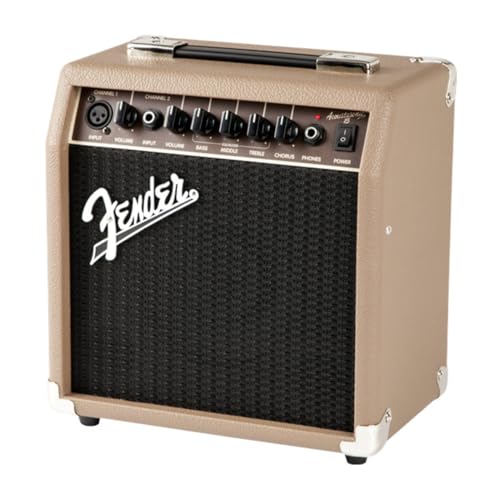
Fender Acoustasonic 15
Singer-songwriters and acoustic players who need a simple portable amp for home practice and small quiet gigs.
Read the Fender Acoustasonic 15 review →Questions Buyers Ask
Pyle 40W Portable Guitar Amp
See the current listing, price and included accessories.
About This Review
Mandrillis Team
The Mandrillis editorial team researches and compares audio and music gear using manufacturer documentation, verified specs and real buyer feedback, so you can make a confident purchase without wading through marketing claims.
Read our full research methodology.