Headphones Review
Fifine HD8 Review: Budget Wired Studio Monitoring
The Fifine HD8 is a budget wired over-ear studio monitor headphone with 50mm dynamic drivers, passive noise isolation, and dual detachable cables. It targets podcasters, musicians, and home studio users who need reliable wired monitoring. The listing publishes a 20Hz to 20kHz range and a lightweight 265g design, though sound quality remains unverified.
Our Verdict
Research Score 70/100The Fifine HD8 is a focused budget wired headphone for monitoring and tracking. On paper it offers 50mm dynamic drivers, a 20Hz to 20kHz range, passive closed-back isolation, and two detachable cables for 3.5mm and 6.35mm connections. The 265g weight and padded headband address comfort for long sessions. Its main limitations are the lack of wireless, active noise cancelling, and any published impedance or sensitivity. There is no microphone or inline remote, and the listing does not mention a case or water resistance. For the budget tier, the HD8 is a sensible buy for podcasters, beginner home studio owners, and wired music listeners who do not need portability. It is not a flagship product, but the dual cable setup and closed-back design cover the essentials. Score: 70 out of 100.
Editorial research score based on published specifications and documented features, not a customer rating or lab test.

Fifine
Fifine HD8
Best for: Budget-minded creators who need a wired closed-back monitor headphone for tracking, podcasting, or casual listening.
Skip it if: You need wireless Bluetooth, active noise cancelling, or a headphone that works without a wired connection.
Check Price on AmazonWe may earn a commission at no extra cost to you.
Listing verified: October 2026
Who Should Buy It
Buy it if
- Podcasters and voiceover artists on a budget
- Home studio musicians who monitor recordings
- DJs or mixers who need dual cable plug options
- Listeners who prefer a wired over-ear closed-back design
Skip it if
- You want active noise cancelling or Bluetooth streaming
- You need inline microphone or track controls
- You prefer a lightweight on-ear or earbud design for travel
Key Specifications
| Type | Wired over-ear closed-back studio monitor headphones |
| Driver | 50mm dynamic drivers |
| Noise cancelling | Passive noise isolation via closed-back circumaural design |
| Bluetooth and codecs | None, wired only |
| Battery life | Not applicable, passive wired design |
| Wired option | Two detachable 9.8ft coiled cables with 3.5mm and 6.35mm plugs |
| Controls and app | Not published in listing |
| Water resistance | Not published in listing |
| Weight | 265g |
| Included accessories | Two detachable 9.8ft coiled cables |
Overview
The Fifine HD8 is a budget wired over-ear headphone aimed at studio monitoring, podcasting, and general music listening. The listing describes a closed-back circumaural design with 50mm dynamic drivers and passive noise isolation. Fifine markets it as a tool for tracking, mixing, and voice monitoring rather than a wireless lifestyle headphone.
On paper the HD8 covers the basics for a starter monitoring headphone. It includes two detachable 9.8ft coiled cables, one with a 3.5mm plug and one with a 6.35mm plug. The published weight is 265g, which is light for a full-size over-ear studio can. No extra adapter is required for common source devices.
This review is based on the product listing and published specifications only. We have not tested the HD8 in-person. The analysis focuses on what the listing states, what the design implies, and how it compares to common alternatives in the budget wired monitor space.
Sound Quality
The HD8 uses 50mm dynamic drivers, which the listing says deliver dynamic bass, stable mids, and accurate treble across a 20Hz to 20kHz frequency range. That is a standard published range for budget studio headphones, but it does not guarantee a flat or reference response. The closed-back design should provide some low-end emphasis, though the listing does not publish a frequency response graph.
Because this is a passive wired headphone, the sound will depend heavily on the source device. The listing does not publish impedance or sensitivity, so buyers cannot easily predict how loud or controlled the HD8 will be with a phone, laptop, or dedicated headphone amp. On paper the large driver should handle monitoring duties, but budget headphones often need careful EQ to avoid muddy bass or harsh treble.
The passive noise isolation of the closed-back cups can help the perceived clarity by reducing external high-frequency noise. The listing claims the circumaural design blocks high-frequency signals and reduces sound leakage. For music lovers and podcasters this may create a more focused listening space, though it is not a substitute for active noise cancelling.
Comfort and Fit
Comfort is a stated priority for the HD8. The listing mentions a supportive adjustable headband and soft padded ear cushions. The circumaural shape is meant to surround the ears, which generally distributes pressure better than on-ear designs. The 265g weight is relatively light for a full-size studio headphone.
The listing claims the ear cushions remain soft and satisfying during long recording or mixing work. It also states the headband can be adjusted without a break-in period, which suggests the clamping force is not extreme. However, comfort is subjective, and buyers with larger heads or glasses may still feel pressure points.
No information is published about ear cup depth, cushion material, or breathability. The closed-back design may trap heat over time, which is common for studio monitors. Still, the lightweight build and padded contact points make the HD8 a plausible choice for long podcast or voiceover sessions.
Noise Control and Features
The HD8 relies entirely on passive noise isolation rather than active noise cancelling. The closed-back circumaural cups physically block some outside noise, especially high-frequency sounds like keyboard clicks or room chatter. The listing says this creates an immersive working zone and helps prevent sound leakage, which is useful for recording.
Feature-wise the HD8 is deliberately simple. There is no Bluetooth, no app, no EQ presets, no transparency mode, and no touch controls. The listing does not mention any inline remote or microphone, so users must control playback and answer calls from their source device. This minimalism keeps the price low but limits everyday convenience.
- Passive closed-back noise isolation reduces high-frequency environmental sound
- No active noise cancelling or ambient sound mode
- No companion app, EQ presets, or firmware updates
- Detachable cable design adds flexibility but no inline controls
- No battery needed for the wired passive operation
- No published water resistance rating
Battery, Bluetooth and Connectivity
The HD8 has no battery and no Bluetooth. It is a purely passive wired headphone, so it draws no power and never needs charging. This makes it reliable for studio use where a dead battery would interrupt a session. The trade-off is that it cannot pair with phones or laptops wirelessly.
Connectivity comes from two detachable 9.8ft coiled cables. One terminates in a 3.5mm plug and the other in a 6.35mm plug, which the listing says covers mixers, audio interfaces, microphones, and Xbox controllers. No extra adapter is required. The coiled design helps manage cable length and reduces tangles, though 9.8ft may still be bulky for portable use.
The listing does not publish Bluetooth codecs, wireless range, or battery life because they do not apply. For users who can live without wireless freedom, the dual cable setup is practical. The lack of a USB-C or Lightning option means it will not connect directly to most modern phones without a dongle.
Build, Design and Portability
The HD8 is built around a lightweight frame with an adjustable headband and soft cushions. The listing says the design balances flexibility and durability, and that the headband holds its position during intense sessions. The closed-back cups are circumaural, which is standard for studio monitoring.
The 265g weight is a strong point for portability and long-term comfort. However, the HD8 is not a travel headphone in the typical sense. The listing does not mention a folding mechanism or included carrying case, so it may not pack down small. The two 9.8ft coiled cables also add bulk.
Published durability details are limited. There is no mention of metal hinges, replaceable ear pads, or a detachable cable locking mechanism. The detachable cables themselves are a plus for longevity, since a damaged cable can be replaced without replacing the whole headphone. Still, buyers should treat the plastic build as a budget design.
Call Quality and Daily Use
The HD8 does not include a microphone, so it is not a call headset in the traditional sense. The listing positions it as a monitor headphone for recording and podcasting, where the user wears it to hear their own voice or mix. Call quality for phone or video chats is therefore not applicable unless a separate mic is used.
For daily use, the HD8 works as a wired listening headphone for PCs, mixers, instruments, and Xbox controllers with a headphone jack. The passive isolation helps in moderately noisy rooms, but the long coiled cables can be cumbersome for walking around. No Bluetooth means it will not work with phones that lack a headphone jack without an adapter.
Buyers who record voiceovers or podcasts may appreciate the closed-back design, which reduces bleed into a microphone. The listing says the ear cushions and headband stay comfortable during long sessions, and the dual cables make it easy to switch between an interface and a mixer. The absence of a built-in mic is not a weakness for this use case.
Who Should Buy It
The HD8 is best for budget-conscious creators who need a no-frills wired monitor headphone. Podcasters, voiceover artists, and home studio musicians can use it to monitor recordings without spending on premium brands. The 3.5mm and 6.35mm cables cover the most common entry-level audio gear.
It also suits casual listeners who prefer a wired over-ear design and do not need wireless features. The published 50mm drivers and closed-back isolation are attractive on paper for music enjoyment at a desk. Users with an Xbox controller or a basic audio interface will find the compatibility straightforward.
This is not the right choice for commuters, frequent travelers, or anyone who wants active noise cancelling and Bluetooth streaming. The HD8 is a stationary tool, not a lifestyle accessory. It assumes you have a headphone jack and are okay with a cable.
Alternatives Worth Considering
The Audio-Technica ATH-M50x is a well-known wired studio monitor with a similar closed-back design and a more established reputation among audio professionals. It costs more than the HD8 but has a longer track record and widely published sound character. The Fifine HD8 is a budget alternative for users who cannot stretch to that price.
For open-back reference listening, the Sennheiser HD 560S offers a different sound with a wider soundstage and no isolation. It is aimed at critical listening rather than tracking. Buyers who need to block outside noise should stick with closed-back models like the HD8 or ATH-M50x.
If wireless and active noise cancelling matter, the Anker Soundcore Space One or Apple AirPods Pro provide Bluetooth convenience and ANC, but they are not passive studio monitors and cost more. The HD8 competes only in the budget wired niche. For pure wired monitoring on a tight budget, the HD8 is a reasonable option if the published specifications hold up in real use.
Verdict
The Fifine HD8 is a focused budget wired headphone for monitoring and tracking. On paper it offers 50mm dynamic drivers, a 20Hz to 20kHz range, passive closed-back isolation, and two detachable cables for 3.5mm and 6.35mm connections. The 265g weight and padded headband address comfort for long sessions.
Its main limitations are the lack of wireless, active noise cancelling, and any published impedance or sensitivity. There is no microphone or inline remote, and the listing does not mention a case or water resistance. Sound quality cannot be confirmed without independent measurement.
For the budget tier, the HD8 is a sensible buy for podcasters, beginner home studio owners, and wired music listeners who do not need portability. It is not a flagship product, but the dual cable setup and closed-back design cover the essentials. Score: 70 out of 100.
Strengths and Limitations
Strengths
- 50mm dynamic drivers publish a 20Hz to 20kHz range
- Lightweight 265g build for long sessions
- Two detachable cables cover 3.5mm and 6.35mm jacks
- Passive closed-back isolation reduces outside noise
- Adjustable headband and padded ear cushions
- No extra adapter needed for mixers or interfaces
Limitations
- No Bluetooth or wireless option
- No inline controls or app support mentioned
- No published water resistance rating
- No carrying case listed
- Sound quality not independently verified
How We Scored It
Scores reflect published specifications, documented features and value against the alternatives below. They are editorial research scores, not laboratory measurements.
Alternatives to Consider

Douk Audio U3
Desktop listeners who want an inexpensive Class A headphone amp for high impedance wired headphones from a fixed analog source.
Read the Douk Audio U3 review →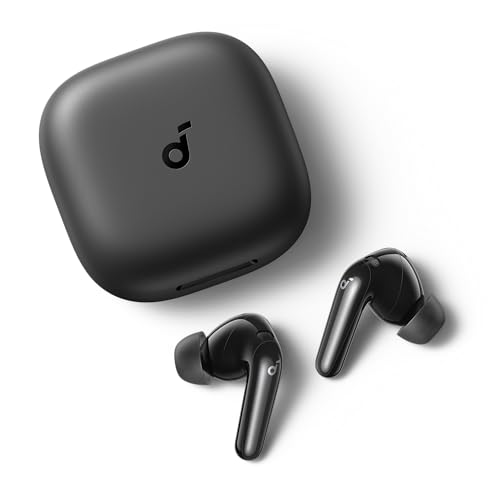
Soundcore P31i
Buyers who want budget true wireless earbuds with adaptive ANC, LDAC, translation tools, and long battery life for travel and everyday listening.
Read the Soundcore P31i review →Questions Buyers Ask
Fifine HD8
See the current listing, price and included accessories.
About This Review
Mandrillis Team
The Mandrillis editorial team researches and compares audio and music gear using manufacturer documentation, verified specs and real buyer feedback, so you can make a confident purchase without wading through marketing claims.
Read our full research methodology.