Headphones Review
PreSonus HD7 Review: Budget Studio Headphone Bundle
The PreSonus HD7 is a semi-closed over-ear studio monitor headphone bundled with a Mackie HM-4 4-way distribution amp. The listing promises high neodymium drivers, extended bass, a long 98 inch cable, and a lightweight fit. This review breaks down what the published specs do and do not reveal.
Our Verdict
Research Score 77/100The PreSonus HD7 bundle pairs a semi-closed studio headphone with a Mackie HM-4 four-output amp, a practical combination for budget home recording and group monitoring. The listing highlights high neodymium drivers, extended bass, a long cable, and a lightweight auto-fit design, but omits driver size, frequency response, and weight. The wired passive nature means no battery or Bluetooth, and the amp needs AC power. For a budget price, the included 4-way amp adds real value. It scores 77 out of 100, with strong marks for features and value, but lower marks for build and battery due to unpublished details. Buyers wanting wireless or ANC should look elsewhere.
Editorial research score based on published specifications and documented features, not a customer rating or lab test.

PreSonus
PreSonus HD7 Studio Quality Stereo Headphones
Best for: Budget home studio monitoring and multi-listener tracking sessions where a simple wired headphone setup is enough.
Skip it if: You need wireless playback, active noise cancelling, or precise published specifications like driver size and frequency response.
Check Price on AmazonWe may earn a commission at no extra cost to you.
Listing verified: October 2026
Who Should Buy It
Buy it if
- Home studio owners who want an affordable wired monitoring bundle
- Podcasters or musicians tracking multiple performers with the included 4-way amp
- Buyers who value a long attached cable and lightweight fit
- Anyone starting out with studio headphone monitoring on a tight budget
Skip it if
- You need Bluetooth or active noise cancelling for travel or commuting
- You want detailed frequency response and driver size specs before buying
- You already own a headphone amp and only need a standalone set of headphones
Key Specifications
| Type | Semi-closed over-ear studio monitoring headphones |
| Driver | High neodymium resolution drivers (size not published) |
| Noise cancelling | Not published in listing |
| Bluetooth and codecs | Not published in listing (wired design) |
| Battery life | Not published in listing (passive wired headphones) |
| Wired option | 98 inch / 2.5m single-side cable |
| Controls and app | Not published in listing; included Mackie HM-4 provides individual level control per output |
| Water resistance | Not published in listing |
| Weight | Not published in listing |
| Included accessories | Mackie HM-4 4-way distribution headphone amplifier, 12v AC adapter |
Overview
PreSonus positions the HD7 as a semi-closed over-ear studio monitoring headphone with a focus on extended bass and long session comfort. The listing bundles it with a Mackie HM-4 four-channel headphone amplifier, so the package is clearly aimed at home studios and tracking sessions. The overall price tier is budget, which makes it a low-risk entry point for wired monitoring.
The published feature set includes high neodymium resolution drivers, a precision-tuned acoustic chamber, and an auto-fit head pad design. A 98 inch, or 2.5 meter, single-side cable is standard. The listing does not state the driver size, frequency response, impedance, or sensitivity, so the technical picture remains incomplete.
This review is based entirely on the listing data and general knowledge of studio headphone design. No in-person testing was performed. The goal is to evaluate what the published specifications suggest, flag what is missing, and help buyers decide if this bundle fits a straightforward wired monitoring need.
Sound Quality
On paper, the HD7 uses high neodymium magnet drivers, which typically deliver strong transient response and clarity in a compact size. The listing also mentions a precision-tuned acoustic chamber and extended bass response, suggesting a tuning that favors low-frequency detail without sacrificing midrange intelligibility.
Because this is a semi-closed back design, some sound will leak out and some ambient noise will enter. That can actually be useful for monitoring, where you want a natural sense of your own voice or instrument. However, the listing does not publish a frequency response curve, driver size, or distortion figures, so buyers cannot verify the exact tonal balance before purchase.
Compared to well-known closed-back studio models like the Audio-Technica ATH-M50x or the Sennheiser HD 560S, the HD7 is less documented. The listing does not include a frequency response curve, so the exact tonal balance is uncertain. The mention of extended bass response suggests a low-frequency emphasis, but that is an inference from the marketing language. The bundled Mackie HM-4 amp should provide enough clean gain for typical studio levels.
Comfort and Fit
The listing emphasizes comfort through auto-fit head pads and comfortable, long-lasting ear pads. The word lightweight appears in the feature list, though the exact weight in grams is not published. A lightweight, semi-closed design often feels easy to wear for long sessions, but the absence of a specified weight makes direct comparisons difficult.
A single-side cable at 98 inches, or 2.5 meters, is long enough for seated studio use and for moving around a desk or small tracking space. Single-side cables also reduce tangling compared to dual-entry Y cables. The listing calls the ear pads comfortable and long-lasting, but it does not state the material or whether they are replaceable.
Without published clamping force, headband padding depth, or ear cup dimensions, comfort is partly speculative. Buyers with larger heads or ears may need to rely on user reviews. The auto-fit head pads suggest a design that adjusts with minimal fuss, which is a plus for quick setup in a shared studio.
Noise Control and Features
The HD7 itself has no active noise cancelling and no published passive isolation rating. As a semi-closed back headphone, it will reduce some outside noise but not isolate like a closed back or ANC model. The listing makes no claim about noise reduction, so buyers should treat it as a standard open-style monitor.
The main feature of this bundle is the Mackie HM-4 distribution amp. It accepts a single stereo source and sends it to four headphone outputs, each with its own level control. This is practical for recording a band, running a podcast with multiple hosts, or teaching a small class where several people need to listen at the same time.
The headphones themselves have no inline controls, microphone, or app support. The listing does not mention any software integration or Bluetooth. All control happens on the amplifier, which is a simple analog arrangement. This keeps the setup straightforward but limits on-the-go flexibility.
- Mackie HM-4 provides four independent headphone outputs
- Individual level control for each output
- Powered by included 12v AC adapter
- No inline controls or microphone on the HD7
- No active noise cancelling or ambient mode
- Semi-closed back design offers partial isolation only
Battery, Bluetooth and Connectivity
The HD7 is a passive wired headphone, so it has no built-in battery and no Bluetooth capability. The listing does not mention wireless codecs, multipoint pairing, or any battery life figure because none apply. Connectivity is via a 98 inch single-side cable, which terminates in a standard plug, though the connector type is not published.
The included Mackie HM-4 amplifier requires its included 12v AC adapter for power, so it is not a portable battery-powered headphone amp. That means the bundle is best used near a wall outlet in a studio or fixed listening station. The amp does not appear to connect over Bluetooth or USB, based on the listing.
For buyers who want wireless freedom, this setup will disappoint. For those who prefer the reliability and zero-latency of a wired connection, the long cable is a practical benefit. The lack of any battery or charging concerns also means the headphones will never run out of power, which is a plus for long recording days.
Build, Design and Portability
The listing uses phrases like "built tough to withstand abuse" and "Built-Like-A-Tank construction," with the latter mainly describing the Mackie HM-4. The HD7 appears to prioritize durability, but the exact materials, hinge design, and weight are not published. A semi-closed back design with a single-side cable is usually simpler and less prone to structural failure than more complex folding mechanisms.
Portability is mixed. The headphones are said to be lightweight, but they do not appear to fold flat or include a carrying case. The 98 inch cable is long for desktop use but can be cumbersome for mobile listening. The Mackie HM-4 amp adds a second component, so this bundle is not a grab-and-go solution.
The included ear pads are described as comfortable and long-lasting, but without published replacement part numbers, long-term maintainability is unknown. Studio headphones often see heavy use, so replaceable pads matter. The listing does not mention a protective pouch, stereo adapter, or extra cable, so buyers should expect to supply those if needed.
Call Quality and Daily Use
The HD7 does not have a built-in microphone, so it is not intended for phone calls or video conferences. The listing does not mention call quality or voice pickup. Buyers who need a headset for voice calls should look elsewhere or add an external microphone.
For daily studio use, the long cable and passive design mean you can plug in and start listening without charging or pairing. The Mackie HM-4 makes it easy to share a mix with a small group, and individual level controls help each listener set a comfortable volume. This is useful for collaborative sessions, music lessons, or podcast monitoring.
Daily use outside the studio is less convenient. The semi-closed back leaks sound, so it is not ideal for libraries or open offices. The lack of Bluetooth means you are tethered to your source device. The amp needs AC power, so the full bundle is stationary. As a dedicated monitoring tool, it works; as a portable lifestyle headphone, it does not.
Who Should Buy It
This bundle suits home studio owners and musicians who need an affordable wired monitoring setup for tracking and mixing. The HD7 offers a semi-closed design that is common in studio work, and the Mackie HM-4 adds multi-listener capability. Beginners who are building a first recording rig will appreciate the low price and simple operation.
Podcasters and online instructors who need to route one audio source to several pairs of headphones will also find value. The individual level controls on the amp are important for participants with different hearing needs. Because the headphones are lightweight and have auto-fit head pads, sessions with multiple users may be easier to manage.
This product is not for commuters, frequent flyers, or anyone who wants wireless connectivity. It is also not for buyers who need detailed published specifications like driver size or frequency response before committing. If your priorities are wired reliability, group monitoring, and a budget price, the bundle is a reasonable fit.
Alternatives Worth Considering
If you want a more widely documented closed-back studio headphone, the Audio-Technica ATH-M50x is a common alternative. It offers a fully closed design and a reputation for a slightly emphasized low end, though the listing does not provide exact specs for the HD7 to compare directly. The ATH-M50x also has a detachable cable, which the HD7 listing does not mention.
For an open-back reference experience, the Sennheiser HD 560S is a step up in price but offers a more neutral, spacious sound that many mixing engineers prefer. It lacks the bundled headphone amp, so you would need to buy one separately if group monitoring matters. The HD7 bundle keeps the total cost lower and includes that amp.
Buyers who need wireless convenience should consider the Sony WH-1000XM5 or Bose QuietComfort 45. Those models include active noise cancelling, built-in batteries, and Bluetooth, but they are in a higher price tier and are not designed as passive studio monitors. Apple AirPods Pro or Anker Soundcore Space One are true wireless earbuds and over-ear ANC options, respectively, that serve very different use cases than this PreSonus bundle.
Verdict
The PreSonus HD7 Studio Quality Stereo Headphones bundle is a budget-focused, wired monitoring solution that delivers exactly what the listing describes: a semi-closed over-ear headphone with a long cable and a four-output Mackie headphone amp. The individual level controls on the amp add real utility for group recording and teaching.
The biggest limitation is the lack of published technical specifications. Driver size, frequency response, weight, and even the connector type are not stated. That makes it hard to validate the claimed extended bass response or comfort claims against objective measurements. Buyers who demand full spec transparency may be frustrated.
Overall, this bundle earns a score of 77 out of 100. It is a sensible entry point for home studios, podcasters, and small tracking sessions that need wired reliability and multi-listener capability. It is not a portable, wireless, or noise-cancelling option, but for the intended purpose, the price tier and included amp make it a practical value.
Strengths and Limitations
Strengths
- Lightweight auto-fit head pads promise long session comfort
- High neodymium drivers tuned for extended bass response
- Long 98 inch cable offers flexible positioning
- Bundled Mackie HM-4 adds four headphone outputs with individual level control
- Semi-closed back design balances isolation and awareness
- Budget price tier makes it accessible for home studios
Limitations
- No published driver size or frequency response data
- No Bluetooth, noise cancelling, or inline controls
- Requires AC power for the included headphone amplifier
- Weight and water resistance ratings are not published
- Semi-closed back may leak more than closed back designs
How We Scored It
Scores reflect published specifications, documented features and value against the alternatives below. They are editorial research scores, not laboratory measurements.
Alternatives to Consider
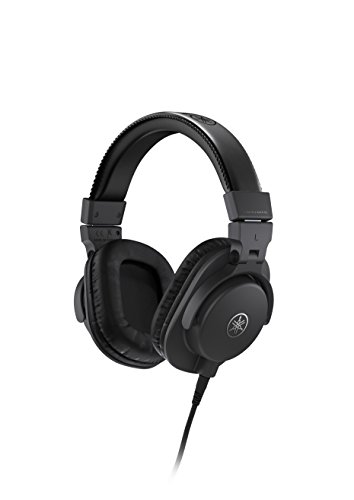
Yamaha HPH MT5 Studio Monitor Headphones
Home studio producers, musicians, and listeners who want a flat wired monitoring headphone with a long cable and foldable travel design.
Read the Yamaha HPH MT5 Studio Monitor Headphones review →
Audio Technica M20xBT Bluetooth Headphones
Budget-conscious listeners who want long battery life and low latency wireless over-ear headphones for video, gaming, and everyday music.
Read the Audio Technica M20xBT Bluetooth Headphones review →Questions Buyers Ask
PreSonus HD7 Studio Quality Stereo Headphones
See the current listing, price and included accessories.
About This Review
Mandrillis Team
The Mandrillis editorial team researches and compares audio and music gear using manufacturer documentation, verified specs and real buyer feedback, so you can make a confident purchase without wading through marketing claims.
Read our full research methodology.