Headphones Review
FiiO K7 Review: Balanced Desktop DAC Amp Value
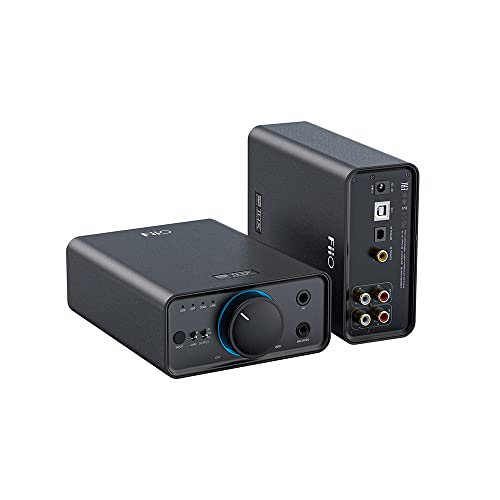
The FiiO K7 is a budget desktop DAC and headphone amplifier that lists dual AK4493SEQ DAC chips, dual THX AAA 788+ amplifier modules, balanced and single-ended outputs, and support for USB, optical, coaxial and AUX inputs. The listing highlights 2000mW of stable balanced output power and RGB status lights.
Our Verdict
Research Score 76/100The FiiO K7 presents a strong on-paper case for a budget desktop DAC and headphone amplifier. The listing specifies dual AK4493SEQ DAC chips and dual THX AAA 788+ amplifier modules, with a balanced output rated at 2000mW stable power. That combination should drive most headphones, including full-size models, and the flexible wired inputs cover USB, optical, coaxial and AUX sources. However, the listing does not publish weight, dimensions, included accessories or any Bluetooth, battery or app features, so buyers should treat those areas as open questions. For a desktop listener who wants balanced amplification and multiple digital inputs at a budget price tier, the FiiO K7 looks like a compelling option. Buyers who need portability or wireless operation should look elsewhere.
Editorial research score based on published specifications and documented features, not a customer rating or lab test.
FiiO
FiiO K7
Best for: The FiiO K7 suits desktop listeners who want a budget DAC and amp with balanced output and flexible wired inputs.
Skip it if: Avoid if you need portable Bluetooth listening or a battery-powered device, because the listing describes a desktop wired DAC and amp.
Check Price on AmazonWe may earn a commission at no extra cost to you.
Listing verified: October 2026
Who Should Buy It
Buy it if
- Listeners with full-size headphones that need more power than a phone or laptop provides
- Users who want a balanced headphone output without a large desktop stack
- People who need multiple wired digital sources, such as USB, optical and coaxial
- Buyers looking for THX amplifier technology at a budget price tier
Skip it if
- You want a wireless headphone amp or DAC with Bluetooth
- You need a battery-powered portable device
- You prefer an all-in-one headphone with built-in DAC, not a separate component
Key Specifications
| Type | Desktop DAC and amplifier |
| Driver | Not published in listing |
| Noise cancelling | Not published in listing |
| Bluetooth and codecs | Not published in listing |
| Battery life | Not published in listing |
| Wired option | Yes, USB, optical, coaxial and AUX inputs |
| Controls and app | Input selection, 2 gain levels, 3 output levels, RGB indicator lights |
| Water resistance | Not published in listing |
| Weight | Not published in listing |
| Included accessories | Not published in listing |
Overview
The FiiO K7 is a desktop DAC and headphone amplifier, not a pair of headphones or earbuds. The product listing positions it as a budget device within its category, highlighting a six-stage audio circuit design similar to FiiO's higher end models. It includes two AK4493SEQ DAC chips and two THX AAA 788+ amplifier modules. The listing describes support for balanced and single-ended headphone outputs and several wired digital inputs.
On paper, the K7 aims to deliver high power for full-size headphones. The listing states a stable output power of 2000mW at 1 percent THD+N under balanced output. That figure suggests enough headroom to drive many demanding headphones. The device also offers input selection, two gain levels and three output levels for flexible control.
Because this is a desktop component, several headphone centric attributes such as noise cancelling, Bluetooth, battery life and water resistance do not appear in the listing. Buyers should treat those areas as not published. This review focuses on what the listing does specify and how the FiiO K7 may fit into a wired desktop audio setup.
Sound Quality
The dual AK4493SEQ DAC chips are the centerpiece of the K7's digital to analog conversion. The listing describes a six-stage audio circuit borrowed from higher end FiiO devices, which suggests attention to signal integrity. With two DAC chips, the design likely aims for improved channel separation and lower noise, though the listing does not provide detailed distortion or noise specs beyond the 1 percent THD+N figure for the balanced output.
The dual THX AAA 788+ amplifier modules are known in the audio world for low distortion and high output. The listing claims 2000mW stable output power under balanced output. That output level should be enough to drive most full-size headphones, including many planar magnetic and high impedance models. However, the listing does not publish output impedance or specific power at different loads, so buyers should rely on the headline power figure.
Without in-person testing, the sound character remains an open question. The combination of AKM DAC chips and THX amplifier modules generally implies a clean, transparent sound rather than a heavily colored one. Buyers report that such setups tend to reproduce music without adding obvious warmth or brightness, but the final sound will depend on the headphones used. The listing itself does not describe any sound tuning or EQ features.
Comfort and Fit
Comfort and fit are normally headphone attributes, but the FiiO K7 is a desktop component. In this context, fit refers to how easily the unit sits on a desk and how accessible its controls are. The listing does not publish dimensions or weight, so the physical footprint is unknown. Buyers should verify the available space before purchase, especially if they plan to stack other gear.
The front panel controls include input selection, two gain levels and three output levels, according to the listing. That implies a straightforward physical interface with likely buttons or a switch, but the listing does not specify exact control types. The presence of both 4.4mm balanced and 6.35/3.5mm single-ended outputs means most headphone cables can connect directly without an adapter.
From an ergonomic standpoint, the RGB indicator lights described in the listing help show the working state and sampling rate at a glance. That can make the device easier to use in a dimly lit room. However, because the listing does not mention a remote control or app, all adjustments happen on the device itself. That is typical for a budget desktop DAC and amplifier.
Noise Control and Features
The FiiO K7 does not include active noise cancelling because it is a DAC and amplifier, not a headphone or earbud. The listing does not publish any noise reduction or isolation features. Instead, the feature set focuses on wired audio processing and output flexibility. Buyers looking for ANC should look at headphones with that technology, not a desktop component.
The listing highlights several practical features. It supports input selection among USB, optical, coaxial and AUX sources. Two gain levels allow users to match the amplifier to sensitive in-ear monitors or power hungry full-size headphones. Three output levels provide further control over listening volume without relying only on source volume. RGB indicator lights display the working state and differentiate sampling rates, which is useful for confirming signal quality.
The dual THX AAA 788+ amplifier modules and six-stage audio circuit are also features that affect performance. The balanced 4.4mm output is a notable inclusion at this budget price tier, since many entry level desktop amps omit balanced connections. Overall, the K7 appears to prioritize wired audio features over wireless or noise cancelling functions.
- Dual AK4493SEQ DAC chips
- Dual THX AAA 788+ amplifier modules
- Balanced 4.4mm and single-ended 6.35/3.5mm outputs
- USB, optical, coaxial and AUX inputs
- Two gain levels and three output levels
- RGB indicator lights for status and sample rate
Battery, Bluetooth and Connectivity
The FiiO K7 is a desktop device and the listing does not publish a battery life. This strongly suggests it is designed to be powered from a wall outlet or USB power, but the listing does not specify the power source or include a battery specification. Buyers should not expect portable use. The absence of battery life is normal for a desktop DAC and amplifier.
Bluetooth is not mentioned anywhere in the product listing, so the K7 should be treated as a wired only component. There are no codecs listed, no aptX or LDAC support, and no wireless pairing functions. That is consistent with the product's focus on high quality wired digital audio rather than wireless convenience.
Wired connectivity is a strength. The listing describes USB, optical, coaxial and AUX inputs, which cover computers, TVs, CD players and many other sources. Outputs include a 4.4mm balanced jack and a 6.35/3.5mm single-ended jack. That range of connections makes the K7 versatile for a desktop audio chain, though users who need Bluetooth should look elsewhere.
Build, Design and Portability
The listing does not specify the chassis material, weight or dimensions, so build quality is hard to evaluate on paper. The six-stage audio circuit and dual DAC and amp modules suggest a more complex internal layout than a simple USB dongle. RGB indicator lights imply a design that values functional feedback, but the listing does not describe the exterior finish or durability.
Portability is not a focus. As a desktop component, the K7 is likely intended to stay on a desk rather than travel in a bag. Without published weight, buyers cannot assess whether it is easy to move between rooms. The lack of battery further reinforces that this is not a portable product.
The design includes both a 6.35mm jack and a 3.5mm jack for single-ended output, which is convenient because users do not need an adapter for common headphone plugs. The 4.4mm balanced output adds compatibility with balanced cables. These physical connections suggest a practical, desktop oriented layout. Beyond that, the listing leaves the visual design largely to the buyer's imagination.
Call Quality and Daily Use
The FiiO K7 is not a communication device, so call quality is not applicable. The listing does not include a microphone, Bluetooth headset profile or any call related features. Buyers who need a headphone amp for phone calls should use a separate microphone or a headset with its own mic. The K7 is designed for music and media playback.
Daily use for a desktop audio setup looks straightforward. Users can connect a computer via USB, a TV via optical, a CD player via coaxial, or an analog source via AUX. The front input selection lets them switch sources without replugging cables. Two gain levels and three output levels help set a comfortable listening volume. RGB lights show the current sample rate, which can confirm that high resolution files are being decoded properly.
The balanced output with 2000mW stable power means the K7 can drive full-size headphones that might sound weak from a laptop or phone. That makes it a practical hub for a desktop headphone station. However, the listing does not mention any remote control, app, or automation, so all changes are manual. That is typical for a budget desktop DAC and amp.
Who Should Buy It
The FiiO K7 is best for listeners who already own wired headphones and want a desktop amplifier with more power than a portable device. Users with high impedance or low sensitivity full-size headphones are likely candidates, because the 2000mW balanced output should provide ample headroom. The dual THX amplifier modules also appeal to those who value low distortion amplification.
Buyers who need multiple digital inputs will appreciate the USB, optical and coaxial options. The AUX input adds compatibility with analog sources such as a turntable preamp or older media player. The presence of a 4.4mm balanced output is a standout feature at this price tier, making the K7 suitable for users with balanced headphone cables.
Those who want a simple, wired desktop audio chain without complex software should find the K7 easy to use. The physical controls for input, gain and output level keep operation direct. This review is written for people considering the K7 as a budget desktop DAC and amp, not for wireless or portable users.
Alternatives Worth Considering
If you need portability or Bluetooth, the FiiO K7 is not the right product. Portable DAC and amp dongles from other brands may offer similar power in a smaller form factor, though often with fewer inputs. Wireless headphone amplifiers with Bluetooth are also available but typically lack the balanced output power of a desktop unit like the K7.
For listeners who want an all-in-one headphone with built-in DAC and noise cancelling, models like the Sony WH-1000XM5 or Bose QuietComfort 45 are popular reference points. Those are closed-back wireless headphones with ANC, not desktop components. They are convenient for travel but do not provide the same amplification for wired full-size headphones.
On the desktop side, buyers might consider entry level DAC and amp combos from other audio brands, but the listing does not provide enough detail to compare exact specifications. The FiiO K7's combination of dual AK4493SEQ chips, dual THX AAA 788+ modules and 2000mW balanced output is notable at a budget price tier. Anyone who wants that feature set should keep the K7 on their shortlist.
Verdict
The FiiO K7 is a budget desktop DAC and amplifier with a strong on-paper feature set. Dual AK4493SEQ DAC chips and dual THX AAA 788+ amplifier modules are not common at this price range, and the 2000mW balanced output should satisfy most headphone power needs. The flexible wired inputs and both balanced and single-ended outputs add real versatility.
The main unknowns are weight, dimensions, accessories and any battery or wireless features. The listing does not publish those, so buyers should not expect portable or Bluetooth operation. For a purely desktop wired setup, those omissions are less important, but they limit the K7's appeal to users who want an all-in-one solution.
Overall, the FiiO K7 appears to deliver excellent value for a budget desktop DAC and amp. It is best suited to listeners who already have good wired headphones and need more power from a computer, TV or other digital source. If that describes you, the K7 is worth a close look. If you need mobility, wireless or a built-in microphone, look at alternative products.
Strengths and Limitations
Strengths
- Dual AK4493SEQ DAC chips and dual THX AAA 788+ amplifier modules
- Balanced 4.4mm and single-ended 6.35/3.5mm outputs
- Supports USB, optical, coaxial and AUX inputs
- 2000mW stable balanced output power
- Input selection, two gain levels and three output levels
- RGB indicator lights show status and sample rate
Limitations
- Not a portable device, no battery or Bluetooth listed
- No published weight or dimensions
- No published included accessories
- No app or remote control mentioned
How We Scored It
Scores reflect published specifications, documented features and value against the alternatives below. They are editorial research scores, not laboratory measurements.
Alternatives to Consider

Audio-Technica ATH-M50xSTS XLR StreamSet Streaming
Live streamers, podcasters, and voice over artists who already own an XLR interface and want a single wired headset with the ATH-M50x sound and a broadcast style microphone.
Read the Audio-Technica ATH-M50xSTS XLR StreamSet Streaming review →
Google Pixel Buds Pro 2
Android users who want active noise cancelling, Gemini AI, and a customizable twist-to-adjust fit in true wireless earbuds.
Read the Google Pixel Buds Pro 2 review →
FiiO BTR17 DAC AMP
Listeners who want a budget portable Bluetooth DAC/amp with desktop power and extensive codec support for wired headphones or earbuds.
Read the FiiO BTR17 DAC AMP review →Head-to-Head Comparisons
- Bowers & Wilkins Px7 S2e vs FiiO K7 Compare →
Questions Buyers Ask
FiiO K7
See the current listing, price and included accessories.
About This Review
Mandrillis Team
The Mandrillis editorial team researches and compares audio and music gear using manufacturer documentation, verified specs and real buyer feedback, so you can make a confident purchase without wading through marketing claims.
Read our full research methodology.