Headphones Review
OneOdio A71D Review: Wired DJ Sound on a Budget
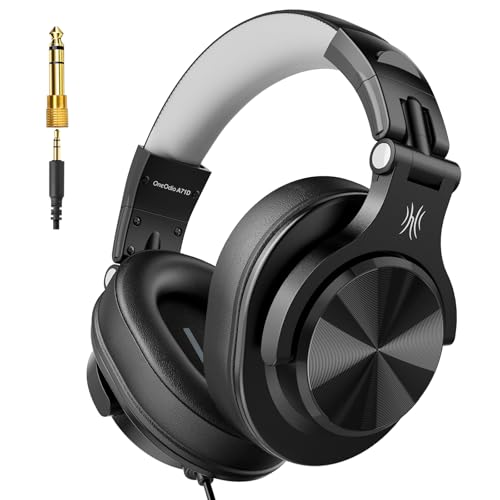
OneOdio A71D is a wired over-ear headphone aimed at DJs, podcasters, and home studio users. Its 40mm drivers, swiveling earcups, foldable frame, and long 2.2m cable with 3.5mm and 6.35mm plugs are its main selling points. The listing omits several specs, so expectations should stay realistic.
Our Verdict
Research Score 58/100The OneOdio A71D is a sensible budget wired headphone for DJ practice, tracking, and casual monitoring. The 40mm dynamic drivers and swiveling earcups provide the basics for single-ear cueing and long cable runs. On paper, the lack of Bluetooth, ANC, and published acoustic measurements means it cannot compete with flagship wireless sets, but it does not try to. Buyers who need a simple, foldable set of wired headphones with both 3.5mm and 6.35mm connections should find it adequate. The main unknowns are weight, durability over time, and exact sound tuning. Treat it as a budget tool, not an audiophile benchmark.
Editorial research score based on published specifications and documented features, not a customer rating or lab test.
OneOdio
OneOdio A71D
Best for: Entry-level DJ monitoring, home recording, and wired listening where a long cable and single-ear swivel are useful.
Skip it if: You need wireless Bluetooth, active noise cancelling, or detailed published acoustic measurements.
Check Price on AmazonWe may earn a commission at no extra cost to you.
Listing verified: October 2026
Who Should Buy It
Buy it if
- Beginners setting up a first DJ or podcast station
- Musicians practicing with guitar amps or keyboards
- Buyers who prefer a simple wired headphone with no battery to charge
- Home studio users needing a second pair for tracking
Skip it if
- You want Bluetooth or active noise cancelling
- You require a built-in microphone for calls
- You need detailed specs like frequency response or weight before buying
Key Specifications
| Type | Wired over-ear headphones |
| Driver | 40mm dynamic drivers |
| Noise cancelling | None, passive isolation only |
| Bluetooth and codecs | None, wired only |
| Battery life | Not applicable, wired passive design |
| Wired option | 2.2m audio cable with 3.5mm and 6.35mm plugs |
| Controls and app | Not published in listing, no inline controls described |
| Water resistance | Not published in listing |
| Weight | Not published in listing |
| Included accessories | 2.2m audio cable with 3.5mm and 6.35mm plugs |
Overview
The OneOdio A71D is a wired over-ear headphone positioned as a budget option for DJing, studio recording, podcasting, and home listening. The listing emphasizes a 40mm dynamic driver, a 90-degree swiveling earcup design, generous padding, and a foldable frame. It also includes a 2.2m audio cable with both 3.5mm and 6.35mm connections, which covers a wide range of audio gear. At its budget price tier, the A71D competes mostly with entry-level wired monitoring headphones rather than premium wireless sets.
Product listing data omits many technical specifications. Frequency response, impedance, sensitivity, weight, and exact build materials are not published, so buyers have to judge on the feature list and general OneOdio reputation. This is common for budget headphones, but it means a fully objective evaluation is not possible from the listing alone. Still, the core design choices point to a simple, flexible headphone for wired studio and stage tasks.
This review is based entirely on the published listing data and general knowledge of headphone design. It is an editorial research review, not a in-person test. The goal is to give an honest, on-paper assessment of what the A71D offers and where it falls short for different buyers. With that context, the A71D looks like a practical first wired headphone for DJ practice and home recording.
Sound Quality
The A71D uses a 40mm dynamic driver, which is a common size for full-size over-ear headphones and typically capable of producing deep bass and clear upper frequencies when well tuned. The listing claims the headphone delivers deep bass, clear mids, and crisp highs for DJing, studio recording, mixing, and monitoring. On paper, this suggests a balanced but slightly bass-forward presentation, which can be useful for beat matching and general monitoring.
However, the listing does not publish frequency response, impedance, or sensitivity figures. Without those numbers, it is impossible to say exactly how the driver measures or how it compares to better-documented studio headphones like the Audio-Technica ATH-M50x or Sony MDR-7506. Buyers report that budget OneOdio models often provide a warm, energetic sound with strong low-end presence, but that is not a guarantee for this specific model.
For DJing and home recording, a closed-back over-ear design like this typically gives some passive isolation and a more direct sound than open-back headphones. The 40mm driver should have enough low-frequency output for monitoring basslines and kick drums, though the lack of precise acoustic data means critical mixing decisions should be made with reference monitors if possible. Overall, the sound quality is likely adequate for its price and intended use, but not a documented audiophile contender.
Comfort and Fit
The listing describes ultra-soft padded ear muffs and an adjustable headband, which suggests a focus on all-day wear. The earcups are over-ear, so they can surround the ears rather than pressing directly on them. The padding thickness is not specified, and the exact weight is not published, so long-term comfort may vary depending on head size and personal preference.
The 90-degree swiveling earcups improve versatility for DJ use because you can slide one cup off your ear while keeping the headband stable. This single-ear monitoring position is especially useful for beat matching in loud environments. The foldable design also suggests the headphone can be stored flat or in a compact shape, which is convenient for transport.
Without a published weight or clamp force figure, it is hard to compare comfort against established studio headphones. Some budget headphones start out comfortable but become warm or tight after several hours. Buyers who prioritize comfort for long sessions may want to try the A71D in person or rely on return policies. Still, the combination of soft padding, adjustable band, and swiveling cups is a reasonable comfort package for the price.
Noise Control and Features
The A71D is a passive wired headphone with no active noise cancelling and no Bluetooth. The closed-back earcup design and padded cushions provide some physical isolation from outside noise, but the listing does not state an attenuation rating. This is typical for budget monitoring headphones, where passive isolation is enough for many home studio or DJ booth situations but not for very loud environments like airplane cabins.
The standout feature is the single-sided monitoring capability made possible by the 90-degree swiveling earcups. The long 2.2m cable with both 3.5mm and 6.35mm plugs also adds flexibility for connecting to mixers, audio interfaces, guitar amps, keyboards, and laptops. There is no app, no touch controls, and no inline remote described in the listing, so all adjustment happens through the source device.
- 90-degree swiveling earcups for single-ear monitoring
- 2.2m cable with 3.5mm and 6.35mm plugs
- Foldable design for storage and travel
- No active noise cancelling or Bluetooth
- No inline microphone or remote controls mentioned
- Passive noise isolation from closed-back earcups only
Battery, Bluetooth and Connectivity
Since the A71D is a wired headphone, there is no battery to charge or manage. The listing does not mention any battery, wireless connectivity, or codec support. It is a purely passive design that gets its signal through the included 2.2m audio cable. This can be an advantage for users who dislike charging cables or battery degradation.
Bluetooth and codecs are completely absent. The A71D will not pair with a phone or laptop wirelessly, and it does not support AAC, SBC, aptX, or LDAC. For buyers who want wireless convenience, this is a significant limitation. However, for DJ booths, recording desks, and guitar practice, a long wired cable is often more reliable and has no latency.
The dual 3.5mm and 6.35mm plug setup is a practical touch. The smaller plug works with most laptops, phones with headphone jacks, and portable devices, while the larger 6.35mm connection fits mixers, audio interfaces, and guitar amps without an adapter. This versatility is one of the A71D's main selling points for stage and studio use.
Build, Design and Portability
The listing describes the A71D as durably constructed for studio, stage, or home office use, but it does not list the specific plastic or metal materials used. The foldable design and swiveling earcups suggest a mix of rigid and hinged parts, which can be prone to wear over time if not handled gently. Weight is not published, so portability is mostly about the folding mechanism rather than absolute mass.
The headphone's all-black appearance and over-ear silhouette are typical for professional monitoring gear, without flashy branding. The cable is 2.2m, which is long enough for studio work but may be cumbersome for walking around with a phone. The included 6.35mm plug adds to the utilitarian design, signaling that this headphone is meant for equipment racks and practice spaces.
Portability is reasonably good because the earcups fold inward, likely making the headphone flatter for a backpack or gear bag. However, the listing does not mention a carrying case or pouch, so buyers may need to provide their own protection. Overall, the build appears adequate for a budget wired headphone, but long-term durability remains an open question without in-person inspection.
Call Quality and Daily Use
The A71D does not include an inline microphone or remote control according to the listing, which means it is not designed for phone calls, video meetings, or voice recording. If you need a headset for calls, this is the wrong tool. Daily use is better suited to music playback, instrument monitoring, or DJ practice where a microphone is not required.
For everyday wired listening with a laptop, keyboard, or audio interface, the long cable and swiveling cups make it easy to adjust position. The closed-back design also keeps sound from leaking too much into a shared room, which is useful for home offices. However, because there is no inline volume control or play/pause button, you have to adjust everything on the source device.
The lack of Bluetooth means you cannot take a call while moving away from the source, and the long cable can get tangled if used on the go. The A71D is best treated as a stationary monitoring headphone rather than a portable lifestyle product. For DJs and producers, that is perfectly fine. For commuters, it is a poor fit.
Who Should Buy It
The OneOdio A71D is a sensible choice for beginners setting up a first DJ or home recording station. The swiveling earcups, long cable, and dual plugs cover the basic needs of cueing, monitoring, and instrument practice. You do not need to charge it, pair it, or manage an app, which lowers the learning curve.
Musicians who practice with guitar amps, keyboards, or electronic drums will appreciate the 6.35mm plug and the long reach. Podcasters and voiceover artists could use it as a monitoring headphone, provided they already have a separate microphone. The budget price tier makes it low-risk for adding a second pair in a studio.
Buyers who want a simple wired headphone for PC listening or late-night music sessions will also find the A71D adequate. It does not pretend to be a high-end reference headphone, but it offers the core features needed for private listening and basic audio work. If your expectations stay realistic, it should serve its purpose.
Alternatives Worth Considering
If you want a more established wired studio headphone with widely published specifications, the Audio-Technica ATH-M50x is a common reference point. It has a long track record and detailed acoustic data. The Sony MDR-7506 is another professional standard with a neutral sound profile often used in broadcast and field recording. Both are typically more expensive than the A71D, but they offer more confidence in performance.
For buyers who need wireless Bluetooth and active noise cancelling, the Anker Soundcore Space One or Apple AirPods Pro serve very different use cases but may be worth considering. They do not offer a quarter-inch plug or swiveling earcups for DJ work, so they are not direct alternatives. Instead, they trade studio flexibility for daily portability and call convenience.
Within the budget wired category, other OneOdio models and similar no-name brands offer foldable designs and dual plugs. The main differentiator is often cable length, padding, and minor feature tweaks. Because the A71D omits detailed specs, comparing against more transparent budget options may be difficult. Buyers who value published measurements should look for headphones that provide them.
Verdict
The OneOdio A71D is a practical budget wired headphone for DJ practice, home recording, and instrument monitoring. Its 40mm driver, swiveling earcups, long cable, and dual plugs address the core needs of those tasks without unnecessary complexity. The listing does not publish several important specs, so buyers should treat it as a functional tool rather than a benchmark product.
For the price tier, the A71D likely delivers acceptable sound and comfort for short to medium sessions, though long-term durability and exact tuning remain unknown. It is not suitable for Bluetooth, active noise cancelling, or call use. If you accept those limitations, it offers a straightforward wired monitoring solution with a feature set that matches many entry-level DJ workflows.
Strengths and Limitations
Strengths
- 40mm dynamic drivers tuned for deep bass and clear mids/highs
- 90-degree swiveling earcups enable single-ear monitoring
- Foldable design and long 2.2m cable for flexible setups
- Generous padding and adjustable headband for extended wear
- Includes both 3.5mm and 6.35mm connections for mixers and instruments
- Budget price tier, good value for entry DJ or home studio use
Limitations
- No active noise cancelling or Bluetooth, wired only
- No published frequency response, impedance, or sensitivity figures
- No inline mic or remote controls mentioned
- Weight and exact build materials not published
- No water resistance rating
How We Scored It
Scores reflect published specifications, documented features and value against the alternatives below. They are editorial research scores, not laboratory measurements.
Alternatives to Consider
Yinyoo KZ ZST PRO X
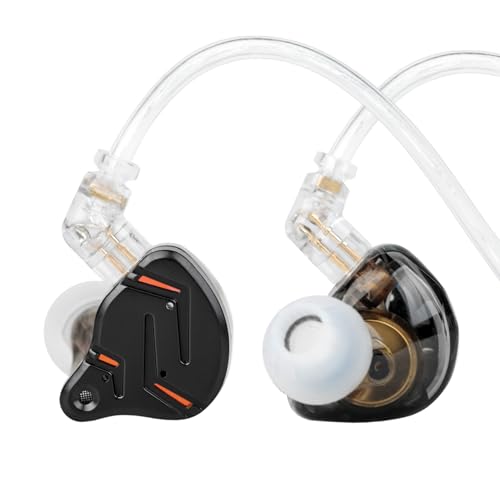
Budget-conscious gamers and music listeners who want a wired hybrid driver IEM with detailed mids and punchy bass.
Read the Yinyoo KZ ZST PRO X review →
syndesmos Headphones
Best for budget minded home studio users and DJs who want a wired over ear monitor with single side swivel and audio sharing.
Read the syndesmos Headphones review →
OneOdio DJ Headphones
DJs, studio monitoring, and budget-minded listeners who need wired over-ear headphones with single-ear swivel and a share port.
Read the OneOdio DJ Headphones review →Questions Buyers Ask
OneOdio A71D
See the current listing, price and included accessories.
About This Review
Mandrillis Team
The Mandrillis editorial team researches and compares audio and music gear using manufacturer documentation, verified specs and real buyer feedback, so you can make a confident purchase without wading through marketing claims.
Read our full research methodology.