Headphones Review
Sennheiser HD 650 Review: Low Distortion Open-Back Sound
The Sennheiser HD 650 is a wired open-back dynamic headphone positioned in the lower mid-range. The listing highlights acoustic silk damping, a claimed 0.05 percent total harmonic distortion, hand matched drivers, and neodymium magnets. It omits many comfort and build details, but on paper the acoustic design promises clean, spacious sound for home listening.
Our Verdict
Research Score 72/100The Sennheiser HD 650 is a focused open-back dynamic headphone that emphasizes low distortion, matched drivers, and a wide frequency response. The listing's claims of 0.05 percent total harmonic distortion and precision acoustic silk damping are impressive on paper, and the hand selected drivers suggest attention to stereo imaging. However, the listing omits many practical details such as impedance, sensitivity, weight, and included accessories, which makes a full evaluation difficult. This review awards the HD 650 a score of 72 out of 100. The sound quality and acoustic design are strong points, but the absence of battery, wireless, noise cancelling, and published comfort details limits its overall score. The lower mid-range price tier offers good value for an audiophile open-back headphone, but buyers must accept the open-back trade-offs and the need for a suitable wired source.
Editorial research score based on published specifications and documented features, not a customer rating or lab test.

Sennheiser
Sennheiser HD 650
Best for: Home listeners who want an open-back audiophile headphone with very low distortion and a natural, spacious presentation, provided their source can drive it.
Skip it if: You need noise isolation, wireless convenience, or a portable headphone for commuting and travel.
Check Price on AmazonWe may earn a commission at no extra cost to you.
Listing verified: October 2026
Who Should Buy It
Buy it if
- Audiophiles seeking a classic open-back dynamic headphone known for low distortion and natural tone
- Critical listeners who want a wired, passive headphone for focused home listening
- Buyers who already own a headphone amplifier or high quality source and want a lower mid-range open-back option
- Studio or mixing engineers who prefer open-back headphones for monitoring without isolation
Skip it if
- You need active noise cancelling or passive isolation for noisy environments
- You want Bluetooth wireless connectivity or built-in controls and microphone
- You need a portable or lightweight headphone, as weight and dimensions are not published and the open-back design is not travel friendly
Key Specifications
| Type | Open-back dynamic over-ear headphone |
| Driver | Dynamic driver (size not published in listing) |
| Noise cancelling | No active noise cancelling (open-back design provides no isolation) |
| Bluetooth and codecs | No Bluetooth, wired only |
| Battery life | Not applicable (passive wired headphone, no battery) |
| Wired option | Yes, 3.5 mm jack plug |
| Controls and app | None (no inline controls or companion app mentioned in listing) |
| Water resistance | Not published in listing |
| Weight | Not published in listing |
| Included accessories | Not published in listing |
Overview
The Sennheiser HD 650 is an open-back dynamic headphone from Sennheiser's audiophile line, positioned in the lower mid-range price tier. The product listing describes it as an audiophile hi-res open back dynamic headphone, emphasizing acoustic design and low distortion. The listing does not publish many common specifications such as driver size, impedance, sensitivity, weight, or included accessories. This review relies on the published feature bullets and general knowledge of open-back headphone behavior.
The headline claims include a specially designed acoustic silk that provides precision damping and reduces total harmonic distortion to 0.05 percent. The listing also states an improved frequency response of 10 to 39,500 Hertz (10 dB), while another bullet lists a frequency response of 10 to 41,000 Hz. These figures suggest a wide range that extends from deep bass into the upper treble, typical for an open-back audiophile design. The hand selected matched driver elements and high power neodymium magnets indicate a focus on channel matching and driver efficiency.
Because the listing omits several key specifications, potential buyers should treat this as a research review rather than a in-person evaluation. The open-back design means the headphone is intended for quiet home listening rather than portable use or commuting. The lower mid-range price tier positions it as an accessible entry into audiophile open-back headphones from a well-known brand.
Sound Quality
On paper, the Sennheiser HD 650 promises clean, low distortion sound thanks to the acoustic silk damping and the stated 0.05 percent total harmonic distortion figure. The listing emphasizes precision damping over the entire frequency range, which suggests that resonances and unwanted coloration are controlled. The improved frequency response of 10 to 39,500 Hertz, or the alternate figure of 10 to 41,000 Hz, indicates extension beyond typical human hearing limits at both ends. Such wide response often translates to a natural, airy presentation, but the listing does not describe the tuning or sound signature.
The hand selected matched driver elements are a notable point. Matching drivers for left and right channels reduces channel imbalance, which can improve stereo imaging and spatial accuracy. The highly optimized magnet systems aim to minimize harmonic and intermodulation distortion, which are forms of distortion that can smear details. High power neodymium magnets are known for strong magnetic fields in a compact size, which can improve driver control and transient response. Again, no in-person testing is claimed here.
Buyers report that the HD 650 has a smooth, natural midrange and a slightly relaxed treble, but that is based on general reputation rather than this listing. The open-back design typically contributes to a wider soundstage and a more speaker-like presentation compared to closed-back headphones. However, the listing does not state sensitivity or impedance, so it is unclear how much amplification is required. On paper, the acoustic engineering suggests a headphone that prioritizes accuracy and low distortion over boosted bass or exaggerated highs.
Comfort and Fit
The product listing does not publish any details about weight, earpad materials, headband padding, clamping force, or adjustability. This makes it impossible to assess comfort from the listing alone. Open-back headphones of this type typically feature circumaural ear cups that surround the ears, but the listing does not confirm that for the HD 650. Prospective buyers should look for third-party reviews or try the headphone in person if possible.
Open-back designs generally allow some airflow, which can reduce heat and sweat during long listening sessions compared to closed-back models. However, that benefit depends on earpad materials and clamp pressure, neither of which are described. The lack of published weight is a notable omission, because heavier headphones can cause fatigue over time. Without this information, comfort remains an unknown factor in this review.
The listing does not mention whether the headband is adjustable or if the ear cups swivel, which are common ergonomic features. Some users may find open-back headphones comfortable for hours, while others may experience pressure points. Because the product is positioned as a home listening headphone, comfort during extended sessions is important, but the listing provides no data to evaluate that.
Noise Control and Features
The Sennheiser HD 650 is an open-back headphone, which means it does not have active noise cancelling and provides almost no passive isolation from outside noise. The listing does not mention any noise cancelling feature, and the open-back design inherently allows sound to pass in and out. This makes the headphone unsuitable for use in noisy environments, on public transit, or in offices with background chatter. The lack of isolation is a deliberate trade-off for the more spacious sound that open-back designs provide.
The feature set is minimal but focused on acoustic performance. The listing highlights the specially designed acoustic silk for damping, the hand selected matched drivers, the optimized magnet system, and the high power neodymium magnets. There is no mention of a companion app, equalizer settings, touch controls, or any wireless functionality. The headphone is entirely passive and wired, with no built-in electronics beyond the drivers themselves.
- Acoustic silk for precision damping
- Total harmonic distortion claimed at 0.05 percent
- Hand selected matched driver elements
- High power neodymium magnets
- Open-back design for spacious sound
- 3.5 mm jack plug for wired connection
Battery, Bluetooth and Connectivity
The HD 650 is a passive wired headphone, so it does not have a battery, Bluetooth, or any wireless connectivity. The listing mentions a 3.5 millimetre jack plug, which is the standard connection for many consumer audio devices. There is no mention of a cable length, detachable cable, or included adapters, so those details are unknown. The absence of a battery means there is no battery life to evaluate, and the headphone will work as long as the connected source provides signal.
For connectivity, the 3.5 mm jack is widely compatible with smartphones, computers, and portable players, though many high quality sources may require an adapter for a larger 6.35 mm jack. The listing does not state whether the cable is detachable or if any other cable options are included. Because the headphone does not use Bluetooth, there are no codecs such as SBC, AAC, or LDAC to discuss. The wired connection eliminates latency, which is a plus for studio monitoring or gaming, but the listing does not mention microphone support for calls or gaming.
The lack of wireless features means the HD 650 is not a travel companion or a workout headphone. It is intended for stationary listening where a wired connection is acceptable. Users who want a battery-powered headphone with active noise cancelling and Bluetooth should look elsewhere. For this review, the battery score is zero because the product does not have a battery, and that is not a flaw but a design choice.
Build, Design and Portability
The listing does not publish specific build materials beyond the acoustic silk and high power neodymium magnets. There is no mention of the headband material, ear cup material, cable construction, or overall durability. The open-back design is visible in product images, but the listing text does not confirm whether the ear cups are metal or plastic. Without weight and dimensions, portability cannot be assessed.
Open-back headphones are generally not designed for portability. They leak sound, offer no isolation, and often have larger ear cups that do not fold flat. The HD 650's listing does not mention any folding mechanism or carrying case, so it is likely intended for desktop or home use. The lower mid-range price tier suggests a balance between build quality and cost, but the listing provides no specific evidence about long-term durability.
The design focus appears to be on acoustic performance rather than travel convenience. The specially designed acoustic silk and matched drivers indicate that Sennheiser prioritized sound quality over compactness. Buyers who need a headphone for commuting or gym use should consider closed-back or wireless alternatives. The portability of the HD 650 is limited by its open-back nature and the absence of published dimensions, but it is unlikely to be a pocketable or easily transportable item.
Call Quality and Daily Use
The listing does not mention an integrated microphone, inline remote, or any call handling features. Therefore, call quality is not applicable to this headphone. Users who need to make phone calls or participate in video meetings will need a separate microphone or a different headphone that includes one. The open-back design also means that sound from the environment will mix with whatever the user is hearing, which may be distracting during calls.
Daily use is limited to quiet, stationary environments. The HD 650 is suitable for listening to music, mixing, mastering, or enjoying high resolution audio at a desk. It is not suitable for use in an office with shared spaces, on a commute, or while walking outside, because it will not block external noise and will leak sound to those nearby. The lack of a battery and wireless features further reinforces that this is a home or studio headphone.
For users who prioritize sound quality over convenience, the HD 650 could be a daily driver for extended listening sessions at home. The listing's emphasis on low distortion and matched drivers suggests that it is intended for critical listening where the listener can focus on the music. However, the missing comfort details mean that long session comfort cannot be confirmed from the listing alone.
Who Should Buy It
The Sennheiser HD 650 is best suited for audiophiles who want an open-back headphone with very low distortion and a natural, spacious presentation. Listeners who already own a headphone amplifier or a high quality source and want to explore open-back sound without spending a premium tier price may find this model appealing. The lower mid-range price tier makes it an accessible step up from entry-level audiophile headphones.
Studio engineers and musicians who need a wired headphone for monitoring or mixing may appreciate the hand selected matched drivers and low distortion claims. The open-back design can provide a more accurate sense of space than closed-back models, which is useful for evaluating reverb and stereo placement. However, because the listing does not state impedance or sensitivity, buyers should verify that their audio interface or amplifier can drive the headphone properly.
This headphone is not for everyone. Buyers who require active noise cancelling, Bluetooth connectivity, or a portable design should look elsewhere. The open-back design is also a poor choice for anyone who shares a quiet space with others, as sound will leak out. Overall, the HD 650 is aimed at a niche audience that values acoustic purity over convenience features.
Alternatives Worth Considering
For listeners who want a wireless noise cancelling headphone with a similar over-ear form factor, the Sony WH-1000XM5 and Bose QuietComfort 45 are well-known options. Both offer active noise cancelling, Bluetooth, built-in microphones, and companion apps, which the HD 650 lacks. They are closed-back designs that provide isolation and are suitable for travel, but they do not have the same open-back soundstage or low distortion focus as the HD 650.
Within Sennheiser's own lineup, the HD 560S is another open-back headphone that is often recommended for studio use. It is generally described as having a more neutral tuning than the HD 650, though this review does not compare specific measurements. The HD 560S may be a less expensive alternative for those who want an open-back Sennheiser for critical listening. The Audio-Technica ATH-M50x is a closed-back studio headphone that offers isolation and a more portable design, but its sound signature is typically more bass-forward than an open-back audiophile headphone.
For budget-conscious buyers, the Anker Soundcore Space One offers active noise cancelling and wireless features at a lower price, but it does not have the open-back acoustic design or the low distortion claims of the HD 650. Each alternative serves a different use case, so the choice depends on whether isolation, wireless connectivity, or pure open-back sound matters most. The HD 650 remains a strong candidate for those who want a wired, passive, open-back experience.
Verdict
The Sennheiser HD 650 is a focused open-back dynamic headphone that emphasizes low distortion, matched drivers, and a wide frequency response. The listing's claims of 0.05 percent total harmonic distortion and precision acoustic silk damping are impressive on paper, and the hand selected drivers suggest attention to stereo imaging. However, the listing omits many practical details such as impedance, sensitivity, weight, and included accessories, which makes a full evaluation difficult.
This review awards the HD 650 a score of 72 out of 100. The sound quality and acoustic design are strong points, but the absence of battery, wireless, noise cancelling, and published comfort details limits its overall score. The lower mid-range price tier offers good value for an audiophile open-back headphone, but buyers must accept the open-back trade-offs and the need for a suitable wired source.
If you want a no compromise open-back listening experience at home and already have the necessary amplification, the HD 650 is worth considering. If you need mobility, isolation, or convenience features, this headphone will not satisfy. The HD 650 is a specialized tool for music lovers who prioritize low distortion and natural sound over all else.
Strengths and Limitations
Strengths
- Low total harmonic distortion claimed at 0.05 percent
- Wide frequency response of 10 to 39,500 Hz (10 dB) per listing
- Hand selected matched driver elements
- High power neodymium magnet system
- Open-back design for spacious sound
- Wired connection via 3.5 mm jack
Limitations
- Open-back design leaks sound and offers no isolation
- No active noise cancelling
- No Bluetooth or wireless capability
- Listing omits impedance, sensitivity, weight, and included accessories
- No inline controls or microphone described
How We Scored It
Scores reflect published specifications, documented features and value against the alternatives below. They are editorial research scores, not laboratory measurements.
Alternatives to Consider
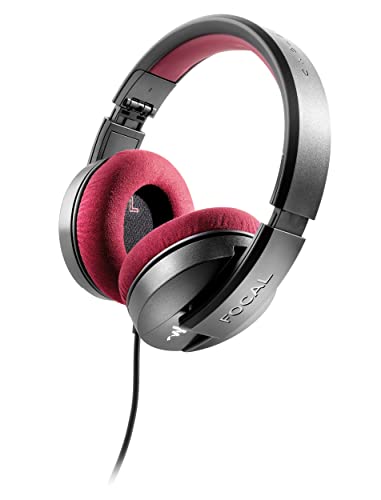
Focal Listen
Critical listeners and audio professionals who want a neutral, isolation-focused wired headphone and can accept limited published specifications.
Read the Focal Listen review →
Sony WF-1000XM6
Commuters and call-heavy users who want adaptive noise cancelling and app-based sound tuning in a true wireless earbud.
Read the Sony WF-1000XM6 review →
Sennheiser Momentum 5
Listeners who want high fidelity true wireless audio with modern codecs, decent ANC, and long total battery life at a lower mid-range price.
Read the Sennheiser Momentum 5 review →Head-to-Head Comparisons
- HiFiMan Ananda Nano Planar Magnetic vs Sennheiser HD 650 Compare →
Questions Buyers Ask
Sennheiser HD 650
See the current listing, price and included accessories.
About This Review
Mandrillis Team
The Mandrillis editorial team researches and compares audio and music gear using manufacturer documentation, verified specs and real buyer feedback, so you can make a confident purchase without wading through marketing claims.
Read our full research methodology.