Instruments Review
Alesis Harmony 61 MKII Review: Lightweight Beginner Keyboard
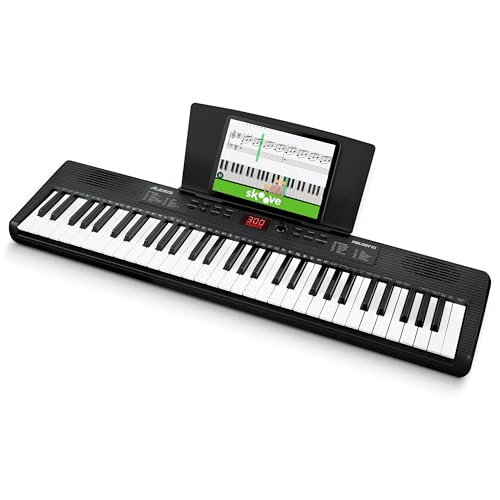
The Alesis Harmony 61 MKII is a budget portable keyboard with 61 keys, 300 voices, split and layer modes, and 300 accompaniment rhythms. It includes online lessons from Skoove and Melodics, USB-MIDI, and battery power. The listing omits key action and control surface details, making it best for beginners rather than producers.
Our Verdict
Research Score 61/100The Alesis Harmony 61 MKII Portable Keyboard is a practical entry-level instrument for beginners who want a lightweight, affordable way to learn piano and explore sounds. The published specification highlights a generous sound library, accompaniment rhythms, and bundled online lessons, which add real value for new players. USB-MIDI connectivity and battery power make it flexible for use with a computer or on the go. However, the listing does not describe key action, velocity response, pads, or assignable controls, so producers and players who need expressive performance features will find it limited. The build quality and long-term durability are unknown from the listing alone, but the inclusion of a sheet music stand and power adapter is a plus. Overall, this keyboard fits its budget tier well and should satisfy complete beginners, but it is not a controller for serious studio work or beat production.
Editorial research score based on published specifications and documented features, not a customer rating or lab test.
Alesis
Alesis Harmony 61 MKII Portable Keyboard
Best for: Beginner piano students and casual players seeking a lightweight, affordable 61-key keyboard with onboard sounds, lessons, and basic USB-MIDI connectivity.
Skip it if: Avoid if you need velocity-sensitive pads, assignable knobs or faders, deep DAW control, or a specified key action for expressive performance.
Check Price on AmazonWe may earn a commission at no extra cost to you.
Listing verified: October 2026
Who Should Buy It
Buy it if
- Absolute beginners wanting a first keyboard with structured online lessons
- Casual players who need a battery-powered keyboard for travel or practice
- Students who want record mode and a built-in metronome to track progress
- Anyone needing a simple USB-MIDI controller for software instruments
Skip it if
- Beatmakers and producers who need drum pads and tactile controls
- Players looking for realistic hammer-action or semi-weighted keys
- Users who rely on deep DAW integration, custom MIDI mapping, or bundled virtual instruments
Key Specifications
| Keys | 61 keys |
| Key type | Not published in listing |
| Pads | Not published in listing |
| Knobs and faders | Not published in listing; no knobs or faders described |
| DAW integration | USB-MIDI connection for Mac or PC; no deep DAW integration or mapping software described |
| Bundled software | Online lessons from Skoove and Melodics; no DAW or virtual instruments included |
| Connectivity | USB-MIDI, 1/4 inch sustain pedal input, 1/8 inch aux input, 1/8 inch headphone output |
| Power | AC adapter included or 6 AA batteries, not included |
| Weight | 6.6 lbs (3 kg) |
| Included accessories | Full-back sheet music/tablet stand and power adapter; batteries and sustain pedal not included |
Overview
Alesis positions the Harmony 61 MKII Portable Keyboard as an entry-level instrument for new piano students and casual players. The listing emphasizes a compact design with 61 keys, a large library of 300 voices, and split or layer functions. It also bundles online lessons from Skoove and Melodics, which gives beginners a guided path from the first note to simple songs. The product falls in the budget tier, making it accessible for families and adult learners who want to try piano without a large upfront investment.
On paper, the keyboard covers the fundamentals well. The published specification includes 300 accompaniment rhythms with auto-chord functions, 30 demo songs, a metronome, and a record mode. A USB-MIDI connection allows the keyboard to work with recording and educational software on a Mac or PC. Portability is a clear focus, since the unit weighs 6.6 lbs and can run on six AA batteries. Those features make it suitable for practice at home, in a dorm room, or on a trip.
The listing does not state the key action type, velocity sensitivity, or build materials. That omission is common in this price range, but it means buyers should not expect confirmed semi-weighted or hammer-action keys. This is a beginner-oriented keyboard with basic controller functionality, not a full studio controller. The review below breaks down what the published information supports and where the product falls short for more demanding users.
Keys, Pads and Feel
The Alesis Harmony 61 MKII has 61 keys, which matches the standard five-octave range for portable learning keyboards. The listing describes the keys as helpful for developing finger strength and dexterity, but it does not publish the key action type, key width, or whether the keys are velocity sensitive. Buyers cannot confirm from the listing whether the feel is closer to a synth-action keyboard, a semi-weighted board, or something else. That missing detail matters for players who want to practice dynamics and expression.
There are no drum pads described anywhere in the product listing. For beatmakers and producers, the absence of velocity-sensitive pads is a notable limitation. This keyboard is not designed for finger drumming or clip launching. The focus is on traditional keyboard playing with onboard sounds and accompaniment rhythms. If you need pads, you will have to add a separate pad controller or choose a different product.
The listing also does not mention aftertouch or any assignable key zones. Buyers should treat the keybed as a simple, unconfirmed action unless they can test it in person. For absolute beginners, this may be acceptable, but intermediate players who need nuanced control will likely find the unspecified feel a drawback.
Knobs, Faders and DAW Integration
The product listing does not describe any knobs, faders, wheels, or assignable controls on the Alesis Harmony 61 MKII. That is an important omission for a review, because many keyboard controllers in this general category include at least a few knobs or pitch and mod wheels. The absence of any published control surface suggests that this keyboard relies on its front panel buttons for voice selection, rhythm control, and metronome functions, but those are not assignable MIDI controls.
DAW integration is limited to a USB-MIDI connection that the listing says works with most recording and educational software on a Mac or PC. There is no mention of custom DAW scripts, automatic mapping, transport controls, or bundled DAW software. Users who want deep integration with Ableton Live, Logic Pro, or similar programs will need to configure MIDI manually or use the keyboard only for basic note input.
For a beginner who simply wants to play software instruments or record MIDI notes into a lesson app, this level of integration is adequate. But for producers who expect knobs to map to mixer controls, faders for volume automation, or pads for drums, the Harmony 61 MKII is not a suitable controller. The listing does not state whether the keyboard is class compliant, so users should verify compatibility with their specific operating system before purchase.
Software, Sounds and Features
The built-in sound library is a highlight of the published specification. The Alesis Harmony 61 MKII offers 300 voices, which covers a wide range of instruments from pianos and organs to strings and synths. The listing also describes the ability to layer two sounds or split them across the keyboard, which is useful for practicing left-hand bass and right-hand melody. Sustain and vibrato effects are included, though the listing does not detail how they are controlled or whether they are editable.
Accompaniment features are another strong point for beginners. The keyboard includes 300 accompaniment rhythms with auto-chord functions, allowing a student to play along with a backing band in different genres. The 30 demo songs provide examples and can be used for listening or learning. A built-in metronome helps with timing, and record mode lets players capture their practice sessions for review.
Bundled online lessons from Skoove and Melodics are a meaningful addition, especially for self-directed learners. These platforms offer structured piano courses and interactive feedback. However, the listing does not include any DAW software or virtual instrument plugins, so buyers who want a full music production package will need to purchase those separately. The keyboard itself is not a standalone workstation, but for its price it provides a solid set of practice tools.
- 300 built-in voices with split and layer modes
- Sustain and vibrato effects included
- 300 accompaniment rhythms with auto-chord functions
- 30 demo songs and built-in metronome
- Record mode for reviewing practice sessions
- Online lessons from Skoove and Melodics included
Build, Design and Portability
Portability is a defining feature of the Alesis Harmony 61 MKII. The listing states the keyboard weighs 6.6 lbs or 3 kg, which is light enough for most people to carry with one hand. The compact 61-key footprint makes it easy to place on a desk, table, or keyboard stand. Running on six AA batteries means it can be used in a park, at a friend's house, or anywhere without a power outlet. However, the batteries are not included, so buyers should factor that into the initial purchase.
The listing mentions a full-back sheet music/tablet stand as an included accessory, which is useful for placing lesson books, a tablet, or sheet music behind the keys. The power adapter is also included. The build materials and overall chassis construction are not published, so long-term durability is unknown. The keyboard does not include a carrying case or bag despite its travel-friendly weight, which is a minor miss for a product marketed as portable.
The design appears focused on simplicity. The listing does not mention a display screen, but the front panel likely has buttons for voice selection, rhythms, and other functions. Without a detailed product photo or in-person access, buyers cannot assess the quality of the buttons, the sturdiness of the keybed, or the overall feel. Given the budget price, buyers should set expectations accordingly for a lightweight plastic instrument.
Connectivity and Power
The Alesis Harmony 61 MKII offers a reasonable set of connections for a beginner keyboard. The listing confirms a USB-MIDI port for connecting to a Mac or PC, which allows use with recording software and educational apps. A 1/4 inch sustain pedal input is present, so players can add a sustain pedal for more piano-like expression, but the pedal itself is not included. The 1/8 inch aux input lets users connect a mobile phone or tablet to play along with songs or backing tracks.
For private practice, the 1/8 inch headphone output mutes the internal speakers, which is a key feature for shared living spaces. The listing does not mention built-in speakers or their wattage, so the quality and volume of onboard sound are unknown. It is safe to assume there are speakers, given that the keyboard is a portable instrument, but the specification sheet omits their details.
Power comes from either the included AC adapter or six AA batteries, which are not included. That dual power option adds flexibility for travel and outdoor use. There is no mention of a MIDI DIN port, Bluetooth connectivity, or an expression pedal input, so the connectivity is basic but sufficient for the target beginner audience.
Setup and Daily Use
Setting up the Alesis Harmony 61 MKII should be straightforward for most users. The listing indicates that connecting the keyboard to a Mac or PC via USB-MIDI is as simple as plugging it in, which suggests class-compliant operation, though that is not explicitly stated. The included power adapter means the keyboard can be used immediately out of the box as long as the user has a stand or table. The sheet music/tablet stand is a helpful addition for holding lesson materials or a device running the Skoove or Melodics apps.
Daily practice features are designed to keep beginners engaged. The built-in metronome helps with timing, while record mode allows students to capture a performance and listen back for mistakes. The 300 accompaniment rhythms can make practice more fun by providing a backing band in various styles. Split and layer modes allow players to experiment with two sounds at once, which is a nice feature for a budget keyboard.
One practical consideration is the lack of a sustain pedal in the box. Many beginners will want a pedal for piano-style playing, so that becomes an additional purchase. The headphone output is a 1/8 inch jack, so users with standard 1/4 inch studio headphones will need an adapter. Those small points do not ruin the experience, but they are worth noting for buyers who want a complete out-of-the-box setup.
Who Should Buy It
This keyboard is best suited for absolute beginners who want an affordable, all-in-one instrument to start learning piano. The inclusion of Skoove and Melodics lessons provides structure, and the 300 voices and rhythms keep practice interesting. Families with young students will appreciate the lightweight design and headphone output for quiet practice. Casual players who want a portable keyboard for travel or impromptu jam sessions will also find the battery power and 6.6 lb weight appealing.
The USB-MIDI connection makes the Alesis Harmony 61 MKII a viable basic controller for software instruments, though it lacks advanced control features. Songwriters who only need to input chords and melodies into a DAW may find it acceptable, as long as they do not rely on pads, knobs, or faders. The keyboard is not a good fit for producers, live performers, or anyone who needs expressive control over virtual instruments.
Overall, the Harmony 61 MKII is a practice keyboard first and a MIDI controller second. It fills the role of a beginner's first instrument well, but users who outgrow the basic keybed and limited connectivity will need to upgrade to something with more features.
Alternatives Worth Considering
For buyers who need drum pads and assignable knobs in a compact form, a controller like the Akai MPK Mini MK3 is a popular alternative. It offers a different focus, with pads and knobs for beat production, but it has fewer keys. The Arturia MiniLab 3 is another compact option known for its bundled software and build quality, though it also has a smaller keybed. Those controllers are better for music production than the Harmony 61 MKII.
If a full-size keyboard with more DAW integration is needed, the Novation Launchkey series or M-Audio Oxygen Pro line may be worth exploring. These controllers include faders, pads, and transport controls with deeper software mapping. However, they are typically larger and more expensive. The Nektar Impact LX series is another budget-friendly alternative that offers more control surface features than the Harmony 61 MKII.
For players who simply want a portable keyboard with built-in sounds and lessons, the Alesis Harmony 61 MKII competes well on price and included content. But if the goal is to grow into a full music production setup, starting with a dedicated MIDI controller that has more controls might be a better long-term investment.
Verdict
The Alesis Harmony 61 MKII Portable Keyboard is a solid budget choice for beginners who prioritize portability, built-in sounds, and guided lessons. The published specification is generous for the price, with 300 voices, 300 accompaniment rhythms, and a lightweight battery-powered design. The inclusion of Skoove and Melodics lessons adds real educational value, and the USB-MIDI connection provides a path to computer-based recording and learning.
The main weaknesses are the unspecified key action and the complete absence of pads, knobs, or faders. For a beginner, those omissions may not matter much, but they limit the keyboard's usefulness as a production controller. The lack of a sustain pedal in the box and the unknown build quality are also points to consider.
Overall, the Harmony 61 MKII does what it sets out to do: it gives new players an affordable, portable instrument with enough features to keep practice engaging. Buyers who want a simple keyboard for learning and casual play will likely be satisfied. Those who need expressive control, drum pads, or deep DAW integration should look elsewhere.
Strengths and Limitations
Strengths
- Lightweight and portable at 6.6 lbs with battery power option
- 300 built-in voices with split and layer modes
- 300 accompaniment rhythms and 30 demo songs for practice
- Includes online lessons from Skoove and Melodics
- USB-MIDI connection for recording and educational software
- Aux input and headphone output for private practice
Limitations
- No drum pads or assignable knobs and faders
- Key action and velocity sensitivity not specified
- No deep DAW integration or MIDI mapping tools described
- Sustain pedal not included despite having a pedal input
- No carrying case included for portability
How We Scored It
Scores reflect published specifications, documented features and value against the alternatives below. They are editorial research scores, not laboratory measurements.
Alternatives to Consider
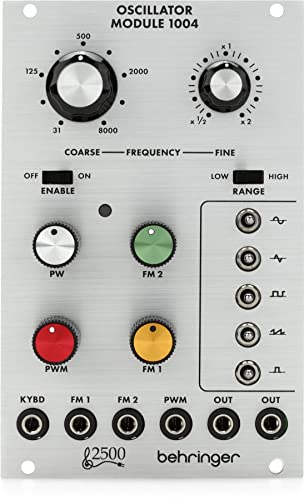
Behringer 1004 Oscillator Module Secondhand
Eurorack users who need a budget dual oscillator voice and can verify missing specs with the seller.
Read the Behringer 1004 Oscillator Module Secondhand review →
Akai LPD8 Portable Production Pad Nearly
Portable beat making and sample triggering in a laptop based studio setup.
Read the Akai LPD8 Portable Production Pad Nearly review →Questions Buyers Ask
Alesis Harmony 61 MKII Portable Keyboard
See the current listing, price and included accessories.
About This Review
Mandrillis Team
The Mandrillis editorial team researches and compares audio and music gear using manufacturer documentation, verified specs and real buyer feedback, so you can make a confident purchase without wading through marketing claims.
Read our full research methodology.