Instruments Review
Pioneer DJ OPUS-QUAD 4-channel Review: Four Standalone Decks, Two Platforms
The Pioneer DJ OPUS-QUAD 4-channel is a premium standalone DJ system with four-deck playback, a Zone output for a second room, Smart Cue, fast track search and compatibility with both rekordbox and Serato, including rekordbox Link Export into Serato DJ. The listing confirms workflow rather than hardware numbers, leaving screen size, jogs, audio figures and outputs unpublished.
Our Verdict
Research Score 86/100The Pioneer DJ OPUS-QUAD 4-channel is a workflow-first flagship. Four standalone decks that can mix and match media sources, fast track search, Smart Cue and a Zone output for a second room make it a strong event tool on paper, and rekordbox Link Export into Serato DJ gives it a rare bridge between the two major ecosystems, albeit one that requires a Serato DVS license. The listing does not publish screen size, jog wheel details, audio figures or a rear panel list, which caps the score below better documented four-deck rivals such as the Pioneer 4-Deck and the Denon DJ PRIME 4 G2. Event and mobile DJs who confirm those details will find a capable premium system.
Editorial research score based on published specifications and documented features, not a customer rating or lab test.

Pioneer
Pioneer DJ OPUS-QUAD 4-channel
Best for: Event and mobile DJs who need four standalone decks, a Zone output and the freedom to move between rekordbox and Serato.
Skip it if: You want published audio figures, screen size and a full rear panel list before committing to a premium system.
Check Price on AmazonWe may earn a commission at no extra cost to you.
Listing verified: October 2026
Who Should Buy It
Buy it if
- Event DJs who need a Zone output for a second room
- Four-deck DJs leaving the laptop behind
- DJs who prepare in rekordbox but perform in Serato
Skip it if
- You are a beginner or a two-deck DJ
- You need documented outputs and audio specs
- You do not want to buy a Serato DVS license
Key Specifications
| Type | Standalone 4-channel, 4-deck DJ system |
| Channels | 4 |
| Jog wheels | Not published in listing |
| Software | rekordbox and Serato DJ compatible; rekordbox Link Export into Serato DJ (requires Serato DVS license) |
| Pads and effects | Professional effects and Smart Cue described; pad count and effect names not published in listing |
| Inputs and outputs | Zone output described; other connections not published in listing |
| Audio interface | Not published in listing |
| Power | Not published in listing |
| Weight | Not published in listing |
| Included accessories | Not published in listing |
Overview
The Pioneer DJ OPUS-QUAD 4-channel is a standalone DJ system with four-deck playback, positioned in the premium tier alongside other laptop-free flagships. The listing emphasizes versatility: four decks, the ability to mix and match media sources, fast track search, Smart Cue, professional effects, a Zone output and compatibility with both rekordbox and Serato. Pioneer DJ frames it as a system for versatile performances rather than a club player clone, which is a slightly different pitch from the rest of its standalone range.
Unlike the Pioneer 4-Deck and Denon DJ PRIME 4 G2 listings, this one gives few hard numbers. There is no screen size, jog wheel diameter, audio figure or rear panel list. What it describes instead is workflow: how a DJ finds tracks, cues them and moves between software ecosystems. For a buyer, that means the strongest reasons to choose it are operational rather than numerical.
This review therefore leans on the published workflow claims, flags the unpublished hardware details, and places the OPUS-QUAD against its better documented rivals so a buyer knows exactly what to verify before spending premium tier money.
Decks, Jog Wheels and Performance Controls
Four-deck standalone playback is the core capability. The listing describes mixing and matching different media sources to suit a playing style, which suggests the four decks can draw from more than one connected source at once, though the source types are not named. In a wedding or corporate set, that could mean a prepared playlist on one source and a request library on another, loaded to different decks as the night develops.
Jog wheel size, whether the jogs carry displays, and the number of performance pads are not published. What the listing does describe is an optimized deck configuration that makes finding tracks easy, which points to a layout designed around browsing and loading speed rather than a conventional two-player mirror. Fast track search is called out specifically for large collections, so the browsing hardware is clearly meant to handle thousands of tracks without slowing down.
Smart Cue is named as a new feature that makes finding and cueing tracks easier than before. The listing does not explain the mechanism, but in context it refers to automatic or assisted cue point placement so a track is ready to play as soon as it is loaded. For event DJs who load many unfamiliar requests, anything that reduces cue preparation time is valuable.
Software and Compatibility
Compatibility with both rekordbox and Serato is confirmed. The listing highlights rekordbox Link Export, which lets a DJ export tunes directly from rekordbox into Serato DJ, with a note that this requires a Serato DVS license. That is a specific and useful bridge for DJs who prepare in one ecosystem and perform in another. Most DJs who use both platforms maintain two libraries, and Link Export is designed to remove that duplication.
Four-deck standalone playback implies a prepared library on USB or similar media, but the listing does not name the media types, state whether streaming or Wi-Fi is supported, or describe computer control modes in detail beyond naming the two platforms. Reference controllers such as the Pioneer DJ DDJ-FLX4 list their software pairing explicitly, and the OPUS-QUAD listing does the same, which is a point in its favor.
The Serato DVS license requirement is worth noting for budgeting, since it is a paid add-on in the Serato ecosystem. Whether any rekordbox or Serato license ships with the unit is not stated, so the total cost of a two-platform workflow should be checked.
Mixer Section, Effects and Audio Quality
The listing describes luxurious, high quality sound that enhances the audience's experience, but it publishes no signal-to-noise ratio, distortion figure or converter specification. By contrast, the Pioneer 4-Deck listing publishes those numbers, so buyers comparing the two have asymmetric information. The description is positive but unverifiable from the listing alone.
Effects are described as easy to use and professional, without names or counts. Given the four-channel design, a per-channel color effect and a tempo-synced Beat FX section would be typical, but neither is confirmed for this unit. The DJM-900NXS2 listing names its Sound Color FX and Beat FX counts, which shows the level of detail a buyer could reasonably expect here.
The Zone output is the one specific mixer feature published. It lets a DJ play different music in a second space, such as a lounge or a patio, which is a genuine event-production feature usually found only on premium four-channel systems. A second output with independent source selection is what separates a true Zone output from a simple booth feed.
- Four-channel mixer with four standalone decks
- Zone output for playing different music in a second space
- Smart Cue for faster track cueing
- Professional effects, names and counts not published
- Audio measurements not published in listing
Build, Design and Portability
Weight, dimensions and materials are not published. A four-channel standalone with four decks is a large unit by nature, so mobile DJs should check the figures before planning transport and a protective case. Four decks also mean more controls, which pushes the width beyond that of a two-channel unit such as the XDJ-RX3.
The optimized deck configuration mentioned in the listing suggests a design that departs from the strict player, mixer, player layout to prioritize library access and four-deck control. Whether that helps or hinders DJs who want club familiarity depends on the individual and on how often they play other hardware.
Chassis construction, fader types and included accessories are not stated, so these remain questions for the manufacturer's documentation.
Connectivity and Outputs
The Zone output is confirmed, meaning at least one additional output beyond the main mix exists for a second room. Main, booth, record, microphone, line and phono connections are not itemized in the listing. A second room rarely needs the same volume as the dance floor, so independent level control for the Zone output would be expected, though the listing does not describe it.
Media inputs are implied by four-deck standalone playback and the mix-and-match description, but USB port count, SD card support and any computer connection for rekordbox or Serato are not published. Mobile DJs who use wireless microphones will want to know the mic input count in particular.
For a premium system marketed on event versatility, this is a significant documentation gap, and the connectivity score reflects it rather than the hardware's likely capability.
Setup and Daily Use
In standalone use, a DJ prepares a library in rekordbox, exports it to media and loads tracks to four decks on the OPUS-QUAD. Fast track search and Smart Cue are designed to shorten the time between deciding on a track and playing it, which matters most when requests arrive mid-set. Loading four decks from a single browse screen is where the optimized deck configuration should pay off.
A DJ who performs in Serato can use rekordbox Link Export to bring prepared tunes into Serato DJ, provided a Serato DVS license is in place. This makes the unit usable in either ecosystem with the same preparation work.
The Zone output allows a second feed, for example background music in a dining room while the main floor gets the dance set. Power supply and firmware details are not published. Keeping the Zone feed at a conversation-friendly level while the main room runs louder is exactly the use case the listing describes.
Who Should Buy It
The OPUS-QUAD suits event and mobile DJs who need four standalone decks and a Zone output, and who move between rekordbox and Serato depending on the gig. Residents who want laptop-free four-deck mixing with fast library access also fit. Restaurant and hotel residents who serve a bar and a function room at once are a good example.
DJs who value a different, browsing-focused layout over a strict club mirror may prefer it to conventional designs, and anyone running two rooms from one booth will value the Zone output immediately.
Beginners, two-deck DJs and anyone who wants published audio figures and a documented rear panel before purchase should consider other options or verify the details first. A buyer with both a rekordbox and a Serato history will get more from it than a single-platform DJ.
Alternatives Worth Considering
The Pioneer 4-Deck offers four standalone decks with 206 mm jogs, SonicLink wireless cueing and published audio figures. The Denon DJ PRIME 4 G2 adds stems, DMX lighting and a fully documented output section that also includes a Zone output. Both publish far more hardware detail than the OPUS-QUAD listing, which matters at this price tier.
For two decks, the Pioneer DJ XDJ-RX3 covers the standalone rekordbox workflow with Serato support at a lower complexity. The Pioneer DJ DDJ-FLX10 gives four channels and Track Separation with a laptop at the upper mid-range tier.
Those who only need a Zone output for events could pair a simpler controller with an external mixer that provides a second output, trading convenience for a lower total cost. That route adds cables and a second power supply, which is the convenience cost the OPUS-QUAD avoids.
Verdict
On paper the Pioneer DJ OPUS-QUAD 4-channel is a flexible four-deck standalone system with a Zone output, Smart Cue, fast track search and a documented bridge between rekordbox and Serato. Those are real advantages for event work.
The listing lacks screen size, jog details, audio figures and a rear panel list, so the score is capped below better documented four-deck rivals even though the workflow claims are attractive.
Event DJs who confirm those details will find a capable premium system; others should compare the Pioneer 4-Deck and PRIME 4 G2 listings first and buy the one whose documentation answers their questions.
Strengths and Limitations
Strengths
- Four standalone decks with mix-and-match media sources
- Zone output for a second room
- Compatible with rekordbox and Serato
- rekordbox Link Export into Serato DJ
- Smart Cue and fast track search
Limitations
- Screen size and jog wheel details not published
- No audio figures in the listing
- Outputs beyond Zone not itemized
- Serato Link Export requires a paid DVS license
How We Scored It
Scores reflect published specifications, documented features and value against the alternatives below. They are editorial research scores, not laboratory measurements.
Alternatives to Consider
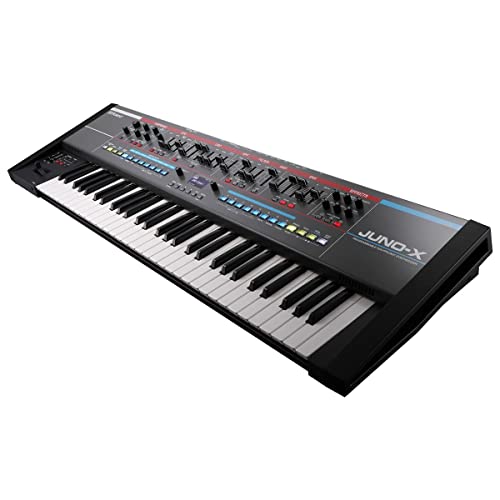
Roland JUNO-X Programmable Polyphonic Keyboard
A keyboardist who loves the JUNO sound and slider panel but needs modern pianos, a vocoder, velocity response and expandable vintage models in one stage instrument.
Read the Roland JUNO-X Programmable Polyphonic Keyboard review →
Roland VR-6HD
Corporate, sales and worship teams that need one operator to switch six HDMI sources, mix 28 audio channels and stream from a single compact unit.
Read the Roland VR-6HD review →
Pioneer DJ DDJ-REV7 2-Channel
Touring turntablists and scratch-focused open-format DJs who want vinyl feel, a pro crossfader and Serato DJ Pro in one controller.
Read the Pioneer DJ DDJ-REV7 2-Channel review →Questions Buyers Ask
Pioneer DJ OPUS-QUAD 4-channel
See the current listing, price and included accessories.
About This Review
Mandrillis Team
The Mandrillis editorial team researches and compares audio and music gear using manufacturer documentation, verified specs and real buyer feedback, so you can make a confident purchase without wading through marketing claims.
Read our full research methodology.