Instruments Review
Roland GAIA 2 Review: Hybrid Engine Behind a Teaching Panel
The Roland GAIA 2 is a full-size-key synthesizer with a hybrid wavetable and virtual analog engine, an aluminum panel of knobs and sliders, a Motional Pad, assignable modulation, a real-time and step sequencer, 53 MFX types and dedicated JUNO Chorus and Shimmer Reverb sections. This research review weighs that against the polyphony and connection details the listing omits.
Our Verdict
Research Score 78/100The Roland GAIA 2 pairs a hybrid wavetable and virtual analog engine with an aluminum panel of knobs and sliders arranged along the synthesis signal path, a Motional Pad for expressive movement, freely assignable modulation routings, a sequencer with real-time and step recording, 53 MFX types and dedicated chorus and delay/reverb sections that include JUNO Chorus and Shimmer Reverb. For a mid-range keyboard synth that is a rich documented feature set with a clear teaching purpose. Polyphony, key count, connectivity, power and weight are not published, and polyphony in particular is a figure a performer needs before buying. For a learner or performer who wants hybrid sound with a transparent panel, it is compelling on paper; buyers set on true analog voices should look at the Minilogue XD first.
Editorial research score based on published specifications and documented features, not a customer rating or lab test.

Roland
Roland GAIA 2
Best for: Learners and performers who want a hybrid synth with a transparent panel, expressive Motional Pad control and Roland chorus and reverb character in a mid-range keyboard.
Skip it if: You need high polyphony or specific USB and MIDI ports confirmed before buying, or you want true analog voices rather than a hybrid engine.
Check Price on AmazonWe may earn a commission at no extra cost to you.
Listing verified: October 2026
Who Should Buy It
Buy it if
- Players learning synthesis who want a panel that mirrors the signal flow
- Performers who will use the Motional Pad and assignable modulation on stage
- Producers who want wavetable and virtual analog in one mid-range keyboard
- Fans of the JUNO Chorus and Shimmer Reverb sound
Skip it if
- You require published polyphony before committing
- You need confirmed USB audio or five-pin MIDI
- You want real analog oscillators and filters
Key Specifications
| Type | Keyboard synthesizer with full-size keys |
| Synthesis | Hybrid wavetable and virtual analog |
| Polyphony | Not published in listing |
| Keys or pads | Full-size keys plus Motional Pad; key count not published in listing |
| Sequencer | Real-time and step recording |
| Effects | MFX with 53 types; dedicated Chorus and Delay/Reverb sections (JUNO Chorus, Shimmer Reverb, Modulation Reverb and more) |
| Connectivity | Not published in listing |
| Power | Not published in listing |
| Weight | Not published in listing |
| Included accessories | Not published in listing |
Overview
The Roland GAIA 2 is a keyboard synthesizer with a hybrid engine that combines wavetable and virtual analog synthesis, a panel of knobs and sliders laid out to follow the signal flow, and a Motional Pad for real-time expression. The listing positions it as an instrument that teaches synthesis basics and then scales up to serious sound design. It sits in the mid-range price tier.
The original GAIA was Roland's entry-level virtual analog synth, known for a panel with no menu diving. The GAIA 2 keeps that philosophy but adds a wavetable oscillator, assignable modulation, a sequencer and a much larger effects section. It is aimed at the same audience of learners and performers, with more depth underneath.
This research review draws only on the published specification. The engine, panel design, Motional Pad, sequencer and effects are described, but polyphony, key count, connectivity, power, weight and accessories are not published, and each of those gaps is flagged in its section.
Sound Engine and Tone
The hybrid engine is the GAIA 2's central idea. Virtual analog modeling provides the sawtooth, square and pulse waves that define classic subtractive synthesis, while the wavetable side adds the ability to sweep through a sequence of single-cycle waveforms for evolving, digital textures. Having both in one voice architecture means a single patch can pair an analog-style bass layer with a moving wavetable top end.
Polyphony is not published in the listing, which is the most significant unknown for a keyboard synth intended for performance. Whether the GAIA 2 handles wide chords with long releases, or is better suited to leads, basses and smaller voicings, cannot be determined from the published data and should be confirmed from the manual.
The effects contribute heavily to the tone. Dedicated chorus and delay/reverb sections include JUNO Chorus, Shimmer Reverb and Modulation Reverb types, which link the GAIA 2 to Roland's own history of lush ensemble sounds. The JUNO Chorus in particular is the effect that made the brand's early polysynths sound so wide, and having it on a dedicated section rather than buried in a menu matters.
in-person Control and Workflow
The panel is described in the listing as logically outlining the synthesis workflow, with an aluminum surface filled with high-quality knobs and sliders. A layout that follows oscillator to filter to amplifier is the traditional teaching tool for synthesis, and it is also the fastest way for an experienced player to shape a sound during a performance.
Full-size keys are confirmed, although the key count and action type are not published. Full-size keys are a meaningful advantage over the mini keys found on many compact synths, since they allow normal piano technique and comfortable two-handed playing. The actual range of the keyboard should be verified before buying for performance use.
The Motional Pad is the GAIA 2's distinctive controller. The published description says it adds real-time movement and expression to sounds, which in practice means a touch surface that morphs between parameter settings as the finger moves. Combined with freely assignable modulation routings, it allows a player to tie several parameters to one gesture.
Sequencer, Effects and Features
The sequencer offers both real-time and step-recording, according to the published specification. Real-time recording captures a played phrase, while step entry lets a pattern be built note by note without timing pressure. Pattern length, number of patterns and whether parameter motion can be recorded are not stated in the listing.
The MFX section carries 53 effect types, which is a large library for a mid-range keyboard synth. Alongside the separate chorus and delay/reverb sections, that gives the GAIA 2 three stages of processing, so a patch can carry a distortion or filter effect in the MFX slot while still receiving chorus and reverb independently.
Freely assignable modulation routings are listed as a feature for fast sound creation. The number of routings and the available sources and destinations are not published, but the phrasing suggests a matrix rather than a fixed set of hard-wired modulations, which is what allows wavetable position, filter cutoff and effect parameters to respond to the Motional Pad or an LFO.
- Hybrid wavetable and virtual analog engine
- Motional Pad for real-time expression
- Sequencer with real-time and step recording
- MFX section with 53 effect types
- Dedicated chorus and delay/reverb sections including JUNO Chorus and Shimmer Reverb
- Freely assignable modulation routings
Build, Design and Portability
The listing describes an attractive aluminum panel with high-quality knobs and sliders, which is a step above the plastic top panels common at this tier. A metal panel resists flex when sliders are pushed hard and tends to age better on a gigging instrument.
Weight and dimensions are not published. With full-size keys the GAIA 2 is not a pocket instrument, but Roland's compact keyboard synths have generally been light enough to carry in a padded gig bag. That is a pattern across the brand rather than a published figure for this model.
Power supply type is also unstated. Whether the synth uses an external adapter, can run on USB bus power or supports batteries affects how it fits into a travel or busking setup, and buyers should check the manual for the answer.
Connectivity, MIDI and Sync
Connectivity is not published in the listing. Audio outputs, headphone jack, MIDI ports, USB and pedal inputs are all absent from the published data, which is a surprising gap for a mid-range keyboard synth. The manual will list them, and a buyer should read it before assuming any particular port exists.
USB audio and MIDI would be a reasonable expectation on a current Roland keyboard, allowing direct recording into a DAW and software editing, but it is not confirmed here. Five-pin MIDI for connecting to hardware is likewise unconfirmed.
Sync behavior for the sequencer is not described. Whether it follows external MIDI clock, and whether it can act as a master clock for other gear, determines how well the GAIA 2 works in a hardware setup alongside a drum machine. Treat it as a point to verify.
Setup and Daily Use
Setup is straightforward for a self-contained keyboard synth: connect power and audio, and play. The panel layout described in the listing is designed to make the signal path visible, so a new owner can learn by moving a slider and hearing the result rather than reading parameter names on a screen.
Daily use splits between performance and sound design. For performance, the Motional Pad and the assignable routings give expressive control over a patch without touching the panel. For sound design, the combination of wavetable and virtual analog oscillators, 53 MFX types and dedicated chorus and reverb provides enough depth to occupy a long session.
The sequencer with step and real-time entry supports sketching ideas away from a computer. Because polyphony and pattern storage are not published, a buyer should confirm how many patterns can be saved and how dense a sequence the instrument can play before relying on it as a standalone writing tool.
Who Should Buy It
The GAIA 2 suits learners who want to understand synthesis through a panel that mirrors the signal flow, and who will grow into the wavetable engine and modulation routings over time. Full-size keys make it a proper instrument rather than a toy for this group.
Performers who value expressive control will find the Motional Pad and assignable modulation useful on stage, and the dedicated JUNO Chorus and Shimmer Reverb give it an immediately usable pad and lead character. Producers who want a hybrid engine in a mid-range keyboard are also well served.
It is a weaker match for players who need high polyphony confirmed before buying, and for anyone who requires published connectivity such as USB audio or specific MIDI ports. Those details are missing from the listing and must be checked.
Alternatives Worth Considering
The Korg Minilogue XD offers true analog voices with a digital multi-engine oscillator, a sequencer and effects in a compact keyboard. It is the pick for a buyer who wants real analog circuitry, while the GAIA 2 offers a broader hybrid palette and a larger effects library.
The Arturia MicroFreak is a lower-tier hybrid with a digital oscillator and analog filter, a touch-plate keyboard and a sequencer. It is more experimental and less of a traditional playing instrument, since it lacks full-size keys.
Roland's own JD-Xi combines analog and digital engines with a pattern sequencer and vocoder in a smaller keyboard. It is more of a groove tool, while the GAIA 2 is more of a sound design keyboard with a better panel. The SH-4d is Roland's desktop alternative for buyers who already own a controller.
Verdict
The Roland GAIA 2 pairs a hybrid wavetable and virtual analog engine with an aluminum panel of knobs and sliders, a Motional Pad, assignable modulation, a sequencer with real-time and step entry, 53 MFX types and dedicated JUNO Chorus and Shimmer Reverb sections. For a mid-range keyboard synth that is a rich documented feature set.
Polyphony, key count, connectivity, power and weight are not published in the listing, and polyphony in particular is a number a performer needs before buying. The manual should settle these questions.
For a learner or performer who wants a hybrid synth with a transparent panel and expressive control, the GAIA 2 is a compelling instrument on paper. Buyers who need pure analog voices or confirmed high polyphony should weigh the Minilogue XD first.
Strengths and Limitations
Strengths
- Hybrid wavetable and virtual analog engine
- Aluminum panel with knobs and sliders laid out along the signal path
- Motional Pad for real-time expression
- Sequencer with real-time and step recording
- 53 MFX types plus dedicated chorus and delay/reverb
- Full-size keys
Limitations
- Polyphony not published
- Key count and action unstated
- Connectivity, power and weight unpublished
- Modulation routing count not specified
How We Scored It
Scores reflect published specifications, documented features and value against the alternatives below. They are editorial research scores, not laboratory measurements.
Alternatives to Consider

Behringer DEEPMIND 12
Producers and performers who want a true analog 12-voice poly with lush onboard effects and deep per-voice modulation in the mid-range tier.
Read the Behringer DEEPMIND 12 review →
Yamaha MX61BK
Songwriters, producers and gigging keyboardists who want a broad Motif sound library with a built-in USB audio and MIDI link to a laptop studio.
Read the Yamaha MX61BK review →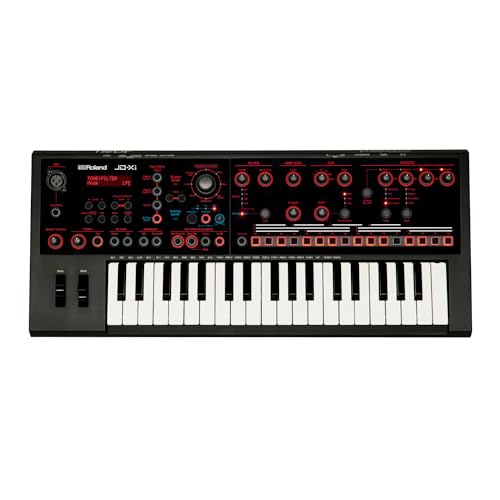
Roland JD-XI 37-Key
Electronic producers and performers who want analog bass and lead, digital pads, drums, a pattern sequencer and a vocoder in one compact mid-range keyboard.
Read the Roland JD-XI 37-Key review →Questions Buyers Ask
Roland GAIA 2
See the current listing, price and included accessories.
About This Review
Mandrillis Team
The Mandrillis editorial team researches and compares audio and music gear using manufacturer documentation, verified specs and real buyer feedback, so you can make a confident purchase without wading through marketing claims.
Read our full research methodology.