Instruments Review
Roland V-STAGE 76 76-Key Review: Semi-Weighted Stage Board for Synth Players
The Roland V-STAGE 76 76-Key puts four modeled engines, over 400 ZEN-Core sounds with free classic synth expansions, 512 Scenes, 128 Scene Chains and eight auto-saving EX Scenes on a semi-weighted 76-key action aimed at synth-focused performers. This research review covers what the listing confirms and what it leaves out.
Our Verdict
Research Score 87/100The Roland V-STAGE 76 76-Key brings the full V-STAGE engine set, V-Piano acoustic pianos, SuperNATURAL electric pianos, Virtual Tone Wheel and transistor organs and a ZEN-Core synth with over 400 sounds and free JUPITER-8, JUNO-106, JX-8P and SH-101 expansions, to a semi-weighted 76-note action with 512 Scenes, 128 Scene Chains and eight EX Scenes that save themselves. The listing documents the engines and memory system thoroughly, but it publishes no connectivity, polyphony, weight or global effects, so verify those from official documentation. For a lighter stage keyboard that covers every classic keyboard voice with dedicated controls, it is an easy premium tier recommendation.
Editorial research score based on published specifications and documented features, not a customer rating or lab test.

Roland
Roland V-STAGE 76 76-Key
Best for: Synth-focused stage keyboardists who want pianos, electric pianos, organs and classic Roland synth voices on a semi-weighted 76-key board with dedicated controls and deep Scene memory.
Skip it if: You need a weighted piano action, a sequencer or sampler, or documented I/O from the listing before you buy.
Check Price on AmazonWe may earn a commission at no extra cost to you.
Listing verified: October 2026
Who Should Buy It
Buy it if
- Function band keyboardists who lean on organ and synth parts
- Touring sidemen who carry their own keyboard
- Worship players who want classic Roland synth voices on a stage board
- Performers who tweak setups live and want them saved automatically
Skip it if
- Piano feel is your top priority
- You compose onboard with a sequencer
- You need the listing to confirm ports
Key Specifications
| Type | 76-key semi-weighted premium stage keyboard with four independent sound engines |
| Synthesis | Acoustic Piano engine (V-Piano technology), Electric Piano engine (SuperNATURAL), Organ engine (Virtual Tone Wheel plus transistor and pipe types), ZEN-Core synthesizer engine with over 400 onboard sounds |
| Polyphony | Not published in listing |
| Keys or pads | 76 semi-weighted keys; action name and aftertouch not published in listing |
| Sequencer | No sequencer stated; 512 Scenes, 128 Scene Chains and eight EX Scenes with auto-save |
| Effects | Overdrive and rotary speaker effects for the organ engine and dedicated EP effects; global delay, reverb and master section not published in listing |
| Connectivity | Not published in listing |
| Power | Not published in listing |
| Weight | Not published in listing |
| Included accessories | Not published in listing; JUPITER-8, JUNO-106, JX-8P and SH-101 Model Expansions are free downloads for registered owners |
Overview
The Roland V-STAGE 76 76-Key is the synth-focused version of Roland's premium stage keyboard, built on a 76-note semi-weighted action and carrying the same four independent engines as its 88-key sibling. The listing positions it for professional stage performers who want pianos, electric pianos, organs and synths under dedicated controls without the mass of a weighted 88. Both versions share the engines; the difference is the keyboard and the intended player.
A semi-weighted 76 is the classic compromise for the keyboardist who plays organ and synth parts as often as piano. The action is light enough for fast runs and organ smears but has enough resistance to make piano and electric piano parts feel controlled, and the 76-note span leaves room for splits with a bass zone.
This review is based on the published listing. It is detailed about engines, Scene memory and the panel philosophy, and it leaves out polyphony, weight, effects beyond the engine-specific ones and, notably, all physical connectivity. Those omissions are noted where they affect a buying decision.
Sound Engine and Tone
The Acoustic Piano engine is developed with V-Piano technology and includes two concert grands, an upright piano, a felt piano and Piano Designer tools. Modeling rather than sample playback means the piano responds continuously to touch, and the Designer tools let a player shape hammer, string and lid character to taste. A felt piano is a soft, muted character often used in film and ambient work, and its inclusion shows the engine is meant for more than concert settings.
The Electric Piano engine is newly developed with the latest SuperNATURAL advancements, with Tine, Reed, Digital and Clavinet types, customizable parameters, adjustable key touch and dedicated EP effects. The Organ engine pairs a three-part console model driven by Virtual Tone Wheel technology with two vintage transistor types and a pipe organ, plus new overdrive and rotary speaker effects.
For a synth-focused player the ZEN-Core engine is the draw. The listing confirms over 400 onboard sounds with support for SDZ Sound Packs and Model Expansions on Roland Cloud, and it states that the JUPITER-8, JUNO-106, JX-8P and SH-101 Model Expansion titles are free downloads for registered V-STAGE owners. That puts four of the most influential Roland synths under the fingers of a 76-key stage board.
in-person Control and Workflow
The panel uses discrete sections for each engine and the effects, which the listing describes as streamlined access to all performance parameters. On a synth-focused board that layout pays off most in the ZEN-Core and organ sections, where filter, envelope, drawbar-style and rotary controls need to be reachable while playing. A player can leave the piano section untouched for a whole set while living in the synth section.
Scene memory is extensive: 512 Scenes store complete keyboard setups, and 128 Scene Chains arrange them into setlists. The 76 adds a feature the 88-key sibling's listing does not mention: eight special EX Scenes with auto-save, which let a performer build and modify a setup in real time during a show without stopping to save.
Knob and fader counts, the display, and the presence of physical drawbars are not published. Players who need a particular control density for organ work should check product images and the manual before deciding between this and a dedicated organ board.
Sequencer, Effects and Features
No sequencer or sampler is described in the listing, which is normal for a stage keyboard. Composition is expected to happen in a DAW or on a workstation, and the V-STAGE 76 76-Key concentrates on recalling and performing sounds. Scenes and Scene Chains are its memory system, storing performance states rather than note data.
Engine-specific effects are confirmed: overdrive and rotary speaker effects for the organ engine and dedicated EP effects for the electric piano engine. Global delay, reverb, multi-effects and any master compressor or EQ are not published in this listing, which is a notable difference from the way the 88-key model is described.
The EX Scenes with auto-save are the standout workflow feature. A performer can tweak a sound mid-set and trust that the change is captured, which removes a common source of lost work on stage keyboards that require a deliberate save step.
- Four engines: Acoustic Piano, Electric Piano, Organ, ZEN-Core
- 512 Scenes and 128 Scene Chains
- Eight EX Scenes with auto-save
- Over 400 ZEN-Core sounds with SDZ Sound Pack support
- Free JUPITER-8, JUNO-106, JX-8P and SH-101 Model Expansions for registered owners
- Organ overdrive and rotary effects, dedicated EP effects
Build, Design and Portability
A semi-weighted 76 is substantially lighter than a weighted 88, which is the whole point of this variant. The listing does not publish weight or dimensions, so exact figures must come from the manufacturer, but a stage keyboard in this format is normally a one-person carry in a padded case. That difference matters for anyone who loads in alone or climbs stairs to a stage.
Build materials and finish are not stated. The semi-weighted action is described as premium and responsive, aimed at synth-focused players, but the action name and whether it includes aftertouch are not published, so expressive synth players should verify that detail.
The discrete-section panel is a design feature in its own right, giving each engine a visible home on the front panel. For a performer who switches between organ and synth within a song, that is more useful than a single shared encoder bank.
Connectivity, MIDI and Sync
This listing publishes no connectivity at all. Audio outputs, microphone or line inputs, MIDI, USB and pedal jacks are absent from the copy, and the connectivity score reflects that silence rather than any known weakness in the instrument.
The 88-key sibling's listing describes balanced XLR and 1/4-inch outputs, sub outputs and a mic input, and the two models share a platform, but it would be wrong to assume identical I/O from a different product's copy. Confirm the 76's ports from the official specification sheet before building a rig around it.
Sync and MIDI clock capability are likewise unstated. Players who want to control a second keyboard or a drum machine from the V-STAGE should verify the MIDI implementation, including whether USB carries MIDI as well as audio.
Setup and Daily Use
Daily use follows the stage keyboard pattern: build Scenes at home, chain them for the gig and step through them on stage. With 512 Scenes and 128 Chains the capacity is enough for several bands, and the eight EX Scenes give a scratchpad for on-the-spot changes that save themselves.
The free Model Expansions should be downloaded after registration, since they add JUPITER-8, JUNO-106, JX-8P and SH-101 voices to the ZEN-Core engine. For a synth-focused player those four titles are likely to become the most used sounds on the board. Since they are downloads rather than preloads, allow time for registration before the first gig.
Power supply, pedals and case are not published as included, so budget for them. The semi-weighted action means a lighter stand is acceptable than for a weighted 88, which helps when the keyboard travels in a car rather than a van.
Who Should Buy It
The V-STAGE 76 76-Key is for the keyboardist whose set leans on organ, synth and electric piano, with acoustic piano as one voice among several. Function band players, touring sidemen and worship keyboardists who move their own gear are the clearest fit. Players who double on a second keyboard will also find the 76 easier to fit on a two-tier stand.
Players who want the classic Roland synth voices on a stage keyboard without buying a separate synthesizer will find the included Model Expansions compelling. The EX Scenes suit performers who improvise their setups during a show rather than locking everything in advance.
It is not for pianists who need a weighted action, nor for buyers who require documented I/O from the listing. Producers who want a sequencer or sampler should look at a workstation instead.
Alternatives Worth Considering
The Roland V-STAGE 88 88-Key is the weighted, piano-focused version of the same platform, and its listing documents balanced outputs, sub outputs and a mic input in detail. Pianists should choose it; synth players should stay with the 76.
The Yamaha YC88 88-Key is an organ-focused stage keyboard with a VCM organ engine and a modeled rotary speaker. The Yamaha MONTAGE M7 76-Key is a 76-key flagship synthesizer with three engines and a DAW plugin, for players who prioritize synthesis over dedicated engine sections.
The Roland FANTOM 6 EX shares ZEN-Core and V-Piano technology in a 61-key workstation with sampling and a vast library. It is the better route for players who compose onboard, while the V-STAGE is the better route for players who perform.
Verdict
The Roland V-STAGE 76 76-Key puts four modeled engines, over 400 ZEN-Core sounds with free classic synth expansions, 512 Scenes, 128 Scene Chains and eight auto-saving EX Scenes on a semi-weighted 76-note action aimed at synth-focused performers. The listing documents the engines and memory system thoroughly.
It publishes no connectivity, polyphony, weight or global effects, so verify those before buying. For a lighter stage keyboard with the full V-STAGE engine set, it is an easy recommendation at the premium tier.
Strengths and Limitations
Strengths
- Semi-weighted 76-key action suited to organ and synth playing
- Four independent engines with discrete panel sections
- Over 400 ZEN-Core sounds plus free classic Model Expansions
- 512 Scenes and 128 Scene Chains for setlists
- Eight EX Scenes with auto-save for live tweaking
- Lighter alternative to the weighted 88-key model
Limitations
- No connectivity published in the listing
- Polyphony, weight and action name unstated
- Global effects and master section not described
- No sequencer or sampling for production work
How We Scored It
Scores reflect published specifications, documented features and value against the alternatives below. They are editorial research scores, not laboratory measurements.
Alternatives to Consider
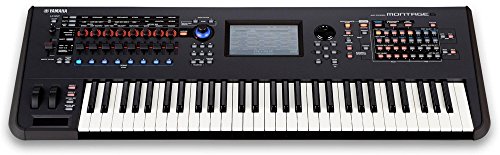
Yamaha Montage6 61-key
Sound designers and performers who want AWM2 realism and FM-X character with a fader bank and a modulation sequencer in a desk-friendly 61-key chassis.
Read the Yamaha Montage6 61-key review →
Yamaha YC88 88-Key
Organ-first keyboardists who also need a full 88-key range for piano, and who want modeled rotary speaker behavior and panel-controlled effects on stage.
Read the Yamaha YC88 88-Key review →
Roland VAD316
A drummer who wants the acoustic look of wood shells and a full-size kick with Roland's new V31 engine, in a kit that takes less depth than a full-shell set.
Read the Roland VAD316 review →Questions Buyers Ask
Roland V-STAGE 76 76-Key
See the current listing, price and included accessories.
About This Review
Mandrillis Team
The Mandrillis editorial team researches and compares audio and music gear using manufacturer documentation, verified specs and real buyer feedback, so you can make a confident purchase without wading through marketing claims.
Read our full research methodology.