Instruments Review
Yamaha YC88 88-Key Review: Organ-First Stage Keyboard With Modeled Rotary
The Yamaha YC88 88-Key is an organ-focused stage keyboard built around a VCM Organ engine, a modeled rotary speaker with two cabinets, an FM Organ and Dual Keys sections for pianos and synths, with nine panel-controlled effects. This research review covers what the listing confirms and the specifications it omits.
Our Verdict
Research Score 85/100The Yamaha YC88 88-Key is an organ specialist: a VCM Organ engine that models component-level circuit behavior, a VCM Rotary Speaker with two cabinets and customizable speeds and balances, an FM Organ with simple drawbar control and massive low end, Dual Keys sections for acoustic and electric pianos, strings, brass and synths, and nine FX processors with dedicated panel controls, all on a full 88-key range. The listing is clear about what the instrument is for and strong on the organ and effects side. Polyphony, key action, connectivity, weight and accessories are not published, so verify them before buying. For organ-first players who also need a piano range, it is the most focused instrument in this group.
Editorial research score based on published specifications and documented features, not a customer rating or lab test.

Yamaha
Yamaha YC88 88-Key
Best for: Organ-first keyboardists who also need a full 88-key range for piano, and who want modeled rotary speaker behavior and panel-controlled effects on stage.
Skip it if: Organ is an occasional sound for you, you need deep synth programming or a sequencer, or you require documented I/O before buying.
Check Price on AmazonWe may earn a commission at no extra cost to you.
Listing verified: October 2026
Who Should Buy It
Buy it if
- Church organists moving to a stage instrument
- Jazz, blues and rock keyboardists who lead with drawbar organ
- Players who want real-time rotary speed control on the panel
- Keyboardists who need organ and piano on one 88-key board
Skip it if
- Piano is your primary voice and organ is secondary
- You want a lightweight 61 or 73 key organ board
- You need the listing to confirm pedal and audio connections
Key Specifications
| Type | 88-key organ-focused stage keyboard |
| Synthesis | VCM Organ engine modeling component-level circuit behavior; FM Organ with drawbar control; Dual Keys sections for acoustic and electric pianos, strings, brass, FM DX electric pianos and synths |
| Polyphony | Not published in listing |
| Keys or pads | 88 keys; action type and aftertouch not published in listing |
| Sequencer | Not published in listing |
| Effects | VCM Rotary Speaker with two rotary speaker sounds and customizable speeds and balances; nine FX processors with dedicated panel controls |
| Connectivity | Not published in listing |
| Power | Not published in listing |
| Weight | Not published in listing |
| Included accessories | Not published in listing |
Overview
The Yamaha YC88 88-Key is an organ-focused stage keyboard, and the listing makes no attempt to hide that priority. Its headline engine is a VCM Organ that models component-level circuit behavior, paired with a VCM Rotary Speaker, an FM Organ and two Keys sections for pianos, strings, brass and synths. It is a premium tier instrument built for the stage.
Organ-first stage keyboards are a distinct category. Where a stage piano leads with its acoustic piano and treats organ as a secondary sound, an instrument like this puts drawbar organ, rotary speaker behavior and real-time organ controls at the front, with pianos and synths as supporting voices. The 88-key format widens the appeal to players who also need a full piano range. The YC name signals that lineage, and the 88-key variant extends it to a full piano range.
This research review draws on the published listing, which is clear about engines and effects and silent on polyphony, key action, connectivity, weight and accessories. Those gaps are identified in each section so a buyer knows what to confirm.
Sound Engine and Tone
The VCM Organ engine provides vintage organ character by modeling component-level circuit behavior, according to the listing. Virtual Circuit Modeling is Yamaha's approach to recreating analog hardware by simulating its individual components rather than sampling its output, so key click, leakage, percussion and the interaction between drawbars respond as a circuit would.
The VCM Rotary Speaker is the other half of the organ sound. Two authentic rotary speaker sounds are listed, with customizable speeds, balances and more, which means a player can set up a tight, fast cabinet for one song and a wide, slow one for another, and ride the speed change in real time. Balance control between the two rotary sounds is what lets the effect sit correctly in a band mix rather than swamping it.
The FM Organ offers what the listing calls pure synth sound with massive low end and simple drawbar control, giving a second organ flavor that behaves more like a synthesizer. The Dual Keys sections cover realistic acoustic and electric pianos, strings, brass and more, through to real FM DX electric pianos and synths. Polyphony is not published for any of these engines.
in-person Control and Workflow
Organ playing is a physical discipline, and the listing emphasizes dedicated panel controls. Nine FX processors can be customized on the fly from the panel, and the drawbar control for the organ engines is designed for live manipulation rather than menu editing. The exact drawbar hardware is not described, but simple drawbar control is called out for the FM Organ.
The Dual Keys sections suggest a layout where two non-organ sounds can be active alongside the organ, each with its own section. For a stage player that means a split with bass or a layer with strings is a matter of switching a section on rather than building a combination from scratch. For a trio player covering bass with the left hand, that speed is the difference between a smooth set and a scramble.
Display type, knob counts and whether the keys offer aftertouch are not published. Players who want a particular control topology should check product images and the manual, especially if they are used to a specific drawbar layout.
Sequencer, Effects and Features
No sequencer is described in the listing, which is expected for an organ-focused stage keyboard. The YC88 88-Key is designed to be played, not programmed, and its memory system for sounds and setups is not detailed in the copy, so registration counts are unknown.
Effects are where the listing is strongest. Nine FX processors with dedicated panel controls are confirmed, and the VCM Rotary Speaker functions as a performance effect in its own right. Reverb, delay, drive and modulation are the usual residents of a stage keyboard effects rack, but the specific nine are not itemized.
The combination of rotary speaker modeling with customizable speeds and balances and a bank of panel-controlled effects means the organ sound can be shaped from clean jazz to overdriven rock without leaving the front panel. That is the core promise of the instrument.
- VCM Organ engine with component-level circuit modeling
- VCM Rotary Speaker with two rotary sounds and customizable speeds
- FM Organ with simple drawbar control
- Dual Keys sections for pianos, strings, brass, FM DX EPs and synths
- Nine FX processors with dedicated panel controls
Build, Design and Portability
An 88-key stage keyboard is a heavy instrument, and the listing does not publish weight or dimensions. Organ players often prefer lighter 61 or 73 key boards, so the 88-key YC is specifically for the player who needs full piano range alongside organ and accepts the extra mass.
Key action is not published. Organ technique favors a light, fast action, while piano technique favors a weighted one, and which direction the YC88 88-Key leans is not confirmed by the copy. Buyers should verify the action before choosing it over a shorter YC.
Chassis materials and finish are not stated. The panel is described in terms of dedicated controls, which suggests a performance-oriented layout designed to be operated without looking down for long.
Connectivity, MIDI and Sync
Connectivity is not published in the listing. Audio outputs, headphone jack, MIDI ports, USB, pedal inputs and any microphone or line inputs are all absent from the copy. For a stage instrument that will connect to rotary pedals, expression pedals and a house console, that is a significant gap. Even a headphone output for quiet practice is unconfirmed by the copy.
Organ players in particular rely on a foot switch for rotary speed and an expression pedal for swell, and the listing does not confirm the inputs for either. Confirm them from the official specification sheet before planning a pedal board.
MIDI clock and sync are unlikely to matter much for an organ-focused board, but MIDI out for controlling a second keyboard is relevant and is also unstated. Treat the whole I/O picture as unverified.
Setup and Daily Use
Daily use revolves around the organ sections: setting drawbars, choosing a rotary cabinet, and riding speed and drive during a song. The nine FX processors with panel controls mean the sound can be adjusted mid-performance without stopping to navigate a menu. Organ players will spend most of their time with the drawbars and the rotary speed, which is exactly where the panel controls are concentrated.
The Dual Keys sections make it straightforward to add a piano for a ballad or strings under an organ pad, and the 88-key span supports a full piano part when the organ is not needed. Switching between those roles should be a matter of section buttons rather than patch hunting.
Accessories, power supply and pedals are not published as included. An organ player will want a rotary speed switch and an expression pedal from day one, so budget for both alongside a case and stand.
Who Should Buy It
The YC88 88-Key is for the keyboardist whose primary voice is organ but who needs an 88-key range for piano as well. Church organists moving to a stage instrument, jazz and blues players and rock keyboardists who run a drawbar organ as the centerpiece of their sound are the core audience.
Players who want modeled rotary behavior with real-time speed control, rather than a static rotary effect, will value the VCM Rotary Speaker. The FM Organ adds a synth-like organ voice that suits modern worship and electronic styles. Players who alternate between vintage and modern organ sounds in one set benefit from having two organ engines on hand.
It is not for pianists who treat organ as an occasional sound, nor for synth players who need deep programming or a sequencer. Buyers who need documented I/O should verify it before purchase.
Alternatives Worth Considering
The Roland V-STAGE 88 88-Key is the closest rival, with a Virtual Tone Wheel organ engine, two transistor organ types, a pipe organ and rotary and overdrive effects, alongside V-Piano and SuperNATURAL engines and documented balanced I/O. It is more evenly balanced across engines than the organ-first YC.
The Roland Digital Stage Piano RD-2000 EX leads with piano and offers nine sliders and eight encoders for control, which suits players who are pianists first. The Yamaha Montage M8X 88-Key is a synthesizer flagship for players who want deep synthesis over dedicated organ controls.
Organ players who do not need 88 keys should consider the shorter YC models, which are not part of this listing, for a lighter carry. The engine set is the reason to buy a YC; the key count is a separate decision.
Verdict
The Yamaha YC88 88-Key is an organ specialist with a VCM Organ engine, a modeled rotary speaker with two cabinets and customizable speeds, an FM Organ, Dual Keys sections for pianos and synths, and nine panel-controlled FX processors, on a full 88-key range. The listing is clear about what it is for.
Polyphony, action, connectivity, weight and accessories are not published, so verify them before buying. For organ-first players who also need a piano range, it is the most focused instrument in this group.
Strengths and Limitations
Strengths
- VCM Organ engine with component-level circuit modeling
- VCM Rotary Speaker with two cabinets and adjustable speeds
- FM Organ adds a synth-style organ voice with drawbar control
- Dual Keys sections for pianos, strings, brass and synths
- Nine FX processors with dedicated panel controls
- Full 88-key range for piano parts
Limitations
- Polyphony, action and connectivity not published in listing
- No sequencer or production features
- 88-key format is heavier than typical organ boards
- Pedal inputs for rotary speed and expression unconfirmed
How We Scored It
Scores reflect published specifications, documented features and value against the alternatives below. They are editorial research scores, not laboratory measurements.
Alternatives to Consider

Roland VAD316
A drummer who wants the acoustic look of wood shells and a full-size kick with Roland's new V31 engine, in a kit that takes less depth than a full-shell set.
Read the Roland VAD316 review →
Roland V-STAGE 76 76-Key
Synth-focused stage keyboardists who want pianos, electric pianos, organs and classic Roland synth voices on a semi-weighted 76-key board with dedicated controls and deep Scene memory.
Read the Roland V-STAGE 76 76-Key review →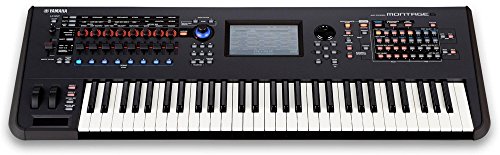
Yamaha Montage6 61-key
Sound designers and performers who want AWM2 realism and FM-X character with a fader bank and a modulation sequencer in a desk-friendly 61-key chassis.
Read the Yamaha Montage6 61-key review →Questions Buyers Ask
Yamaha YC88 88-Key
See the current listing, price and included accessories.
About This Review
Mandrillis Team
The Mandrillis editorial team researches and compares audio and music gear using manufacturer documentation, verified specs and real buyer feedback, so you can make a confident purchase without wading through marketing claims.
Read our full research methodology.