Instruments Review
Yamaha Montage M6 61-Key Review: Flagship Synth With Aftertouch
The Yamaha Montage M6 61-Key is a premium flagship synthesizer with an FSX action featuring aftertouch, 400-note total polyphony across three engines and a new AN-X analog modeling engine. The listing highlights Seamless Sound Switching and an Expanded Softsynth Plugin, but leaves connectivity, weight and power unstated.
Our Verdict
Research Score 86/100The Yamaha Montage M6 61-Key is a flagship synthesizer in the full sense of the term. The published specification combines 400-note total polyphony across three engines, an AN-X engine for analog style sound with sophisticated modulation, Seamless Sound Switching and an FSX action with aftertouch, all of which address the needs of serious synth players rather than casual users. The Expanded Softsynth Plugin extends the instrument into a DAW, which blurs the line between hardware and software workflows. The listing is thin on physical details such as connectivity, power and weight, and 61 keys will not satisfy pianists. For synth focused professionals in the premium tier, it is a compelling instrument.
Editorial research score based on published specifications and documented features, not a customer rating or lab test.

Yamaha
Yamaha Montage M6 61-Key
Best for: Professional synth players and producers who want a flagship 61-key instrument with massive polyphony, analog style synthesis and a matching software plugin.
Skip it if: You need a weighted 88-key action for piano focused playing or a compact controller for a laptop rig.
Check Price on AmazonWe may earn a commission at no extra cost to you.
Listing verified: October 2026
Who Should Buy It
Buy it if
- Touring synth players who rely on seamless patch changes
- Producers who want hardware and plugin versions of the same sound set
- Sound designers drawn to the AN-X analog modeling engine
- Keyboardists who want aftertouch on a synth action keybed
Skip it if
- Piano feel matters more to you than synth action
- You need published connectivity details before buying
- Your budget is mid-range or below
Key Specifications
| Keys | 61 keys |
| Key type | FSX action with aftertouch |
| Pads | Not published in listing |
| Knobs and faders | Dedicated Keyboard, Part and Scene controls, exact knob and fader counts not published in listing |
| DAW integration | Expanded Softsynth Plugin replicates the instrument inside a DAW |
| Bundled software | Expanded Softsynth Plugin |
| Connectivity | Not published in listing |
| Power | Not published in listing |
| Weight | Not published in listing |
| Included accessories | Not published in listing |
Overview
The Yamaha Montage M6 61-Key sits at the top of Yamaha's synthesizer line, and the listing is explicit about calling it a flagship music synthesizer. It is the 61-key member of the MONTAGE M family, which means it trades piano range for a synth style FSX action with aftertouch and a more portable footprint than its 88-key sibling. The product listing leads with sound exploration and expressive control, which is the right emphasis for an instrument built around three sound engines.
Those three engines share 400 notes of total polyphony, a figure that allows dense layered Performances without voice stealing. The newest of the three is the AN-X engine, which recreates analog synth sound with what the listing calls sophisticated modulation options. Seamless Sound Switching lets a player change sounds while notes are still ringing, and dedicated Keyboard, Part and Scene controls give direct access to the Performance structure.
This review draws only on the published listing. Several practical specifications, including audio and MIDI connectivity, power, weight and included accessories, are not stated, and the text flags those gaps rather than filling them from assumption.
Keys, Pads and Feel
The published keyboard is a 61-key FSX action with aftertouch. FSX is Yamaha's synth action, and its inclusion here signals that the Montage M6 is intended for synth and organ style playing where fast repetition and light touch matter more than hammer weight. Aftertouch adds a second expressive dimension after the initial strike, allowing pressure to open a filter, add vibrato or push modulation depth without touching a wheel.
For a flagship synthesizer the aftertouch feature is significant because the AN-X engine's modulation options are only as useful as the controllers that drive them. A player holding a chord and leaning into the keys to sweep a filter is using the instrument the way it was designed. The listing does not specify whether the aftertouch is channel or polyphonic, so buyers who need per note pressure should confirm that detail.
There are no pads in the published specification. The Montage M6 is a keyboard instrument first, and sample triggering or clip launching is not part of the described feature set. Players who finger drum will want a separate pad controller alongside it.
Knobs, Faders and DAW Integration
The listing points to new controls on the Montage M6, specifically dedicated Keyboard, Part and Scene controls. In the MONTAGE architecture a Performance holds multiple Parts, and Scenes capture snapshots of Part states and controller positions. Dedicated physical controls for those layers mean a player can mute Parts, jump between Scenes and adjust keyboard behavior without navigating menus during a show.
Exact knob, fader and button counts are not published, so this review cannot describe the panel layout in numbers. What can be said is that the design philosophy is to expose the Performance structure directly on the surface, which is consistent with a flagship synthesizer that expects to be played live. The sophisticated modulation options in the AN-X engine also imply a control surface capable of real time tweaking.
DAW integration comes through the Expanded Softsynth Plugin, which the listing says replicates MONTAGE M inside a favorite DAW. In practice that means a producer can build a sound on the hardware, then open the same Performance as a plugin in a project for recall and editing. The listing does not describe transport controls or a DAW remote mode, so the hardware's role as a general controller is not confirmed.
Software, Sounds and Features
The sound engine story starts with the headline figure of 400-note total polyphony across three engines. That number covers the whole instrument, not a single engine, and it exists to support thick multi Part Performances with long release tails and layered pads. The AN-X engine is the new arrival, described as recreating analog synth sound complete with sophisticated modulation options, which positions it as a virtual analog layer alongside the other two engines.
Seamless Sound Switching is a live performance feature that allows a change of Performance while held notes continue to sustain. For keyboard players who move between a pad and a lead within a single song, that avoids the abrupt cut that older synths produce on patch changes. Combined with Scene controls, it allows a song to be arranged as a sequence of snapshots stepped through in real time.
The Expanded Softsynth Plugin is the main bundled software item in the listing. It is intended to replicate the MONTAGE M in a DAW, giving producers hardware and software versions of the same sound set. No other bundled software, sample libraries or editor applications are named, and the listing does not state the number of factory Performances.
- 400-note total polyphony shared across three sound engines
- AN-X engine for analog style synthesis with deep modulation
- Seamless Sound Switching for uninterrupted patch changes
- Dedicated Keyboard, Part and Scene controls
- Expanded Softsynth Plugin for DAW based recall and editing
Build, Design and Portability
The product listing describes the Montage M6 as a flagship instrument, but it does not describe chassis materials, panel construction or display type. Flagship Yamaha synthesizers have historically been built for touring, and nothing in the listing contradicts that, but this review cannot confirm build details from the published data alone.
Weight and dimensions are not published. A 61-key synth action instrument is generally the most portable option in a flagship family, and choosing the M6 over an 88-key version is usually a decision made with transport in mind. Buyers who need a specific weight figure for a flight case or a one person load in should confirm it before purchase.
The design priority evident from the listing is control access. Dedicated Keyboard, Part and Scene controls suggest a panel organized around how a Performance is structured, which tends to make an instrument easier to operate under stage lighting than one that relies on a single touchscreen for everything.
Connectivity and Power
Connectivity is the biggest gap in the published listing. There is no mention of audio outputs, headphone jacks, MIDI DIN ports, USB audio or MIDI, pedal inputs or expansion options. A flagship synthesizer would be expected to carry a full complement of balanced outputs and USB connectivity, but this review can only report that the listing does not state them.
The existence of the Expanded Softsynth Plugin implies some form of computer connection, since the plugin is meant to replicate the hardware inside a DAW. Whether that connection also carries multichannel audio or only MIDI and parameter data is not published. Power requirements, including whether an external adapter or an internal supply is used, are likewise absent from the listing.
Buyers planning a studio or stage rig around the Montage M6 should obtain the rear panel specification from the manufacturer before committing. For an instrument at the premium tier, those details will almost certainly be comprehensive, but they are not part of the data this review can draw on.
Setup and Daily Use
Daily use centers on Performances, Parts and Scenes. A Performance is the top level sound, Parts are the layers inside it, and Scenes are snapshots of how those Parts and their controllers are set. The dedicated controls mean that in a live set a player can bring Parts in and out, switch Scenes and let Seamless Sound Switching handle the transitions between Performances without audible gaps.
In the studio the workflow shifts to the Expanded Softsynth Plugin. A producer can craft a sound on the hardware, open the same sound in a DAW session as a plugin and continue editing with total recall when the project reopens. That removes the usual friction of printing hardware synth parts to audio before the sound is final.
The 400-note polyphony budget means layered Performances with multiple Parts rarely hit voice limits, so a player does not need to manage voice allocation during a show. Setup time is likely to be spent on organizing Performances into a set order and mapping Scene changes, since the listing does not mention any included accessories or quick start materials.
Who Should Buy It
The Montage M6 is aimed at professional synth players and producers who treat a keyboard as a central instrument rather than a controller. Touring keyboardists who need Seamless Sound Switching and Scene level control, and who prefer a 61-key synth action for portability, are the core audience. Players who already know the MONTAGE workflow will find the dedicated Part and Scene controls a natural evolution.
Producers who want the same sound set in hardware and software should also take a close look. The Expanded Softsynth Plugin gives studio recall that most hardware synths lack, and the AN-X engine adds a virtual analog flavor that complements the other two engines. Sound designers who enjoy deep modulation architectures will have plenty to explore.
Pianists, beginners and anyone who mainly needs a controller for software instruments should not buy this. The 61-key FSX action is a synth action, the premium tier price reflects the onboard engines, and the listing does not describe DAW transport or pad features.
Alternatives Worth Considering
Within Yamaha's lineup the obvious alternatives are the 76-key and 88-key MONTAGE M models, which keep the same engines and add range or a weighted action. Players who need piano repertoire will want the 88, while those who need portability and synth feel will stay with the M6. The lower tier MODX family offers a related sound architecture with fewer controls for buyers who cannot justify the flagship price.
Across brands, flagship workstations from Korg and Roland cover similar territory with their own engines, Scene systems and plugin integrations. The Roland JUNO-D8 and the Roland JD-XA covered elsewhere on this site take different approaches, one as an 88-key gig board with a huge preset library and the other as an analog and digital crossover with deep analog modulation.
For a buyer whose main goal is analog style sound in software, a dedicated virtual analog plugin paired with a quality controller such as the Native Instruments Komplete Kontrol series or an Arturia KeyLab costs far less. That path gives up the hardware engines and Seamless Sound Switching but keeps the DAW recall that the Expanded Softsynth Plugin provides here.
Verdict
The Yamaha Montage M6 61-Key presents as a mature flagship synthesizer with a clear performance focus. Four hundred notes of polyphony across three engines, the AN-X analog modeling engine, Seamless Sound Switching, dedicated Keyboard, Part and Scene controls and an FSX action with aftertouch together describe an instrument that rewards expressive players. The Expanded Softsynth Plugin adds genuine studio value.
The published listing is light on physical facts. Connectivity, power, weight and included accessories are all unstated, and there are no pads or confirmed DAW transport controls. Synth focused professionals who confirm those details and accept the premium tier price will find a deep instrument, while pianists and controller shoppers should look elsewhere.
Strengths and Limitations
Strengths
- 400-note total polyphony across three engines
- FSX action with aftertouch for expressive synth playing
- AN-X engine for analog style sounds with deep modulation
- Seamless Sound Switching for clean live transitions
- Expanded Softsynth Plugin brings the sounds into a DAW
- Dedicated Keyboard, Part and Scene controls on the panel
Limitations
- Connectivity, power and weight are not published in the listing
- 61 keys limits two handed piano repertoire
- No pads are mentioned for finger drumming or clip launching
- Premium tier pricing demands a serious commitment
- Exact control counts are not stated
How We Scored It
Scores reflect published specifications, documented features and value against the alternatives below. They are editorial research scores, not laboratory measurements.
Alternatives to Consider
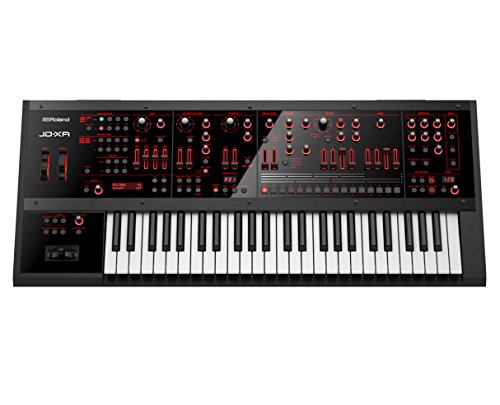
Roland JD-XA 49-Key
Synthesists who want genuine discrete analog voices and a digital engine in one 49-key crossover instrument with deep real time filter control.
Read the Roland JD-XA 49-Key review →Questions Buyers Ask
Yamaha Montage M6 61-Key
See the current listing, price and included accessories.
About This Review
Mandrillis Team
The Mandrillis editorial team researches and compares audio and music gear using manufacturer documentation, verified specs and real buyer feedback, so you can make a confident purchase without wading through marketing claims.
Read our full research methodology.