Speakers Review
Audioengine S6 Mini Review: Compact 210W Powered Bass
The Audioengine S6 Mini is a compact front firing powered subwoofer with a 6 inch driver and 210 watts of amplification. The listing positions it for music, movies, gaming and home office use, with a slim gray cabinet and compatibility with the Audioengine W3 wireless adapter. Exact frequency response and dimensions are not published.
Our Verdict
Research Score 75/100The Audioengine S6 Mini is a compact powered subwoofer that makes sense for small rooms and desktop audio. Its 6 inch front firing driver and 210 watt amplifier should provide a useful bass bump without overwhelming a space. The slim gray cabinet and W3 wireless compatibility are practical strengths. However, the listing leaves frequency response, dimensions, weight and input types unpublished, which makes full evaluation difficult. The small driver also limits deep bass output. For budget buyers with modest needs, it may be a good fit, but those wanting big home theater bass or detailed specs should look elsewhere.
Editorial research score based on published specifications and documented features, not a customer rating or lab test.

Audioengine
Audioengine S6 Mini
Best for: Small to medium rooms and desktop setups that need compact powered bass reinforcement without taking up much floor space.
Skip it if: You need deep sub-bass for a large home theater or require confirmed input types and published specifications before buying.
Check Price on AmazonWe may earn a commission at no extra cost to you.
Listing verified: October 2026
Who Should Buy It
Buy it if
- Buyers with small rooms, desks or home offices
- Owners of compact powered speakers or small stereo systems
- Audioengine users who already have W3 wireless hardware
- Value seekers who accept unpublished specs at a budget tier
Skip it if
- You need a subwoofer for a large living room or dedicated theater
- Deep, high output bass below 40 Hz is a priority
- You require detailed published specifications before purchasing
Key Specifications
| Type | Powered compact subwoofer |
| Drivers | 6-inch front-firing woofer (listing does not specify cone material or number of drivers) |
| Power or sensitivity | 210 watts (listing does not specify RMS or peak) |
| Frequency response | Not published in listing |
| Inputs and connectivity | Not published in listing; compatible with Audioengine W3 wireless adapter (stated in listing) |
| Bluetooth and streaming | No built-in Bluetooth mentioned; wireless via optional Audioengine W3 adapter |
| Dimensions | Not published in listing |
| Weight | Not published in listing |
| Finish | Gray |
| Included accessories | Not published in listing |
Overview
The Audioengine S6 Mini is a compact powered subwoofer described in the product listing as a 210 watt bass speaker built around a 6 inch front firing driver. Audioengine positions the S6 Mini as an addition to music, movie, gaming and home office setups, with a slim gray cabinet intended to fit into smaller living areas. The listing emphasizes deep, rich bass in a space conscious form factor, but it does not publish frequency response, cabinet dimensions or weight. On paper, the S6 Mini appears aimed at buyers who want a powered sub without the bulk of a traditional home theater subwoofer.
The published details are limited, which is common for budget tier audio products. The listing provides two hard numbers: a 6 inch woofer and 210 watts of amplification. It also confirms front firing sound and compatibility with the Audioengine W3 wireless adapter. Those facts shape the review that follows. Because we have not tested this subwoofer, our assessment relies on the listing data, the brand reputation of Audioengine and general knowledge of compact subwoofer behavior.
The Audioengine S6 Mini sits in the budget segment, which means some tradeoffs are expected. Small powered subwoofers often sacrifice low frequency extension and maximum output for size and price. The S6 Mini may be best understood as a bass reinforcement tool for small speakers rather than a room shaking home theater sub. Keep that role in mind while reading the sound quality and room fit sections below.
Sound Quality
The listing does not publish a frequency response figure, so the S6 Mini's low end extension is unknown. A 6 inch woofer in a compact cabinet can produce useful mid bass punch, but it will not move air like a 10 or 12 inch subwoofer. Buyers should expect a noticeable improvement in fullness for small bookshelf speakers, especially in music and games, rather than subsonic rumble. That is not a criticism of this specific product, just a physical limitation of the driver size and likely cabinet volume.
The front firing design is relevant to sound quality because it can reduce boundary interaction compared with down firing or rear ported designs in some placements. The listing describes front firing sound, which may help keep bass clear when the sub is placed near a wall or under a desk. However, without a published port configuration or enclosure type, we cannot say whether the S6 Mini is sealed or ported. That detail matters for low end character and placement flexibility.
The S6 Mini is described as delivering precise audio reproduction and deep, rich bass. Those are marketing terms, not measured performance. In practice, a 210 watt amplifier behind a 6 inch driver in a small box should provide enough output for nearfield listening and moderate volume in small rooms. For movie explosions or bass heavy electronic music at high levels, the sub may run out of headroom quickly. The lack of a stated sensitivity or maximum SPL makes it hard to predict exactly how loud it can play.
Drivers, Power and Room Fit
The single published driver detail is a 6 inch subwoofer. The listing does not specify whether it is a long throw design, the cone material, or whether there are passive radiators. The 210 watt power figure is also not qualified as RMS or peak, which is an important omission. In a compact sub, amplifier power often matters less than driver excursion and cabinet tuning, but the listing leaves those parameters unpublished.
The slim subwoofer design suggests the S6 Mini is intended for small to medium rooms and spaces where floor area is limited. A 6 inch woofer can work well in a bedroom, office, dorm room or under a desk, but a large open living room or dedicated home theater will likely overwhelm it. Buyers should match expectations to room size. The front firing orientation may help placement near walls, but the absence of exact dimensions makes it hard to know how slim it actually is compared with competitors.
The listing mentions compatibility with Audioengine W3 wireless adapter, which implies the S6 Mini can be used in systems that already use Audioengine wireless audio. Without knowing the wired input options, however, it is difficult to assess how the sub connects to a receiver, amplifier or powered speakers. If the only input is a line level RCA or a speaker level connection, that changes room integration. The listing does not publish those details, so buyers must confirm connectivity before purchase.
Features and Connectivity
The Audioengine S6 Mini is an active, or powered, subwoofer, meaning the amplifier is built into the cabinet. The 210 watt amp is the only power related specification given. There is no mention of adjustable crossover, phase switch, volume control or auto on/off in the listing, which are common features on powered subwoofers. Their absence from the feature bullets could mean the S6 Mini is minimalist, or simply that the listing is incomplete. We cannot confirm either way.
Compatibility with the Audioengine W3 wireless adapter is confirmed in the listing, which is a notable feature for cable conscious setups. The W3 is an optional wireless audio transmitter and receiver system from Audioengine, typically used to send audio between source and powered speakers or subwoofers. If you already own W3 hardware, the S6 Mini may integrate cleanly. The listing does not mention Bluetooth or Wi-Fi streaming, so we should assume no wireless capability is built in without the W3 adapter.
Wired connectivity is not specified. The S6 Mini likely has at least one line level input, but the listing does not state whether it has RCA, LFE, speaker level or high level inputs. This is a significant gap because a subwoofer with only an LFE input works best with home theater receivers, while one with speaker level inputs can connect to stereo amplifiers without a sub output. Buyers should verify the input panel before buying, since the listing does not describe it.
- 210 watt built in amplifier
- 6 inch front firing driver
- Slim gray cabinet
- Compatible with Audioengine W3 wireless adapter
- Designed for music, movies, gaming and home office use
- Inputs and controls not published in listing
Build, Design and Finish
The S6 Mini is described as having a slim design and a gray finish. The listing does not specify the cabinet material, whether it uses MDF or another composite, or whether the finish is matte, textured or glossy. Gray is the only color option mentioned. The front firing orientation means the driver and possibly a grille face the listener or room, which can influence the visual appearance. Without seeing the product in person, we cannot assess build quality beyond the general reputation of Audioengine.
Audioengine has a history of making compact powered speakers and subwoofers with simple, modern styling, and the S6 Mini appears to follow that direction. The slim cabinet is marketed as a space saver, but because dimensions and weight are not published, it is impossible to say how portable or unobtrusive it actually is. A subwoofer with a 6 inch driver can be quite small, but amplifier and enclosure requirements add weight and depth.
The gray finish should blend into many modern rooms, but some buyers may want black or white. The listing only mentions gray, so that is likely the only option. The front firing design may allow the cabinet to be placed closer to a wall than rear ported models, which is a practical build consideration. Overall, the S6 Mini seems intentionally simple in design, with the focus on compact size rather than premium materials or multiple finish options.
Setup and Placement
Setup details are not described in the product listing. As a powered subwoofer, it will need a power outlet and a signal cable from a source or amplifier. The W3 wireless adapter compatibility suggests that setup can be simplified if you use that optional accessory, but the actual steps are not explained. Without knowing the input panel, we cannot say whether setup is plug and play or requires more careful gain and crossover matching.
The compact front firing design may make placement easier than rear ported subwoofers in tight spaces. A front firing driver does not need clearance behind the cabinet for a port, which could allow the S6 Mini to sit closer to a wall. However, bass response in any room depends heavily on placement, and the listing offers no guidance on corner loading, phase or boundary effects. Buyers should plan to experiment with position, especially in small rooms where standing waves can dominate.
The slim cabinet may fit under a desk or next to a sofa, but exact dimensions are missing. That is a critical piece of information for buyers with limited space. Before ordering, it would be wise to check the manufacturer's website or contact the seller for dimensions, because the listing alone does not confirm whether the S6 Mini will fit a particular spot. Setup itself should be straightforward for a powered sub, but the unknown input types add a step of uncertainty.
Daily Use
In daily use, the Audioengine S6 Mini is meant to provide low frequency support for music, movies, gaming and home office audio. A 6 inch subwoofer will likely add warmth and impact to small speakers without dominating the room. The 210 watt amp should be sufficient for nearfield listening, but sustained high output could cause audible compression or distortion, especially with bass heavy content. The listing does not include a limiter or thermal protection specification, so we cannot comment on long term reliability under stress.
For office and desktop setups, the front firing design may be appealing because it directs bass toward the listener rather than into the floor. That can improve clarity at low volumes, which is often how desktop users listen. For movies and games in a small room, the sub should add a sense of scale and weight relative to TV speakers or compact monitors, but it will not replace a larger home theater sub. The W3 wireless compatibility could reduce cable clutter if you are already using Audioengine wireless components.
The gray finish and slim profile are easy to live with visually, assuming the actual dimensions suit your space. The absence of published specifications for controls, crossover frequency and phase may frustrate users who want to fine tune integration. If the sub has minimal controls, setup may rely on the source device or receiver's bass management. That is not necessarily bad for a budget sub, but it is a limitation to keep in mind.
Who Should Buy It
The S6 Mini is best for someone with a small room or desktop setup who wants a powered subwoofer that does not take up much space. It should pair well with compact powered speakers or a small stereo amplifier, especially if you already use Audioengine products. The 210 watt amp and 6 inch driver are reasonable for nearfield listening and moderate volume music, not for large home theater use.
Buyers who value simple, understated design and a gray finish will likely find the S6 Mini visually acceptable. The W3 wireless adapter compatibility is a specific reason to choose this sub if you want to avoid running long cables from a source. The budget price tier also makes it an accessible first subwoofer for someone building a small audio system.
That said, the missing specifications mean you need to be comfortable with some uncertainty. If you require exact dimensions, weight, frequency response or input types, you will need to look beyond the listing. The S6 Mini is not intended for buyers who want a high output subwoofer for a large living room, home theater or bass heavy listening at loud volumes.
Alternatives Worth Considering
If the Audioengine S6 Mini's unpublished specifications are a concern, the Edifier R1280DB is a powered bookshelf speaker pair that includes some bass from its main drivers, but it is not a subwoofer. For compact powered subwoofers, the category includes models from Polk Audio and ELAC, but many are larger and more expensive. The Audioengine S6 Mini's main advantage is its small 6 inch driver and slim design, which some competitors may not match.
On the portable side, the JBL Flip 6 and Bose SoundLink Flex are not subwoofers at all, but they show how compact audio products can deliver usable bass from small drivers. The S6 Mini is a different product type, however, because it needs a signal from a source and cannot stream on its own. If you need a true subwoofer for a small stereo, the S6 Mini competes more directly with compact powered subs than with Bluetooth speakers.
For buyers who can accommodate a larger cabinet, a 10 or 12 inch subwoofer from a brand like SVS, such as the SB-1000 Pro, will offer deeper extension and higher output, but at a higher price and larger size. The S6 Mini is not a substitute for that class of subwoofer. It is a step up from no sub at all for small systems. If deep bass is a priority, save up for a bigger sealed or ported design with published specifications.
Verdict
The Audioengine S6 Mini is a compact powered subwoofer that makes sense on paper for small rooms and desktop audio. Its 6 inch front firing driver and 210 watt amplifier should deliver a useful bass bump without overwhelming the space. The gray slim cabinet and W3 wireless compatibility are appealing features for cable conscious setups. The budget price tier makes it a low risk way to add low end to small speakers.
However, the listing leaves too many critical specifications unpublished. There is no frequency response, no dimensions, no weight, no input details and no confirmation of crossover or phase controls. That makes it hard to fully evaluate performance or plan integration. Buyers who demand published specs or want deep home theater bass should look elsewhere.
Overall, the S6 Mini earns a middle of the road score. It is likely a solid compact sub for the right user, but the lack of information and physical limits of a 6 inch driver keep it from competing with larger or better documented subwoofers. If you can confirm the missing details and your room is small, it may be a good fit.
Strengths and Limitations
Strengths
- Compact 6-inch front-firing design
- 210-watt built-in amplifier
- Slim gray cabinet suits small spaces
- Compatible with Audioengine W3 wireless adapter
- Budget price tier for accessible bass
- Front-firing orientation may ease placement near walls
Limitations
- Frequency response not published
- Dimensions and weight not published
- Wired input types not confirmed
- No built-in Bluetooth without W3 adapter
- Small driver limits deep bass and maximum output
How We Scored It
Scores reflect published specifications, documented features and value against the alternatives below. They are editorial research scores, not laboratory measurements.
Alternatives to Consider
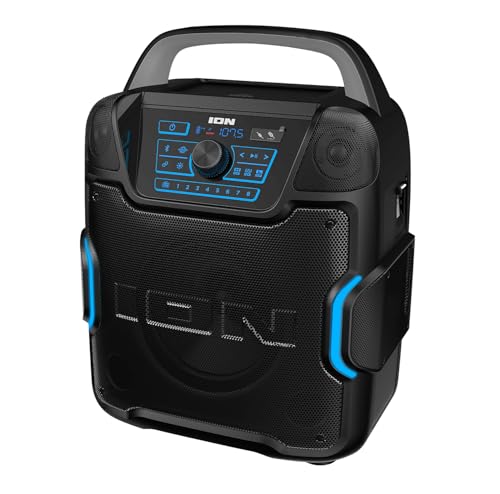
ION Sport 320
Outdoor parties, poolside listening, and buyers who want a wheeled battery-powered speaker with more driver area than a small portable.
Read the ION Sport 320 review →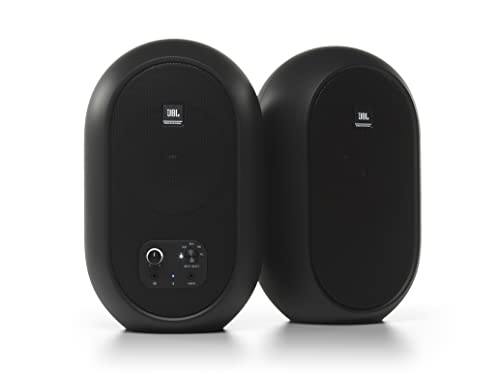
JBL 1 104-BT
Desktop producers, podcasters, and casual listeners who want compact powered monitors with Bluetooth and multiple wired inputs.
Read the JBL 1 104-BT review →
Audioengine A2 AIO
Listeners who want a simple white Bluetooth speaker pair for a desk or small room and do not need detailed published specifications.
Read the Audioengine A2 AIO review →Questions Buyers Ask
Audioengine S6 Mini
See the current listing, price and included accessories.
About This Review
Mandrillis Team
The Mandrillis editorial team researches and compares audio and music gear using manufacturer documentation, verified specs and real buyer feedback, so you can make a confident purchase without wading through marketing claims.
Read our full research methodology.