Speakers Review
Audioengine S8 Review: Compact Power and Wireless Ready Bass
The Audioengine S8 is a lower mid range powered subwoofer built around an 8 inch down firing driver and a 250 watt amplifier. The listing promises easy placement, sleep mode, and optional wireless readiness through the W3 adapter. Several key specifications remain unpublished, so this review focuses on what the listing does and does not state.
Our Verdict
Research Score 75/100The Audioengine S8 is a sensible lower mid range subwoofer for buyers who want a space friendly bass upgrade and do not demand a long list of published specifications. The 250 watt amplifier and 8 inch down firing driver should be enough for small to medium rooms, and the sleep mode is a useful everyday touch. Optional W3 wireless readiness adds flexibility, but the listing leaves out frequency response, dimensions, weight, and wired input details. That missing information makes an informed purchase harder than it should be. If you accept those gaps and want an approachable powered subwoofer from a known audio brand, the S8 is worth a shortlist. Buyers who need full specs or built in Bluetooth should look elsewhere.
Editorial research score based on published specifications and documented features, not a customer rating or lab test.
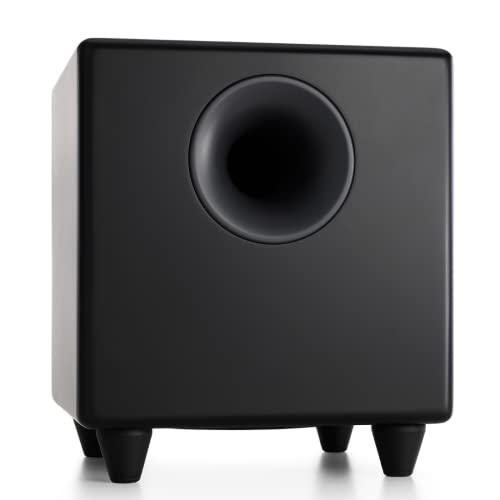
Audioengine
Audioengine S8
Best for: Buyers who want a powered subwoofer for a small to medium room and prefer a lower mid range, space conscious bass upgrade without running long signal cables.
Skip it if: You need published frequency response, precise connection specs, or built in wireless streaming before purchase.
Check Price on AmazonWe may earn a commission at no extra cost to you.
Listing verified: October 2026
Who Should Buy It
Buy it if
- Home theater listeners who want stronger low end for movies and games
- Music listeners pairing with bookshelf or desktop speakers
- Small room setups where a compact down firing subwoofer is easier to place
- Buyers already using Audioengine gear and open to the W3 wireless adapter
Skip it if
- You require a listed frequency response or crossover control before buying
- You need a variety of wired inputs such as XLR or high level speaker terminals
- You want a large driver for very big rooms or reference level output
Key Specifications
| Type | Powered subwoofer (down firing) |
| Drivers | 8 inch down firing driver (listing describes 8 inch; exact cone material not published) |
| Power or sensitivity | 250 watt amplifier; sensitivity not published |
| Frequency response | Not published in listing |
| Inputs and connectivity | Wireless ready via Audioengine W3 adapter kit; wired inputs not published |
| Bluetooth and streaming | Wireless audio via optional W3 adapter; no built in Bluetooth stated in listing |
| Dimensions | Not published in listing |
| Weight | Not published in listing |
| Finish | Black (per listing title) |
| Included accessories | Not published in listing |
Overview
Audioengine positions the S8 as a compact powered subwoofer for home theater, music, and gaming. The product listing highlights a 250 watt amplifier, an 8 inch down firing driver, and a design that is meant to be easy to place. This is a lower mid range subwoofer rather than a budget novelty or a premium high output bass cabinet. On paper, it sits between simple desktop subwoofers and larger home theater models, aimed at buyers who want stronger low end without a huge enclosure.
The published material is unusually thin in a few areas. Frequency response, dimensions, weight, included accessories, and the exact wired inputs are not listed. This means a buyer cannot verify how deep the subwoofer plays or whether it will fit under a specific table or behind a couch. The listing does mention optional wireless readiness through the Audioengine W3 adapter kit, which is a practical feature when a long cable run is not possible. That partial picture shapes the rest of this review.
Sound Quality
Because the listing does not publish a frequency response or crossover point, the S8's low end extension and upper bass character remain partly unknown. What the listing does state is a 250 watt amplifier driving an 8 inch down firing driver. In a small to medium room, that combination often produces punchy bass for movie effects and music, but it may not pressurize a large open space. The down firing orientation can help distribute low frequencies more evenly than a front firing design in some placements, but that is a general property rather than a measured claim.
Buyers looking for accurate sub bass below 30 Hz will need to temper expectations. An 8 inch driver in a compact cabinet is typically not a deep infrasonic tool, even with 250 watts. The listing uses phrases like rich and dynamic bass and deep resonant bass tones, but those are marketing descriptions, not measured data. For music listening, the S8 should reinforce kick drums and bass guitar in a pleasing way, assuming the user has a way to blend it with the main speakers. The absence of a published crossover control or phase switch makes that blend less certain until setup.
The sleep mode does not directly affect sound quality, but it can influence readiness. When the subwoofer wakes, some users report a brief ramp up or delay before bass returns. That behavior is not described in the listing, so it remains an unknown. Overall, the S8 appears tuned for everyday punch rather than reference flatness, but without a published frequency response, any absolute statement would be speculation.
Drivers, Power and Room Fit
The S8 uses an 8 inch down firing driver. The listing does not identify the cone material, surround, magnet structure, or voice coil details. A 250 watt amplifier is the published power figure, and it suggests enough headroom for an 8 inch driver in typical nearfield or small room use. The phrase mini subwoofer appears in the feature bullets, which implies a smaller footprint than many ported 10 or 12 inch models. Buyers short on floor space may find that appealing.
Room fit is a critical question that the listing leaves partly unanswered because dimensions and weight are not published. The down firing design means the woofer faces the floor, so the cabinet can be placed closer to a wall or tucked beside furniture without a visible driver. That can make it easier to position in a living room or desktop setup. The listing specifically mentions ideal placement and easy positioning, which suggests the cabinet is not overly large or awkward. Still, without measurements, a buyer cannot confirm whether it will slide under a low shelf or fit next to a media console.
From a power perspective, 250 watts is substantial for this class. It is more than many small subwoofers sold as computer or multimedia companions. However, power alone does not guarantee room filling output. The combination of an 8 inch driver and a compact sealed or possibly ported design, though the port design is not stated, will determine actual headroom. In a very large open plan room, a single 8 inch subwoofer may sound strained at high levels. In a bedroom, office, or modest living room, the S8 should provide a meaningful bass lift over bookshelf speakers alone.
Features and Connectivity
The S8's headline feature is wireless readiness. The listing says it is compatible with the Audioengine W3 wireless subwoofer adapter kit. That means the subwoofer can receive signal without a long cable, but the W3 kit is likely purchased separately. The listing does not say the subwoofer has built in Bluetooth or Wi-Fi. So the term wireless ready means optional add on capability, not out of box wireless streaming from a phone.
The wired connection side is not published. Common subwoofer inputs include line level RCA, LFE, speaker level, or XLR, but the listing does not specify which of these the S8 offers. That is a frustrating gap for buyers who want to know if it will connect directly to an AV receiver subwoofer output or to a stereo amplifier without a dedicated sub out. The lack of a stated crossover control, phase switch, or automatic room correction is also notable. A power saving sleep mode is described, which should reduce standby draw when no signal is present.
- 250 watt amplifier with 8 inch down firing driver
- Optional W3 wireless adapter readiness
- Sleep mode for automatic power down
- Down firing orientation for placement flexibility
- Compact mini subwoofer form suggested by listing
Build, Design and Finish
The S8 is listed in black, and the title includes that color. The cabinet shape is not described in detail, but the down firing nature means the driver is on the bottom and the cabinet likely sits on legs or feet. The listing does not mention the enclosure material, thickness, bracing, or finish texture. That level of build detail is missing. For a powered subwoofer, cabinet rigidity matters because the driver can excite panel resonances that color the bass.
The design language appears simple and functional. The phrase mini subwoofer suggests a cube or squat rectangular cabinet that does not dominate a room. The down firing driver also keeps the visible surfaces clean, with no exposed cone or grille on the front. This can blend well in a living room where a large black front firing subwoofer would be more obvious. However, without dimensions or weight, buyers cannot assess build heft or construction quality from the listing.
The black finish is the only color mentioned. Some Audioengine products use a satin or matte black, but this listing does not state that. The sleep mode implies some internal power management circuitry, which adds complexity to the amplifier plate. No mention is made of a remote control, app, or front panel controls beyond power and likely volume and crossover if present. Those control details are absent, so build evaluation remains partial.
Setup and Placement
Setting up the S8 will likely follow the standard powered subwoofer routine, but the exact steps depend on the unpublished inputs. A typical path is to connect a line level output from a receiver or preamp, set the subwoofer volume, adjust the crossover if available, and place the unit near a wall or corner for more bass. The listing does not confirm whether the S8 has a crossover dial, phase switch, or both. Buyers who want fine tuning may need to rely on the source component's bass management.
Placement should be easier with a down firing 8 inch cabinet. Because the driver fires toward the floor, the subwoofer may be less sensitive to listener ear height. It can often be placed beside a sofa, under a side table, or along a wall. The listing's easy positioning claim is reasonable for this type of design. If a wired connection is inconvenient, the optional W3 adapter can remove one cable constraint. Without a published wireless range or latency figure, though, the adapter's real world performance is not verified.
The sleeping mode may affect setup decisions. If the subwoofer powers down after a period of no signal, it should wake when signal returns. Some powered subwoofers with this feature wake quickly, while others require a stronger input to trigger. The listing does not describe the wake sensitivity or delay. For most users, this is a minor convenience rather than a setup obstacle. The main setup unknown is the input panel, so buyers should check the manufacturer's current manual if they need a specific connection type.
Daily Use
In daily use, the S8 should operate as a set and forget bass component for music, movies, and games. The sleep mode reduces the need to switch it off manually, and the down firing design keeps the driver protected from accidental contact. The 250 watt amplifier should handle moderate listening sessions without obvious strain in a small room. However, without a published frequency response or maximum output, the upper limits of clean bass are not clear.
The optional W3 wireless kit could be useful for daily convenience if the subwoofer is placed across the room from the audio system. Listeners who often rearrange furniture may appreciate not dealing with a long cable. The listing does not state whether the W3 adds any delay or compresses the signal. In general, wireless subwoofer kits add some latency, but many are acceptable for home theater and music. Buyers sensitive to lip sync issues should verify with the manufacturer before relying on wireless.
The missing connection details can make daily use uncertain. If the subwoofer only offers a single RCA input, users with an older stereo receiver lacking a subwoofer output may need adapters or speaker level connections, which may not be supported. If it offers both line and speaker level inputs, it will be far more flexible. That information is simply absent from the listing. As a result, the S8 is best suited to buyers who already know they have a standard subwoofer output or who are willing to research the current manual outside the listing.
Who Should Buy It
The Audioengine S8 is a good candidate for someone moving from bookshelf speakers or a basic soundbar to a proper subwoofer for the first time. The lower mid range price and straightforward 250 watt, 8 inch design lower the barrier. Home theater listeners in apartments, dorm rooms, or small living rooms should find the added low end useful without overwhelming the space.
Desktop audio users with limited floor space may also appreciate the compact down firing form. The optional wireless readiness adds appeal for those who want to place the subwoofer in a corner away from the equipment rack. Music listeners who primarily want a fuller low end rather than reference level movie bass are the sweet spot. Buyers already in the Audioengine ecosystem will likely find the W3 adapter simple to add.
If you do not need published dimensions or frequency response, and you are willing to accept the listing's omissions, the S8 fits a practical niche. It is not for spec sheet perfectionists. The product is best evaluated as a convenient, room friendly bass upgrade with enough power for small to medium spaces.
Alternatives Worth Considering
Buyers who want a fully documented subwoofer may look at alternatives from Polk Audio, Klipsch, or ELAC. These brands often list frequency response, amplifier power, dimensions, and input types in the product listing, which makes comparison easier. Some models at a similar lower mid range price point include larger 10 inch drivers, though actual performance varies by design. The Audioengine S8 is smaller and down firing, which may be easier to hide.
The SVS SB-1000 Pro is a premium sealed subwoofer with a higher price tier and more published control features such as app based adjustments. It would be a step up for buyers who want precise tuning and deeper output. The Polk Audio T50 is a floorstanding speaker with built in bass drivers, not a dedicated subwoofer, but it shows how some towers can cover low end without a separate cabinet. For desktop users, the Edifier R1280DB powered bookshelf speakers already provide respectable bass for nearfield listening.
The JBL Flip 6 and Bose SoundLink Flex are portable Bluetooth speakers, not subwoofers, but they are often considered by casual listeners who want better sound in a small space. Those cannot match the dedicated 250 watt amplifier and 8 inch driver of the S8 for low end. If proper bass extension for movies and games is the goal, a dedicated powered subwoofer like the S8 makes more sense than a portable speaker.
Verdict
The Audioengine S8 is a lower mid range powered subwoofer that should work well for small to medium rooms, especially for buyers who want an easy to place down firing cabinet. The 250 watt amplifier and 8 inch driver are the main published specs, and they suggest capable but not extreme bass output. The sleep mode and optional W3 wireless readiness are practical conveniences.
The biggest limitation is the listing itself. Frequency response, dimensions, weight, input types, and included accessories are not published. That makes it hard to fully assess room fit, connectivity, and performance before purchase. Buyers who need those details will be frustrated. Still, if you have a standard subwoofer output and limited floor space, the S8 offers a credible step up from no subwoofer at all.
Overall, this is a product to shortlist rather than buy blind. The missing specifications prevent a higher score. In the context of known Audioengine design, the S8 likely delivers clean, controlled bass for its size, but the listing leaves too much unanswered for a strong recommendation. It is a practical choice for a specific user, not a universal pick.
Strengths and Limitations
Strengths
- 250 watt amplifier offers ample headroom for an 8 inch driver
- Down firing design can make placement easier in smaller rooms
- Wireless ready with the W3 adapter kit when a cable run is impractical
- Sleep mode helps reduce standby power draw
- Lower mid range price makes it approachable for a first subwoofer
- Compact form suggested by mini subwoofer language
Limitations
- Frequency response and crossover settings are not published
- Wired input types and connections are not specified in the listing
- Dimensions and weight are absent, so clearance planning is guesswork
- Finish options beyond black are not described
- No built in Bluetooth unless using the separate W3 adapter
How We Scored It
Scores reflect published specifications, documented features and value against the alternatives below. They are editorial research scores, not laboratory measurements.
Alternatives to Consider

Kali Audio LP-UNF-R 4” Ultra
Producers and desktop listeners who want compact powered monitors with deep bass and flexible wired or wireless input.
Read the Kali Audio LP-UNF-R 4” Ultra review →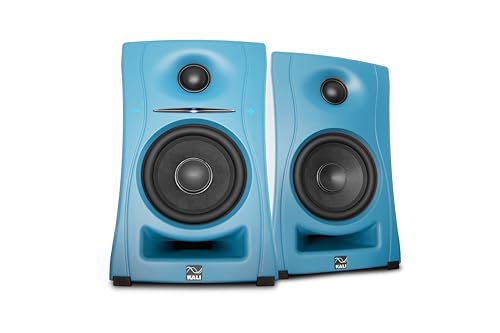
Kali Audio LP-UNF-B 4” Ultra
Desktop producers and content creators who want a compact powered monitor pair with USB-C and Bluetooth for close listening.
Read the Kali Audio LP-UNF-B 4” Ultra review →
Audioengine A2 HD
Desktop and nearfield listening where compact powered speakers with USB, Bluetooth aptX HD, and a headphone amp replace typical computer speakers.
Read the Audioengine A2 HD review →Questions Buyers Ask
Audioengine S8
See the current listing, price and included accessories.
About This Review
Mandrillis Team
The Mandrillis editorial team researches and compares audio and music gear using manufacturer documentation, verified specs and real buyer feedback, so you can make a confident purchase without wading through marketing claims.
Read our full research methodology.