Speakers Review
Kali Audio LP-UNF-R 4" Ultra Review: Nearfield Power
The Kali Audio LP-UNF-R 4" Ultra is a powered nearfield studio monitor pair with a 4.5-inch woofer, 39 Hz bass extension, Bluetooth, USB-C, TRS and RCA inputs. This review examines the published specs, boundary EQ, and desktop fit to help you decide if the red pair suits your setup.
Our Verdict
Research Score 80/100The Kali Audio LP-UNF-R 4" Ultra reads as a focused desktop monitor for small rooms and nearfield work. The published 39 Hz extension and under 2 percent distortion claim are the headline items, joined by a bi-amped 160W Class D package and a useful set of inputs that includes USB-C and Bluetooth. The listing does not publish tweeter size, upper frequency response, dimensions, or weight, which leaves practical fit questions open. For buyers who can confirm placement and accept the red finish, the monitor pair offers a strong lower mid-range feature set. It is best viewed as a desktop production tool rather than a large-room solution. Score reflects the unknown physical details and missing upper range data.
Editorial research score based on published specifications and documented features, not a customer rating or lab test.

Kali Audio
Kali Audio LP-UNF-R 4” Ultra
Best for: Producers and desktop listeners who want compact powered monitors with deep bass and flexible wired or wireless input.
Skip it if: You need known dimensions, a neutral black finish, or published tweeter and upper frequency details before buying.
Check Price on AmazonWe may earn a commission at no extra cost to you.
Listing verified: October 2026
Who Should Buy It
Buy it if
- Home studio owners mixing at a desk
- Content creators who need USB-C direct monitoring
- Listeners who want Bluetooth convenience in a desktop monitor
- Buyers who prefer a lower mid-range powered monitor pair
Skip it if
- You need a ruler-ready footprint with published dimensions
- You require a specific Bluetooth codec for critical wireless listening
- You want a matched black or wood finish option
Key Specifications
| Type | Powered ultra nearfield studio monitor speakers, pair |
| Drivers | High-excursion 4.5-inch woofer (listing title says 4-inch); tweeter not published in listing |
| Power or sensitivity | Bi-amped 160W Class D system |
| Frequency response | Low-frequency extension down to 39 Hz; upper limit not published in listing |
| Inputs and connectivity | USB-C, TRS, RCA, Bluetooth |
| Bluetooth and streaming | Bluetooth input; codec and version not published in listing |
| Dimensions | Not published in listing |
| Weight | Not published in listing |
| Finish | Red |
| Included accessories | Not published in listing |
Overview
The Kali Audio LP-UNF-R 4" Ultra is a powered studio monitor pair aimed at ultra nearfield listening, meaning it is designed for use at arm's length on a desk or workstation. The listing positions the speakers for music production, mixing, and editing, with a focus on compact placement and full-range sound. The product name includes a 4-inch descriptor, but the published feature bullet refers to a 4.5-inch woofer, which is a small discrepancy worth noting before buying.
The key selling points in the listing are the 39 Hz low-frequency extension, low distortion rating of under 2 percent, a 3D imaging waveguide, and a bi-amped 160W Class D amplifier package. Connectivity includes USB-C, TRS, RCA, and Bluetooth, which covers both professional interfaces and consumer devices. The listing does not publish tweeter size, upper frequency response, dimensions, or weight, so buyers should treat this as a feature-rich but partially specified product.
Sound Quality
On paper, the Kali Audio LP-UNF-R 4" Ultra emphasizes low-end capability for its size. The listing states that the high-excursion 4.5-inch woofer extends down to 39 Hz with less than 2 percent distortion. For a compact nearfield monitor, that is a meaningful published figure because deep bass is often the first compromise in small desktop speakers. The listing describes the bass as tight and controlled, which suggests a focus on translation rather than exaggerated low-end hype.
The listing also mentions a 3D imaging waveguide that is said to create a detailed and lifelike soundstage. This feature is intended to help with spatial placement of instruments and vocals during mixing. However, the listing does not publish the tweeter size, crossover frequency, or the upper limit of the frequency response, so the overall balance and treble character cannot be fully assessed from the data. Buyers should note that the sound claims are based on the manufacturer's published description, not independent verification.
Drivers, Power and Room Fit
The published driver information is limited to a high-excursion 4.5-inch woofer, even though the product name says 4-inch. The listing does not identify the tweeter design or size, which is a notable omission for a studio monitor. The enclosure is powered by a bi-amped 160W Class D system, which means separate amplification for the woofer and tweeter, a common approach in active monitors. The listing does not break down the wattage per driver.
Room fit is addressed through boundary EQ settings. The listing says these settings adjust for placement near walls or surfaces, helping maintain tonal balance. This is useful for desks pushed against a wall or monitors sitting close to a boundary. However, without published dimensions or weight, buyers cannot easily confirm whether the Red pair will fit their desk space or stands. The ultra nearfield design implies a small footprint, but the exact size remains unknown from the listing.
Features and Connectivity
The Kali Audio LP-UNF-R 4" Ultra offers a versatile input set. The listing lists USB-C, TRS, RCA, and Bluetooth as available connections. USB-C is particularly handy for direct connection to a computer without an external audio interface, while TRS inputs suit balanced connections from interfaces or mixers. RCA provides an unbalanced option for consumer devices, and Bluetooth adds wireless convenience for casual listening or quick reference checks.
The listing does not state the Bluetooth version or supported codecs, so buyers who need high-quality wireless audio should treat Bluetooth as a convenience feature rather than a critical monitoring path. The bi-amped 160W Class D system means no external amplifier is required, which simplifies desktop setups. The following bullets summarize the key connectivity features as described in the listing.
- USB-C input for direct computer connection
- TRS inputs for balanced professional sources
- RCA input for consumer line-level devices
- Bluetooth input for wireless playback
- No external amplifier required
Build, Design and Finish
The listing describes the Kali Audio LP-UNF-R 4" Ultra as a red pair, which gives the monitors a distinct look compared with the typical black studio monitor. The finish is the only visual detail provided. The cabinet material, baffle construction, and port design are not published, so build quality cannot be fully evaluated from the listing alone. The compact ultra nearfield positioning suggests a desktop-friendly form factor, but no dimensions or weight are given.
For buyers who care about aesthetics, the red finish may be a positive or a negative. It stands out on a desk but may not match all setups. The listing does not mention a black or wood option, so the red pair appears to be the only finish for this model. Without published weight, the sturdiness of the enclosure and the ease of moving the monitors are open questions. Prospective buyers should check the physical size with the seller if desk space is tight.
Setup and Placement
Setup should be straightforward because the monitors are powered and include multiple inputs. The listing highlights boundary EQ settings that adjust for placement near walls or surfaces, which is common for desk use. A buyer would simply connect a source via USB-C, TRS, RCA, or Bluetooth and set the boundary EQ based on whether the monitors are on stands, on a desk, or near a wall. The listing does not mention included cables or accessories.
The lack of published dimensions makes placement planning more difficult. Ultra nearfield monitors are typically placed close to the listener, often on desk stands or monitor pads, but without knowing the footprint, buyers cannot confirm fit. The listing does not state whether isolation pads or angle adjustment are included. Buyers should plan to supply their own cables and possibly desktop stands, since the listing does not specify what comes in the box.
Daily Use
In daily use, the Kali Audio LP-UNF-R 4" Ultra should work as a compact desktop monitoring solution. The USB-C input allows a direct connection to a laptop or desktop computer, which is convenient for a small production setup. The Bluetooth input enables quick wireless playback from a phone or tablet for reference listening or casual music. The input switching method is not described in the listing, so buyers should check whether switching is manual or automatic.
For mixing and editing work at arm's length, the published bass extension and the 3D imaging waveguide are the main selling points. The listing suggests that the boundary EQ helps keep the tonal balance consistent when the monitors are placed near a desk surface or wall. However, the absence of a published upper frequency response and tweeter details means that buyers cannot fully judge the high-frequency performance from the spec sheet. The monitor should be auditioned or researched further if critical treble detail is a priority.
Who Should Buy It
The Kali Audio LP-UNF-R 4" Ultra is best suited to home studio owners, content creators, and desktop listeners who want a compact powered monitor pair with deep bass and flexible inputs. Producers who mix at a desk and need USB-C connectivity without a separate interface will find the feature set practical. The boundary EQ is also a useful feature for untreated rooms or desks against walls.
Buyers who value a non-black finish may appreciate the red pair, while those who need a traditional black studio monitor should look elsewhere. The lower mid-range price tier and the published 39 Hz bass extension make this an attractive option for someone stepping up from small multimedia speakers to dedicated nearfield monitors. However, the missing dimensions and tweeter details mean it is not ideal for buyers who need complete specifications before purchasing.
Alternatives Worth Considering
For a similar powered desktop form factor with Bluetooth, the Edifier R1280DB is a common consumer alternative. It typically offers a wood or black finish and a remote control, but the published bass extension is not as deep as the Kali's 39 Hz claim. The Edifier is often viewed as a lifestyle speaker, while the Kali is positioned more for production work, so the choice depends on whether studio features like balanced TRS and USB-C matter.
Buyers who want a passive bookshelf speaker should consider the Klipsch R-51M, but that model requires a separate amplifier or receiver, which adds cost and complexity. The ELAC Debut 2.0 B5.2 is another well-regarded passive option with a different sonic signature, though it also needs external power and lacks Bluetooth or USB-C. For those who need sub-bass below 39 Hz, adding a subwoofer such as the SVS SB-1000 Pro would be a separate purchase, but it moves the setup beyond the lower mid-range tier. The Kali LP-UNF-R 4" Ultra stands out by combining active amplification, USB-C, Bluetooth, and boundary EQ in a single package, even if some specifications are not published.
Verdict
The Kali Audio LP-UNF-R 4" Ultra presents a compelling on-paper feature set for a lower mid-range powered nearfield monitor. The published 39 Hz bass extension, sub 2 percent distortion claim, bi-amped 160W design, and versatile inputs are strong selling points for a desktop production setup. The red finish adds visual distinction, and the boundary EQ shows thought for real-world desk placement.
The main weaknesses are informational. The listing omits tweeter size, upper frequency response, dimensions, and weight, which makes it hard to fully evaluate fit and treble performance. Bluetooth codec details are also absent. For buyers who can confirm the physical size and do not need exhaustive specs, this monitor pair is a strong option. The score reflects the solid feature set balanced against the unknown specifications and missing physical details.
Strengths and Limitations
Strengths
- Published bass extension down to 39 Hz with low distortion
- Bi-amped 160W Class D package with multiple inputs
- Bluetooth plus USB-C for direct computer connection
- Boundary EQ for desk or wall placement
- Compact ultra nearfield design for small studios
Limitations
- Listing omits tweeter size and upper frequency response
- No published dimensions or weight for desk planning
- Bluetooth codec and version not stated
- Red finish limits aesthetic flexibility
How We Scored It
Scores reflect published specifications, documented features and value against the alternatives below. They are editorial research scores, not laboratory measurements.
Alternatives to Consider
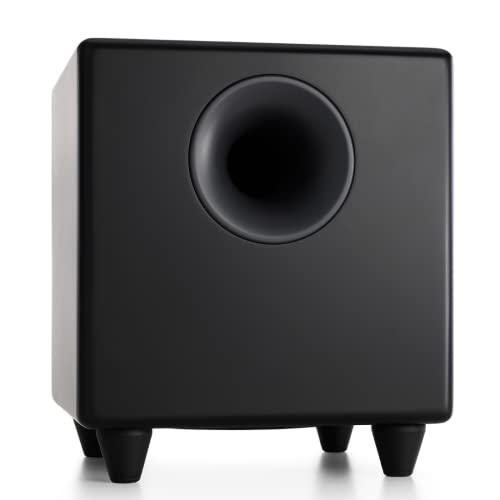
Audioengine S8
Buyers who want a powered subwoofer for a small to medium room and prefer a lower mid range, space conscious bass upgrade without running long signal cables.
Read the Audioengine S8 review →
Klipsch AW-650
A buyer who already owns an amplifier or receiver and wants a mountable, weather-resistant speaker pair for a patio or balcony.
Read the Klipsch AW-650 review →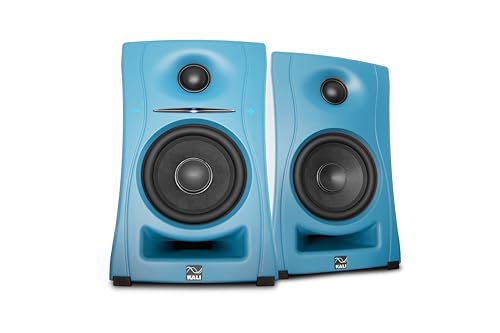
Kali Audio LP-UNF-B 4” Ultra
Desktop producers and content creators who want a compact powered monitor pair with USB-C and Bluetooth for close listening.
Read the Kali Audio LP-UNF-B 4” Ultra review →Questions Buyers Ask
Kali Audio LP-UNF-R 4” Ultra
See the current listing, price and included accessories.
About This Review
Mandrillis Team
The Mandrillis editorial team researches and compares audio and music gear using manufacturer documentation, verified specs and real buyer feedback, so you can make a confident purchase without wading through marketing claims.
Read our full research methodology.