Speakers Review
Marantz M1 Review: Compact Power Meets HEOS Streaming
The Marantz M1 is a compact two channel streaming amplifier rated at 100 watts per channel, powered by HEOS with AirPlay 2, Spotify Connect, Bluetooth, and high resolution file support, plus HDMI eARC for television sound and a dedicated subwoofer output for a simple 2.1 system.
Our Verdict
Research Score 74/100The Marantz M1 packages a stated 100 watt per channel amplifier, broad HEOS based streaming, and HDMI eARC television integration into a notably compact design, which is the core appeal here for buyers who do not want a large component taking up shelf space. The listing emphasizes tuning at Marantz's own Shirakawa Audio Works facility and a proprietary digital filtering approach, both specific claims rather than generic marketing language. What is missing is a phono input and any detailed analog connectivity beyond network, USB, and HDMI eARC, which buyers planning a turntable or a more traditional wired setup should note before buying. For a HEOS centered household that wants compact, capable amplification with real streaming breadth, this amplifier is a focused, credible option.
Editorial research score based on published specifications and documented features, not a customer rating or lab test.

Marantz
Marantz M1
Best for: Buyers who want a compact, HEOS connected streaming amplifier with real power and HDMI eARC television integration, ideally as part of a wider HEOS multi-room setup.
Skip it if: Avoid it if you need a built in phono input for a turntable, or detailed analog and digital input options beyond network, USB, and HDMI eARC.
Check Price on AmazonWe may earn a commission at no extra cost to you.
Listing verified: October 2026
Who Should Buy It
Buy it if
- Buyers who want a compact amplifier that still delivers a stated 100 watts per channel
- Households already using HEOS speakers who want a matching amplifier for multi-room listening
- Buyers who want HDMI eARC and existing TV remote control for a simple television audio upgrade
- Listeners who stream primarily through AirPlay 2, Spotify Connect, or Bluetooth rather than physical media
Skip it if
- You need a built in phono input for vinyl playback
- You need confirmed analog input options beyond network, USB, and HDMI eARC
- You need published dimensions and weight before planning a specific placement
Key Specifications
| Drive type | Not published in listing (product is a wireless streaming amplifier, not a turntable) |
| Cartridge | Not published in listing (no cartridge applies to this product) |
| Platter | Not published in listing (no platter applies to this product) |
| Tonearm | Not published in listing (no tonearm applies to this product) |
| Speeds | Not published in listing (no turntable speeds apply) |
| Built-in preamp | Not published in listing (no turntable phono preamp specified; amplifier has line-level and digital inputs) |
| Bluetooth and USB | Bluetooth, AirPlay 2, Spotify Connect, HEOS, USB input for high-resolution files |
| Outputs | Dedicated subwoofer output, HDMI eARC, speaker outputs implied by 100 W per channel but not detailed in listing |
| Dimensions and weight | Not published in listing, though the listing describes the unit as diminutive in size |
| Included accessories | Not published in listing |
| Type | Compact two channel wireless streaming integrated amplifier |
| Power output | 100 watts per channel of what the listing calls high quality, low distortion amplification, with a dedicated subwoofer output for a full 2.1 system. No ohm load or distortion percentage is published |
| Channels | 2 channels, stereo, plus a dedicated subwoofer output for building a simple 2.1 system |
| Inputs and outputs | Not fully published in listing. The listing confirms a dedicated subwoofer output and HDMI eARC, but does not list separate analog or digital inputs beyond network and USB based sources |
| HDMI and video | HDMI eARC is included, with onboard Dolby Digital plus decoding, letting the amplifier take over television audio duties and be controlled using an existing TV remote |
| Wireless and streaming | Powered by HEOS, with support for high resolution music up to 24 bit, 192 kHz PCM and DSD over streamed services, a home network, or USB, plus AirPlay 2, Spotify Connect, and Bluetooth |
| Phono input | Not published in listing. No phono stage is described for this amplifier in the given features |
| Remote and app | Controlled through the HEOS app, with volume and basic adjustments also possible using an existing TV remote through the HDMI eARC connection. No dedicated included remote is specifically described |
Overview
The Marantz M1 is built around a specific idea, pack a genuinely powerful amplifier and broad streaming support into a compact enough chassis that it can sit comfortably in spaces a larger integrated amplifier or receiver simply would not fit, whether that is a bookshelf, a small desk, or a secondary room.
The listing leans on Marantz's own Shirakawa Audio Works facility in Japan as the design and build location, framing this amplifier as shaped by decades of audiophile engineering experience rather than as a generic compact streaming box built purely for convenience and a small footprint.
HEOS sits at the center of the feature set, tying together high resolution streaming, AirPlay 2, Spotify Connect, and Bluetooth, while HDMI eARC extends the amplifier's usefulness into television audio duties as well as pure music listening, which gives it a dual role many compact amplifiers do not attempt.
This review treats the compact size and the HEOS integration as the two defining characteristics of the M1, since together they explain both who the amplifier is built for and where its real limits sit compared with larger, more traditionally connected stereo amplifiers.
Power and Sound Quality
The stated power figure is 100 watts per channel, which the listing describes as high quality, low distortion amplification, a meaningful claim for an amplifier this compact, where thermal and space constraints often limit how much power a design can comfortably deliver without compromising long term reliability.
No ohm load or distortion percentage is published alongside that wattage figure, so buyers should treat 100 watts per channel as the primary confirmed data point rather than a complete bench specification matching a larger, more traditional integrated amplifier with a full published distortion curve.
The listing also names Marantz Musical Digital Filtering, describing it as preserving natural warmth, detail, and spaciousness through oversampling techniques drawn from the brand's reference grade audiophile products, a specific technical claim rather than vague marketing language about sound quality in general terms.
Combined with the dedicated subwoofer output, the stated power figure suggests this amplifier is meant to anchor a genuinely capable 2.1 system rather than serve only as a background music source for a small desktop pair of speakers, even inside such a compact chassis.
Connectivity and Inputs
The clearest confirmed connections are a dedicated subwoofer output, for building a simple 2.1 system, and HDMI eARC, which lets the amplifier receive audio from a connected television and also be controlled through that television's existing remote for basic volume adjustments.
Streaming connectivity is genuinely broad, covering AirPlay 2, Spotify Connect, and Bluetooth, alongside HEOS network streaming and USB playback for high resolution files up to 24 bit, 192 kHz PCM and DSD, which covers nearly every common wireless source a buyer might already use.
The listing does not detail additional analog or digital inputs beyond those network and USB based sources, which is a real gap for buyers planning to connect a CD player, a turntable, or another physical source directly to the amplifier rather than relying entirely on streaming and USB playback.
That gap matters more for buyers coming from a traditional multi input stereo system than for someone building a fresh, primarily streaming based setup, since the latter group is less likely to miss analog inputs they were never planning to use in the first place.
Formats, Processing and Room Correction
High resolution file support is a genuine strength here, with the listing stating playback up to 24 bit, 192 kHz PCM alongside DSD, whether the source is a streamed service, a home network, or a connected USB drive.
Onboard Dolby Digital plus decoding through the HDMI eARC connection extends format support into basic television audio processing, which is a useful bonus for buyers using this amplifier as their main television sound upgrade.
There is no room correction system described, which is consistent with a compact two channel streaming amplifier rather than a multichannel AV receiver, and buyers should not expect any automated room calibration out of the box.
- High resolution streaming up to 24 bit, 192 kHz PCM and DSD
- AirPlay 2, Spotify Connect, and Bluetooth streaming
- HEOS network streaming and multi-room support
- Onboard Dolby Digital plus decoding through HDMI eARC
- No room correction system described
Features, Streaming and Apps
HEOS is the backbone of the feature set, letting this amplifier join a wider multi-room system alongside other HEOS speakers and amplifiers, or operate entirely on its own as a single zone.
HDMI eARC with existing TV remote control is a particularly practical feature, since it means a buyer does not necessarily need a second remote just to adjust volume while watching television through this amplifier.
AirPlay 2, Spotify Connect, and Bluetooth round out the streaming options, covering most households regardless of which specific ecosystem, Apple, Spotify, or a general Bluetooth device, they are already using day to day.
Build, Design and Controls
The listing describes a soft touch finish, a distinctive metal grille, and a dimmable front panel as the main visible design elements, aimed at a subtly elegant look wherever the amplifier is placed in a room, rather than a utilitarian box meant to disappear behind other equipment.
Diminutive size is specifically called out in the listing as a deliberate design goal, intended to make the amplifier an easy fit for multi-room listening or for extending an existing Marantz system into a new space without needing to find room for a full sized component.
No exact dimensions or weight are published, so buyers planning a very specific shelf or cabinet space should treat diminutive as a general descriptor rather than a guaranteed fit until they can confirm exact measurements elsewhere, particularly in a tight built in cabinet or shelving unit.
The dimmable front panel is a small but practical touch for a bedroom or living room placement, letting the display brightness match the lighting in the room rather than staying at a single fixed level regardless of the time of day.
Setup and Daily Use
Setup should center on connecting the amplifier to a home network for HEOS access, pairing AirPlay 2, Spotify Connect, or Bluetooth as needed, and connecting a television through HDMI eARC if that is part of the plan, all of which the listing presents as straightforward rather than requiring technical expertise.
Day to day use benefits from the existing TV remote integration, letting a buyer adjust volume for television audio without needing a separate dedicated remote just for the amplifier itself, which reduces one more remote cluttering a coffee table or shelf.
Buyers already running other HEOS devices should find this amplifier joins that same multi-room system directly through the HEOS app, without needing a separate setup process distinct from how other HEOS speakers are configured elsewhere in the home.
For a household switching between streaming, a connected television, and occasional Bluetooth playback from a phone or laptop, the amplifier's various inputs should cover most realistic daily scenarios without requiring frequent manual source switching or additional hardware.
Who Should Buy It
This amplifier suits buyers who specifically want a compact footprint without giving up a genuinely stated 100 watt per channel power figure, which is a combination not every compact streaming amplifier manages to offer.
Households already using HEOS speakers elsewhere benefit directly from the multi-room integration, since this amplifier becomes one more zone in an existing system rather than a separate, isolated device.
Buyers who want to simplify television audio through HDMI eARC and an existing remote, without adding another remote to the coffee table, get a genuinely practical feature here beyond pure music listening.
Alternatives Worth Considering
Buyers who specifically need a phono input built in should look elsewhere, since the Marantz M1 does not describe one, unlike some other compact integrated amplifiers in a similar price tier.
Listeners who want a larger, more traditionally built stereo amplifier with more confirmed analog inputs might prefer something like a Yamaha A-S series model over this more compact, streaming focused design.
Buyers deep into the HEOS ecosystem who want to compare similar functionality at a different size or power point should look at other Denon or Marantz HEOS enabled amplifiers before settling on this specific model.
Verdict
The Marantz M1 is a genuinely specific product, a compact amplifier that still claims 100 watts per channel, paired with broad HEOS based streaming and a particularly useful HDMI eARC implementation for television sound.
The lack of a phono input and limited detail on analog connectivity beyond network and USB sources are real constraints for some buyers, but for a HEOS centered household prioritizing compact size and streaming breadth, this amplifier reads as a well focused, credible choice.
Strengths and Limitations
Strengths
- 100 watts per channel of stated low distortion amplification, built and tuned at Marantz's Shirakawa Audio Works facility
- Powered by HEOS, with AirPlay 2, Spotify Connect, and Bluetooth covering most common streaming scenarios
- Supports high resolution music up to 24 bit, 192 kHz PCM and DSD from streamed services, network, or USB
- HDMI eARC with onboard Dolby Digital plus decoding lets an existing TV remote control the amplifier
- Dedicated subwoofer output enables a simple 2.1 system without a separate processor
- Compact, diminutive size is specifically suited to multi-room placement alongside other HEOS devices
Limitations
- No phono input described, so a turntable would need a separate outboard phono stage
- No ohm load or distortion percentage published alongside the 100 watt per channel figure
- No dimensions, weight, or included accessories listed beyond a general description of a compact size
- Inputs beyond network, USB, and HDMI eARC are not detailed in the listing
How We Scored It
Scores reflect published specifications, documented features and value against the alternatives below. They are editorial research scores, not laboratory measurements.
Alternatives to Consider
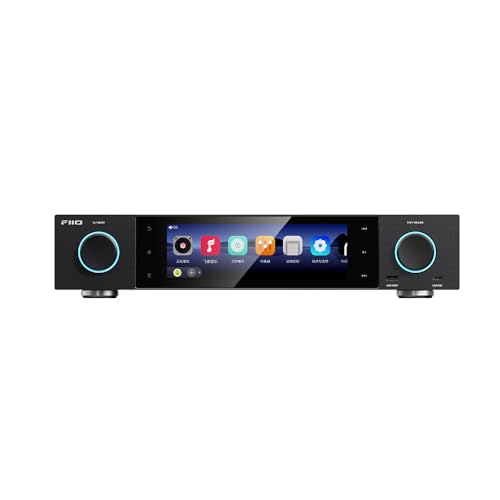
FiiO S15
Listeners who want one full-width component to handle streaming, local files, television audio and digital to analog conversion with a large screen.
Read the FiiO S15 review →
Onkyo Muse Y-40
Living room listeners who want one compact box that streams from every major service, plays records and handles television sound with real power.
Read the Onkyo Muse Y-40 review →
Marantz Cinema 70s
Buyers who want real Atmos and DTS:X processing with generous HDMI connectivity in a receiver that fits a shallow or low cabinet.
Read the Marantz Cinema 70s review →Questions Buyers Ask
Marantz M1
See the current listing, price and included accessories.
About This Review
Mandrillis Team
The Mandrillis editorial team researches and compares audio and music gear using manufacturer documentation, verified specs and real buyer feedback, so you can make a confident purchase without wading through marketing claims.
Read our full research methodology.