Speakers Review
Polk Audio PSW10 10" Review: Compact Budget Bass
The Polk Audio PSW10 10" is a budget powered subwoofer built around a 10 inch Dynamic Balance woofer and a ported cabinet. The published spec includes a 50 watt RMS amp, a 40 to 160 Hz response, and flexible wired inputs. This review covers what the listing reveals and what it leaves out.
Our Verdict
Research Score 74/100The Polk Audio PSW10 10" is a straightforward budget subwoofer for small to mid-size rooms. Its 10 inch Dynamic Balance driver and ported cabinet should add useful low-end weight to music and movies, while the variable 80 to 160 Hz crossover and phase toggle help with basic integration. The published 40 to 160 Hz response means it is not a deep-bass monster, and the 50 watt RMS amplifier is modest by enthusiast standards. The listing does not publish dimensions, weight, finish, or measured output, so buyers should treat this as a sensible entry-level option rather than a precision instrument. If you need an affordable wired subwoofer and can verify physical fit, this model is worth shortlisting.
Editorial research score based on published specifications and documented features, not a customer rating or lab test.
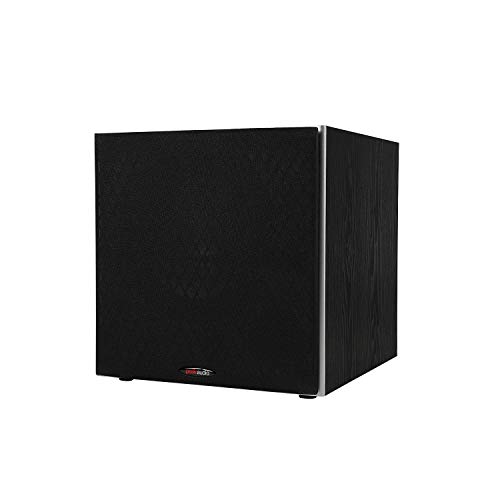
Polk Audio
Polk Audio PSW10 10"
Best for: Small to mid-size rooms where a wired subwoofer can add bass weight and punch to music or movie playback.
Skip it if: You need sub-40 Hz extension, wireless control, or exact physical dimensions before buying.
Check Price on AmazonWe may earn a commission at no extra cost to you.
Listing verified: October 2026
Who Should Buy It
Buy it if
- First-time subwoofer buyers on a budget
- Owners of Polk Monitor or T-series speakers
- Users with small to mid-size rooms
- Listeners who prefer simple wired setup with basic crossover and phase controls
Skip it if
- You want deep sub-bass below 40 Hz
- You require Bluetooth, app control, or wireless placement
- You need published dimensions and weight for tight furniture fit
Key Specifications
| Type | Powered subwoofer |
| Drivers | 10 inch Dynamic Balance woofer |
| Power or sensitivity | 50 watts RMS amplifier, up to 100 watts output |
| Frequency response | 40 to 160 Hz at -3 dB |
| Inputs and connectivity | Speaker-level inputs, speaker-level outputs, and line-level inputs |
| Bluetooth and streaming | Not published in listing |
| Dimensions | Not published in listing |
| Weight | Not published in listing |
| Finish | Not published in listing |
| Included accessories | Detachable front grille (additional accessories not published) |
Overview
The Polk Audio PSW10 10" is a budget powered subwoofer aimed at small to mid-size rooms. The listing positions it as an easy way to add low-end weight to a music system or home theater without complex setup. Its core components on paper are a 10 inch Dynamic Balance woofer, a configured directed port, and a built in amplifier rated at 50 watts RMS with up to 100 watts of output.
The published specification includes a 40 to 160 Hz frequency response at -3 dB and a continuously variable 80 to 160 Hz crossover. The product listing does not publish dimensions or weight, so buyers who need exact placement measurements will have to look elsewhere. This review works only from the data that the listing provides and avoids guessing about missing physical details.
Sound Quality
The published driver and port combination points toward a warmer, fuller presentation than small main speakers can produce alone. The listing describes accurate bass depth and the ability to play demanding nodes without distortion, although no measured distortion limits are given. A 10 inch Dynamic Balance woofer should handle kick drums, bass guitar, and movie impacts with reasonable composure in a modest room.
The continuously variable crossover from 80 to 160 Hz is the main tuning tool for blending with different main speakers. A higher setting can work with small satellite speakers, while a lower setting may suit larger bookshelf or floorstanding models. Because the listing does not state the crossover slope or the output level at which compression begins, the real clean output ceiling remains an open question.
The ported cabinet should deliver more perceived loudness around its tuning frequency than a sealed box of similar size. Listeners who expect pressurizing sub 30 Hz rumble will be disappointed, since the response rolls off below 40 Hz. For music and casual movie watching in a small to mid-size space, the on paper behavior suggests decent punch and warmth without excessive boom.
Drivers, Power and Room Fit
The driver is a 10 inch Dynamic Balance unit, which Polk uses to reduce unwanted cone resonances. The listing mentions resonance-free driver materials and durability for extended use, but does not publish the exact cone or surround material. A 50 watt RMS amplifier is modest by subwoofer standards, and the up to 100 watts figure is best understood as a peak or dynamic allowance rather than continuous output.
The published frequency response of 40 to 160 Hz at -3 dB defines the useful operating range on paper. Below 40 Hz, output falls off, so the deepest organ pedals, synth drops, and action movie sub bass will be reduced. The configured directed port should improve efficiency and reduce port noise, but the listing does not provide cabinet volume, port tuning frequency, or maximum SPL.
For room fit, the listing describes small-to-mid size rooms. Physical dimensions and weight are not published, which makes planning difficult. A ported cabinet with a 10 inch driver typically occupies a cube between roughly 14 and 17 inches per side, but that is general knowledge and not confirmed by this listing. Buyers should confirm actual size and weight from another source if a specific spot is required.
Features and Connectivity
The rear panel carries speaker-level inputs, speaker-level outputs, and line-level inputs, which allows connection to both older stereo receivers and modern AV gear. The listing does not mention a dedicated LFE input, so users with a receiver that has a single subwoofer output may need to use a Y adapter or the stereo line inputs. The phase toggle switch is present for aligning multiple subwoofers in the same system.
This is a wired-only subwoofer. The listing does not describe Bluetooth, Wi-Fi, network streaming, app control, or any wireless audio input. The continuously variable 80 to 160 Hz crossover is the primary integration feature, and it offers useful adjustment for matching different speaker sizes. A detachable front grille is part of the package, but the listing does not list cables or a power cord length.
- 10 inch Dynamic Balance woofer with directed port
- 50 watt RMS built in amplifier, up to 100 watts output
- Speaker-level and line-level inputs plus speaker-level outputs
- Continuously variable 80 to 160 Hz crossover
- Phase toggle switch for multiple subwoofers
- Detachable front grille included
Build, Design and Finish
The listing describes a compact design with a detachable grille on the front. Cabinet material, internal bracing, and finish color are not published, which is common for budget subwoofers where cosmetic details are not emphasized. Buyers should expect a simple black box rather than a furniture-grade cabinet, but the exact appearance cannot be confirmed from the listing.
The driver is said to use resonance-free materials for long term durability and clean output. However, the listing does not publish weight, dimensions, or cabinet thickness, so build quality cannot be fully assessed on paper. The detachable grille provides some flexibility for users who prefer an exposed driver or a cleaner front panel.
The listing states that the subwoofer is not waterproof, so it is intended for indoor use only. No finish options, power cord details, or additional accessories are specified. Overall the published design points to a functional budget subwoofer that prioritizes low cost and simple integration over premium cabinet aesthetics.
Setup and Placement
Setup should be straightforward with a wired connection from a receiver or integrated amplifier. The presence of both speaker-level and line-level inputs makes this subwoofer flexible for older stereo gear and newer home theater receivers. The phase toggle switch and variable crossover allow basic room tuning without automatic digital correction.
Placement planning is limited by the absence of published dimensions and weight. Corners and wall boundaries generally increase perceived bass output, but the best spot depends on room modes and furniture. This model does not include a microphone or room correction system, so users will adjust the crossover, level, and phase by ear or with their receiver's bass management.
The published crossover range from 80 to 160 Hz is the key setup control. For very small satellites, a setting near 120 or 140 Hz may reduce a midbass gap, while a lower 80 Hz point often works with larger bookshelf speakers. The listing does not provide specific recommended settings, so experimentation is part of the process.
Daily Use
In daily use, this subwoofer should be a set-and-forget component once level and crossover are balanced. The ported design may add noticeable body to both music and movie soundtracks in a small room, and the listing claims clean output without distortion at high volume. Specific maximum output and distortion are not published, so real world headroom remains unknown.
Auto-on signal sensing and standby behavior are not mentioned in the listing, so users may need a switched outlet or manual power control. The detachable grille can help the subwoofer blend into a living space, and the modest footprint should fit into typical rooms if the actual dimensions match expectations. Wired connections mean cable management is part of the installation.
For apartments and bedrooms, the 40 Hz rolloff and modest amplifier power may actually be beneficial, since less deep energy travels through walls. Still, volume discipline and proper placement determine whether the low end enhances or annoys. The phase toggle can help when a second subwoofer is added later.
Who Should Buy It
This subwoofer fits a buyer adding a first powered subwoofer to a budget stereo or home theater setup in a small to mid-size room. It is particularly relevant for owners of Polk Monitor and T-series speakers, because the listing specifically mentions timbre matching with those lines. Users who prefer a simple wired connection and basic manual controls should find it manageable.
Buyers who need wireless streaming, room correction, or deep sub 40 Hz extension should look elsewhere. The lack of published dimensions and weight makes it a less ideal choice for someone who must know exact physical fit before ordering. If you want a straightforward entry-level subwoofer and can verify the size from another source, this model is worth considering.
Alternatives Worth Considering
In the budget subwoofer class, some competitors publish full dimensions, weight, and finish details, which can be useful for planning. Some models may also include a dedicated LFE input, auto-on sensing, or a variable low pass filter with a bypass option. Shoppers who prioritize published measurements should compare those listings side by side.
A sealed subwoofer may deliver tighter, less boomy bass but often requires more amplifier power to play as loud. A larger ported subwoofer with a 12 inch driver can typically dig deeper and move more air, but costs more and takes up more space. The Polk PSW10 10" sits in the entry-level ported group, and its phase toggle and variable crossover are its most useful setup features.
Because the listing does not include measured output or distortion data, buyers who want objective performance numbers should look for independent test reports or manufacturer data beyond this listing. Comparing crossover range, input options, and physical size is the best way to make a shortlist in this budget tier.
Verdict
The Polk Audio PSW10 10" is a competent entry-level powered subwoofer for small to mid-size rooms. Its 10 inch Dynamic Balance driver and ported cabinet should add welcome low-end energy to movies and music, especially when paired with modest main speakers. The variable 80 to 160 Hz crossover and phase toggle provide enough control for basic integration.
However, the listing is thin on physical details and measured performance. No dimensions, weight, finish, or output limits are published, so buyers cannot fully assess fit or headroom from the available data. This is a budget subwoofer for listeners who want a simple wired upgrade and are willing to accept limited deep bass below 40 Hz.
Strengths and Limitations
Strengths
- 10 inch Dynamic Balance woofer with a directed port
- Variable 80 to 160 Hz crossover for blending
- Speaker-level and line-level inputs for flexible hookup
- Phase toggle switch for multiple subwoofer setups
- Detachable front grille included
Limitations
- No published dimensions or weight
- No Bluetooth or wireless streaming listed
- Frequency response rolls off below 40 Hz
- No dedicated LFE input specified
- Cabinet material and finish not published
How We Scored It
Scores reflect published specifications, documented features and value against the alternatives below. They are editorial research scores, not laboratory measurements.
Alternatives to Consider

Audioengine P4
Use with a separate amplifier or receiver in a small room or desktop audio setup.
Read the Audioengine P4 review →
Klipsch R-80SWi 8-inch
Best for home theater and music listeners who want a compact wireless subwoofer in a small or medium room without running a long subwoofer cable.
Read the Klipsch R-80SWi 8-inch review →
Polk Audio T50
Budget home theater builders who already have an AV receiver and want a floorstanding foundation with simple expansion to 5.1.
Read the Polk Audio T50 review →Questions Buyers Ask
Polk Audio PSW10 10"
See the current listing, price and included accessories.
About This Review
Mandrillis Team
The Mandrillis editorial team researches and compares audio and music gear using manufacturer documentation, verified specs and real buyer feedback, so you can make a confident purchase without wading through marketing claims.
Read our full research methodology.