Speakers Review
Audioengine P4 Review: Compact Passive Bookshelf Pair
The Audioengine P4 is a compact passive bookshelf speaker pair with custom 4 inch aramid fiber woofers, 0.75 inch silk dome tweeters and a front ported cabinet. It requires a separate amplifier and is rated for 125 watts per channel. The listing does not publish frequency response, sensitivity or dimensions.
Our Verdict
Research Score 72/100The Audioengine P4 is a small passive bookshelf speaker pair with custom drivers and a front ported cabinet. It needs a separate amplifier, which may be a benefit for those with an existing receiver or integrated amp and a limitation for desktop users who want an all in one system. The listing publishes power handling and driver materials, but omits frequency response, sensitivity, dimensions and weight. That makes objective sound quality difficult to verify on paper. The white finish, gold plated connectors and three year warranty are practical strengths. For a budget priced passive speaker in a small room, the P4 is a reasonable choice if you accept the published data gaps.
Editorial research score based on published specifications and documented features, not a customer rating or lab test.

Audioengine
Audioengine P4
Best for: Use with a separate amplifier or receiver in a small room or desktop audio setup.
Skip it if: You want a self-powered speaker with wireless connectivity or full published acoustic specifications.
Check Price on AmazonWe may earn a commission at no extra cost to you.
Listing verified: October 2026
Who Should Buy It
Buy it if
- Have an existing amplifier or receiver and need compact passive speakers
- Want a small room or desktop setup with front ported bass tuning
- Prefer a white bookshelf speaker with custom drivers
- Value a three year warranty from a US based brand
Skip it if
- Need powered speakers with built-in Bluetooth or streaming
- Require deep bass without a subwoofer
- Want full published specifications before buying
Key Specifications
| Type | Passive bookshelf speakers |
| Drivers | 4 inch aramid fiber woofers and 0.75 inch silk dome tweeters |
| Power or sensitivity | 125 watts per channel power handling; sensitivity not published in listing |
| Frequency response | Not published in listing |
| Inputs and connectivity | Gold plated passive speaker connectors |
| Bluetooth and streaming | Not published in listing |
| Dimensions | Not published in listing |
| Weight | Not published in listing |
| Finish | White |
| Included accessories | Pair of Audioengine P4 speakers, microfiber speaker bags, setup guide |
Overview
The Audioengine P4 is a compact passive bookshelf speaker pair sold in a white finish. It is designed for use with a separate amplifier or receiver, not as a self-powered desktop monitor. The listing positions it for home stereo systems, computer desktops and music listening with sources like turntables when an amplifier is present.
Audioengine describes the P4 as built around custom components. Each cabinet contains a 4 inch aramid fiber woofer and a 0.75 inch silk dome tweeter. The enclosure is front ported. The published power handling is 125 watts per channel. Many acoustic specifications, such as frequency response and sensitivity, are not provided in the listing.
The package includes the two speakers, microfiber bags and a setup guide. Audioengine backs the P4 with a three year warranty and US based customer support. This review is based on the product listing and published specifications, not in-person testing.
Sound Quality
On paper, the P4 uses a two-way driver configuration with a 4 inch aramid fiber woofer and a 0.75 inch silk dome tweeter. Aramid fiber is a stiff, lightweight material that can help reduce cone breakup. Silk dome tweeters are often chosen for a smooth or forgiving treble response, although the listing does not publish a frequency response curve.
The front ported cabinet is the main acoustic design clue in the listing. A front port can make the speaker more flexible for shelf or desktop placement, since the bass tuning port does not fire directly into a rear wall. The 4 inch woofer is smaller than many full size bookshelf drivers, so listeners should expect modest low frequency output unless a subwoofer is added.
Because the listing omits sensitivity and frequency response, the P4's tonal balance cannot be verified from the published data. The speaker is likely to work best for nearfield listening or small rooms where deep bass is not a priority. Buyers who want a measured response should seek more complete specifications from Audioengine.
Drivers, Power and Room Fit
The P4 is rated for 125 watts per channel power handling according to the listing. That figure describes how much amplifier power the speaker can accept, not how loud it will play on its own. A separate amplifier must provide all power to the drivers. The listing does not publish a sensitivity rating, so it is hard to estimate how much amplifier power is needed for a given volume.
The driver complement is a 4 inch aramid fiber woofer paired with a 0.75 inch silk dome tweeter. The small woofer size suggests a compact cabinet and limited low bass extension. In a small room or on a desk, that may be enough for clear midrange and treble. In a larger space, the P4 may sound thin without a subwoofer or larger speakers.
The front ported design is useful for placement flexibility. A front port reduces the need to keep the speaker far from the wall behind it. However, the listing does not include physical dimensions, so exact room fit and stand compatibility remain open questions until the buyer measures the actual cabinet.
Features and Connectivity
The P4 is a traditional passive speaker pair. It has no internal amplification, no DAC and no wireless radios described in the listing. The only connection is a set of gold plated speaker terminals on each cabinet, meant for ordinary speaker wire from a power amplifier or receiver.
Audioengine states that the P4 works with most stereo receivers, integrated amps, tube amplifiers and digital hybrid amplifiers. The listing also suggests the Audioengine N22 stereo amplifier as a matching component. That pairing may be convenient, but the N22 is sold separately and its specifications are not part of this listing.
For buyers who want Bluetooth or streaming, the P4 does not offer those features on its own. It can be used with any amplifier that includes those sources, such as a receiver with Bluetooth. The passive design keeps the speaker simple but shifts connectivity and source selection to the external electronics.
- Passive bookshelf speaker pair, requires external amplification
- 4 inch aramid fiber woofer and 0.75 inch silk dome tweeter
- Front ported cabinet design
- Gold plated speaker connectors
- Works with receivers, integrated amps, tube amps and hybrid amps
- No Bluetooth or streaming listed
Build, Design and Finish
The listing describes the P4 cabinets as hand crafted and precision tuned. The finish shown is white, which can suit modern desks and living spaces. The use of custom Audioengine components, including the aramid fiber woofer and silk dome tweeter, suggests attention to driver integration.
The front ported construction is integrated into the cabinet, which keeps the front baffle relatively simple. The gold plated connectors are a small but useful detail for corrosion resistance. No cabinet material, grille design, dimensions or weight are published in the listing, so build quality beyond the described components is difficult to assess from data alone.
Included microfiber speaker bags add a modest protection accessory. The three year warranty is longer than the typical one year coverage on some budget speakers and indicates some manufacturer confidence in reliability.
Setup and Placement
Setup requires a separate amplifier or receiver and standard speaker wire. The listing does not mention that speaker wire is included, so buyers should plan to supply their own. The gold plated terminals accept bare wire or perhaps banana plugs, but the listing does not specify connector compatibility.
Placement is made easier by the front port. A front ported speaker can sit closer to a rear wall without the same bass tuning issues as a rear ported design. The compact cabinet, based on the 4 inch woofer, should fit on many desks or bookshelves, but without published dimensions, exact footprint cannot be confirmed.
The P4 is passive, so there are no source controls, volume knobs or EQ adjustments on the speaker. All volume and source switching happens at the amplifier. This is simple for those with an existing hi-fi setup and a limitation for those who expect a self-contained powered speaker.
Daily Use
In daily use, the P4 will behave like most passive bookshelf speakers paired with an amplifier. The 125 watt per channel rating means a moderately powered receiver should drive them without issue, but the small woofer may reach its excursion limit on bass heavy material if pushed hard. The listing does not provide a recommended amplifier power range or sensitivity.
The music focus in the listing suggests the P4 is meant for stereo listening rather than home theater or party volume. Buyers who keep volume sensible in a small room will likely find the front port and silk dome tweeter pleasant for long sessions. The passive design means no firmware updates, no pairing issues and no wireless dropouts.
One practical consideration is that the P4 does not include grilles in the listing. The microfiber bags are for storage, not everyday protection on a desk. The white finish may need occasional dusting. Without weight data, moving the speakers or mounting them on wall brackets cannot be planned from the listing alone.
Who Should Buy It
The Audioengine P4 suits buyers who already own an amplifier or receiver and need a compact passive speaker pair. It fits a desktop or small room stereo setup where a separate amplifier is part of the plan. The white finish and small driver size make it a candidate for a tidy music listening station.
Those who prefer to choose their own amplification and source components may like the P4's simple passive design. It works with tube amps and hybrid amplifiers according to the listing, which can be useful for someone building a budget vinyl or digital system. The three year warranty is another reason to consider it.
Listeners who want a smooth or forgiving treble from a silk dome tweeter may find the P4 appealing on paper. However, anyone who needs published frequency response or sensitivity before buying should wait for more complete data.
Alternatives Worth Considering
For a powered option with similar compact size, the Edifier R1280DB includes amplification and Bluetooth in one package. It does not require a separate amplifier. Buyers who want a simple desktop setup without extra components may find that route more straightforward.
The Klipsch R-51M is a passive bookshelf speaker with a horn loaded tweeter, which can sound more forward or dynamic in a home theater or lively music setup. It is often compared to the Audioengine P4 at similar price points. The ELAC Debut 2.0 B5.2 offers a larger woofer and is a common step up for fuller midbass.
For portable use, the JBL Flip 6 and Bose SoundLink Flex are not bookshelf speakers but small battery powered Bluetooth speakers. They cannot match the stereo separation of a passive pair like the P4, but they are easier to move and require no amplifier.
Verdict
The Audioengine P4 is a focused, compact passive bookshelf speaker pair. The listing highlights custom aramid fiber and silk dome drivers, a front ported cabinet and a 125 watt per channel power handling rating. Its white finish and simple design will appeal to people building a small stereo around an existing amplifier.
The main gaps are the unpublished frequency response, sensitivity, dimensions and weight. Without those details, the P4 is harder to evaluate on paper than speakers that publish full specifications. The lack of Bluetooth or streaming is expected for a passive design, but it means the P4 depends entirely on the source and amplifier.
For the right buyer with a receiver or integrated amp, the P4 is a sensible budget minded choice with a three year warranty. For those wanting a self-contained powered speaker or deep bass without a subwoofer, alternatives like the Edifier R1280DB or larger ELAC models may be more practical.
Strengths and Limitations
Strengths
- Passive design works with a wide range of amplifiers
- Compact front ported cabinet suits desktop or small room placement
- Custom 4 inch aramid fiber woofer and 0.75 inch silk dome tweeter
- Gold plated speaker connectors resist corrosion
- Three year warranty with US based support
- Includes microfiber bags for storage
Limitations
- No published frequency response or sensitivity
- No included speaker wire
- Requires a separate amplifier to function
- No Bluetooth or streaming features
- No published dimensions or weight
How We Scored It
Scores reflect published specifications, documented features and value against the alternatives below. They are editorial research scores, not laboratory measurements.
Alternatives to Consider

Polk Audio T50
Budget home theater builders who already have an AV receiver and want a floorstanding foundation with simple expansion to 5.1.
Read the Polk Audio T50 review →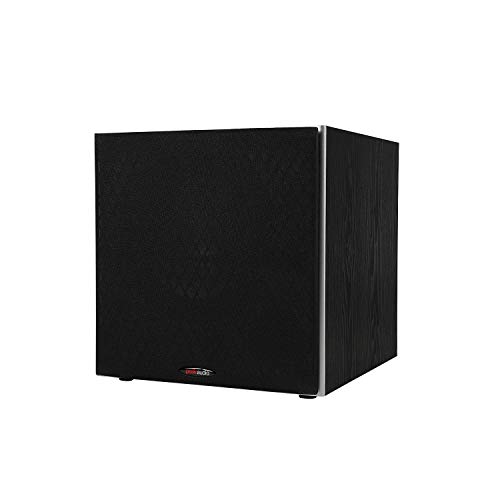
Polk Audio PSW10 10"
Small to mid-size rooms where a wired subwoofer can add bass weight and punch to music or movie playback.
Read the Polk Audio PSW10 10" review →
Audioengine S6 Mini
Small to medium rooms and desktop setups that need compact powered bass reinforcement without taking up much floor space.
Read the Audioengine S6 Mini review →Questions Buyers Ask
Audioengine P4
See the current listing, price and included accessories.
About This Review
Mandrillis Team
The Mandrillis editorial team researches and compares audio and music gear using manufacturer documentation, verified specs and real buyer feedback, so you can make a confident purchase without wading through marketing claims.
Read our full research methodology.