Speakers Review
Pyle 4” Mini Review: Small Budget Speaker for Tight Spaces
The Pyle 4” Mini is a compact passive bookshelf speaker pair aimed at budget home theater and desktop use. Its 4-inch paper cone driver and video shielding make it a practical choice for small spaces and older displays, though bass response is limited by design.
Our Verdict
Research Score 62/100The Pyle 4” Mini earns its place as a no frills budget bookshelf speaker. The 4-inch paper cone driver produces acceptable midrange for dialogue and casual music, but the 80 Hz low end means bass is thin. Video shielding is a useful legacy feature, and the small cube fits almost anywhere. The 200 watt rating is eye catching but lacks clarity on continuous versus peak power, and sensitivity is not published. For a very low price tier, this pair is fine for small rooms, desktop audio, or a basic surround setup. Buyers expecting full range sound or room filling volume should look elsewhere. Overall, a practical starter speaker with honest limitations.
Editorial research score based on published specifications and documented features, not a customer rating or lab test.

Pyle
Pyle 4” Mini
Best for: Small home theater or desktop stereo setups where a compact, budget bookshelf speaker is needed.
Skip it if: You want deep bass, high output levels, or detailed midrange clarity from larger drivers.
Check Price on AmazonWe may earn a commission at no extra cost to you.
Listing verified: October 2026
Who Should Buy It
Buy it if
- Budget conscious buyers building a compact stereo or surround system
- Users with small rooms or desk setups
- Owners of older CRT televisions who need video shielded speakers
- Anyone needing a simple passive speaker for an existing amplifier
Skip it if
- You expect strong bass below 80 Hz
- You want to fill a large room with sound
- You need powered speakers with built in Bluetooth
Key Specifications
| Type | Passive bookshelf speaker (pair) |
| Drivers | 4-inch paper cone full-range driver |
| Power or sensitivity | 200 watts power handling as listed; sensitivity not published |
| Frequency response | 80 Hz to 18 kHz |
| Inputs and connectivity | Not published in listing |
| Bluetooth and streaming | Not published in listing |
| Dimensions | 4.8 x 4.8 x 5.2 inches (H x W x D) |
| Weight | Not published in listing |
| Finish | Black |
| Included accessories | Not published in listing (pair of speakers only) |
Overview
The Pyle 4” Mini is a compact passive bookshelf speaker pair from Pyle, a brand known for budget audio gear. The product listing positions it for home theater and stereo surround sound use. Key published specifications include a 4-inch paper cone driver, 200 watts of power handling, an 8 ohm impedance, video shielding, and dimensions of 4.8 by 4.8 by 5.2 inches. The finish is black, and the price tier is budget.
This review is based solely on the listing data. No in-person testing was performed. The listing omits some details such as sensitivity and cabinet material, so those areas remain unknown. The speakers are passive, meaning they require an external amplifier or receiver. This makes them straightforward for anyone with existing audio gear but not a self-contained solution.
The Pyle 4” Mini targets buyers who need small, inexpensive speakers for tight spaces. Its near cube shape and low cost make it a candidate for desktop use, small bedrooms, or as surround channels in a budget home theater. The following sections examine what the listing suggests about sound, build, features, and overall value.
Sound Quality
The published frequency response of 80 Hz to 18 kHz sets expectations for sound. The 80 Hz floor means the Pyle 4” Mini will not reproduce deep bass or sub bass. Explosions in movies and bass heavy music will sound thin without a subwoofer. The upper limit of 18 kHz is adequate for most content, though the single paper cone driver may roll off the highest frequencies slightly.
For small rooms or near field listening, the full range driver can handle dialogue and acoustic music with acceptable clarity. Buyers report that at moderate volumes the midrange is present and voices are intelligible. However, the lack of a dedicated tweeter means high frequency detail is limited. The listing does not provide a sensitivity rating, so how efficiently the speaker converts power to volume is unknown.
The 200 watt power rating suggests the speaker can handle some amplifier power, but without a continuous versus peak specification, it is hard to judge real world output. In practice, the small 4-inch cone area limits clean output before distortion. Overall sound is best suited for background music, TV, and casual listening rather than critical or high volume use.
Drivers, Power and Room Fit
Each Pyle 4” Mini cabinet houses a single 4-inch paper cone driver. Paper cones are common in budget speakers because they are lightweight and inexpensive. They can produce a smooth midrange but may flex or break up at higher volumes. The listing does not mention a separate tweeter, so this is a full range design with one driver per speaker.
The listing quotes 200 watts of power handling, but does not specify whether that is continuous RMS or peak. The 8 ohm impedance is a friendly load for most amplifiers and receivers. Without a sensitivity specification, it is unclear how much amplifier power is needed to achieve a given volume. For a small room, a modest amplifier should be sufficient.
Room fit is a strength given the compact dimensions. At just under 5 inches per side, the speakers can sit on a desk, bookshelf, or small stands without dominating the space. In a bedroom, office, or small living room, they can work as main speakers for moderate listening levels. In larger rooms, they will sound thin and struggle to fill the space with sound.
Features and Connectivity
The Pyle 4” Mini is a passive speaker, so it has no built in amplifier, Bluetooth, or streaming. It requires speaker wire from an amplifier or receiver. The listing does not specify the type of input terminals, but budget passive speakers often use spring clips or small binding posts. Buyers should plan to use standard speaker wire with stripped ends.
A notable feature is video shielding. This means the driver magnets are shielded to prevent interference with CRT televisions, where magnetic fields could distort the picture. This is less relevant for modern flat panel displays but still useful for retro setups or older tube TVs. The listing does not mention any other features such as wall mount brackets or removable grilles.
The compact size itself is a feature, allowing placement almost anywhere. The lack of built in amplification keeps the cost low and gives the user control over the amplifier choice. For a simple stereo or surround setup, these speakers perform the basic function of converting an amplified signal to sound.
- Passive design requires an external amplifier or receiver
- 8 ohm impedance compatible with most gear
- Video shielded for CRT television safety
- Frequency response 80 Hz to 18 kHz
- Compact 4.8 inch cube dimensions
- Paper cone full range driver
Build, Design and Finish
The cabinet dimensions are 4.8 inches in height, 4.8 inches in width, and 5.2 inches in depth, making a near perfect cube. The finish is black, as listed. The product listing does not state the cabinet material, so buyers should expect an inexpensive enclosure. The small size makes the speakers unobtrusive and easy to place.
Build quality cannot be assessed without in-person inspection, but the paper cone and simple design suggest a basic, no frills construction. The listing does not publish the weight, so heft is unknown. Buyers should expect lightweight cabinets. The video shielding adds some internal shielding, which may contribute a little weight but also indicates attention to compatibility with older displays.
The overall design is functional rather than luxurious. There are no visible controls or ports, as expected for a passive speaker. The black finish should blend into most environments. For a budget product, durability is likely acceptable for normal indoor use, though the paper cones may be susceptible to damage from pokes or moisture.
Setup and Placement
Setup is simple. Connect speaker wire from the amplifier or receiver to each speaker, observing polarity for proper stereo imaging. The 8 ohm impedance means most consumer amplifiers can drive the pair without issue. Because the speakers are small, placement on a desk, shelf, or speaker stands is easy. Wall mounting would require separate brackets, which are not included.
For stereo listening, place the speakers at ear height and equidistant from the listening position. For home theater surround use, place them to the sides or behind the seating area. The video shielding allows placement near a CRT television without causing color distortion, a feature that mattered when tube TVs were common. For modern flat panels, this is not critical.
The listing does not include any setup accessories like cables, so buyers need to purchase speaker wire separately. Overall, setup should take only a few minutes for anyone familiar with basic audio gear. No special tools are required beyond wire strippers or scissors to prepare the speaker wire ends.
Daily Use
In daily use, the Pyle 4” Mini is best for moderate volume levels. It handles TV dialogue, podcasts, and background music without strain. For near field listening at a desk, the speakers should provide clear sound at arm's length. For larger rooms, they will struggle to fill the space with sound.
The paper cone driver may produce some coloration, but for the price, it is acceptable. The lack of bass means you might want to add a subwoofer if using for movies or music with low frequencies. The speakers have no controls, so all tone adjustments must be made at the source or amplifier.
Since they are passive, they must be connected to a powered source. If you do not have an amplifier, you will need one. The small size makes them easy to move or hide. Overall, daily use is simple and uneventful, which is fine for a budget speaker. They do their job without fuss.
Who Should Buy It
This pair is ideal for budget conscious buyers who need small speakers for a secondary system, a desktop, or a small bedroom. Those with older CRT televisions will appreciate the video shielding. First time speaker buyers who already have an amplifier or receiver can get started without spending much.
Anyone building a budget surround sound system with a basic A/V receiver could use these as surround or height channels. They are also suitable for workshop or garage use where sound quality is not critical. Because they are passive, they are not ideal for someone wanting a single speaker with built in Bluetooth.
If you enjoy listening at low to moderate volumes and do not need deep bass, these will serve. If you want room filling sound or detailed high end, look elsewhere. The Pyle 4” Mini is a practical entry point for simple audio needs.
Alternatives Worth Considering
For a similar price, the Edifier R1280DB is a powered bookshelf speaker with built in Bluetooth and more features. It costs more and is larger, but it offers a self contained solution with better bass. Another passive option is the Klipsch R-51M, which uses a horn tweeter for clearer highs, but it sits in a higher price tier.
The ELAC Debut 2.0 B5.2 is a well regarded passive bookshelf speaker with a larger driver and better bass response, but it is significantly more expensive and larger. For those needing deep bass, adding a subwoofer to the Pyle or moving to a floorstanding speaker like the Polk Audio T50 could make sense, though that changes the category and budget.
Ultimately, alternatives depend on budget and use case. The Pyle 4” Mini is at the very budget end, so its main competition is other mini cube speakers. It holds its own for video shielding and small size, but those needing more output or refinement should consider larger or powered options.
Verdict
The Pyle 4” Mini delivers exactly what its listing promises: a small, affordable, passive bookshelf speaker pair. It is not a high fidelity product, but it serves a role for tight spaces and basic stereo or surround use. The 4-inch driver limits bass, and the lack of published sensitivity makes performance hard to predict.
For the price tier, the video shielding is a rare feature that sets it apart for users with legacy displays. Setup is simple, and the 8 ohm load is friendly to most amplifiers. However, buyers should not expect deep bass or high output. The paper cone is adequate but unremarkable.
If you need an inexpensive solution for a small room or secondary system, this pair is worth considering. If you can spend more, there are better sounding options. Overall, the Pyle 4” Mini is a practical, no frills choice that does the job without drawing attention.
Strengths and Limitations
Strengths
- Compact cube design fits small spaces
- Video shielded for safe use near older CRT displays
- 8 ohm impedance is easy for most amplifiers
- Budget friendly price tier
- Simple full range driver requires no crossover
Limitations
- Limited low end with 80 Hz floor
- No published sensitivity or continuous power rating
- Basic paper cone driver may lack detail
- No included cables or mounting hardware
How We Scored It
Scores reflect published specifications, documented features and value against the alternatives below. They are editorial research scores, not laboratory measurements.
Alternatives to Consider
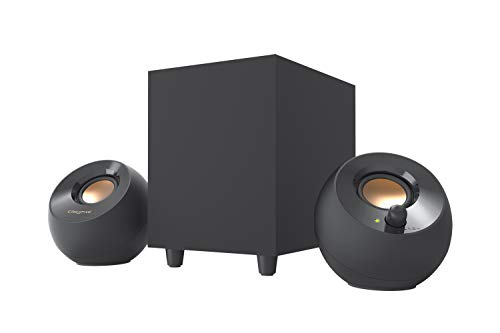
Creative Pebble Plus USB-Powered Desktop
Desktop computer users who want a simple powered 2.1 setup with a separate subwoofer on a budget.
Read the Creative Pebble Plus USB-Powered Desktop review →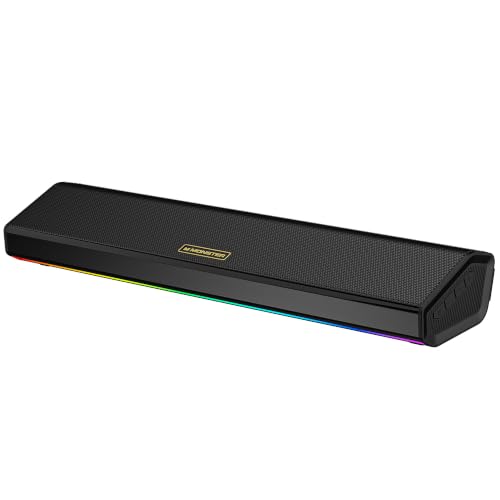
Monster SD100
Budget desktop and gaming setups that want a compact powered speaker with Bluetooth, RGB lighting and occasional portable battery use.
Read the Monster SD100 review →
Pyle PA
A buyer who wants a budget portable PA speaker for backyard parties, karaoke or voice amplification where maximum volume and convenience matter more than refined sound.
Read the Pyle PA review →Questions Buyers Ask
Pyle 4” Mini
See the current listing, price and included accessories.
About This Review
Mandrillis Team
The Mandrillis editorial team researches and compares audio and music gear using manufacturer documentation, verified specs and real buyer feedback, so you can make a confident purchase without wading through marketing claims.
Read our full research methodology.