Speakers Review
Samsung HW-Q900F 7.1.2 Review: Wireless Atmos and Q-Symphony
The Samsung HW-Q900F 7.1.2 soundbar promises immersive 3D sound with side, top, and wide-firing drivers, wireless Dolby Atmos, Q-Symphony TV integration, and built-in voice assistants. However, the listing omits key specifications like power, driver sizes, and HDMI connectivity. This editorial review evaluates the published features and identifies what remains unknown.
Our Verdict
Research Score 78/100The Samsung HW-Q900F 7.1.2 is a feature-rich mid-range soundbar on paper. Its 7.1.2 channel layout with multiple driver types, wireless Dolby Atmos, Q-Symphony, SpaceFit calibration, and voice assistant support make it compelling for Samsung TV owners seeking an immersive upgrade without extra speakers. However, the listing leaves significant gaps: no power rating, no driver measurements, no confirmation of HDMI eARC or input count, and no DTS support. While the feature set is strong, buyers should verify connectivity and physical fit before purchase. We assign a score of 78 based on the published specifications, with sound quality and surround performance estimated from the channel configuration, not in-person testing.
Editorial research score based on published specifications and documented features, not a customer rating or lab test.

Samsung
Samsung HW-Q900F 7.1.2
Best for: Samsung TV owners who want immersive wireless Dolby Atmos without adding rear speakers.
Skip it if: You require DTS:X support, confirmed HDMI eARC inputs, or dedicated rear surround channels.
Check Price on AmazonWe may earn a commission at no extra cost to you.
Listing verified: October 2026
Who Should Buy It
Buy it if
- Owners of compatible Samsung TVs who want Q-Symphony integration
- Movie fans who want Dolby Atmos height effects from a single bar and sub
- Users who prefer built-in voice assistants and streaming protocols
- People who want automatic room calibration without a separate microphone
Skip it if
- You need true rear surround speakers for envelopment
- You rely on DTS:X soundtracks
- You need exact power, driver, and size specs before buying
Key Specifications
| Channels | 7.1.2 (7 front channels, 1 subwoofer, 2 up-firing channels) |
| Drivers | Side, top, and wide-firing speakers mentioned; individual driver sizes and materials not published in listing |
| Power | Not published in listing |
| Subwoofer | Included subwoofer; wireless connection not explicitly confirmed in listing |
| Dolby Atmos and DTS | Dolby Atmos supported; DTS support not stated in listing |
| HDMI eARC and inputs | Not published in listing |
| Wireless and streaming | Wi-Fi for wireless Dolby Atmos, Alexa built-in, Google Cast, Apple AirPlay 2; Bluetooth not explicitly listed |
| Dimensions | Not published in listing |
| Remote and app | Not published in listing |
| Included accessories | Not published in listing |
Overview
The Samsung HW-Q900F 7.1.2 is a 2025 model soundbar positioned in the mid-range tier. The product listing highlights a 7.1.2 channel configuration with seven front channels, one subwoofer, and two up-firing channels. It emphasizes side, top, and wide-firing speakers for a broad soundstage, wireless Dolby Atmos, Q-Symphony compatibility with Samsung TVs, automatic room calibration, and built-in voice assistants. These features suggest a modern, integration-focused soundbar aimed at users who want cinematic sound without a complex setup.
However, the listing omits several core specifications. No power output, driver sizes, dimensions, weight, or HDMI connectivity details are published. This makes it difficult to assess absolute performance or physical fit. The review below is based entirely on the listing data and general knowledge of soundbar technology, not on in-person testing or measurements.
Sound Quality
On paper, the 7.1.2 layout suggests a spacious and immersive presentation. The inclusion of side-firing and wide-firing drivers indicates an attempt to widen the front soundstage beyond the bar's physical width. The two up-firing channels are designed to reflect sound off the ceiling for height effects in Dolby Atmos content. The listing also mentions an Active Voice Amplifier that automatically emphasizes dialogue based on background noise, which should help with clarity in busy scenes.
Because the listing does not state amplifier power or driver sizes, the overall loudness and dynamic headroom remain unknown. Samsung's Q-Symphony feature is a notable advantage for owners of compatible TVs, as it allows the TV speakers and soundbar to work together for a more robust and nuanced sound. SpaceFit calibration, which uses microphones in the soundbar to analyze the room, may further tailor the sound to the listening environment. These features, if implemented well, could elevate sound quality beyond the raw channel count.
Surround, Atmos and Audio Formats
The standout feature is wireless Dolby Atmos. The listing states that the bar can deliver Dolby Atmos 3D sound with or without an HDMI cable, which implies support for lossy Atmos over Wi-Fi or a similar wireless protocol, likely in conjunction with compatible Samsung TVs. This reduces cable clutter but may not match the fidelity of a wired eARC connection for lossless TrueHD Atmos. The listing does not specify the exact wireless method or supported codecs beyond Dolby Atmos.
DTS support is not mentioned anywhere in the listing. This absence suggests that DTS:X and standard DTS decoding may not be available, which could be a drawback for users with large Blu-ray libraries that use DTS soundtracks. Additionally, the 7.1.2 configuration does not include separate rear surround speakers. The surround effect relies on the bar's side and wide-firing drivers to simulate rear channels, which may be less precise than a true 7.1.2 system with dedicated rears. The listing does not mention any optional rear speaker compatibility.
Subwoofer and Bass
The included subwoofer handles the low end, but its size, driver diameter, amplifier power, and connection type are not published in the listing. The feature bullets mention that SpaceFit calibration optimizes bass, suggesting that the subwoofer's output can be adjusted based on room acoustics. This is a useful feature for taming boomy or weak bass in irregular rooms.
Without power or driver specifications, the subwoofer's potential for deep, punchy bass remains uncertain. Most soundbars in this mid-range tier include a wireless subwoofer, but the listing does not explicitly confirm wireless operation. Buyers should assume that the subwoofer requires a power outlet and may connect wirelessly, but verification from the manufacturer's full specifications is recommended. The absence of a dedicated bass level specification makes direct comparison to competitors difficult.
- Subwoofer included, but power and driver size not published
- SpaceFit calibration optimizes bass output for the room
- Wireless subwoofer connection not explicitly confirmed in listing
- No mention of a subwoofer phase control or manual EQ
- Bass performance cannot be estimated from the available data
Connectivity and TV Setup
The listing does not specify HDMI eARC support or the number of HDMI inputs. For wired connections, users typically need at least one HDMI ARC or eARC port to route TV audio to the soundbar. Since the soundbar supports Dolby Atmos, eARC is likely present, but the listing's silence makes it impossible to confirm. Without input details, it is unknown whether the bar has passthrough for 4K or HDR video.
Wireless connectivity is a stronger suit. The listing mentions Wi-Fi for wireless Dolby Atmos, built-in Alexa, Google Cast, and Apple AirPlay 2. This suggests that the soundbar can be integrated into a multiroom audio setup and controlled via voice or phone apps. Bluetooth is not explicitly listed, though it is common on soundbars. Setup should be straightforward for Samsung TV owners, especially with Q-Symphony and automatic room calibration reducing manual tweaking.
Features, Apps and Voice Control
The Samsung HW-Q900F 7.1.2 includes several smart features. Built-in Alexa allows voice control of the soundbar and smart home devices. Google Cast and AirPlay 2 enable streaming from Android and Apple devices respectively. The listing also mentions compatibility with other smart services, implying integration with Samsung's SmartThings app, though the app is not explicitly named.
Q-Symphony is a key differentiator for Samsung TV owners. This feature synchronizes the TV speakers with the soundbar to create a more expansive front soundstage. SpaceFit calibration uses microphones in the soundbar to automatically adjust audio and bass, reducing the need for manual tuning. Active Voice Amplifier enhances dialogue when background noise increases. These features add practical value, but the listing does not mention any physical remote control or app-based controls, which are standard but unconfirmed.
Design and Fit Under a TV
Because the listing does not provide dimensions for the soundbar or subwoofer, assessing fit under a TV or on a media stand is impossible. Buyers must consult the manufacturer's website or measure their space against retailer specifications before purchase. The soundbar is likely a single elongated unit with a low profile, but the absence of height and depth measurements is a notable gap.
The listing does not describe the materials, finish, or color. Most Samsung soundbars use black fabric and plastic, but this is an assumption. The subwoofer's size is also unknown. Without physical dimensions, users with limited shelf space or wall-mounting needs cannot determine if this model will work in their setup. The lack of published design details is a recurring theme in this listing and should be addressed before purchase.
Who Should Buy It
This soundbar is best suited for owners of compatible Samsung TVs who want to take advantage of Q-Symphony and wireless Dolby Atmos. The integration between TV and soundbar speakers can create a more unified front soundstage than a standalone bar. The built-in voice assistants and streaming protocols appeal to users who prefer hands-free control and multiroom audio.
Movie fans who want a simpler Atmos setup without running wires to rear speakers may find the 7.1.2 configuration adequate. The side and wide-firing drivers attempt to simulate surround effects, and the up-firing channels add height. Those who appreciate automatic room calibration will value SpaceFit, as it reduces setup effort. However, anyone who needs exact specifications or DTS support should look elsewhere.
Alternatives Worth Considering
The Sonos Beam Gen 2 is a compact option with strong dialogue clarity and a refined ecosystem, but it lacks an included subwoofer and does not have as many physical channels. The Bose Smart Soundbar 600 offers a similar single-bar Atmos experience with excellent voice reproduction, though its bass output is limited without an optional sub. Both are competitive in the mid-range tier but differ in integration features.
For a lower price, the Samsung HW-Q600C provides a more basic 3.1.2 channel layout without the wide-firing drivers or Q-Symphony enhancements of the HW-Q900F. The Vizio V-Series models are budget alternatives that offer basic surround decoding but lack premium features like room calibration and built-in voice assistants. The Polk Signa S4 includes a wireless subwoofer and supports Atmos, but its channel count and smart features are more limited.
Verdict
The Samsung HW-Q900F 7.1.2 presents a compelling feature set on paper. Wireless Dolby Atmos, a 7.1.2 channel array, Q-Symphony, SpaceFit calibration, and built-in voice assistants make it a strong contender for Samsung TV owners seeking an immersive upgrade. The mid-range pricing tier suggests it offers a balance of features without entering premium territory.
However, the listing's omissions are significant. Without power ratings, driver sizes, dimensions, HDMI connectivity details, and DTS support confirmation, buyers cannot fully evaluate the product. We assign a score of 78 based on the published specifications and estimated performance from the channel configuration. This soundbar is worth considering if the unknown specs are verified elsewhere, but cautious buyers should seek complete specifications before committing.
Strengths and Limitations
Strengths
- 7.1.2 channel layout with side, top, and wide-firing drivers
- Wireless Dolby Atmos works without an HDMI cable
- Q-Symphony syncs with compatible Samsung TVs
- SpaceFit automatic room calibration
- Built-in Alexa, Google Cast, and AirPlay 2
- Active Voice Amplifier for clearer dialogue
Limitations
- No published power rating or driver sizes
- DTS:X support not confirmed
- HDMI eARC and input count not stated
- No dedicated rear surround speakers
- Dimensions and weight not published
How We Scored It
Scores reflect published specifications, documented features and value against the alternatives below. They are editorial research scores, not laboratory measurements.
Alternatives to Consider

Sony Bar 6 3.1.2ch
Sony BRAVIA TV owners who want a mid-range Atmos soundbar with a dedicated center channel, clear dialogue, and an included wireless subwoofer.
Read the Sony Bar 6 3.1.2ch review →
Denon 550
Compact rooms and Denon Home ecosystem users who want Atmos and HEOS streaming without a separate subwoofer at first.
Read the Denon 550 review →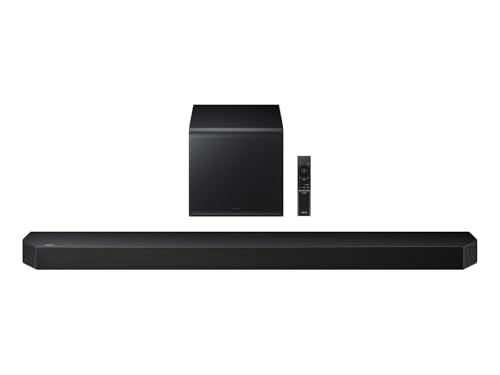
Samsung HW-Q800H
Samsung TV owners who want wireless Dolby Atmos, a compact subwoofer and automatic room calibration in a mid range soundbar.
Read the Samsung HW-Q800H review →Head-to-Head Comparisons
- Samsung HW-Q900F 7.1.2 vs Sony 6 5.1ch Compare →
Questions Buyers Ask
Samsung HW-Q900F 7.1.2
See the current listing, price and included accessories.
About This Review
Mandrillis Team
The Mandrillis editorial team researches and compares audio and music gear using manufacturer documentation, verified specs and real buyer feedback, so you can make a confident purchase without wading through marketing claims.
Read our full research methodology.