
Guides
Do Speakers Need to Be Broken In? (Facts vs Myths)
Speaker break-in is one of the most argued topics in home audio. Some say new speakers need hundreds of hours, others say it is all in your head. This guide explains what can physically change in a new driver, what is likely your ears adjusting, and which setup steps make a much bigger difference.
Quick Answer
Speakers do not strictly need to be broken in. The suspension parts in a new woofer can loosen slightly during the first few hours of normal use, which may cause a small change. Most of the difference people hear comes from their ears adjusting and from placement. Just play music at normal volume and enjoy them.
How this guide was put together
This guide is based on manufacturer manuals, published specifications and widely used audio reference standards. Mandrillis does not run hands-on tests for these guides, so treat figures as typical values and check the manual for your own gear before changing settings.
What Speaker Break-In Means
Break-in, also called burn-in, is the idea that new speakers sound different until they have played for a while. Some people say the bass gets fuller and the highs get smoother over time.
The claim usually focuses on the moving parts of the drivers. These parts flex every time the speaker plays.
- Also called burn-in or run-in.
- Claims range from a few hours to several hundred.
- Usually said to affect bass the most.
- Some speaker makers mention it in their manuals, many do not.
What Can Physically Change in a New Speaker
A woofer cone is held in place by two flexible parts. The surround is the rubber or foam ring at the edge, and the spider is a fabric ring behind the cone.
When new, these parts can be slightly stiff. After some use, they may loosen a little, which can let the cone move a bit more freely.
How Big Is the Change?
Measurements published by some engineers show small shifts in a woofer's resonance in the first hours of use. The change usually levels off quickly.
These shifts are often small compared with the effect of moving a speaker a few inches in a room.
What Does Not Change
Tweeters have very small moving parts and are not expected to change much. Cabinets, crossovers and wiring do not break in in any meaningful way.
Break-In Claims vs Reality
What people often say, compared with what is more likely.
| Claim | What is more likely | What to do |
|---|---|---|
| Bass grows over 200 hours | Small change in the first hours, if any | Play music normally |
| Highs get smoother | Ears adjusting to a new sound | Give it a few days of listening |
| You need special break-in tracks | Normal music works the same | Skip special tracks |
| Loud playback speeds it up | Risk of damage with new gear | Use normal volume |
| Wire and cables break in | No known physical change | Ignore it |
Your Ears Break In Too
When you switch to new speakers, your brain is used to the old sound. At first, the new ones can seem bright, thin or just different.
Over days of listening, your brain adapts and the new sound starts to feel normal. This is often called brain burn-in, and it can feel just like the speakers changing.
- New speakers often sound unfamiliar, not worse.
- Your hearing adjusts over days of listening.
- Expectations can change what you think you hear.
- Fair comparisons need the same volume and songs.
Do Powered Speakers Need Break-In?
Powered speakers use the same kind of drivers as passive ones. So any small suspension change applies to them as well.
The built-in amplifier and electronics do not need break-in. Many powered speakers also have built-in tone settings that matter far more.
How to Break In Speakers Safely, if You Want To
If you want to give new speakers some time before judging them, there is no harm in it. Just keep it simple.
Simple Steps
Normal listening does the job. There is no need for special noise tracks.
- Play your usual music at normal volume.
- Include songs with steady bass lines.
- Avoid very loud playback during the first few hours.
- Do not leave speakers playing unattended for days.
- Wait about a week of normal use before judging the sound.
A Warning About Loud Break-In Methods
Some tips suggest running loud test tones or pink noise for many hours. This can overheat voice coils and damage drivers, especially tweeters.
Loud noise for long periods can also bother neighbors and harm your hearing. Keep volume moderate, and never play loud sound for hours with nobody around.
What Improves the Sound Much More
If your new speakers sound off, setup is usually the real cause. These steps can make a bigger change than any break-in period.
- Place tweeters at about seated ear height.
- Pull speakers 1 to 2 feet from the back wall.
- Form an equal triangle between you and both speakers.
- Angle the speakers slightly toward your seat.
- Check that both speakers are wired with correct polarity.
- Use stands or pads instead of a hollow shelf.
How to Judge New Speakers Fairly
To know whether your speakers have changed, compare them the same way each time. Small changes in volume can make one listen sound better than another.
Write down a few notes after the first day, then listen again a week later with the same songs.
A Simple Comparison Routine
Keep everything the same except the passage of time.
- Use the same three to five songs you know well.
- Keep the same volume setting and seat.
- Listen for bass depth, voice clarity and harshness.
- Compare your notes after a week of normal use.
When the Sound Problem Is Not Break-In
Some problems will not go away with time. A rattle, buzz, distortion at low volume or one speaker sounding quieter points to a setup or hardware issue.
Check connections, settings and placement first. If a fault stays, contact the maker while the speaker is still under warranty.
Do Speaker Makers Recommend Break-In?
Some manufacturers mention a short run-in period in their manuals, often suggesting normal use for the first several hours. Others say nothing about it at all.
Where a maker gives advice, follow it, since they know their own drivers best. Where they do not, normal listening is all you need. No maker requires special tracks or loud noise to make a speaker work properly.
The Bottom Line
Speakers do not strictly need to be broken in. Woofer suspensions may loosen slightly in the first hours, but the change is usually small.
Play them normally, let your ears adjust, and focus on placement and setup. Those steps make the biggest difference.
Bookshelf Speakers From Our Reviews
Passive and powered bookshelf speakers that sound their best with good placement.
ELAC Debut B5.2
Mentioned
Who Should Buy It
- Listeners building a traditional two-channel system with an existing amplifier
- Home theater users who want compact front or surround speakers
- Buyers who prioritize a neutral midrange and extended treble over heavy bass
- Those who want a lower mid-range passive speaker from a known brand
Skip It If
- You need Bluetooth, Wi-Fi, or a built-in phono stage
- You want a speaker that plays loud from a low power amplifier without a subwoofer
- You require detailed dimensions and weight before purchase
We may earn a commission at no extra cost to you.
Last verified: October 2026

Klipsch R-41M
Mentioned
Who Should Buy It
- Buyers with a spare amplifier or receiver
- Desk users wanting compact horn loaded speakers
- Listeners who value efficiency and lively treble
- Home theater beginners building a small front stage
Skip It If
- You need wireless streaming or Bluetooth built in
- You listen to bass heavy material at high volume without a subwoofer
- You prefer a warm or laid back treble response
We may earn a commission at no extra cost to you.
Last verified: October 2026
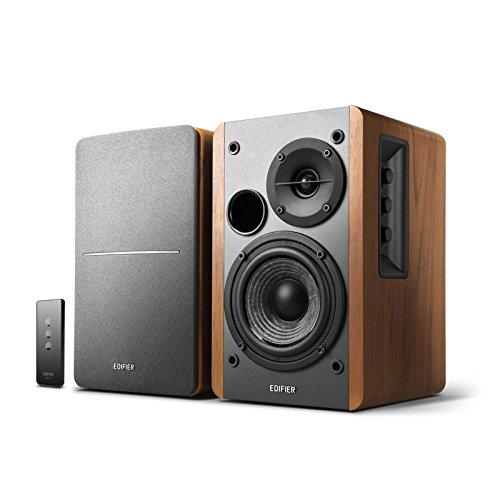
Edifier R1280T
Mentioned
Who Should Buy It
- Desktop listeners who want powered speakers for a computer or laptop
- Users with analog sources like a TV headphone jack, turntable with built-in preamp, or game console
- Small room listeners who prefer physical tone controls over apps
- Budget conscious buyers who do not need wireless or digital audio
Skip It If
- You need Bluetooth or Wi-Fi streaming from a phone or tablet
- You want strong sub bass or high volume output without adding a subwoofer
- You require optical, coaxial, or USB digital inputs for a TV or computer
We may earn a commission at no extra cost to you.
Last verified: October 2026
Keep Reading
Related guides and picks on Mandrillis:
- Best Passive Bookshelf Speakers : pairs worth setting up well
- How to Set Up Bookshelf Speakers : placement that matters more
- Why Does One Speaker Sound Quieter Than the Other? : fix a real imbalance
FAQs
About This Guide
Mandrillis Team
The Mandrillis editorial team researches and compares audio and music gear using manufacturer documentation, verified specs and real buyer feedback, so you can make a confident purchase without wading through marketing claims.
Read our full research methodology.