Guides
Banana Plugs vs Bare Wire for Speakers (Which Is Better?)
Banana plugs and bare wire both connect speaker wire to an amplifier or speaker. Neither one changes the sound when done right, but they differ a lot in convenience, neatness and short circuit risk. This guide compares them, shows how to do each one properly, and helps you pick the right option for your setup.
Quick Answer
Banana plugs and bare wire sound the same when both are connected tightly. Bare wire is free and works with every binding post, but it can fray and short. Banana plugs cost a little more, make connecting faster and neater, and lower the risk of stray strands. Choose plugs if you change connections often.
How this guide was put together
This guide is based on manufacturer manuals, published specifications and widely used audio reference standards. Mandrillis does not run hands-on tests for these guides, so treat figures as typical values and check the manual for your own gear before changing settings.
What Banana Plugs Are
A banana plug is a small metal connector that attaches to the end of speaker wire. Its springy tip pushes into the hole in the center of a binding post.
Once the plugs are fitted, you can connect or unplug a speaker in seconds. There is no twisting of strands or tightening of posts each time.
- Single plugs: one plug per wire end.
- Dual plugs: two plugs joined, positive and negative together.
- Fit by screw, set screw or crimp depending on the type.
- Need binding posts with an open center hole.
What Bare Wire Means
Bare wire means stripping the insulation off the end of the speaker wire and clamping the copper strands directly in the binding post or spring clip.
It needs no extra parts and works with nearly every amplifier and speaker. The trade-off is that strands can fray, loosen or touch the wrong terminal.
Banana Plugs vs Bare Wire at a Glance
How the two options compare in daily use.
| Factor | Banana plugs | Bare wire |
|---|---|---|
| Sound quality | Same when tight | Same when tight |
| Cost | Small extra cost | Free |
| Ease of reconnecting | Very fast | Slower, strip and twist each time |
| Short circuit risk | Lower | Higher if strands stray |
| Works with spring clips | No | Yes |
| Long term reliability | Good if well fitted | Can oxidize and fray over time |
Does Either One Sound Better?
No, not in any meaningful way. Both give a solid metal to metal contact when installed correctly, and the tiny resistance of a good plug is far too small to hear.
What matters for sound is a tight, clean connection and the right wire gauge for your run length. A loose plug or a frayed bare end can cause problems, but that is a fitting issue, not a type issue.
When Banana Plugs Make More Sense
Banana plugs shine when you connect and disconnect gear often, or when the back of your amp is hard to reach.
They also help on crowded receivers where many speaker wires sit close together.
- You swap speakers or move gear often.
- Your receiver has many tightly spaced terminals.
- You use thick wire that is hard to fit into small holes.
- You want a tidy, labeled setup behind a cabinet.
When Bare Wire Is Fine
If you set up your system once and rarely touch it, bare wire works perfectly well. Plenty of systems run for years with bare wire and no issues.
Bare wire is also the only option for spring clip terminals, which are common on budget speakers, older receivers and some subwoofers.
How to Connect Bare Wire Properly
Good bare wire connections take only a minute each. Turn the amplifier off before you start.
Steps for Binding Posts
Binding posts screw down to clamp the wire. Most also have a small hole through the shaft.
- Strip about half an inch of insulation, or 12 to 15 mm.
- Twist the copper strands tightly clockwise.
- Loosen the post and push the wire through the hole, or wrap it clockwise around the shaft.
- Tighten the post firmly by hand.
- Tug gently to check the wire is held and no strands stick out.
Steps for Spring Clips
Press the clip lever, push the twisted wire into the hole, and release. Strip only about a third of an inch so no bare copper shows outside the clip.
How to Fit Banana Plugs
Most banana plugs screw apart. The wire goes inside and a screw or cone clamps it.
Fitting Steps
Check the plug's instructions for the exact strip length, since designs vary.
- Strip the length the plug needs, often a quarter to half an inch.
- Twist the strands and insert them into the plug body.
- Tighten the screw or cone until the wire cannot pull out.
- Match plug colors to wire polarity: red for positive, black for negative.
- Push the plug fully into the center of the binding post.
Check Your Binding Posts First
Some binding posts ship with small plastic caps in the center hole. Pop these out with a pin before using banana plugs.
Make sure the plug's rated wire size matches your gauge. Many plugs fit 12 to 16 gauge wire.
Other Connector Types
Banana plugs are not the only option. Pin connectors and spade lugs also attach to the wire ends.
- Pin connectors: thin straight pins, good for spring clips and small holes.
- Spade lugs: U-shaped forks that clamp under a binding post, very secure.
- Dual banana plugs: keep positive and negative together for fast swaps.
Safety: Prevent Short Circuits
A single strand of copper touching both terminals can short the amplifier output. Many amps then shut down to protect themselves, and some can be damaged.
Always power off before changing wires. After connecting, check every terminal with a flashlight for stray strands before turning the amp back on.
Keeping Connections in Good Shape
Bare copper slowly darkens as it oxidizes, especially in humid rooms. If old wire ends look dull or green, cut them off and strip fresh ends.
Check banana plugs once or twice a year to make sure their screws are still tight. Keep the wire runs neat so nothing pulls on the connections.
What to Look for in Banana Plugs
Banana plugs vary in build and fit. A good plug grips the binding post firmly and clamps the wire so it cannot slip out.
Plain gold or nickel plated plugs both work well. Price has little effect on sound, so focus on fit and build.
- A rated wire size that matches your gauge.
- A firm, springy tip that does not wobble in the post.
- Color bands or rings to mark positive and negative.
- A screw or crimp design that holds the wire tightly.
- Enough plugs for every wire end, usually four per stereo pair.
The Bottom Line
Banana plugs and bare wire sound the same when both are fitted tightly. The real differences are convenience, neatness and short circuit risk.
Use bare wire for a set and forget system or spring clips. Choose banana plugs if you reconnect often or have a crowded receiver.
Amplifiers and Speakers From Our Reviews
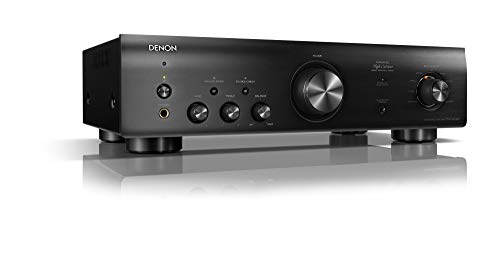
A stereo amplifier and passive bookshelf speakers with binding posts that accept bare wire or banana plugs.
Denon PMA-600NE
Mentioned
Who Should Buy It
- Vinyl listeners who want a built in phono input rather than an external phono preamp
- Buyers who specifically want an analog only listening mode that disengages digital circuits and Bluetooth
- Anyone connecting a CD player, Blu-ray player or similar source through optical or coaxial digital inputs
- Buyers who prioritize a simple, focused stereo amplifier over wireless streaming breadth
Skip It If
- You need Wi-Fi based multi-room streaming or an app
- You need a confirmed 8 ohm power rating or distortion figure before buying
- You need published dimensions and weight ahead of a tight shelf installation
We may earn a commission at no extra cost to you.
Last verified: November 2026

ELAC Debut B6.2
Mentioned
Who Should Buy It
- Listeners building a two-channel music system around a stereo receiver or integrated amplifier
- People who value aramid-fiber woofer technology and a cloth dome tweeter
- Buyers who prefer front-ported cabinets for near-wall or shelf placement
- Those stepping up from entry-level bookshelf speakers to a recognized name in hi fi
Skip It If
- You want a powered speaker with Bluetooth and streaming built in
- You require published dimensions, weight, and sensitivity specs before ordering
- You need a speaker with known low-frequency extension for bass-heavy genres
We may earn a commission at no extra cost to you.
Last verified: October 2026

Klipsch R-41M
Mentioned
Who Should Buy It
- Buyers with a spare amplifier or receiver
- Desk users wanting compact horn loaded speakers
- Listeners who value efficiency and lively treble
- Home theater beginners building a small front stage
Skip It If
- You need wireless streaming or Bluetooth built in
- You listen to bass heavy material at high volume without a subwoofer
- You prefer a warm or laid back treble response
We may earn a commission at no extra cost to you.
Last verified: October 2026
Keep Reading
Related guides and picks on Mandrillis:
- Best Stereo Amplifiers : amps with solid binding posts
- What Gauge Speaker Wire Do I Need for Home Theater? : pick the wire before the plugs
- What Is Bi Wiring Speakers and Is It Worth It? : connecting four terminal speakers
FAQs
About This Guide
Mandrillis Team
The Mandrillis editorial team researches and compares audio and music gear using manufacturer documentation, verified specs and real buyer feedback, so you can make a confident purchase without wading through marketing claims.
Read our full research methodology.