
Guides
What Is Bi Wiring Speakers and Is It Worth It? (Explained)
Some speakers have two pairs of terminals on the back, which lets you run two sets of wire from one amplifier. This guide explains what bi wiring is, how it differs from bi amping, how to set it up without damaging your amp, and when it makes sense to bother.
Quick Answer
Bi wiring means running two separate pairs of speaker wire from one amplifier channel to a speaker with two sets of terminals, one for the woofer and one for the tweeter. It is safe and easy, but any sound change is usually very small. For most people, good single wiring with the right gauge is enough.
How this guide was put together
This guide is based on manufacturer manuals, published specifications and widely used audio reference standards. Mandrillis does not run hands-on tests for these guides, so treat figures as typical values and check the manual for your own gear before changing settings.
What Bi Wiring Means
Inside most passive speakers is a crossover. It splits the signal so low notes go to the woofer and high notes go to the tweeter.
Some speakers split that crossover into two parts, each with its own pair of terminals on the back. Bi wiring means running a separate pair of wires to each part, both from the same amplifier output.
- Single wiring: one pair of wires per speaker.
- Bi wiring: two pairs of wires per speaker, from one amp output.
- Needs a speaker with four terminals, not two.
- Uses the same amplifier, with no extra power.
How to Tell If Your Speakers Can Be Bi Wired
Look at the back of the speaker. If you see four binding posts, two red and two black, it supports bi wiring.
The two pairs are usually labeled HF or high for the tweeter and LF or low for the woofer. If you see only two posts, the speaker is single wire only.
The Metal Jumpers
Speakers with four terminals ship with metal links, called jumpers or straps, joining the top and bottom pairs. These let you use a single pair of wires.
You must remove these jumpers before bi wiring. Leaving them in place while running two pairs of wire defeats the purpose.
Single Wiring vs Bi Wiring vs Bi Amping
Three ways to connect speakers with four terminals.
| Method | What you need | Typical benefit |
|---|---|---|
| Single wiring | One pair of wire, jumpers in place | Simple and fully correct |
| Bi wiring | Two pairs of wire, jumpers removed | Small, often hard to hear |
| Passive bi amping | Two amp channels per speaker | Some extra headroom |
| Active bi amping | External crossover and extra amps | Real gains, but complex |
How to Bi Wire Your Speakers Step by Step
Bi wiring takes about 20 minutes for a pair of speakers. Turn the amplifier off and unplug it before you start.
The Steps
Work on one speaker at a time so you do not mix up the wires. Label each wire as you go.
- Remove the metal jumpers from the back of the speaker.
- Run one pair of wire to the HF terminals and one to the LF terminals.
- Connect positive to positive and negative to negative on every wire.
- At the amp, join both positive wires to the positive terminal and both negatives to the negative terminal.
- Check that no stray strands touch the other terminal, then repeat for the second speaker.
Using Bi Wire Cable
Some speaker cable is sold as bi wire cable. It has four conductors in one jacket, split at the speaker end.
Two separate runs of ordinary speaker wire do the same job and are often easier to find.
Safety: Avoid Short Circuits
With two wires going into each amp terminal, it is easier for a stray strand to touch the wrong post. A short across the outputs can trigger the amp's protection or damage it.
Twist strands tightly, use banana plugs that accept two wires if your amp allows it, and double check every connection before you power on.
Does Bi Wiring Improve the Sound?
The idea is that the woofer and tweeter no longer share a wire, so they interfere less with each other. In theory, that can slightly reduce interaction between the two drivers.
In practice, any change is usually very small. Many listeners hear no difference at all, and blind listening comparisons rarely show a clear result.
- Both wire pairs still connect to the same amp output.
- The amp still delivers the same power.
- Wire length and gauge often matter more.
- Speaker placement makes a far bigger difference.
Bi Wiring vs Bi Amping
Bi amping uses two separate amplifier channels for each speaker, one for the woofer and one for the tweeter. Some receivers can assign spare channels to do this.
Passive bi amping gives each driver its own amp channel, which can add some headroom at high volume. Active bi amping, with an external crossover, can bring larger gains but is complex and usually beyond a beginner setup.
Receivers With Bi Amp Mode
Many AV receivers with seven or more channels can use unused surround back outputs to bi amp the front speakers. Check the manual for an amp assign or bi amp setting.
Remove the jumpers first, just as with bi wiring, or the two amp channels can be connected together and damaged.
When Bi Wiring Is Worth Trying
Bi wiring costs little if you already have spare wire, and it does no harm when done correctly. That makes it a fair experiment for curious listeners.
It makes the most sense in a few situations.
- Your speakers already have four terminals.
- You have spare speaker wire of the right gauge.
- You enjoy fine tuning a system and comparing by ear.
- Your amp terminals accept two wires comfortably.
When It Is Not Worth It
If you would have to buy expensive bi wire cable, that budget is better spent elsewhere. Better speakers, better placement or room treatment usually give far bigger gains.
It is also not worth it if your amp terminals are small spring clips that cannot hold two wires safely.
Using Jumper Wires Instead of Metal Straps
Some people replace the thin metal jumpers with short lengths of speaker wire. It is an easy, low cost change if the original straps are lost.
Connect positive to positive and negative to negative between the terminal pairs, and keep the links short and tight.
The Bottom Line
Bi wiring runs two pairs of wire to a speaker with four terminals, from one amp output. It is safe when done carefully, but the sound change is usually small.
Single wiring with the right gauge and good placement is enough for most systems. Try bi wiring only if you already have the speakers and spare wire.
Speakers and an Amplifier From Our Reviews
Passive bookshelf speakers and a stereo amplifier that connect with standard speaker wire.
ELAC Debut B6.2
Mentioned
Who Should Buy It
- Listeners building a two-channel music system around a stereo receiver or integrated amplifier
- People who value aramid-fiber woofer technology and a cloth dome tweeter
- Buyers who prefer front-ported cabinets for near-wall or shelf placement
- Those stepping up from entry-level bookshelf speakers to a recognized name in hi fi
Skip It If
- You want a powered speaker with Bluetooth and streaming built in
- You require published dimensions, weight, and sensitivity specs before ordering
- You need a speaker with known low-frequency extension for bass-heavy genres
We may earn a commission at no extra cost to you.
Last verified: October 2026
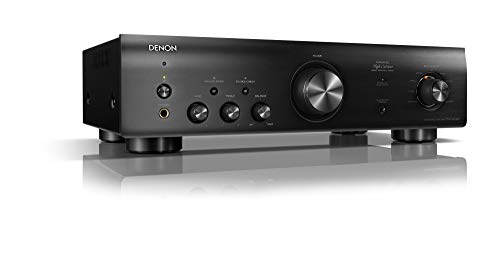
Denon PMA-600NE
Mentioned
Who Should Buy It
- Vinyl listeners who want a built in phono input rather than an external phono preamp
- Buyers who specifically want an analog only listening mode that disengages digital circuits and Bluetooth
- Anyone connecting a CD player, Blu-ray player or similar source through optical or coaxial digital inputs
- Buyers who prioritize a simple, focused stereo amplifier over wireless streaming breadth
Skip It If
- You need Wi-Fi based multi-room streaming or an app
- You need a confirmed 8 ohm power rating or distortion figure before buying
- You need published dimensions and weight ahead of a tight shelf installation
We may earn a commission at no extra cost to you.
Last verified: November 2026

Klipsch R-41M
Mentioned
Who Should Buy It
- Buyers with a spare amplifier or receiver
- Desk users wanting compact horn loaded speakers
- Listeners who value efficiency and lively treble
- Home theater beginners building a small front stage
Skip It If
- You need wireless streaming or Bluetooth built in
- You listen to bass heavy material at high volume without a subwoofer
- You prefer a warm or laid back treble response
We may earn a commission at no extra cost to you.
Last verified: October 2026
Keep Reading
Related guides and picks on Mandrillis:
- Best Stereo Amplifiers : amps with solid binding posts
- What Gauge Speaker Wire Do I Need for Home Theater? : pick the right wire first
- Active vs Passive Speakers for Beginners : which speakers use speaker wire
FAQs
About This Guide
Mandrillis Team
The Mandrillis editorial team researches and compares audio and music gear using manufacturer documentation, verified specs and real buyer feedback, so you can make a confident purchase without wading through marketing claims.
Read our full research methodology.