
Guides
Active vs Passive Speakers for Beginners (Simple Guide)
Active and passive speakers can both sound great, but they are set up very differently. This guide explains what each type is, what extra gear passive speakers need, how they compare on cost, sound and upgrades, and which suits a desk, a living room, a turntable or a TV.
Quick Answer
Active speakers have amplifiers built in, so you plug them into power and a source and they play. Passive speakers need a separate amplifier or receiver to power them. For most beginners, active speakers are simpler and take less space. Passive speakers suit people who want to choose and upgrade each part of their system.
How this guide was put together
This guide is based on manufacturer manuals, published specifications and widely used audio reference standards. Mandrillis does not run hands-on tests for these guides, so treat figures as typical values and check the manual for your own gear before changing settings.
What Active Speakers Are
Active speakers, also called powered speakers, have an amplifier inside the cabinet. You plug them into a wall outlet and connect a source like a phone, computer, TV or turntable.
Many active speakers also include Bluetooth, optical inputs, a remote and sometimes a phono preamp. Everything you need to start listening is in the box.
- Amplifier built in.
- Plug into power and a source.
- Often include Bluetooth and extra inputs.
- Common for desks, small rooms and studio monitors.
What Passive Speakers Are
Passive speakers have no amplifier inside. They need a separate amplifier, stereo receiver or AV receiver to power them, connected with speaker wire.
This is the traditional hi-fi setup. It lets you choose the speakers and the amplifier separately, and upgrade either one later.
- No built-in amplifier.
- Need an amp or receiver and speaker wire.
- Inputs and features come from the amplifier.
- Common in hi-fi and home theater systems.
Active vs Passive Speakers at a Glance
Typical differences for beginners. Individual models vary.
| Factor | Active speakers | Passive speakers |
|---|---|---|
| Extra gear needed | None, just a source | Amplifier or receiver plus speaker wire |
| Setup | Simple | More steps |
| Space needed | Less | More for the amp |
| Upgrade path | Replace the whole pair | Upgrade speakers or amp separately |
| Power cables | Each speaker often needs power | Only the amp needs power |
| Best for | Desks, small rooms, beginners | Hi-fi, home theater, upgraders |
Pros and Cons of Active Speakers
Active speakers are popular because they remove guesswork. The maker matches the amplifier to the drivers, so the combination is designed to work well.
Pros
These strengths make active speakers the easy first choice for many people.
- No separate amplifier to buy or fit.
- Amplifier matched to the drivers by the maker.
- Compact setup with fewer boxes.
- Many include Bluetooth and phono inputs.
Cons
If the built-in amp fails, the speaker may need repair as a whole. You also cannot upgrade the amplifier on its own.
Some pairs need a power cable to each speaker, and others connect the second speaker by a cable from the first.
Pros and Cons of Passive Speakers
Passive speakers give more freedom. You can build a system one part at a time.
Pros
These strengths appeal to people who enjoy building a system.
- Mix and match speakers and amplifiers.
- Upgrade one part without replacing everything.
- Use one receiver for a turntable, TV, streamer and more.
- Huge choice of speakers at every size.
Cons
You must buy an amplifier and wire, which adds cost and space. You also need to match the amp's power and the speakers' impedance.
Matching an Amp to Passive Speakers
If you choose passive speakers, check two numbers on the spec sheets: impedance and power.
Most home speakers are rated around 4, 6 or 8 ohms. Make sure your amplifier supports that impedance, and that its power rating suits the speaker's recommended range.
- Check the speaker's impedance, often 6 or 8 ohms.
- Check the amp supports that impedance.
- Match the amp's power to the speaker's recommended range.
- Use the right gauge speaker wire for your run length.
What a Basic Setup Looks Like
Seeing the full chain helps you plan. Here is what you need for each type, from the source to the speakers.
Active Speaker Setup
Connect your source to the main speaker with an RCA, optical or USB cable, or pair it over Bluetooth. Link the second speaker with the cable that came in the box.
Plug the speakers into power, choose the right input and start playing. Most active pairs are working within ten minutes.
- Source: phone, computer, TV or turntable.
- Cable: RCA, optical, USB or Bluetooth.
- Power: one or both speakers plug into the wall.
Passive Speaker Setup
Connect your sources to the amplifier or receiver. Then run speaker wire from the amp's left and right terminals to each speaker, matching red to red and black to black.
Plug in only the amplifier, choose the input and raise the volume slowly. Check that both speakers play and that bass sounds full, which shows the wires are in phase.
- Source: any device connected to the amp.
- Amplifier or receiver: powers the speakers.
- Speaker wire: usually 16 or 14 gauge for home runs.
Adding a Subwoofer
Both setups can add a subwoofer later for deeper bass. Many active speakers and most receivers have a subwoofer output.
Check for this output before you buy if you think you will want more bass.
Which Is Better for Your Setup?
Think about where the speakers will go and what you will connect. These quick rules cover most beginners.
- Desk or computer: active speakers.
- Turntable with no receiver: active speakers with a phono input.
- TV and movies with surround: passive speakers with an AV receiver.
- Hi-fi listening you plan to upgrade: passive speakers and a stereo amp.
- Small apartment with little space: active speakers.
Does One Sound Better?
Neither type sounds better by default. Both can sound excellent or poor depending on design and price.
Active speakers have the advantage of a matched amplifier. Passive systems can reach very high quality when you choose great speakers and a strong amp.
Common Beginner Mistakes
These mistakes lead to quiet, unbalanced or disappointing sound.
- Buying passive speakers without budgeting for an amplifier.
- Plugging passive speakers straight into a phone or laptop.
- Connecting a turntable to active speakers with no phono preamp.
- Mixing up positive and negative speaker wires.
- Placing speakers right against the wall or in corners.
The Bottom Line
For most beginners, active speakers are the easiest way to great sound, especially for desks, small rooms and turntables.
Choose passive speakers if you want a home theater, plan to upgrade over time, or already own a good amplifier or receiver.
Active Speakers, Passive Speakers and Amps From Our Reviews
A powered speaker pair, a passive bookshelf pair, and two amplifiers that can drive passive speakers.
Kanto YU4MB
Mentioned
Who Should Buy It
- Listeners building a compact stereo or desktop system with a turntable
- Those who want a powered speaker with a remote and auto standby
- Buyers who prefer a simple matte black aesthetic
- Users who value lower mid-range pricing with brand recognition
Skip It If
- You require detailed driver and frequency response data for critical listening decisions
- You need multiple analog and digital inputs beyond Bluetooth and phono
- You want floorstanding or high-output speakers for a large room
We may earn a commission at no extra cost to you.
Last verified: October 2026

ELAC Debut B6.2
Mentioned
Who Should Buy It
- Listeners building a two-channel music system around a stereo receiver or integrated amplifier
- People who value aramid-fiber woofer technology and a cloth dome tweeter
- Buyers who prefer front-ported cabinets for near-wall or shelf placement
- Those stepping up from entry-level bookshelf speakers to a recognized name in hi fi
Skip It If
- You want a powered speaker with Bluetooth and streaming built in
- You require published dimensions, weight, and sensitivity specs before ordering
- You need a speaker with known low-frequency extension for bass-heavy genres
We may earn a commission at no extra cost to you.
Last verified: October 2026
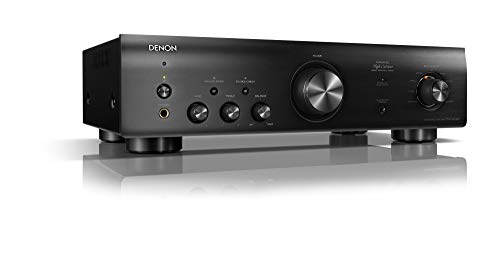
Denon PMA-600NE
Mentioned
Who Should Buy It
- Vinyl listeners who want a built in phono input rather than an external phono preamp
- Buyers who specifically want an analog only listening mode that disengages digital circuits and Bluetooth
- Anyone connecting a CD player, Blu-ray player or similar source through optical or coaxial digital inputs
- Buyers who prioritize a simple, focused stereo amplifier over wireless streaming breadth
Skip It If
- You need Wi-Fi based multi-room streaming or an app
- You need a confirmed 8 ohm power rating or distortion figure before buying
- You need published dimensions and weight ahead of a tight shelf installation
We may earn a commission at no extra cost to you.
Last verified: November 2026

WiiM Amp Pro
Mentioned
Who Should Buy It
- Owners of passive speakers wanting streaming amplification added
- Buyers wanting Alexa or Google Assistant voice control built in
- TV owners wanting a simple HDMI ARC sound upgrade
- Multiroom audio users with existing Echo or Google Home devices
Skip It If
- You specifically need AirPlay receiver compatibility
- You do not own passive speakers to connect
- You need a confirmed phono input
We may earn a commission at no extra cost to you.
Last verified: November 2026
Keep Reading
Related guides and picks on Mandrillis:
- Best Bookshelf Speakers Under 500 : active and passive picks
- Best Stereo Amplifiers : amps to power passive speakers
- How Far Should Bookshelf Speakers Be From the Wall? : placement for either type
FAQs
About This Guide
Mandrillis Team
The Mandrillis editorial team researches and compares audio and music gear using manufacturer documentation, verified specs and real buyer feedback, so you can make a confident purchase without wading through marketing claims.
Read our full research methodology.