
Guides
How Far Should Bookshelf Speakers Be From the Wall?
Wall distance is one of the biggest and cheapest changes you can make to how bookshelf speakers sound. Too close and bass gets boomy, too far and the sound can feel thin. This guide gives clear starting distances, explains rear and front ports, and shows how to fine tune by ear.
Quick Answer
Most bookshelf speakers sound best about 1 to 2 feet from the wall behind them, measured from the back of the speaker. Rear-ported speakers usually need at least 8 to 12 inches so the port can breathe. Front-ported or sealed speakers can sit closer. Keep them at least 2 to 3 feet from side walls and corners.
How this guide was put together
This guide is based on manufacturer manuals, published specifications and widely used audio reference standards. Mandrillis does not run hands-on tests for these guides, so treat figures as typical values and check the manual for your own gear before changing settings.
Why Wall Distance Changes the Sound
Bass spreads out in all directions from a speaker, including backward. When the speaker sits close to a wall, that bass bounces back and adds to the sound coming forward.
A little of this makes bass fuller. Too much makes it boomy and muddy. This is called boundary reinforcement, and it gets stronger the closer you get, and stronger again in corners.
- Very close to the wall: more bass, often boomy.
- Moderate distance: balanced bass.
- Far from the wall: tighter but sometimes thinner bass.
- In a corner: the most bass buildup of all.
Rear Ports vs Front Ports vs Sealed
Look at the back of your speakers. Many bookshelf speakers have a round hole called a port. It helps them play deeper bass. Where it sits changes how close to the wall they can go.
Rear-Ported Speakers
A port on the back pushes air out behind the speaker. Too close to the wall and that air has nowhere to go, which causes chuffing noises and boomy bass.
Give rear-ported speakers at least 8 to 12 inches of space, and more if you can.
Front-Ported and Sealed Speakers
Front ports push air forward, so wall distance matters less. Sealed speakers have no port at all and are the most forgiving near walls.
These designs can often sit 4 to 8 inches from the wall and still sound balanced.
Starting Distances by Speaker Type
Measured from the back of the speaker. Fine tune by ear from here.
| Speaker design | From back wall | From side walls |
|---|---|---|
| Rear-ported | At least 8 to 12 inches, ideally 1 to 2 feet | At least 2 to 3 feet |
| Front-ported | About 4 to 12 inches | At least 2 feet |
| Sealed | About 4 to 8 inches | At least 2 feet |
| Any design, wide room | 1 to 3 feet | Equal on both sides |
Side Walls and Corners
The back wall is not the only one that matters. Side walls also reflect sound and add bass. A speaker close to a side wall sounds different from its partner in open space.
Try to keep both speakers about the same distance from their nearest side wall. That keeps the left and right channels balanced.
- Avoid placing either speaker in a corner.
- Keep both speakers equal distances from side walls.
- Keep large furniture from blocking the front of the speakers.
How to Find the Best Spot Step by Step
Start with the distances above, then adjust by ear. This takes about 20 minutes and costs nothing.
Step 1: Set the Triangle
Place the speakers so they and your listening seat form roughly an equal triangle. For many rooms, that means speakers 6 to 8 feet apart and 6 to 8 feet from you.
Angle each speaker slightly toward your seat.
Step 2: Start Close, Then Move Out
Put the speakers at the minimum distance for their design. Play a song with steady bass you know well.
Move both speakers out 2 inches at a time, listening after each move. Stop when the bass sounds full but not boomy.
Step 3: Check the Center Image
Play a track with a centered vocal. It should sound like it comes from between the speakers.
If it leans to one side, check that both speakers are the same distance from you and from their walls.
What to Do When You Cannot Move Them
In small rooms, speakers often have to sit near a wall or on a shelf. You can still improve the sound.
- Insert the foam port plugs that many rear-ported speakers include.
- Use speakers with front ports or sealed cabinets for tight spaces.
- Lower the bass slightly with tone controls or EQ.
- Pull the speakers to the front edge of the shelf.
- Place isolation pads under the speakers to reduce shelf vibration.
Height and Toe-In
Distance from the wall works together with height and angle. Tweeters should be at about ear height when you sit.
Toe-in, angling the speakers toward you, sharpens the center image. Start with them pointing at your shoulders and adjust from there.
Room Size Changes the Answer
Small rooms build up bass more than large ones. In a small bedroom or office, you may need more space from the wall, or port plugs, to stop the low end sounding heavy.
In a large living room, bass can sound thin. Moving speakers a little closer to the back wall can bring back fullness without a subwoofer.
- Small room: start farther from the wall, about 1.5 to 2 feet if you can.
- Medium room: start around 1 foot and adjust.
- Large room: try 8 to 12 inches to add warmth.
- Rooms with hard floors: add a rug to tame reflections.
- Long, narrow rooms: place speakers on the short wall facing down the room.
Common Placement Mistakes
These are the most common reasons bookshelf speakers disappoint.
- Pushing rear-ported speakers flat against the wall.
- Placing one speaker in a corner and one in open space.
- Hiding speakers deep inside a bookcase cubby.
- Setting speakers on a hollow shelf without pads.
- Placing tweeters far below ear height.
The Bottom Line
Start with bookshelf speakers about 1 to 2 feet from the back wall, at least 8 to 12 inches for rear-ported models, and 2 to 3 feet from side walls.
Then move them in small steps while listening. The best spot is where bass sounds full and tight and voices sit clearly in the center.
Bookshelf Speakers From Our Reviews
Passive and powered bookshelf speakers with different port designs, all of which benefit from careful placement.
ELAC Debut B5.2
Mentioned
Who Should Buy It
- Listeners building a traditional two-channel system with an existing amplifier
- Home theater users who want compact front or surround speakers
- Buyers who prioritize a neutral midrange and extended treble over heavy bass
- Those who want a lower mid-range passive speaker from a known brand
Skip It If
- You need Bluetooth, Wi-Fi, or a built-in phono stage
- You want a speaker that plays loud from a low power amplifier without a subwoofer
- You require detailed dimensions and weight before purchase
We may earn a commission at no extra cost to you.
Last verified: October 2026

Kanto YU4MB
Mentioned
Who Should Buy It
- Listeners building a compact stereo or desktop system with a turntable
- Those who want a powered speaker with a remote and auto standby
- Buyers who prefer a simple matte black aesthetic
- Users who value lower mid-range pricing with brand recognition
Skip It If
- You require detailed driver and frequency response data for critical listening decisions
- You need multiple analog and digital inputs beyond Bluetooth and phono
- You want floorstanding or high-output speakers for a large room
We may earn a commission at no extra cost to you.
Last verified: October 2026
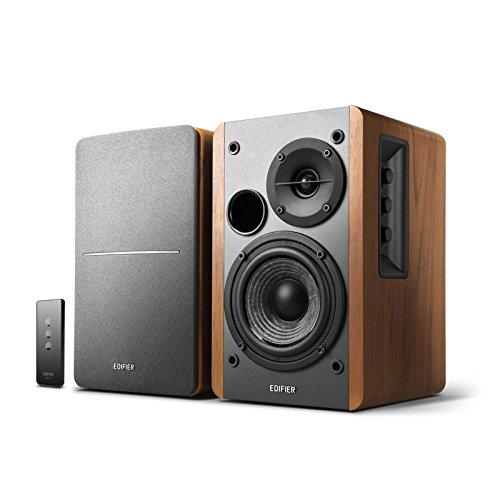
Edifier R1280T
Mentioned
Who Should Buy It
- Desktop listeners who want powered speakers for a computer or laptop
- Users with analog sources like a TV headphone jack, turntable with built-in preamp, or game console
- Small room listeners who prefer physical tone controls over apps
- Budget conscious buyers who do not need wireless or digital audio
Skip It If
- You need Bluetooth or Wi-Fi streaming from a phone or tablet
- You want strong sub bass or high volume output without adding a subwoofer
- You require optical, coaxial, or USB digital inputs for a TV or computer
We may earn a commission at no extra cost to you.
Last verified: October 2026
Keep Reading
Related guides and picks on Mandrillis:
- Best Bookshelf Speakers Under 500 : passive and powered picks
- How to Set Up Bookshelf Speakers : the full setup from unboxing
- How to Isolate Studio Monitors on a Desk : pads and stands that help any speaker
FAQs
About This Guide
Mandrillis Team
The Mandrillis editorial team researches and compares audio and music gear using manufacturer documentation, verified specs and real buyer feedback, so you can make a confident purchase without wading through marketing claims.
Read our full research methodology.