Speakers Review
Yamaha HS8 Review: 8-Inch Powered Studio Subwoofer
The Yamaha HS8 is a lower mid-range 8-inch powered studio subwoofer with a 150-watt amplifier, 22 Hz to 150 Hz response, XLR inputs and manual crossover controls. This review examines the published specifications to see how it fits a mixing or monitoring setup.
Our Verdict
Research Score 74/100The Yamaha HS8 presents a focused set of studio subwoofer features: an 8-inch bass-reflex driver, 150-watt amplifier, 22 Hz to 150 Hz response, XLR inputs, and practical crossover controls. The lower mid-range price tier makes it an attractive option for producers building a monitoring system without wireless extras. However, the listing leaves significant gaps in published specifications, including dimensions, weight, driver materials, and output connectivity. Buyers who need to know physical size or want a more complete integration path should investigate further before purchasing. Based on the available data, the HS8 earns a score of 74 out of 100, reflecting solid on-paper bass capability with some practical unknowns.
Editorial research score based on published specifications and documented features, not a customer rating or lab test.

Yamaha
Yamaha HS8
Best for: A powered studio subwoofer for mixing and monitoring setups that need low frequency extension down to 22 Hz with XLR connectivity and manual crossover control.
Skip it if: You need a subwoofer with known physical dimensions, wireless features, or a full set of published output connections for satellite monitors.
Check Price on AmazonWe may earn a commission at no extra cost to you.
Listing verified: October 2026
Who Should Buy It
Buy it if
- Home studio owners mixing bass heavy music
- Producers already using Yamaha HS series monitors
- Users with balanced XLR audio interfaces
- Buyers who want a straightforward wired subwoofer with crossover controls
Skip it if
- You need a subwoofer with remote control or app based tuning
- You require published dimensions and weight before buying
- You need a model with built in high pass outputs for main monitors
Key Specifications
| Type | 8-inch bass-reflex powered subwoofer |
| Drivers | 8-inch bass-reflex powered subwoofer |
| Power or sensitivity | 150W amplifier (sensitivity not published in listing) |
| Frequency response | 22 Hz to 150 Hz |
| Inputs and connectivity | XLR inputs; additional connectivity not published in listing |
| Bluetooth and streaming | Not published in listing |
| Dimensions | Not published in listing |
| Weight | Not published in listing |
| Finish | Black |
| Included accessories | Not published in listing |
Overview
The Yamaha HS8 is an 8-inch bass-reflex powered studio subwoofer positioned in the lower mid-range price tier. The listing describes it as a subwoofer for mixing, monitoring and production, with a 150-watt amplifier and a frequency response of 22 Hz to 150 Hz. It includes XLR inputs and a set of low-frequency management controls.
This product is designed to extend the low end of an existing monitor system rather than serve as a standalone full-range speaker. The published specification focuses on sub-bass reproduction, and the inclusion of crossover and phase adjustments suggests studio use. Buyers should view it as a component for a dedicated monitoring chain.
Sound Quality
On paper, the HS8 promises useful deep bass reach down to 22 Hz, which is lower than many compact studio subwoofers in this class. The 150-watt amplifier should provide enough headroom for small control rooms when paired with appropriate nearfield monitors, though the listing does not state maximum sound pressure level or total harmonic distortion.
The bass-reflex enclosure design typically trades some transient tightness for greater low-frequency efficiency. Without published group delay or port tuning data, the practical character of the bass cannot be verified from the listing alone. The high cut control from 80 to 120 Hz lets users blend the subwoofer with satellites, which is critical for avoiding a gap or overlap in the crossover region.
The low cut switch and low cut control from 80 to 120 Hz are meant to filter low frequencies from the main outputs when using an external crossover arrangement. However, the listing does not specify whether the subwoofer has a high-pass filtered output for the main monitors. This means the practical integration path is only partly described.
Drivers, Power and Room Fit
Published specifications identify an 8-inch driver in a bass-reflex cabinet. The listing does not state the cone material, surround type, voice coil diameter, or excursion limits. Those omissions make it difficult to predict long term power handling or distortion behavior at the lowest frequencies.
The 150-watt amplifier is described as high power, but the listing does not specify whether this is continuous, peak, or program power. For a subwoofer, continuous power rating matters more than a peak figure. Without a stated measurement standard, comparisons to other subwoofers on paper are limited to frequency response and feature set.
Room fit is uncertain because the listing does not provide dimensions or weight. An 8-inch driver and 22 Hz extension generally point toward small to medium studio rooms, but actual placement depends on cabinet size and port location. Buyers with tight spaces may need to confirm physical dimensions before purchase.
Features and Connectivity
The published feature list includes XLR inputs, which are standard for balanced studio connections. No other input types, such as RCA or TRS, are mentioned. The feature set includes a phase switch for aligning the subwoofer with main monitors, a low cut switch, and separate low cut and high cut controls, each covering 80 to 120 Hz.
There is no mention of Bluetooth, Wi-Fi, a remote control, or app-based tuning. The product is described purely as a wired studio component. The absence of wireless features is not unusual in monitoring subwoofers, but it means this model is not intended for casual consumer streaming or portable use.
- 8-inch bass-reflex powered subwoofer
- 22 Hz to 150 Hz frequency response
- 150-watt amplifier
- XLR inputs
- Low cut and high cut controls, each 80 to 120 Hz
- Phase switch
Build, Design and Finish
The published finish is black, which should be a neutral choice for studio environments. No other finish options are named. The cabinet dimensions, weight, and material are not published in the listing, so the physical build quality cannot be assessed from the available data.
Yamaha's HS series has a recognizable visual identity, but this review cannot rely on in-person inspection or measurements. The listing does not state whether the enclosure uses MDF, polymer, or another material. Potential buyers who prioritize build details will need to look for additional documentation elsewhere.
The lack of published weight and size also prevents any practical judgment about portability or desk placement. For a studio subwoofer, isolation and cabinet rigidity matter, but without specifications these remain open questions.
Setup and Placement
Setup begins with connecting a balanced XLR cable from the audio interface or monitor controller to the subwoofer input. The listing does not describe an XLR output for satellite monitors, so users may need to use a separate monitor management system or connect the subwoofer in parallel if the interface offers multiple outputs.
The phase switch and high cut control are intended to help time align the subwoofer with the main speakers. The low cut control filters low frequencies from the main outputs only if the subwoofer includes a line level output, which is not published. Buyers should plan for a way to high pass the main monitors.
Because dimensions are not listed, placement planning is harder. General subwoofer guidance suggests starting near a front wall or corner to increase low frequency output, but the final position should be determined by listening and measurement. The phase switch can help reduce cancellations at the crossover point.
Daily Use
In daily studio use, the HS8 would likely stay powered on or be controlled by a master power strip, since no auto-on or standby feature is described. The front or rear control layout is not stated, but the presence of low cut, high cut and phase switches suggests manual adjustment at the cabinet.
Once set, the crossover controls allow users to blend the subwoofer with nearfield monitors. The 80 to 120 Hz range covers the common bass management region for small monitors. Without remote control or presets, changing the crossover for different monitor pairs would require reaching the subwoofer.
The lack of published output connections means users may need an external crossover or DSP to properly high pass the main speakers. If the subwoofer only has an input, it may be intended for use with the Yamaha HS series monitors and the HS8S's own controls, but the listing does not confirm this.
Who Should Buy It
The Yamaha HS8 is best suited to home studio owners and producers who need a powered subwoofer to extend low frequency response for mixing and monitoring. Users who already own Yamaha HS series monitors will find a matched visual and likely sonic pairing, though this review cannot confirm timbre matching from the listing alone.
Those who rely on balanced XLR connections and want manual crossover control will appreciate the feature set. It is also a candidate for small project studios where a lower mid-range subwoofer with 22 Hz extension is desirable. Buyers who need a simple wired subwoofer without wireless distractions are the target audience.
Alternatives Worth Considering
The SVS SB-1000 Pro is a well-known alternative in the powered subwoofer category. It often includes a different control app and more detailed tuning options, although this review does not state specific numbers for that model. The Yamaha HS8's XLR focus and studio monitor positioning distinguish it from home theater subwoofers.
For users who do not need dedicated sub-bass, the Edifier R1280DB and Klipsch R-51M are compact bookshelf speakers with built-in or passive designs. They are not direct substitutes for a subwoofer, but they may cover some small room listening needs. The ELAC Debut 2.0 B5.2 is another bookshelf option with a different tonal balance.
Portable speakers like the JBL Flip 6 and Bose SoundLink Flex serve entirely different use cases. They are not studio monitoring tools and cannot reproduce deep sub-bass with the same authority as a dedicated powered subwoofer. Floorstanding models like the Polk Audio T50 offer more full range output than a subwoofer alone, but they require separate amplification.
Verdict
The Yamaha HS8 presents a focused set of studio subwoofer features: an 8-inch bass-reflex driver, 150-watt amplifier, 22 Hz to 150 Hz response, XLR inputs, and practical crossover controls. The lower mid-range price tier makes it an attractive option for producers building a monitoring system without wireless extras.
However, the listing leaves significant gaps in published specifications, including dimensions, weight, driver materials, and output connectivity. Buyers who need to know physical size or want a more complete integration path should investigate further before purchasing. Based on the available data, the HS8 earns a score of 74 out of 100, reflecting solid on-paper bass capability with some practical unknowns.
Strengths and Limitations
Strengths
- 22 Hz low frequency extension
- 150-watt amplifier for sub bass authority
- XLR balanced input for studio use
- Independent low cut and high cut controls from 80 to 120 Hz
- Phase switch for subwoofer and monitor alignment
- Bass-reflex enclosure for efficient low end
Limitations
- Dimensions and weight not published in listing
- No Bluetooth, Wi-Fi or remote control listed
- No published output connections for main monitors
- Driver material and continuous power rating not specified
- Limited finish options with only black mentioned
How We Scored It
Scores reflect published specifications, documented features and value against the alternatives below. They are editorial research scores, not laboratory measurements.
Alternatives to Consider

Edifier R2750DB MKII 3-Way
Listeners who want a powered 3-way bookshelf speaker with broad wired connectivity, Bluetooth LDAC, and a subwoofer output at a lower mid-range price.
Read the Edifier R2750DB MKII 3-Way review →
Klipsch Reference Premiere RP-504C II
Home theater listeners who want a dedicated passive center channel with emphasis on clear dialogue.
Read the Klipsch Reference Premiere RP-504C II review →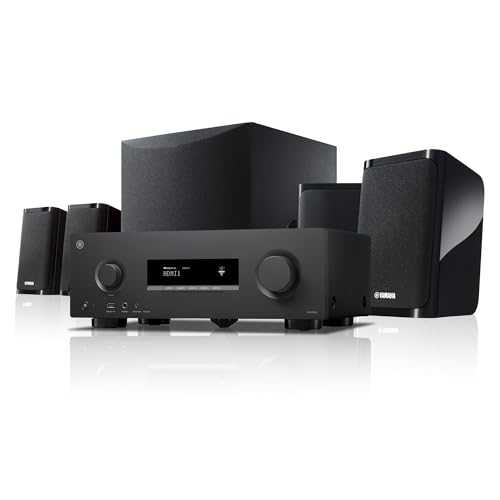
Yamaha YHT-4970U
A buyer who wants a complete 5.1 home theater system with modern HDMI and immersive audio without selecting separate components.
Read the Yamaha YHT-4970U review →Questions Buyers Ask
Yamaha HS8
See the current listing, price and included accessories.
About This Review
Mandrillis Team
The Mandrillis editorial team researches and compares audio and music gear using manufacturer documentation, verified specs and real buyer feedback, so you can make a confident purchase without wading through marketing claims.
Read our full research methodology.