Audio-Technica AT4040 vs Sennheiser Neumann TLM 102 MT
Quick Verdict
The Audio-Technica AT4040 is a true externally polarized condenser known as a versatile, do-everything studio microphone with transformerless electronics and high-SPL capability. The Sennheiser Neumann TLM 102 MT is the accessible Neumann, a large-diaphragm cardioid condenser with a confirmed 144 dB maximum sound pressure level and a slight presence boost that flatters vocals. Choose the AT4040 if a versatile workhorse condenser for vocals, acoustic instruments and loud sources is needed. Choose the TLM 102 MT if Neumann's house sound and a compact body for tight spaces matters more. Scored at 86 and 85, both are strong lower mid-range to mid-range studio condensers, and the gap between them is small enough that either is a defensible choice.
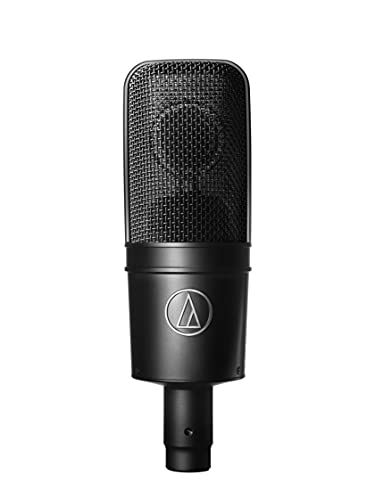

| Spec | Audio-Technica AT4040 | Sennheiser Neumann TLM 102 MT |
|---|---|---|
| Type | Large-diaphragm true condenser, externally polarized (DC bias) | Large-diaphragm condenser, pressure gradient transducer |
| Polar pattern | Cardioid | Cardioid |
| Frequency response | Not published in listing | Not published in listing (slight presence boost above 6 kHz stated) |
| Connection | Not published in listing | Not published in listing |
| Phantom power | Required for an externally polarized condenser; voltage not published in listing | Not published in listing |
| Max SPL or sensitivity | Not published in listing; described as high-SPL capable with exceptionally low noise | 144 dB maximum sound pressure level |
| Controls | Not published in listing | Not published in listing |
| Mount and stand | Not published in listing | Not published in listing |
| Weight | Not published in listing | Not published in listing |
| Included accessories | Not published in listing | Not published in listing |
Sound Quality
The AT4040 is a large-diaphragm true condenser, externally polarized with DC bias, and the listing describes it as exceptionally low noise with wide dynamic range and high-SPL capability, aided by transformerless circuitry for low-frequency clarity and fast transients. No specific frequency response, self-noise or maximum SPL figure is published.
The TLM 102 MT is a large-diaphragm pressure gradient condenser with a slight presence boost above 6 kHz stated directly in the listing, along with a confirmed 144 dB maximum sound pressure level. That SPL figure is a concrete, published number the AT4040 listing does not provide for itself.
On documented numbers alone, the TLM 102 MT has the edge with its stated 144 dB maximum SPL and a specific presence boost frequency. The AT4040 compensates with qualitative claims of exceptional low noise and wide dynamic range tied to its transformerless design, though no hard figures back those claims in the listing. Scoring reflects this closely, with the AT4040 earning 28 of 30 on sound quality against the TLM 102 MT's 27 of 30, a single point apart despite the different kinds of evidence each listing relies on.
Pickup Pattern and Noise Handling
Both microphones use a cardioid polar pattern, with no multi-pattern switching available on either. The AT4040's noise handling claim rests on its transformerless electronics and externally polarized capsule design, described as exceptionally low noise.
The TLM 102 MT's noise handling is not detailed beyond its cardioid pattern and the 144 dB SPL ceiling, which suggests strong headroom for loud sources, though self-noise in decibels is not published for either microphone.
Neither microphone offers a pad or low-cut switch, meaning both rely entirely on their capsule design to manage loud sources and unwanted noise, and both are described in their own listings as suited to vocals and loud instruments alike. The AT4040 scores 12 of 15 on pickup pattern and noise handling against the TLM 102 MT's 13 of 15, a small edge for the TLM 102 MT that likely reflects its confirmed 144 dB ceiling.
Build Quality
The AT4040 features a nickel-plated brass baffle for element stability, a detail specifically cited for keeping the capsule steady under use. Weight, mount type and stand compatibility are not published in the listing.
The TLM 102 MT is described as having a compact body that fits tight spaces, with a matte black finish suited to stage and video work. Weight and mount details are also not published for this microphone.
Both microphones leave weight and mounting hardware undocumented, a shared gap at this tier. The AT4040's named brass baffle gives it a slightly more specific build detail than the TLM 102 MT's general compact body description. The AT4040 scores 14 of 15 on build quality against the TLM 102 MT's 13 of 15, consistent with that extra named construction detail.
Connectivity and Setup
The AT4040 requires phantom power since it is an externally polarized condenser, though the exact voltage is not published in the listing. Connector type is also not stated.
The TLM 102 MT's phantom power requirement is not explicitly published either, though a pressure gradient condenser of this type would typically need it. Connector type is likewise not stated in the listing.
Setup requirements are effectively identical on paper: both need a quiet, treated room and a mic preamp or interface, and both leave phantom power voltage and connector type as details for the buyer to confirm with the seller before purchase. Both score 12 of 15 on connectivity and setup, an identical mark reflecting the same documentation gaps on each listing.
Features, Controls and Extras
Neither microphone is described as having onboard switches. The AT4040 listing does not mention a pad or low-cut filter, which the cons section explicitly notes as cardioid only with no multi-pattern option.
The TLM 102 MT also has no pad or low-cut switch according to its listing, which the cons section states directly, leaving both microphones dependent on preamp-level gain staging and filtering rather than onboard controls.
Accessories and included mounts are not published for either microphone, so neither has a documented advantage in this category, and both would need a shock mount or stand clip sourced or confirmed separately. Both score 11 of 15 on features and extras, reflecting that each is a relatively no-frills, performance-first condenser rather than a feature-laden one.
Use Cases: Vocals, Streaming, Podcasting and Instruments
The AT4040 is positioned as a versatile studio condenser suited to vocals, acoustic instruments and loud sources like a guitar cabinet, all with the same microphone, according to its listing's description of high-SPL capability alongside low noise.
The TLM 102 MT is positioned similarly for vocals, voice-over and loud instruments, with its slight presence boost above 6 kHz specifically cited as flattering vocals, and its matte black compact body suited to stage and video appearances.
For podcasting or streaming specifically, neither listing calls out USB connectivity or plug-and-play features, so both are XLR-style studio condensers requiring an interface or preamp rather than a direct USB connection to a computer. Anyone wanting to go straight from microphone to laptop without an interface should look at a dedicated USB condenser instead of either of these two models, since neither listing positions itself as a direct USB solution for streaming or podcasting.
Who Should Buy It
The AT4040 suits home and project studios that want one serious large-diaphragm condenser for vocals, acoustic instruments and loud sources alike, based on its described versatility and high-SPL handling.
The TLM 102 MT suits home and project studios that want one refined condenser for vocals, voice-over and loud instruments, with Neumann's house character and a slight presence boost that flatters vocals specifically.
Both avoid recommending themselves to buyers needing a plug-and-play USB microphone, a multi-pattern condenser, or onboard pad and filter switches, since neither listing describes those features for either model. Both score 9 of 10 on value, suggesting each is considered a well priced option within its own respective tier despite the different brand positioning.
The Deciding Question
The deciding question is whether Neumann's specific house sound and the TLM 102 MT's documented 144 dB SPL ceiling matter more than the AT4040's broader claimed versatility and transformerless low-frequency clarity.
A second question is physical space: the TLM 102 MT's compact body is specifically cited as fitting tight spaces, while the AT4040's dimensions are not published at all, leaving that comparison incomplete for buyers working in a small booth or closet style recording setup.
Scores of 86 against 85 put the AT4040 very slightly ahead, driven mainly by its described dynamic range and transient response, while the TLM 102 MT closes most of that gap with its concrete SPL figure and Neumann brand consistency. Both microphones land in the same broad price tier, so cost alone is unlikely to be the deciding factor between them for most home or project studio buyers.
Who Should Buy Which
Buy the Audio-Technica AT4040 if a single versatile condenser is needed across vocals, acoustic instruments and loud sources, and transformerless electronics with high-SPL handling and a long professional track record matter at a lower mid-range price.
Buy the Sennheiser Neumann TLM 102 MT if Neumann's specific house sound, a confirmed 144 dB SPL ceiling, and a compact body for tight spaces are priorities, especially for vocals and loud instrument recording in a small room.
Both are cardioid-only condensers with no pad or low-cut switch, so buyers needing those onboard controls should look beyond either model regardless of which one otherwise fits their room and vocal style better. Either microphone represents a reasonable long-term studio investment, and the final call often comes down to personal preference for Audio-Technica's documented transformerless design against Neumann's house voicing and compact form factor.
Audio-Technica AT4040
Pros
- True externally polarized condenser with a large diaphragm
- Transformerless circuitry for low-frequency clarity and fast transients
- Described as exceptionally low noise with wide dynamic range
- High-SPL capability suits loud sources as well as vocals
- Nickel-plated brass baffle for element stability
- Long-established studio reputation at a lower mid-range price
Cons
- Frequency response, self-noise and max SPL figures not published in listing
- Accessories, mount and connector not stated
- Cardioid only, no multi-pattern option
- Requires phantom power and a quiet room to shine
Sennheiser Neumann TLM 102 MT
Pros
- Large-diaphragm cardioid condenser with Neumann consistency
- 144 dB maximum sound pressure level handles loud sources
- Slight presence boost above 6 kHz flatters vocals
- Compact body fits tight spaces
- Matte black finish suits stage and video
Cons
- No pad or low-cut switch
- Connector, phantom power and self-noise not published in listing
- Accessories not confirmed
- Picks up more room sound than a dynamic
Who Should Buy Each
Audio-Technica AT4040
- Vocalists and voice-over artists recording in a treated or quiet room
- Project studios upgrading from an entry-level condenser
- Engineers who need one microphone for vocals, guitar amps and overheads
- Buyers who value published design detail over marketing gloss
Sennheiser Neumann TLM 102 MT
- Vocalists stepping up from an entry-level condenser
- Voice-over artists and narrators wanting a clean, airy sound
- Multi-instrumentalists recording guitar cabinets, brass and acoustic sources
- Video creators who want a non-reflective studio microphone
Quick Decision Guide
| If you want a versatile condenser for vocals and loud acoustic sources alike | Choose Audio-Technica AT4040 |
| If you want Neumann's specific house sound in an accessible price tier | Choose Sennheiser Neumann TLM 102 MT |
| If you need a confirmed maximum SPL figure before buying | Choose Sennheiser Neumann TLM 102 MT |
| If you want transformerless electronics for low-frequency clarity | Choose Audio-Technica AT4040 |
| If you are recording in a tight space and want a compact body | Choose Sennheiser Neumann TLM 102 MT |
FAQ
About This Comparison
Mandrillis Team
The Mandrillis editorial team researches and compares audio and music gear using manufacturer documentation, verified specs and real buyer feedback, so you can make a confident purchase without wading through marketing claims.
Read our full research methodology.
We may earn a commission at no extra cost to you.