Drums & Percussion Review
Roland SPD-SX PRO Review: Stage-Ready Sampling Pad Flagship
The Roland SPD-SX PRO is a nine-pad sampling instrument built for live work. The listing details six large pads, three shoulder pads, a 4.3-inch color display, customizable LEDs, four balanced direct outputs and eight external trigger inputs. This review weighs those published strengths against the specs the listing leaves out, including memory and dimensions.
Our Verdict
Research Score 86/100The Roland SPD-SX PRO reads as a purpose-built stage sampler rather than a practice toy. Its published strengths are concrete: nine pads with improved shoulder pad sensitivity and crosstalk handling, a 4.3-inch color display, multi-color LEDs that can be customized per pad, a stereo main plus four balanced direct outputs, and eight external trigger inputs. File import covers WAV, AIFF and MP3 with automatic conversion, and a desktop app handles sample management. The listing does not state internal memory, pad surface material, dimensions or box contents, which are real gaps at an upper mid-range price. For drummers who run tracks and samples every night, the score of 86 reflects a flagship feature set with a few unknowns a buyer should confirm.
Editorial research score based on published specifications and documented features, not a customer rating or lab test.

Roland
Roland SPD-SX PRO
Best for: Working drummers and percussionists who trigger backing tracks, loops and one-shots on stage and need individual outputs for front of house.
Skip it if: You want a complete electronic drum kit with snare, toms and cymbals rather than a nine-pad sampler.
Check Price on AmazonWe may earn a commission at no extra cost to you.
Listing verified: October 2026
Who Should Buy It
Buy it if
- Gigging drummers running click, tracks and samples alongside an acoustic kit
- Percussionists building a hybrid rig with external triggers
- Worship and theater players who need reliable sample playback with visual cues
- Producers who want a tactile sample launcher with balanced outputs
Skip it if
- You need a full drum kit with pads for every limb
- You only trigger a handful of sounds and never need direct outputs
- You require published memory, weight and dimension figures before buying
Key Specifications
| Pad type | Nine playing surfaces with Roland's advanced trigger technology: six large pads and three top-row shoulder pads; surface material not published |
| Number of pads | 9 onboard, expandable with up to 8 external triggers |
| Module and kits | Integrated sampling engine with 4.3-inch color display and onboard effects; kit and sample counts not published in listing |
| Kick pedal and pad | No kick pad or pedal listed; the eight external trigger inputs accept additional pads |
| Hi-hat type | Not published in listing |
| Cymbal pads | Not published in listing |
| Connectivity | Stereo main output, four balanced direct mono outputs, eight external trigger inputs (four stereo or eight mono with Y-cables), companion app for Windows and Mac |
| Practice features | Not published in listing |
| Footprint | Not published in listing |
| Included accessories | Not published in listing |
Overview
The Roland SPD-SX PRO is the current flagship of Roland's sampling pad line, a product category Roland effectively defined with the original SPD-SX. The listing presents it as the sampling pad for the most demanding gigs, built for life on the road, and the published feature set backs that framing with specifics rather than slogans. It is an upper mid-range purchase aimed squarely at working players.
Nine playing surfaces form the core: six large pads across the main face and three shoulder pads along the top edge. A 4.3-inch color display sits in the control panel, and every pad carries high-visibility LEDs in both horizontal and vertical orientations with multi-color customization. Around the back, the listing describes a stereo main output, four direct mono outputs and inputs for up to eight external triggers.
This review treats the Roland SPD-SX PRO as what it is, a sampler and trigger hub rather than a drum kit. The ten-section structure below still covers kick, hi-hat and cymbal considerations, because many buyers will pair it with external pads, but the emphasis falls on pad response, sample handling, outputs and stage workflow.
Pads, Feel and Response
Roland describes the nine pads as using its advanced trigger technology, with the six large pads intended for primary hits and the three shoulder pads for secondary sounds and quick accents. The published material specifically calls out increased shoulder pad sensitivity and improved crosstalk performance over earlier models. Crosstalk, where striking one pad falsely triggers a neighbor, is the classic weakness of compact multi-pads, so this is a meaningful claim.
The listing does not state the pad surface material, the rim or zone configuration of each pad, or whether the pads are velocity-only or offer additional articulation. Earlier models in the line used rubber surfaces, but this review relies on the published data for this product and marks the material as unstated. Velocity sensitivity is implied by the dynamics discussion but not spelled out in the bullets.
On paper the pad layout is the standard SPD-SX arrangement that drummers have used for years, which means stick technique transfers directly. The feel score credits the documented sensitivity improvements and the familiar layout, and withholds a few points for the missing surface and zone details.
Drum Module and Sounds
Unlike a conventional drum module with a fixed sound bank, the Roland SPD-SX PRO builds its voice from imported audio. The listing specifies import of 48 kHz and 44.1 kHz WAV and AIFF files at 16, 24 or 32 bit, plus MP3 files from 32 to 320 kbps, with automatic conversion to 48 kHz and 16 bit on loading. That conversion step means every sample lands in a single internal format regardless of source.
Onboard effects are named in the listing title but not itemized in the bullets, so the exact effect types and count are not published. The number of kits, the number of samples that ship preloaded and the internal storage capacity are also absent from this listing. Buyers coming from an earlier SPD-SX will want to confirm the memory figure directly.
The practical upshot is a sound engine limited only by what the user loads into it: backing tracks, loops, one-shot hits, vocal stabs or full stems routed to separate outputs. The sounds score reflects the flexibility of a modern sample engine with a documented import path, tempered by the unpublished storage and effect details.
Kick, Hi-Hat and Cymbal Pads
No kick pad, hi-hat controller or cymbal pad is listed with the Roland SPD-SX PRO, and the listing does not mention any included pedal or stand. What it does provide is connectivity for up to eight external individual triggers or pads, configured as four stereo triggers or eight mono triggers using Y-cables. That is enough to add a kick trigger, a hi-hat controller, a couple of cymbal pads and still have inputs to spare.
In a hybrid setup, acoustic drum triggers can feed these inputs so the sampler layers electronic sounds under real drums. The listing does not state whether the external inputs support positional sensing or choke behavior, so cymbal-specific features should be confirmed with the pads you intend to use.
- No kick pad or bass drum pedal included
- Hi-hat controller: Not published in listing
- Cymbal pads: Not published in listing
- Eight external trigger inputs, four stereo or eight mono with Y-cables
- External inputs suit acoustic drum triggers for hybrid kits
Practice Tools and Features
The listing publishes no metronome, coach mode or training function for the Roland SPD-SX PRO, which is consistent with a product aimed at performance rather than practice. A click can of course be loaded as an audio file and routed to a direct output, which is how many touring drummers use a sampling pad anyway.
Where the product does invest is in stage features: multi-color LEDs that can be customized to show which pad holds which sound, a color display large enough to read mid-song and a dedicated desktop app for Windows and Mac that handles importing, sample management and deep kit editing away from the unit. The features score reflects strong performance tools and an absence of documented practice modes.
Rehearsal use still benefits from the layout. A drummer can build a practice kit with a click on one pad, a count-in on another and song sections on the rest, then step through an arrangement at tempo without a laptop. That is not a coach mode, but for a player learning a set it is a practical substitute.
Build, Rack and Footprint
Built for life on the road is the listing's only construction claim, and no chassis material, weight or dimensions are published. The SPD-SX form factor is a flat tabletop unit that mounts on a stand or clamps to a rack, and the Roland SPD-SX PRO follows that layout with its nine pads and top panel controls.
The four direct outputs and stereo main are described as balanced, which matters for long cable runs in venues and reduces noise pickup on stage. A mounting stand is not listed as included, so budget for a multi-pad stand or a clamp if the unit will sit beside an acoustic kit.
Footprint planning depends on the unpublished dimensions. Expect a unit wider than a snare drum and shallower than a floor tom, in line with earlier models in the line, and verify the measurement before committing to a cramped riser position.
Connectivity and Recording
Output routing is where the Roland SPD-SX PRO separates itself from compact multi-pads. A stereo main output serves the general mix, while four direct mono outputs let a click, a backing track, a sample bus and a loop each reach the mixer on its own channel. All are balanced according to the listing, which front of house engineers will appreciate.
Input connectivity covers the eight external trigger channels already discussed. The listing describes a desktop app for Windows and Mac but does not name the connection type, so USB audio, USB MIDI and conventional MIDI ports should be confirmed before building a studio workflow around the unit.
For recording, the direct outputs make it simple to capture separate stems into an interface. Whether the pad can also act as a multi-channel audio interface over USB is not stated in this listing, which is the one connectivity question left open.
Setup and Daily Use
Initial setup revolves around loading content. The desktop app handles importing WAV, AIFF and MP3 files and assigning them to pads and kits, and the automatic conversion to 48 kHz 16 bit removes format worries. Once kits are built, the color display and per-pad LEDs make navigation on a dark stage practical.
Daily use for a gigging drummer means recalling a kit per song, triggering tracks and samples, and trusting that shoulder pads will fire without false triggers from the main pads. The published sensitivity and crosstalk improvements target exactly that scenario, and the kit-based workflow familiar from earlier SPD-SX models carries over on paper.
Who Should Buy It
The Roland SPD-SX PRO is for the drummer who already knows they need a sampler on stage: cover band players running tracks, worship drummers triggering loops and pads, theater percussionists cueing effects, and hybrid players blending triggers with acoustic drums. The direct outputs and external trigger inputs justify the tier for those use cases.
It is the wrong purchase for someone who wants a complete electronic kit for practice, or for a player who triggers two or three sounds a night and would be served by a smaller pad. Buyers who need published memory, weight and dimensions in writing should request them, since this listing omits all three.
Verdict
On the strength of the published specification, the Roland SPD-SX PRO is a serious performance instrument with the outputs, trigger inputs and visual feedback that touring work demands. The documented file import path and desktop app round out a workflow that scales from one backing track to a full hybrid rig.
The score of 86 places it in flagship territory, with points withheld for unpublished memory, pad material, dimensions and box contents. If those details check out, it is the sampling pad to beat at this tier.
Strengths and Limitations
Strengths
- Nine pads including three shoulder pads for dense layouts
- Four balanced direct outputs plus a stereo main for stage mixing
- Eight external trigger inputs for building a hybrid kit
- Imports WAV, AIFF and MP3 at common sample rates with automatic conversion
- 4.3-inch color display and customizable multi-color pad LEDs
- Desktop app for sample management and deep kit editing
Limitations
- Internal memory size is not stated in this listing
- No pedal, stand or cables are listed as included
- Pad surface material and unit dimensions are not published
- Upper mid-range tier for what is essentially a sampling pad, not a kit
How We Scored It
Scores reflect published specifications, documented features and value against the alternatives below. They are editorial research scores, not laboratory measurements.
Alternatives to Consider

Yamaha DTX 6
Drummers who already know the Yamaha DTX 6 series from other sources and want a mid-tier kit from an established brand.
Read the Yamaha DTX 6 review →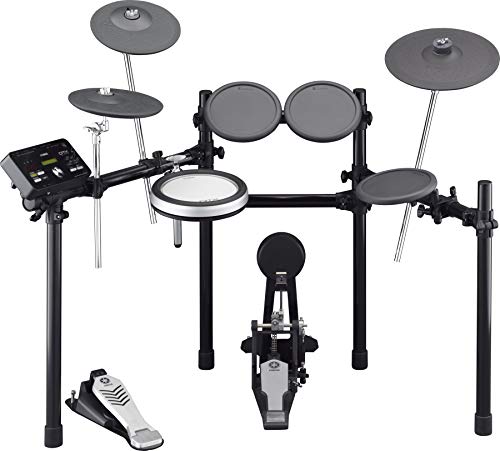
Yamaha DTX522K
Intermediate drummers who want a three-zone silicone snare and expressive cymbals from a major brand at an upper mid-range price.
Read the Yamaha DTX522K review →
Roland TD-30
Drummers who already own compatible pads and want a flagship-class brain with physical faders and deep per-pad processing.
Read the Roland TD-30 review →Questions Buyers Ask
Roland SPD-SX PRO
See the current listing, price and included accessories.
About This Review
Mandrillis Team
The Mandrillis editorial team researches and compares audio and music gear using manufacturer documentation, verified specs and real buyer feedback, so you can make a confident purchase without wading through marketing claims.
Read our full research methodology.