Guides
How to Ground a Turntable Without a Ground Wire (Stop the Hum)
A steady low hum from a turntable is usually a grounding problem. This guide explains why turntables need a ground, four safe ways to add one when your deck has no ground wire, and what to check if the hum keeps going.
Quick Answer
To ground a turntable without a ground wire, run a thin piece of speaker wire from the metal screw on the turntable's base or tonearm to the GND post or a chassis screw on your receiver or phono preamp. If your deck has a built-in preamp set to LINE, it may not need a ground at all.
How this guide was put together
This guide is based on manufacturer manuals, published specifications and widely used audio reference standards. Mandrillis does not run hands-on tests for these guides, so treat figures as typical values and check the manual for your own gear before changing settings.
Why Do Turntables Need a Ground Wire?
A turntable cartridge makes a tiny electrical signal. It is about 5 millivolts for a typical moving magnet cartridge. That is roughly a hundred times weaker than the signal from a phone or CD player.
Because the signal is so small, it picks up electrical noise easily. The metal parts of the tonearm and motor can act like an antenna. A ground wire drains that noise away. Without it, you hear a steady low hum, often at 60 Hz in North America or 50 Hz in Europe.
- Hum that gets louder when you touch the tonearm or the metal base is a ground problem.
- Hum that stays the same with the volume down is usually not the turntable.
- Buzz that changes when you move the RCA cables points to a bad cable or a loose plug.
4 Ways to Ground a Turntable Without a Dedicated Ground Wire
Turn everything off before you add any wire. Start with method 4 if your turntable has a PHONO and LINE switch, because you may not need a ground at all.
1. Make a DIY Ground Wire Using Speaker Wire
This is the most common fix. Any thin copper wire works. A length of 18 or 20 gauge speaker wire is ideal, and you only need one of its two strands.
Look for a small screw or metal tab on the back or bottom of the turntable. On many decks it sits near where the RCA cables exit. That is the ground point, even if no wire is attached to it.
- Cut a piece long enough to reach your receiver, plus 6 inches of slack.
- Strip about half an inch of insulation from each end.
- Loosen the turntable's ground screw, wrap the bare wire clockwise around it, and tighten.
- Connect the other end to the GND or ground post on your receiver or phono preamp.
- Play a record at normal volume and listen for the hum.
2. Ground to a Receiver Chassis Screw
Some receivers and amplifiers have no labeled ground post. In that case, any bare metal screw on the back panel usually connects to the chassis ground.
Loosen one of the small screws on the rear panel by one or two turns. Slip the bare end of your wire under it and tighten it again. Avoid screws near the power cord or the fuse holder, and never open the case.
3. Ground to the Outlet Center Screw (Safety Warning Included)
Some people attach the ground wire to the center screw of a wall outlet cover plate. This only works if the outlet box itself is grounded, and you cannot tell that by looking. It can also create a new ground loop, which may make the hum worse.
Treat this as a last resort. Never push wire into the outlet slots. Never touch the screw while you work with wet hands. If you are not sure your wiring is grounded, skip this method and ask an electrician.
4. Check If Your Built-In Preamp Already Grounds It
Many modern turntables, such as the Audio-Technica AT-LP60X series, have a built-in phono preamp and a PHONO and LINE switch on the back. When the switch is set to LINE, the signal is already boosted, and these decks are usually designed to work without a separate ground wire.
If your deck is set to LINE and you plug it into a PHONO input, you will hear distortion rather than hum. Match the switch to the input. Use LINE for AUX, CD or powered speaker inputs. Use PHONO only for a receiver input labeled PHONO.
Common Grounding Mistakes to Avoid
Most failed ground fixes come down to a small detail. Check these before you assume the wire did not work.
A loose connection is the top culprit. The bare wire must be clamped firmly under metal, not resting on paint or plastic. If the screw sits on a painted panel, scrape a tiny spot clean or use a different screw.
- Do not connect the ground wire to the RCA plug or the cable shield. It must go to a screw or GND post.
- Do not ground the turntable to more than one point. Two ground paths can form a loop and bring the hum back.
- Do not use aluminum foil or tape as a ground. It loosens and breaks over time.
- Do not leave stray copper strands at the post. A single strand touching another terminal can cause a short.
- Do not tighten screws with the system powered on. Switch everything off first, every time.
Grounding Methods Compared
Pick the safest option that fits your gear.
| Method | Best for | Safety |
|---|---|---|
| DIY wire to receiver GND | Most setups | Safe |
| Wire to receiver chassis screw | Receivers with no GND post | Safe if power is off |
| External phono preamp GND | Receivers with no phono input | Safe |
| Outlet cover screw | Last resort only | Risky, ask an electrician |
| None needed (LINE mode) | Decks with built-in preamp | Safe |
What If the Humming Still Doesn't Stop?
If a ground wire does not fix the hum, the cause is likely somewhere else in the chain. Work through these checks one at a time so you know which change helped.
- Swap the RCA cables. A broken shield inside a cable causes hum that no ground wire can fix.
- Move the turntable away from power strips, routers and the receiver's power transformer. Even 12 inches can help.
- Plug the turntable and the receiver into the same power strip to reduce ground loop hum.
- Check that the cartridge wires at the back of the headshell are pushed fully onto their pins.
- Try a different input. If the hum follows the turntable, the problem is in the deck or cartridge.
When to Add an External Phono Preamp
Some receivers have no phono input or no ground post at all. A small external phono preamp fixes both problems. It boosts the signal to line level and gives you a proper GND terminal for the turntable's ground wire.
Keep the preamp a few inches away from its own power adapter. A noisy wall adapter placed right beside the preamp can add hum of its own.
Phono Preamps With a Proper Ground Post
If your receiver has no phono input or ground post, an external phono preamp with a GND terminal solves both problems.
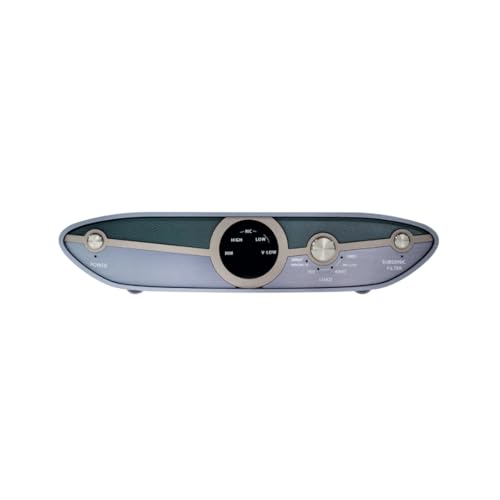
iFi Zen Phono 3
Mentioned
Who Should Buy It
- Turntable owners using low output moving coil cartridges
- Listeners who want to adjust loading and gain independently
- Users dealing with turntable rumble or low frequency noise
- Budget conscious vinyl enthusiasts upgrading from a built in phono stage
Skip It If
- You only use a moving magnet cartridge with fixed loading needs
- You need wireless streaming or digital conversion
- You require detailed physical specifications and included accessories before buying
We may earn a commission at no extra cost to you.
Last verified: October 2026

Pro-Ject Phono Box S3 B
Mentioned
Who Should Buy It
- Turntable owners wanting a dedicated, high-end phono preamp
- Buyers with both MM and MC cartridges wanting loading flexibility
- Audiophiles with a balanced-input amplifier downstream
- Listeners wanting European handmade build quality
Skip It If
- You want an all-in-one receiver with built-in phono
- You do not have a balanced-input amplifier to take advantage of the balanced output
- You want a stated weight or dimensions before buying
We may earn a commission at no extra cost to you.
Last verified: November 2026
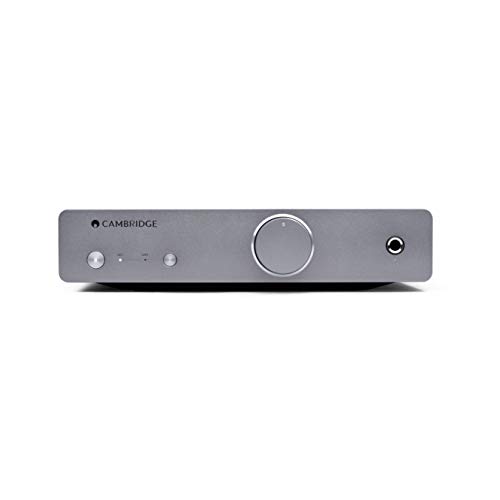
Cambridge Audio Duo Phono Preamplifier
Mentioned
Who Should Buy It
- Turntable owners wanting a dedicated phono preamp
- Buyers with both MM and MC cartridges wanting one preamp for either
- Listeners who want a built-in headphone amplifier for private listening
- Buyers wanting precise RIAA equalization accuracy
Skip It If
- You want an all-in-one receiver with built-in phono
- You need front panel cartridge loading adjustment
- You want a stated weight or dimensions before buying
We may earn a commission at no extra cost to you.
Last verified: November 2026
Keep Reading
Related guides and picks on Mandrillis:
- Best Phono Preamps : picks with a proper ground post
- How to Set Up a Turntable at Home : the full setup, including the ground connection
- Why Does My Turntable Sound Slow or Fast? : 7 fixes for speed problems
FAQs
About This Guide
Mandrillis Team
The Mandrillis editorial team researches and compares audio and music gear using manufacturer documentation, verified specs and real buyer feedback, so you can make a confident purchase without wading through marketing claims.
Read our full research methodology.