Guitar & Bass Review
Boss Acoustic Singer Live LT Review: Dual-Channel Amp
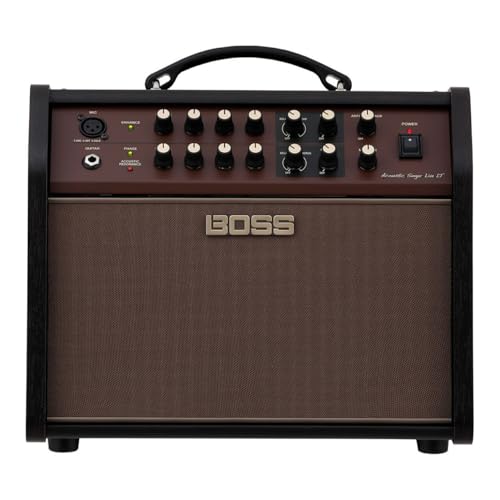
The Boss Acoustic Singer Live LT is a lower mid range acoustic amplifier with 60 watts of bi amp power, a 6.5 inch woofer, a dome tweeter, and separate guitar and mic channels. The listing highlights Acoustic Resonance, feedback controls, reverb, delay, and direct output options.
Our Verdict
Research Score 81/100The Boss Acoustic Singer Live LT appears to be a focused, practical acoustic combo for players who need clean amplification for guitar and vocals in one box. The published specification emphasizes a 60 watt bi amp design with a dedicated woofer and tweeter, two independent channels, and simple but useful effects. Acoustic Resonance and the phase switch and notch filter address common piezo and feedback problems. Limitations include the absence of Bluetooth, app editing, USB audio, and any published weight or dimensions. The feature set is not as deep as some modeling amps, but the direct outputs and feedback tools make it a strong lower mid range option for small venues and home practice. Buyers who want a straightforward acoustic amp with minimal menu diving should find this package sensible.
Editorial research score based on published specifications and documented features, not a customer rating or lab test.
Boss
Boss Acoustic Singer Live LT
Best for: Acoustic guitarists and singer-songwriters who need a compact, dual-channel amp for small gigs, rehearsals, and home practice.
Skip it if: You need deep effects editing, Bluetooth streaming, or a battery-powered amp, or you require published weight and dimensions before buying.
Check Price on AmazonWe may earn a commission at no extra cost to you.
Listing verified: October 2026
Who Should Buy It
Buy it if
- Singer-songwriters performing in small venues
- Acoustic players who want vocal and guitar channels in one amp
- Users who value simple analog-style controls over app menus
- Guitarists needing feedback suppression tools
Skip it if
- You want wireless app control and Bluetooth audio
- You require a USB audio interface for recording
- You prefer a traditional electric guitar amp with many amp models
Key Specifications
| Power output | 60 watts (bi-amp design) |
| Speaker | Custom-designed 6.5-inch woofer and dome tweeter |
| Amp models or channels | Guitar and mic channels with independent three-band EQs; Acoustic Resonance (three types) on guitar channel |
| Effects | Delay/chorus on guitar channel, delay/echo on mic channel, independent reverb on both channels, Enhance effect on mic channel, phase switch and notch filter |
| Inputs and outputs | Guitar and mic inputs, aux input with level control, XLR DI jack, phones/recording output |
| Headphone and line out | Phones/recording output |
| Bluetooth and app | Not published in listing |
| Weight | Not published in listing |
| Dimensions | Not published in listing |
| Included accessories | Not published in listing |
Overview
The Boss Acoustic Singer Live LT is a lower mid range acoustic amplifier built around a 60 watt bi amp design with a custom 6.5 inch woofer and a dome tweeter. The listing positions it as a professional acoustic guitar amp with separate guitar and mic channels, each with its own three band EQ. This dual channel layout suggests it is aimed at singer songwriters and acoustic performers who want both instruments and vocals in one portable cabinet. The published feature list also includes Acoustic Resonance, feedback suppression controls, and a tilt back cabinet for projection.
Beyond those headline features, the product listing omits several practical details such as weight, dimensions, and included accessories. The lack of published measurements makes it hard to judge true portability from the listing alone. However, the mention of a tilt back cabinet and compact class of acoustic amps implies a design meant for easy transport and stage or practice use. Buyers who need exact numbers before buying will have to look elsewhere or contact the seller.
Amp Models and Tone
The Amp Models and Tone section is really about the onboard voicing and channel behavior. The listing states that the guitar channel includes Acoustic Resonance with three selectable types, which is a tool for restoring a natural acoustic tone when using stage guitars with piezo pickups. This is significant because piezo systems often sound brittle or quacky, and the Acoustic Resonance circuit is designed to smooth that response. On paper, that feature alone could make this amp attractive for acoustic players who use undersaddle pickups.
Each channel has its own three band EQ, so vocal and guitar shaping remain independent. The mic channel adds an Enhance effect that the listing claims provides full, well defined vocal tones. While the listing does not explain exactly what Enhance does, it likely functions as a presence or clarity boost for vocals. Because there are no amp models in the traditional electric guitar sense, this amp focuses on clean acoustic and vocal reproduction rather than distorted or overdriven tones.
The overall tone character is therefore clean, full range, and designed for acoustic transparency. The bi amp architecture with separate woofer and tweeter should handle both the low body of an acoustic guitar and the high frequency detail of pick and string noise. Without in-person testing, the published specification points to a neutral platform that lets the guitar and microphone sound natural, with extra corrective tools for piezo quack and feedback.
Effects and Features
The built in effects are modest but practical. The guitar channel offers delay and chorus combined into one effect, while the mic channel has delay and echo. Both channels include independent reverb. This is not a deep multi effects engine, but it covers the basics that most acoustic performers need for a little space and movement without overwhelming the core sound.
Feedback suppression is a key feature here. The listing includes a phase switch and a notch filter, both of which are common tools for fighting acoustic feedback on stage. The phase switch flips polarity to help break the feedback loop, and the notch filter cuts a narrow band of offending frequencies. These controls are especially useful when using the amp as a monitor while sending a DI signal to the house PA.
One thing to note is that the listing does not mention any presets, app based editing, or footswitch support. The effects are adjusted with front panel controls only, according to the published specification. For players who like to set and forget a couple of subtle ambience settings, this is fine. For those who want dozens of delay types or deep parameter control, this amp will feel basic.
Power, Speaker and Volume
The power section is a 60 watt bi amp design, meaning the woofer and tweeter are driven separately. This arrangement typically provides tighter low end and clearer highs compared to a single full range speaker. The custom designed 6.5 inch woofer is on the smaller side for an acoustic amp, but the dedicated dome tweeter helps spread the upper frequencies. The tilt back cabinet design lets the amp project upward, which is useful when placed on the floor.
For home practice, 60 watts is more than enough and the headphone or recording output allows silent playing. For small cafes, coffee shops, and small venues, a 60 watt acoustic amp with a mic channel can serve as a compact PA substitute for a solo act. The listing does not state the maximum sound pressure level, but the bi amp power should provide adequate clean headroom for acoustic guitar and vocals at moderate stage volume.
- 60 watt bi amp power section with separate woofer and tweeter amplification
- Custom 6.5 inch woofer and dome tweeter for full range sound
- Tilt back cabinet improves floor projection
- Phones and recording output for silent practice
- XLR DI output for sending signal to a mixing console
Build and Portability
The listing describes a tilt back cabinet design, which is a practical build choice for stage monitoring. However, the product listing does not publish the amp's weight or dimensions, so it is impossible to confirm how portable it really is from the data provided. Many compact acoustic amps in this lower mid range class are relatively light, but without official specifications, buyers should not rely on assumptions.
The cabinet likely uses typical wood or composite construction, but the listing does not state the material. The black covering and metal grille are common on Boss and Roland style amplifiers, and the control panel appears straightforward based on the feature list. Until the manufacturer publishes details, the build quality can only be judged by the reputation of the brand and the included features.
For a musician who needs to carry an amp to small shows, the lack of published weight is a notable gap. In practice, the amp's compact class and single 6.5 inch woofer suggest it is not a large or heavy cabinet, but this is an inference rather than a listed fact. The absence of dimensions makes it hard to plan transport or storage.
Connectivity and Apps
The input and output set includes separate guitar and mic inputs, an aux input with its own level control, an XLR DI jack, and a phones and recording output. This covers the essential connections for a solo performer who wants to plug in an acoustic guitar, a vocal mic, and a backing music source. The XLR DI is particularly useful for sending a balanced signal to a front of house mixer without needing an external direct box.
The listing does not mention Bluetooth, a companion app, or USB audio connectivity. This means wireless streaming from a phone or tablet is not part of the published specification. It also means you cannot edit effects or save presets from a mobile device, and you cannot record directly to a computer over USB without an audio interface.
The aux input with level control does allow wired playback of backing tracks or break music, which is a simple and reliable alternative to Bluetooth. The phones and recording output can be used for silent practice or as a line out to a recorder, though the listing does not state whether this output is mono or stereo. On paper, the connectivity is more traditional than modern, focusing on live performance and simple recording rather than digital integration.
Setup and Daily Use
Setting up the Boss Acoustic Singer Live LT should be straightforward based on the published controls. Each channel has its own volume, three band EQ, and effects controls, so the front panel likely follows a familiar layout for acoustic amps. There is no deep menu diving or app synchronization to worry about, which can be a relief for players who want to plug in and play quickly.
The feedback suppression tools are directly accessible, which matters during a live show when a quick phase or notch adjustment can stop a howl. The independent reverbs are also simple to set, and the Acoustic Resonance selector on the guitar channel is a set and forget control. Because the amp lacks presets, you will need to dial in your preferred tone each time if you change settings between songs or venues.
Daily use as a practice amp is helped by the headphone and recording output, which allows late night playing without a speaker. The aux input means you can jam along with a track from a phone using a cable. The main usability limitation is the absence of published weight and dimensions, so you cannot plan how easy it is to move around the house or load into a car from the listing alone.
Home Practice Versus Stage
At home, the 60 watt rating is far more power than most living rooms require, but the master volume can be turned down and the headphone output offers silent practice. The aux input makes it easy to play along with backing music, and the mic channel means you can practice vocals and guitar together without a separate PA. The lack of Bluetooth may be a minor inconvenience, but a simple aux cable solves streaming from most devices.
On stage, the XLR DI output lets the amp send a balanced signal to a PA system while the cabinet serves as a personal monitor. The tilt back design helps aim the sound toward your ears, and the 60 watt bi amp section should be enough for small to medium rooms. The phase switch and notch filter become more critical in this setting because stage monitors and close proximity to the amp can trigger feedback.
For larger stages, the amp may need PA support for the audience, but that is typical for acoustic amps of this size. The listing does not mention a line out level or ground lift for the DI, so those details are unknown. Overall, the feature set positions this amp as a solo performer's compact companion rather than a backline amplifier for a full band.
Who Should Buy It
This amp is best suited to singer songwriters and acoustic solo performers who need separate guitar and mic channels in one portable package. The Acoustic Resonance feature appeals to players who use piezo equipped acoustic guitars and want a more natural amplified tone. The feedback suppression tools make it a practical choice for live use in small venues.
Practice players who want a simple amp with a headphone output and aux input will also find it useful, provided they do not require Bluetooth or app features. Recording musicians can use the phones and recording output for quick demos, though it is not a full USB audio interface. Overall, the target buyer values clean acoustic tone, vocal support, and straightforward controls over deep digital modeling.
Verdict
The Boss Acoustic Singer Live LT appears to be a well focused acoustic amplifier that combines a 60 watt bi amp platform with dual channels and essential live performance tools. The published specification includes Acoustic Resonance, independent EQs, feedback suppression, and direct outputs, all of which address real needs for acoustic performers. The absence of Bluetooth, app editing, USB audio, and published weight and dimensions are the main gaps on paper.
For a lower mid range price tier, this amp offers a sensible set of features without trying to be a full modeling powerhouse. It is not the right choice for players who want dozens of effects or deep digital integration, but it should appeal to those who prefer analog style controls and acoustic focused sound. The published data makes a strong case for the Boss Acoustic Singer Live LT as a practical, dual channel acoustic combo for home, rehearsal, and small stage use.
Strengths and Limitations
Strengths
- Bi-amp design with dedicated woofer and tweeter
- Independent guitar and mic channels with three-band EQ
- Acoustic Resonance helps correct piezo pickup tone
- Phase switch and notch filter aid feedback control
- XLR DI and phones/recording outputs add flexibility
- Tilt-back cabinet improves projection
Limitations
- Bluetooth and app support not listed
- No USB audio interface mentioned
- Weight and dimensions unpublished
- Only one delay/chorus type on guitar channel
- No battery power option in listing
How We Scored It
Scores reflect published specifications, documented features and value against the alternatives below. They are editorial research scores, not laboratory measurements.
Alternatives to Consider

Ampeg Rocket Bass RB112
Bassists needing a straightforward 100-watt combo with Ampeg style, overdrive, and a direct output for small gigs and rehearsal.
Read the Ampeg Rocket Bass RB112 review →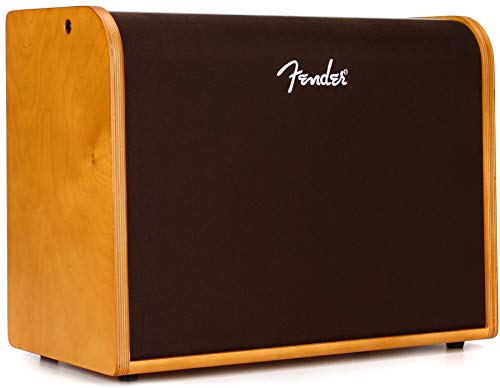
Fender Acoustic 100
Singer-songwriters and acoustic players who need a portable 100-watt amp with dual channels and Bluetooth streaming.
Read the Fender Acoustic 100 review →
Boss Katana-110 Bass
Bassists who want a versatile solid-state combo with direct recording and computer editing without a premium price.
Read the Boss Katana-110 Bass review →Head-to-Head Comparisons
- Boss Acoustic Singer Live LT vs Fender Acoustic 100 Compare →
Questions Buyers Ask
Boss Acoustic Singer Live LT
See the current listing, price and included accessories.
About This Review
Mandrillis Team
The Mandrillis editorial team researches and compares audio and music gear using manufacturer documentation, verified specs and real buyer feedback, so you can make a confident purchase without wading through marketing claims.
Read our full research methodology.