Guitar & Bass Review
Boss Katana-110 Bass Review: Solid State Bass Combo with Deep Tone
The Boss Katana-110 Bass is a lower mid-range solid-state combo with a 60-watt class AB power section, Shape switch, four-band EQ, blend control, six memories, and USB recording outs. The listing omits speaker specs, weight, and Bluetooth, so the review focuses on published features and likely use cases.
Our Verdict
Research Score 78/100On paper, the Boss Katana-110 Bass offers a compelling package for a lower mid-range bass amp. The 60-watt class AB power section, Shape switch, four-band EQ, blend control, and six memories provide practical tone shaping without a complex menu. USB and phones/recording outputs with cab emulation make it suitable for quiet recording. The missing speaker specification, weight, and absence of Bluetooth are notable gaps for research-first buyers. The amp scores well for features and connectivity, moderately for tone and power, and lower for build transparency. It is a strong choice for players who trust the Boss ecosystem and want a flexible practice or recording amp, but shoppers who need full specs before purchase should look elsewhere.
Editorial research score based on published specifications and documented features, not a customer rating or lab test.

Boss
Boss Katana-110 Bass
Best for: Bassists who want a versatile solid-state combo with direct recording and computer editing without a premium price.
Skip it if: You need a published speaker spec, built-in Bluetooth streaming, or a fully hands-off mobile editing workflow.
Check Price on AmazonWe may earn a commission at no extra cost to you.
Listing verified: October 2026
Who Should Buy It
Buy it if
- Players who want a lower mid-range bass combo with onboard effects and memories
- Home recordists who need USB and phones/recording outputs with cabinet emulation
- Bassists who like EQ flexibility and blend control for sculpting fat or clear tones
- Anyone already invested in the Boss ecosystem who will use the desktop editor
Skip it if
- You require a specific speaker size or weight before buying
- You want wireless Bluetooth audio streaming from a phone or tablet
- You prefer a simpler amp without app-based editing or multiple effect sections
Key Specifications
| Power output | 60-watt class AB power amp |
| Speaker | Not published in listing |
| Amp models or channels | No traditional channels or specific amp models published; six memories for storing and recalling sound setups |
| Effects | Compressor, drive, FX1/FX2 with a large range of selectable effects; exact effect list not published |
| Inputs and outputs | USB and phones/recording outputs with mic'd cabinet emulation; other inputs not explicitly published |
| Headphone and line out | Phones/recording outputs with mic'd cabinet emulation |
| Bluetooth and app | BOSS Tone Studio editor for macOS and Windows; Bluetooth not mentioned in listing |
| Weight | Not published in listing |
| Dimensions | Not published in listing |
| Included accessories | Not published in listing |
Overview
The Boss Katana-110 Bass is a lower mid-range bass combo amplifier described by the product listing as a versatile amp with stage-ready sound and advanced features. The published specification centers on a 60-watt class AB power section, a Shape switch with three tone characters, a four-band EQ, a Blend section, and six memories for saving sounds. It also includes USB and phones/recording outputs with microphone-style cabinet emulation. The listing does not publish the speaker size, weight, or dimensions, which leaves some practical details open for a buyer to verify.
On paper, this amp sits in the modern solid-state modeling and tone-shaping category rather than a traditional no-frills practice amp. The combination of a class AB power amp and Power Control aims to deliver punchy tone at lower volume levels. The Shape switch and selectable mid frequencies give bassists more tonal movement than a simple three-band EQ. Boss is a brand with a strong history in compact bass amplification, so the Katana-110 Bass inherits some expectations for reliability and usable direct recording.
Because this is an editorial research review based on the listing, no direct playing or measurement has been performed. The assessment below relies on the published feature set and general knowledge of how these controls typically work. The missing speaker specification is the largest unknown, because speaker size and cabinet design heavily affect low-end response and overall volume. Buyers who value complete specs may want to contact the manufacturer or a local dealer for additional details before purchasing.
Amp Models and Tone
Specific amplifier models or channels are not published in the listing for the Katana-110 Bass. Instead of named amp emulations, the amp offers a Shape switch with three tone characters: mid scoop, bright, and extended range. This approach gives quick access to common bass voice profiles without requiring deep menu editing. On paper, mid scoop suits slap and modern fingerstyle, bright helps the bass cut through a mix, and extended range emphasizes low-end clarity for drop tunings or five-string work.
The four-band EQ adds more surgical control than the Shape switch alone. The listing specifies that the low-mid and high-mid frequency centers are selectable, which lets a player move the midrange cut or boost to the frequency that matters most for their instrument and cabinet. The Studio-inspired Blend section is another tone-shaping tool that mixes the dry bass signal back into the processed sound. This is useful for preserving note definition when running heavy compression or drive, and it can add perceived fatness without muddying the low end.
Without a published speaker spec or specific preamp model names, the amp's core tonal character cannot be fully verified from the listing. Buyers report that Boss bass amps tend to have a controlled, slightly modern low end and a clear midrange, but that is not a substitute for direct experience. The combination of Shape, EQ, and Blend suggests the amp is designed for flexibility across genres rather than a single vintage tone. Players who prefer the character of a specific tube or solid-state amp model may find the Katana-110 Bass more neutral and reliant on its EQ and effects.
Effects and Features
The Katana-110 Bass includes four independent effect sections: compressor, drive, FX1, and FX2. The listing states that FX1 and FX2 offer a vast range of selectable effects, though the exact effect list is not published. Having independent sections means a player can run compression and drive while also adding modulation, delay, or reverb without losing the core bass tone. This is a step beyond many practice combos that include only a single effect or a fixed chain.
Six memories allow a player to store and recall entire sound setups, including preamp settings, EQ, blend, and effect choices. On paper, this is one of the amp's strongest features for live use, because a bassist can move from a clean fingerstyle tone to a driven pick tone with a single recall. The Power Control function is also listed, which reduces the output stage's headroom behavior at lower volume. This is meant to emulate the feel of a cranked amp at bedroom levels, though the listing does not specify the number of power scaling steps or the exact effect on tone.
Deep editing of preamp and effect settings is done through the BOSS Tone Studio editor for macOS and Windows. The editor allows organizing sounds and adjusting parameters that may not be accessible from the front panel. Unlike some competitors with mobile apps or Bluetooth, the Katana-110 Bass relies on a computer for most advanced editing. This is a practical limitation for players who want to adjust effects from a phone or tablet on the fly.
Power, Speaker and Volume
The published power rating is 60 watts from a class AB power amp. Class AB designs are common in bass combos because they balance efficiency, weight, and clean headroom. Sixty watts is generally enough for home practice, recording, and moderate rehearsals, but without a published speaker sensitivity and cabinet size, the actual acoustic volume cannot be predicted from the listing. The Power Control feature is important because it allows the amp to be run at reduced output while retaining the feel of a pushed amp.
Speaker size, number of speakers, and cabinet tuning are not published. This is a significant gap for a bass amplifier, since speaker area and cabinet design are primary factors in low-frequency output. A 60-watt amp through a small sealed cabinet will sound very different from the same amp through a larger ported cabinet. The Katana-110 name suggests a single 10-inch speaker, but the listing itself does not state this, so that detail remains unverified.
- 60-watt class AB power amp
- Power Control for reduced-volume playing
- Shape switch with mid scoop, bright, and extended range
- Four-band EQ with selectable low-mid and high-mid frequencies
- Studio-inspired Blend section
- Six memories for storing sounds
Build and Portability
Weight and dimensions are not published in the listing for the Katana-110 Bass. Without those numbers, it is impossible to assess portability from the product listing alone. Combo bass amps in this power class can vary from compact and light to relatively bulky depending on cabinet materials and speaker magnet size. Boss has a history of robust but transportable designs, but that is not a guarantee for this specific model.
The front panel appears to offer a direct set of controls for Shape, EQ, Blend, effects, and memory recall, which suggests a straightforward physical layout. The amp includes USB and phones/recording outputs, so at minimum there is some digital conversion and cabinet emulation circuitry inside. The published feature set does not mention an XLR DI output, which some bassists consider important for live sound. The absence of a published weight and dimensions means buyers should not assume the amp is either lightweight or heavy.
From a build standpoint, the listing gives no information about cabinet covering, corner protection, or speaker mounting. Boss products are generally built to a consistent standard, but without manufacturer details this review cannot confirm materials or ruggedness. The lower mid-range price tier suggests cost-effective construction rather than premium touring-grade hardware. Players who move gear often will want to verify the actual weight and size before buying.
Connectivity and Apps
The Katana-110 Bass includes a USB port and phones/recording outputs with mic'd cabinet emulation. This means a player can connect the amp directly to a computer for recording without a separate microphone. The cab emulation is designed to make the direct signal sound more like a mic'd bass cabinet than a raw preamp. The listing does not specify the sample rate, bit depth, or whether the USB connection can also receive audio from a computer for playback.
BOSS Tone Studio is the only software mentioned, and it runs on macOS and Windows. The editor allows adjusting preamp and effect settings, organizing sounds, and presumably updating firmware, though the listing does not state the latter. There is no mention of Bluetooth audio streaming, a mobile app, or wireless control from a phone. This is a difference from some competitors like the Positive Grid Spark or Yamaha THR series that lean heavily on mobile connectivity.
The phones/recording outputs use a single connection for both headphone monitoring and line-level recording. This is convenient for quiet practice and for capturing ideas, but players who need a separate headphone volume and line out volume may find the shared output limiting. The cab emulation on the recording output is a valuable feature, but the lack of a published XLR DI output means live sound engineers may need to use a direct box or a microphone for stage use.
Setup and Daily Use
Setting up the Katana-110 Bass from the front panel appears to be straightforward for basic use. A player can choose a Shape character, set the four-band EQ, dial in the Blend, and then adjust compressor, drive, and FX1 or FX2. Saving a sound to one of six memories is intended to be quick, though the exact button press sequence is not published. The Power Control control lets a player reduce output for home use without altering the stored tone.
Daily use for practice and recording is likely to center on the phones/recording output and the USB connection. The cab-emulated output means a player can listen through headphones without a speaker cabinet, which is useful in apartments. The BOSS Tone Studio editor adds deeper control but requires a computer nearby. The amp does not mention an aux input, so playing along with tracks from a phone may require connecting the phone through a separate interface or using the computer's audio playback.
The memory system supports quick changes, but the amp's lack of a published footswitch jack is a potential gap. The listing does not mention a footswitch or a dedicated input for one. If a player wants to change memories while playing, they may need to reach over to the front panel or verify whether an optional footswitch is supported. This detail, along with the missing speaker and weight, is an example of what the listing leaves unclear.
Home Practice Versus Stage
For home practice, the Katana-110 Bass has several useful tools. The Power Control is specifically designed to reduce volume while keeping the amp's dynamic feel, and the phones/recording output allows silent practice. The USB connection makes it easy to record practice sessions or song ideas into a computer. The Shape switch and compressor can help produce a polished headphone tone without turning up the speaker.
For stage use, the 60-watt class AB power section may be enough for small rooms and rehearsals, but without a published speaker spec, stage volume is hard to predict. The six memories are a genuine performance feature, letting a player recall different tones between songs. The cab-emulated recording output can feed a front-of-house mixer, but the lack of a stated XLR DI output means players may need an external direct box. The amp's class AB design and lower mid-range price make it a candidate for practice and small gigs rather than large stages.
Maximum SPL and frequency response are not published in the listing. Any comparison to a specific stage amp must remain general. Players who need a known minimum volume for a loud drummer may find the missing speaker information frustrating. On paper, the Katana-110 Bass seems best suited as a versatile home, recording, and light rehearsal amp that can occasionally handle a small venue with PA support.
Who Should Buy It
The Katana-110 Bass should appeal to bassists who want a lower mid-range combo with onboard effects and direct recording. Players who like the Boss ecosystem and already use BOSS Tone Studio will find the workflow familiar. The six memories and Power Control make it practical for home practice and small-scale recording.
Bassists who value deep tone-shaping from the four-band EQ and Blend section will appreciate the flexibility on paper. Those who need a USB audio interface built into their practice amp can simplify their recording setup. The amp is also a reasonable choice for players who want a solid-state bass amp with class AB power rather than a budget switching design.
However, the missing speaker specification and weight mean research-oriented buyers may need to gather more information before committing. This amp is not the best fit for someone who needs a known 1x10 or 1x12 configuration, a built-in Bluetooth streamer, or mobile app editing. Within its published feature set, it targets the player who values tone shaping, memories, and direct recording over raw spec transparency.
Verdict
The Boss Katana-110 Bass is a lower mid-range bass combo that brings a useful set of tone and connectivity features to a solid-state package. The 60-watt class AB power section, Shape switch, selectable mid frequencies, Studio Blend, six memories, and USB recording output make it a flexible option for practice and light recording. The Power Control function addresses the common problem of getting a satisfying bass tone at low volume.
The main weaknesses are not performance issues but information gaps. The listing does not publish the speaker size, weight, dimensions, or included accessories. It also omits Bluetooth audio and a mobile app, which are increasingly common in this category. These missing details make it hard to compare the Katana-110 Bass head to head with competitors that publish full specs.
Given the published features and the Boss brand reputation, the amp deserves a solid score for features, connectivity, and value, with lower marks for build transparency because of the missing physical specs. Players who are comfortable with the Boss ecosystem and want a flexible home or recording bass amp should shortlist it. Those who need complete specs before buying may find the listing too thin.
Strengths and Limitations
Strengths
- 60-watt class AB power amplifier with Power Control for lower-volume practice
- Shape switch with three tone characters for quick low-end and midrange variation
- Four-band EQ with selectable low-mid and high-mid frequency controls
- Studio-inspired Blend section for mixing dry and processed bass signal
- Six memories for saving favorite sound setups
- USB and phones/recording outputs with cab-emulated direct recording
Limitations
- Speaker size and configuration are not published in the listing
- No Bluetooth audio or mobile app mentioned
- Computer required for deep editing through BOSS Tone Studio
- No included footswitch or accessory details given
How We Scored It
Scores reflect published specifications, documented features and value against the alternatives below. They are editorial research scores, not laboratory measurements.
Alternatives to Consider

Ampeg Rocket Bass RB112
Bassists needing a straightforward 100-watt combo with Ampeg style, overdrive, and a direct output for small gigs and rehearsal.
Read the Ampeg Rocket Bass RB112 review →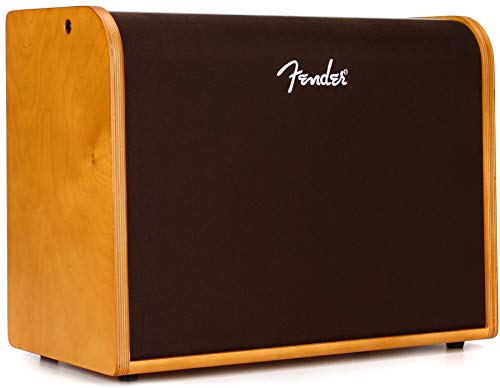
Fender Acoustic 100
Singer-songwriters and acoustic players who need a portable 100-watt amp with dual channels and Bluetooth streaming.
Read the Fender Acoustic 100 review →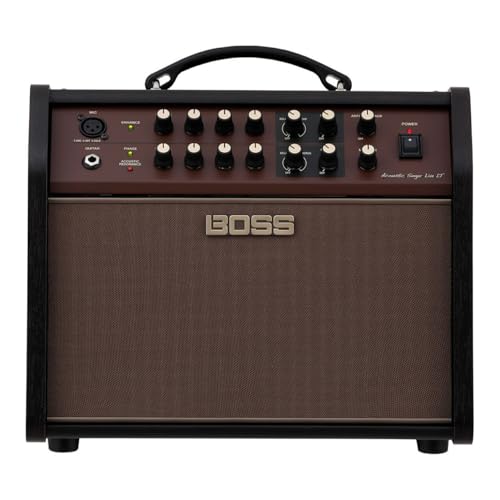
Boss Acoustic Singer Live LT
Acoustic guitarists and singer-songwriters who need a compact, dual-channel amp for small gigs, rehearsals, and home practice.
Read the Boss Acoustic Singer Live LT review →Head-to-Head Comparisons
- Peavey Vypyr X3 vs Boss Katana-110 Bass Compare →
Questions Buyers Ask
Boss Katana-110 Bass
See the current listing, price and included accessories.
About This Review
Mandrillis Team
The Mandrillis editorial team researches and compares audio and music gear using manufacturer documentation, verified specs and real buyer feedback, so you can make a confident purchase without wading through marketing claims.
Read our full research methodology.