Guitar & Bass Review
Positive Grid Reactor 50 Review: Smart Amp with Custom Tone
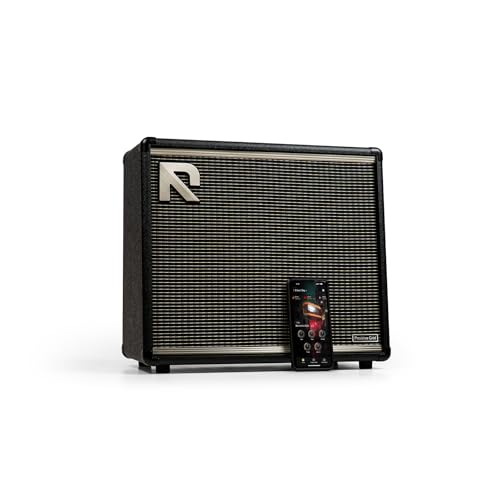
The Positive Grid Reactor 50 is a 50 watt modeling combo built around the REACTOR app. The listing highlights 24 amps, 27 effects, user created amp models, selectable output power, and a custom 12 inch speaker in a wood cabinet. This research review examines the published feature set and what it suggests for home and gigging use.
Our Verdict
Research Score 82/100The Positive Grid Reactor 50 is a forward looking modeling combo that pairs a traditional 12 inch speaker cabinet with an app driven tone platform. It offers 24 amps, 27 effects, selectable wattage, and AI assisted custom amp creation, which sets it apart from many fixed preset combos. The published hardware controls suggest a focus on feel and real time adjustment. The main limitation is the lack of detailed I/O and physical specs in the listing, which leaves some practical questions unanswered. For players who want deep customization and a stage capable 1x12 combo, the Reactor 50 is a strong lower mid range option. More traditional players may find the app dependency a drawback.
Editorial research score based on published specifications and documented features, not a customer rating or lab test.
Positive Grid
Positive Grid Reactor 50
Best for: Best for guitarists who want a 50 watt modeling combo with AI assisted tone creation and a real 12 inch speaker for home practice and small gigs.
Skip it if: Avoid if you need a fully hardware based amp with no app dependency or require clearly specified I/O before purchase.
Check Price on AmazonWe may earn a commission at no extra cost to you.
Listing verified: October 2026
Who Should Buy It
Buy it if
- Players who enjoy deep tone editing and custom amp design
- Home musicians who want a 1x12 combo with selectable low wattage
- Small venue performers needing a portable 50 watt amp
- Fans of Positive Grid software who want a traditional cabinet format
Skip it if
- You need a pure analog or tube amp without digital modeling
- You prefer physical knobs for every effect and parameter
- You cannot verify the specific I/O types from a manual or retailer
Key Specifications
| Power output | 50 watts with selectable 1W, 25W, or full power |
| Speaker | Custom 12 inch speaker in a wood cabinet |
| Amp models or channels | 24 amps plus user-created custom amps via REACTOR app |
| Effects | 27 effects plus custom signal chains |
| Inputs and outputs | Comprehensive I/O described, specific types not published in listing |
| Headphone and line out | Not published in listing |
| Bluetooth and app | REACTOR app for control, connection type not published in listing |
| Weight | Not published in listing |
| Dimensions | Not published in listing |
| Included accessories | Not published in listing |
Overview
The Positive Grid Reactor 50 is a 50 watt intelligent guitar combo amp built around the REACTOR app. The listing positions it as a platform for building custom tones and amp models from prompts, photos, and recordings. This sets it apart from fixed modeling amps with only factory presets. The feature set suggests a product for players who want deep tone editing without a traditional pedalboard or computer editor.
This review is based solely on the product listing and published specifications. It is not a in-person evaluation, so the assessment focuses on the documented feature set and how it fits known amp categories. Some hardware details are omitted in the listing, and those gaps are noted where relevant.
Positive Grid is known for the Spark series and BIAS software. The Reactor 50 applies that approach to a traditional 1x12 combo with selectable output power. The result is a flexible amp aimed at both home practice and small stage use. The amp intelligence angle is the main differentiation, as the app can generate usable signal chains from descriptive prompts or audio references.
Amp Models and Tone
The listing states the amp starts with 24 amp models and 27 effects. Specific amp names are not published, but the count covers the usual clean, crunch, and high gain categories. Positive Grid's reputation with BIAS and Spark suggests the base models are likely derived from familiar tube amp architectures. Users can also build their own amp models in the REACTOR app, which is a significant step beyond fixed presets.
Front panel controls include Gain, EQ, Master, and an AMP knob for moving through amps in real time. Two unique controls, HEAT and PUSH/SMOOTH, adjust feel and response. HEAT likely adds harmonic saturation, while PUSH/SMOOTH may affect transient character. On paper these offer more tactile shaping than many modeling combos in this price tier.
The app can build amps from prompts, photos, or audio clips. This suggests an AI process that matches reference tones, though the quality depends on software execution. Without in-person testing, the exact behavior of these generated models is not confirmed. The listing cannot verify that performance.
Effects and Features
The listing reports 27 onboard effects, which likely include modulation, delay, reverb, compression, and pitch based effects. The REACTOR app allows users to arrange effects into fully custom signal chains. This means the amp can function as a self contained multi effects unit in addition to an amplifier.
Deep editing relies heavily on the app. The front panel does not appear to have dedicated effect selectors for every effect type. Instead, the hardware covers essential tone shaping while the app handles preset building, signal chain order, and parameter fine tuning. That division may appeal to players comfortable using a phone or tablet for setup.
The listing does not specify stereo processing or advanced routing options. A 12 inch speaker suggests mono output, but the app could support stereo through a line out or headphone out. Without published I/O details, the feature set remains partially opaque. Buyers who need specific effect types should confirm the app's current library before purchase.
Power, Speaker and Volume
The Reactor 50 is rated at 50 watts and uses a custom 12 inch speaker in a wood cabinet. The listing describes the speaker as built to deliver warmth and presence at any volume. A 12 inch driver in a wooden enclosure often provides a fuller low end and more even dispersion than smaller practice speakers.
Selectable wattage is a major practical feature, with 1 watt, 25 watt, and full power modes. The 1 watt setting suits apartment or late night practice. The 25 watt setting works for band rehearsals. Full 50 watt output should cover small to medium stages. This flexibility is similar to successful modeling combos, though the Reactor adds its own tone shaping controls.
The listing does not publish speaker sensitivity, impedance, or cabinet dimensions. On paper, a 50 watt amp through a 12 inch speaker is adequate for many live scenarios with PA support. The 1 watt mode is valuable for preserving tone at bedroom levels, a common pain point for tube amp owners.
- Rated at 50 watts with selectable 1 watt, 25 watt, and full power modes
- Custom 12 inch speaker in a wood cabinet
- Front panel Gain, EQ, Master, AMP knob, HEAT, and PUSH/SMOOTH controls
- Comprehensive I/O mentioned but specific connectors not listed
Build and Portability
The listing specifies a wood cabinet but does not provide dimensions or weight. The 50 watt rating and 12 inch speaker imply a combo that is larger and heavier than desktop practice amps. Buyers who need a grab and go amp should check the physical specs from a reliable source before assuming it is easily portable.
The front panel layout appears focused on essential controls, though the listing does not mention a handle or protective corners. A wood cabinet generally provides a resonant musical enclosure but adds weight compared to plastic or MDF. The overall aesthetic is more traditional than Positive Grid's Spark desktop units.
This traditional look may appeal to players who want a stage ready amplifier that also works in a living room. However, missing size and weight data make portability hard to compare against competitors like the Boss Katana 50 or Fender Mustang series. Potential buyers should verify physical dimensions before purchase.
Connectivity and Apps
The REACTOR app is the heart of the system. It handles preset building, custom amp creation, and signal chain editing. The listing does not state whether the connection is Bluetooth, USB, or Wi-Fi. Positive Grid's other products often use Bluetooth for wireless control, but that is not confirmed for the Reactor 50.
The phrase comprehensive I/O appears in the listing, but specific connectors are not listed. Common possibilities include a 1/4 inch instrument input, aux input, headphone out, line out, and USB. Without a published list, buyers cannot confirm direct recording, external speaker connections, or pedal integration.
The AI tone generation is the main differentiator. If it works well, prompts, photos, or audio references could produce usable presets quickly. Practical usefulness depends on software execution, which this review cannot verify. The connectivity score reflects the promised feature set, not tested performance.
Setup and Daily Use
Setup appears to involve pairing the amp with the REACTOR app for full access. Basic playing is possible with the front panel controls, but deeper customization requires the app. Daily use likely centers on selecting presets from the app or moving through amps with the AMP knob.
The selectable wattage adds everyday practicality. The 1 watt mode is ideal for quiet practice, while full power is ready for rehearsal. HEAT and PUSH/SMOOTH allow real time feel adjustments without menu diving. This is useful for adapting a preset to a different guitar or room.
One drawback is dependence on the app for advanced functions. If the app is discontinued or not maintained, some custom features may become inaccessible. Players who prefer a fully hardware based modeling amp, like the Boss Katana series, may find the Reactor's workflow either a benefit or a burden.
Home Practice Versus Stage
At home, the 1 watt mode and 12 inch speaker deliver full tone at low volume. The extensive editing tools eliminate the need for a pedalboard during practice. This makes the Reactor 50 a versatile home amp for learning songs or exploring new sounds.
On stage, 50 watts and a 12 inch cabinet suit small to medium venues with PA support. The selectable wattage can reduce stage volume while preserving feel. Custom amp building could help match reference tones from recordings for covers or original material.
Compared to a Boss Katana 50 or Fender Mustang LT25, the Reactor focuses more on AI tone creation and open ended software. Those amps have simpler workflows and proven reliability. Players wanting minimal tweaking may prefer those known models, while experimenters may favor the Positive Grid approach.
Who Should Buy It
The Reactor 50 suits guitarists who enjoy deep app based editing and AI generated tones. It works for players who use a smartphone or tablet regularly. The 12 inch speaker and selectable wattage support both home practice and small gig use.
Players who want a conventional amplifier without software dependency may find this model frustrating. The front panel covers basics but leaves many features to the app. If you want physical knobs for every effect and parameter, this is not the best fit.
Existing Positive Grid fans who want a larger cabinet than the Spark series will appreciate the format. For those seeking a minimal practice amp, the Reactor 50 may be more than needed. Its lower mid range price is competitive with established modeling combos. The open ended platform also suits players who like to experiment with signal chain order and custom amp design.
Verdict
The Positive Grid Reactor 50 is an ambitious modeling combo that pairs a traditional 1x12 cabinet with an app driven platform. It offers 24 amps, 27 effects, selectable wattage, and AI assisted custom amp creation. The HEAT and PUSH/SMOOTH controls add tactile feel adjustment.
The main limitation is the lack of detailed I/O and physical specs in the listing. Without connector types, weight, or dimensions, practical assessment is incomplete. Buyers with specific connectivity needs should seek the full manual or manufacturer spec sheet.
On balance, the Reactor 50 earns a solid score based on its published features and Positive Grid's reputation. It is a strong lower mid range option for tone experimenters. Traditional players may prefer simpler hardware based alternatives. The app dependency will be a deciding factor for many buyers.
Strengths and Limitations
Strengths
- Selectable 1W, 25W, and full power modes for home and stage use
- 24 amp models and 27 effects expandable with custom signal chains
- AI driven amp building from prompts, photos, and audio references
- 12 inch custom speaker in a wood cabinet for fuller tone
- Unique HEAT and PUSH/SMOOTH feel controls on the front panel
- REACTOR app provides deep editing without extra pedals
Limitations
- Listing does not publish specific input and output connectors
- Weight and dimensions are not provided
- App centric workflow may not suit players who prefer hardware only control
- Effect and amp model names are not specified in the listing
- No published headphone or line out details
How We Scored It
Scores reflect published specifications, documented features and value against the alternatives below. They are editorial research scores, not laboratory measurements.
Alternatives to Consider

Orange Crush 35RT
Guitarists who want a straightforward analogue practice amp with headphone output and an effects loop for pedals.
Read the Orange Crush 35RT review →
Hartke HD75 Bass
Bass players who want a simple, affordable combo with enough power for home practice and small rehearsals without digital complexity.
Read the Hartke HD75 Bass review →
Positive Grid Spark LIVE
The Positive Grid Spark LIVE suits players who want a versatile smart amp and portable PA for guitar, bass, vocals, and backing tracks at home jams or small gigs.
Read the Positive Grid Spark LIVE review →Questions Buyers Ask
Positive Grid Reactor 50
See the current listing, price and included accessories.
About This Review
Mandrillis Team
The Mandrillis editorial team researches and compares audio and music gear using manufacturer documentation, verified specs and real buyer feedback, so you can make a confident purchase without wading through marketing claims.
Read our full research methodology.