Guitar & Bass Review
Takamine GD11M Review: A Straightforward Mahogany Dreadnought
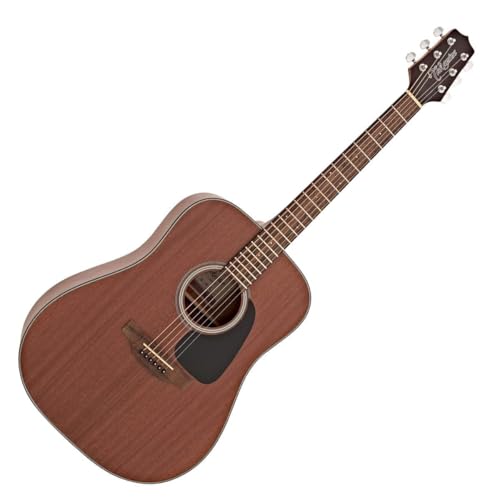
The Takamine GD11M is a lower mid-range dreadnought with a mahogany top, back and sides, laurel fingerboard, and natural finish. The listing omits scale length, nut width, and solid versus laminate details, so this review focuses on the published specs and typical expectations for the class.
Our Verdict
Research Score 67/100The Takamine GD11M is a lower mid-range dreadnought that keeps its feature set simple. The listing describes an all-mahogany body, laurel fingerboard, and natural finish, but it leaves out scale length, nut width, tuner type, and whether the top is solid or laminated. That missing information makes a definitive verdict difficult, but the guitar on paper should deliver a warm, relaxed acoustic voice suitable for strumming and singing. Its main drawbacks are the absent case, the lack of published playability specs, and the uncertainty around construction materials. Buyers who can accept those gaps and plan for a setup may find the GD11M to be a dependable first or backup dreadnought. It is not a spec-rich showpiece, but it does not pretend to be one.
Editorial research score based on published specifications and documented features, not a customer rating or lab test.
Takamine
Takamine GD11M
Best for: A beginner or budget-minded player who wants a full-size all-mahogany dreadnought for warm strumming and singing without electronics.
Skip it if: You need published scale length, nut width, or solid wood confirmation, or you want a guitar with factory electronics and a case included.
Check Price on AmazonWe may earn a commission at no extra cost to you.
Listing verified: October 2026
Who Should Buy It
Buy it if
- Beginners seeking a recognizable brand and full-size dreadnought
- Players who prefer a warm, midrange-heavy tone over bright spruce
- Acoustic-only musicians who already have a case or gig bag
- Buyers comfortable with a possible setup and unknown neck dimensions
Skip it if
- Players who require exact scale length and nut width before purchase
- Those who want built-in electronics or a travel-friendly body
- Buyers who insist on a confirmed solid top or all-solid construction
Key Specifications
| Body shape | Dreadnought |
| Top | Mahogany |
| Back and sides | Mahogany |
| Neck and fingerboard | Neck wood not published in listing; fingerboard is laurel |
| Scale length | Not published in listing |
| Nut width | Not published in listing |
| Electronics | Not published in listing |
| Tuners | Not published in listing |
| Finish | Natural |
| Included accessories | None listed; case not included |
Overview
Takamine positions the GD11M as an accessible dreadnought with mahogany on the top, back and sides, a laurel fingerboard, and a natural finish. The product listing omits scale length, nut width, tuner type, and whether the top is solid or laminated. That leaves several practical details open, but the overall shape and wood combination point to a warm, traditional acoustic voice. This review is based on the published specifications and general knowledge of the category.
For a lower mid-range price tier, the GD11M competes with spruce-topped entry models but offers a different tonal identity. The absence of onboard electronics simplifies the design and keeps the focus acoustic. No case is included, so a separate gig bag or hard case is a necessary accessory. Players who want a no-frills dreadnought from a known brand may find this model appealing.
Because the listing does not state whether the mahogany is solid or laminate, the long-term tone potential remains uncertain. A solid top would typically improve with age, while laminate is more stable but less responsive. Buyers should treat this as an unknown until they inspect the guitar in person.
Body, Neck and Playability
The full-size dreadnought body should provide strong low-end response and a comfortable strumming platform. The listing does not publish body depth or lower bout width, but the shape is familiar to most players. A laurel fingerboard offers a smooth surface that shares some characteristics with rosewood. The neck wood remains unpublished, which adds uncertainty about weight and stability.
Scale length and nut width are not specified, so exact string spacing and fret spacing are unknown. Players with smaller hands often prefer a narrower nut width around 43 mm, but the listing does not confirm that measurement. Without these numbers, the GD11M may suit average to larger hands better, but that is speculative. Trying the guitar before purchase is the only reliable way to judge playability.
No truss rod details or neck profile are published either. The lack of electronics means there are no control panels or battery boxes on the upper bout, which keeps the body clean. The natural finish should feel smooth, but gloss versus satin is not stated. Overall, the playability profile is incomplete on paper.
Tone and Projection
Mahogany on the top, back and sides is known for a warm, midrange-forward tone with softer treble than spruce. The dreadnought body adds bass and volume, so the GD11M should produce a full, relaxed strumming voice. However, the listing does not confirm solid versus laminate, which affects resonance and dynamic range. On paper, the guitar likely suits vocal accompaniment and rhythm playing.
Compared to a Yamaha FG800 or Fender CD-60S, which often use spruce tops, the all-mahogany Takamine should sound rounder and darker. The exact projection depends on bracing, top thickness, and string gauge, none of which are published. Buyers who like a mellow, old-school tone may prefer this character, while those who want crisp articulation might find it too soft.
The listing does not mention string gauge or factory strings, so the immediate tone out of the box is unpredictable. A set of light gauge strings can brighten the response, while medium strings add punch but feel stiffer. Without direct evaluation, these remain general expectations rather than measurements.
Hardware and Electronics
Published details list no electronics, pickup, or preamp for the GD11M. That keeps the guitar purely acoustic, which is fine for home use and small unplugged jams. A soundhole pickup or piezo system can be added later if amplification is needed. The absence of electronics also removes potential failure points and battery maintenance.
The tuner type is not published, which is common at this price level. Basic sealed tuners are typical, but the exact brand and ratio are unknown. The natural finish is listed, but the bridge material and saddle material are not specified. Buyers should expect functional hardware that may need upgrading over time.
The only accessory note is that a case is not included. That means the guitar ships without protection or storage. A padded gig bag or hard case is a practical purchase for most owners. No strap button or strap is listed, though most dreadnoughts include a strap button at the heel.
- Dreadnought body shape
- Mahogany top, back, and sides
- Laurel fingerboard
- Natural finish
- Case not included
- No electronics listed
Build Quality and Finish
Takamine has a reputation for consistent assembly and quality control, but the GD11M is an entry-level model with limited published specs. The natural finish likely shows the mahogany grain without heavy tint, but the sheen is not stated. The neck joint, bracing pattern, and binding material are also not described.
For a lower mid-range price, laminated wood is common, but the listing does not confirm it. A laminated mahogany body is durable and resistant to humidity changes, which is a practical advantage for beginners. The tradeoff is less acoustic responsiveness compared to solid wood. This uncertainty lowers the certainty of the build assessment.
Fit and finish details such as fret ends, fretboard edges, and bridge glue are not visible in the listing. A careful visual inspection after purchase is necessary. The natural finish is usually low-maintenance and easy to clean, but scratches may show more easily on a matte surface. Buyers should set realistic expectations for this price tier.
Setup Out of the Box
Factory action and neck relief are not published, so the out-of-box playability is unknown. Many acoustics at this price ship with slightly high action to avoid fret buzz, which can make chords feel stiff. A professional setup is often needed to achieve comfortable low action. The listing does not indicate a specific string gauge either.
Without published nut width or scale length, a setup cannot fully correct an uncomfortable neck shape. The truss rod is likely adjustable, but the listing does not state it. Buyers who are particular about action should budget for a setup by a technician. The lack of a case increases the chance of minor setup shifts during shipping.
After the guitar acclimates to room temperature and humidity, checking relief, nut slots, and saddle height is sensible. These steps are standard for any new acoustic, but especially important when specs are missing. The GD11M is not marketed as a ready-to-play premium instrument, so some adjustment is expected.
Daily Use and Practice
A full-size dreadnought is a straightforward choice for daily practice, but the unknown neck dimensions may affect comfort during long sessions. The warm mahogany voice on paper is unlikely to cause ear fatigue, which is a plus for frequent playing. No batteries or cables are needed, so the guitar is always ready acoustically.
The absence of a case means the guitar is more vulnerable to accidental bumps and humidity swings. A simple padded gig bag solves that. The natural finish should be easy to wipe down after use, though a matte finish may show wear more quickly. For a bedroom or living room player, the GD11M fits a simple, fuss-free routine.
The dreadnought body is not the most comfortable for playing while seated on a couch, but many players manage with a strap or footstool. Its full size gives a commanding presence that smaller travel guitars lack. If the neck feels right, the GD11M can serve as an everyday workhorse.
Versatility and Styles
The combination of mahogany and a dreadnought body leans toward warm strumming, folk, country, blues, and singer-songwriter material. The guitar should handle light fingerpicking, but the lack of published nut width makes intricate fingerstyle comfort uncertain. Bright, cutting lead lines may not be its strength compared to a spruce top.
Compared to a Taylor GS Mini or Martin LX1, the full-size GD11M offers more body and likely more low-end on paper. However, it is less portable and heavier. The acoustic-only design limits stage use unless a pickup is added, but for recording with a microphone it works fine.
For a player who mostly strums open chords and sings, the GD11M should cover a wide range of songs. Alternate tunings are possible, but the unknown nut and saddle materials may affect tuning stability. Without a pickup, live performance requires an external microphone or aftermarket electronics.
Who Should Buy It
The GD11M suits beginners and budget-minded players who want a full-size dreadnought from a known brand. Its all-mahogany specification and natural finish offer a classic look without extra features. Players who already own a case or gig bag and do not need electronics will find it practical.
This guitar also appeals to those who prefer a warm, midrange-forward tone over a bright modern acoustic. Buyers who are comfortable with some unpublished specs and plan for a setup will be less surprised. It is not for players who need exact scale length or nut width before purchase.
Skip this model if you require factory electronics, a travel-friendly body, or a confirmed solid top. It is also not ideal for those who want a highly detailed spec sheet. For everyone else, the Takamine GD11M is a straightforward lower mid-range option.
Verdict
The Takamine GD11M is a lower mid-range dreadnought with a published all-mahogany body, laurel fingerboard, and natural finish. The listing leaves out scale length, nut width, tuner type, and solid versus laminate construction, which adds risk for buyers who want known measurements. On paper, the guitar should deliver a warm, relaxed voice suited to strumming and singing.
Its main drawbacks are the absent case, the unpublished playability specs, and the uncertainty around materials. Buyers who can accept those gaps and budget for a setup may find the GD11M a dependable first or backup acoustic. It is not a spec-rich showpiece, but it does not pretend to be one.
For the price, the GD11M competes with entry-level spruce-top models but offers a different tonal identity. The score reflects the balance of published features and missing details. Based on the listing alone, this review rates the guitar as a reasonable value for the right buyer, with caveats.
Strengths and Limitations
Strengths
- All-mahogany body and top for a warm, mid-focused voice on paper
- Dreadnought body provides traditional full-size projection
- Laurel fingerboard is a practical, rosewood-like material
- Natural finish keeps the look simple and low-maintenance
- Lower mid-range price tier makes it accessible
- No electronics to maintain or fail
Limitations
- Listing does not state scale length, nut width, or neck wood
- Case is not included
- No factory electronics or pickup listed
- Solid versus laminate top not specified
- Tuner brand and finish details are not published
How We Scored It
Scores reflect published specifications, documented features and value against the alternatives below. They are editorial research scores, not laboratory measurements.
Alternatives to Consider

Alvarez AD30
Players seeking a lower mid-range dreadnought with a solid spruce top and traditional build for strumming and flatpicking.
Read the Alvarez AD30 review →
Alvarez AF30
The Alvarez AF30 is best for fingerstyle and folk players who want a solid spruce top in a comfortable folk body at a lower mid-range price.
Read the Alvarez AF30 review →
Takamine GC1
Students and casual players seeking a lower midrange classical guitar with a traditional nylon string voice and simple appointments.
Read the Takamine GC1 review →Head-to-Head Comparisons
- Alvarez AD30 vs Takamine GD11M Compare →
Questions Buyers Ask
Takamine GD11M
See the current listing, price and included accessories.
About This Review
Mandrillis Team
The Mandrillis editorial team researches and compares audio and music gear using manufacturer documentation, verified specs and real buyer feedback, so you can make a confident purchase without wading through marketing claims.
Read our full research methodology.