Headphones Review
iFi GO Review: A Compact Portable USB DAC Amp
The iFi GO is a budget USB DAC and headphone amplifier with dual ESS Sabre chips, a 4.4mm balanced output rated up to 241 milliwatts, and high resolution audio support. It has no battery or Bluetooth and is designed to improve wired headphone listening from any USB device.
Our Verdict
Research Score 63/100The iFi GO Link 2 Max presents a strong on paper case as a budget portable DAC and headphone amplifier. Its dual ESS Sabre chips, balanced 4.4mm output with up to 241 milliwatts, Dynamic Range Enhancement, and reduced distortion are meaningful upgrades over typical built in phone audio. The lack of a battery and Bluetooth keeps the design simple and focused on wired listening. The main limitations are the absence of a 3.5mm output, no microphone, and no noise cancelling, which are expected for this category. The listing does not publish exact weight, dimensions, or power consumption, so some practical details remain unknown. Overall, the iFi GO is a sensible choice for budget minded listeners who already own balanced wired headphones and want cleaner power and high resolution support from a USB source.
Editorial research score based on published specifications and documented features, not a customer rating or lab test.

iFi
iFi GO
Best for: Budget minded listeners who already own wired headphones with a 4.4mm balanced cable and want to upgrade the sound from a phone, laptop, or PC.
Skip it if: You want a wireless or noise cancelling headphone, need a 3.5mm jack, or expect the device to have its own battery.
Check Price on AmazonWe may earn a commission at no extra cost to you.
Listing verified: October 2026
Who Should Buy It
Buy it if
- Owners of wired headphones with a 4.4mm balanced cable
- Listeners who want high resolution PCM 384kHz and DSD256 playback
- Users who want a compact, battery free USB DAC for portable use
- Budget conscious buyers looking for a first portable audiophile upgrade
Skip it if
- You use headphones with only a 3.5mm single ended cable
- You need Bluetooth wireless connectivity
- You want a device with a built in microphone for calls
Key Specifications
| Type | Portable USB DAC and headphone amplifier |
| Driver | Not published in listing |
| Noise cancelling | Not applicable, this is not a headphone |
| Bluetooth and codecs | Not published in listing, listing does not mention Bluetooth |
| Battery life | Not applicable, powered by USB |
| Wired option | Yes, USB input and 4.4mm balanced headphone output |
| Controls and app | iFi Nexis mobile app for customisable filtering |
| Water resistance | Not published in listing |
| Weight | Not published in listing, listing states more than 20 percent lighter than Gen 1 |
| Included accessories | Not published in listing |
Overview
The iFi GO is a portable USB DAC and headphone amplifier, not a pair of headphones. The listing positions it as an upgrade for any USB audio source, including phones, laptops, and PCs. It is a dongle style device that connects between a USB port and wired headphones. On paper, it offers balanced output and high resolution decoding.
The standout specifications include dual ESS Sabre DAC chips in a balanced circuit, a 4.4mm balanced headphone output rated at up to 241 milliwatts, and Dynamic Range Enhancement that adds up to 6 decibels of extra dynamics. The listing also claims distortion is reduced by over 50 percent compared to the first generation GO Link. These features target listeners who want better sound from a portable device without carrying a large amp.
Because this is a DAC and amplifier rather than headphones, some typical review categories such as comfort and battery life do not apply in the usual way. The following sections evaluate what the listing provides and note where information is not published. The price tier is budget, making this an accessible entry point for wired headphone upgrades.
Sound Quality
The published sound architecture is built around two ESS Sabre DAC chips configured in a balanced circuit. Balanced designs can reduce noise and crosstalk, and the listing specifically claims S-Balanced output halves crosstalk for cleaner playback. The 4.4mm balanced output provides up to 241 milliwatts, which is enough power for many efficient headphones and some moderately demanding models, though the listing does not state impedance range.
Dynamic Range Enhancement is a feature the listing says adds up to 6 decibels of extra dynamics. This suggests a wider perceived difference between quiet and loud passages, which can make music sound more vivid. The listing also states distortion is reduced by over 50 percent versus the first generation, which implies a cleaner signal path. Without in-person measurement, these remain on paper claims, but they are consistent with iFi's approach to portable audio.
High resolution audio support is listed as PCM up to 384 kilohertz and DSD256. This means the DAC can handle studio quality files that exceed CD resolution. Buyers who use lossless streaming services or local high resolution files should be able to take advantage of the decoding capability, provided the connected headphones and source material are up to the task.
Comfort and Fit
Since the iFi GO is not a headphone, it does not have earpads, headband, or any part that touches the ears. Comfort depends entirely on the headphones or earbuds connected to its 4.4mm output. The device itself is a small in line module that attaches to a USB port and a headphone cable, so it adds minimal bulk to a portable setup.
The listing states the GO Link 2 Max is more than 20 percent lighter in weight than the first generation. It does not publish an exact weight in grams or ounces. A lighter dongle is less likely to pull on a phone or laptop port, which can improve everyday usability. The cable uses silver plated copper conductors that are twisted, which the listing claims maintains high signal purity but does not directly affect wearing comfort.
For listeners who plan to use this with over ear headphones, the fit remains a property of those headphones. For in ear monitors, the fit is determined by the ear tips and shell shape. The iFi GO should not introduce additional pressure or weight on the head, but it does add a short cable segment between the source and the headphone cable.
Noise Control and Features
Noise control in the traditional sense of active noise cancelling does not apply to this product because it is not a headphone or earbud with microphones for ambient sound. The listing does not mention any form of noise cancelling, transparency mode, or passive isolation. Instead, the noise related claims focus on low noise circuit design and reduced crosstalk for cleaner playback.
The feature set is centered on the DAC and amplifier performance. Customisable filtering is available through the iFi Nexis mobile app, which allows users to tailor the digital filter response to their preference. The listing does not detail the number of filter options or whether the app works on both iOS and Android, but it does confirm app support via the product name and feature bullet.
- Dual ESS Sabre DAC chips in a balanced circuit
- Balanced 4.4mm headphone output rated up to 241 milliwatts
- Dynamic Range Enhancement adds up to 6 decibels
- Distortion reduced by over 50 percent versus Gen 1
- S-Balanced output halves crosstalk
- Customisable filtering via iFi Nexis mobile app
Battery, Bluetooth and Connectivity
The iFi GO Link 2 Max has no internal battery. It draws power directly from the USB port of the connected phone, laptop, or PC. This means battery life is not a spec to evaluate, but it also means the device will drain the host device's battery during use. The listing does not specify power consumption in milliwatts or milliamps.
Bluetooth is not mentioned in the listing, and the product is not a wireless DAC. It requires a wired USB connection to the source and a wired connection to the headphones via the 4.4mm balanced output. The listing does not mention a 3.5mm single ended output, so users with only 3.5mm cables may need an adapter, which is not listed as included.
Connectivity is straightforward: plug the USB side into a compatible phone, laptop, or PC, then connect a 4.4mm balanced headphone cable. The listing does not state whether a USB C to USB A adapter is included or required. It also does not specify OTG compatibility for Android or iOS, though many modern devices support USB audio class devices. Buyers should confirm their source device supports USB audio output.
Build, Design and Portability
The build focuses on a compact dongle form factor. The listing highlights silver plated copper conductors that are twisted for high signal purity. Silver plated copper is often used in audio cables to improve conductivity at high frequencies, though the practical audible difference can be small. The chassis material and connector plating are not published.
Portability is a key selling point. The listing states the device is more than 20 percent lighter than the first generation GO Link. Without exact dimensions, it is reasonable to infer that this is a small, pocket friendly item similar to other dongle DACs. It should fit easily in a pocket or small case along with earphones.
The design appears minimal, with no buttons or screen mentioned. All settings, including the custom digital filters, are adjusted through the iFi Nexis app. There is no mention of a volume control on the device, so volume is controlled from the source or app. The absence of a built in battery keeps the weight down and the design simple.
Call Quality and Daily Use
The iFi GO does not include a microphone, and the listing does not mention any call handling features. Therefore call quality is not applicable to this product. If users need to take phone calls, they would rely on the microphone of their phone or laptop, not the DAC. The headphone output is designed for music listening and other audio playback, not voice input.
For daily use, the device is meant to be a transparent bridge between a USB source and wired headphones. It should work with streaming apps, local music players, and system audio as long as the source supports USB audio. The lack of a battery means no need to recharge the device itself, but it will contribute to battery drain on the host device, which is a trade off for the improved sound.
The small size and light weight make it convenient for commuting, travel, or desk use. The 4.4mm balanced output is less common than 3.5mm, so users may need dedicated balanced cables for their headphones. The listing does not include any adapter or carrying pouch, so buyers should plan to purchase those separately if needed.
Who Should Buy It
This product is best for listeners who already own wired headphones with a 4.4mm balanced cable and want to improve the sound from a phone or laptop without buying a new pair of headphones. It is an inexpensive way to bypass the built in DAC of a source device and use a dedicated chipset with more power and lower noise.
It also suits budget conscious buyers who want to experiment with high resolution audio files, including PCM 384 kilohertz and DSD256. The iFi GO can serve as a first step into portable hi fi without the cost of a full digital audio player or desktop stack. Users who are happy with the sound straight from their phone's headphone jack may not notice a large difference, but those with revealing headphones are more likely to benefit.
Because the listing does not specify compatibility with every phone model, buyers should verify that their source device supports USB audio class and can provide enough power. This product is not for someone who wants a completely wireless setup or integrated noise cancelling.
Alternatives Worth Considering
The first generation iFi GO Link is an obvious alternative if buyers do not need the balanced 4.4mm output or the higher power rating. It is likely to be even less expensive and smaller, though the listing does not provide direct comparison numbers beyond distortion and weight. Another option is to consider other portable dongle DACs in the same budget tier, many of which offer similar chipsets and power ratings.
For users who prefer a 3.5mm single ended connection, some competing dongles include both outputs or use a different connector. The listing for the iFi GO does not mention a 3.5mm jack, so those with standard cables may want to look elsewhere or plan for an adapter. Bluetooth wireless DACs are another alternative if the goal is to eliminate the cable from phone to device, though they will not match the direct wired connection for latency sensitive use.
Since the iFi GO is not a headphone, it cannot replace a pair of wireless noise cancelling headphones. Buyers who want all in one convenience with active noise cancelling and Bluetooth should consider models like the Sony WH-1000XM5 or Bose QuietComfort 45, but those are different product categories and price tiers. The iFi GO is specifically for wired headphone enthusiasts.
Verdict
The iFi GO Link 2 Max presents a strong on paper case as a budget portable DAC and headphone amplifier. Its dual ESS Sabre chips, balanced 4.4mm output with up to 241 milliwatts, Dynamic Range Enhancement, and reduced distortion are meaningful upgrades over typical built in phone audio. The lack of a battery and Bluetooth keeps the design simple and focused on wired listening.
The main limitations are the absence of a 3.5mm output, no microphone, and no noise cancelling, which are expected for this category. The listing does not publish exact weight, dimensions, or power consumption, so some practical details remain unknown. Overall, the iFi GO is a sensible choice for budget minded listeners who already own balanced wired headphones and want cleaner power and high resolution support from a USB source.
Strengths and Limitations
Strengths
- Dual ESS Sabre DAC chips in a balanced circuit
- Balanced 4.4mm headphone output rated up to 241 milliwatts
- Dynamic Range Enhancement adds up to 6 decibels
- Distortion reduced by over 50 percent versus Gen 1
- S-Balanced output halves crosstalk
- Customisable filtering via iFi Nexis mobile app
Limitations
- No noise cancelling or Bluetooth
- No built in battery
- No microphone for calls
- Listing does not state exact weight or dimensions
- Only one headphone output listed, no 3.5mm jack mentioned
How We Scored It
Scores reflect published specifications, documented features and value against the alternatives below. They are editorial research scores, not laboratory measurements.
Alternatives to Consider

Raycon Bone Conduction Headphones
Runners, cyclists, and commuters who need to stay aware of surroundings while listening to audio in moderate noise environments.
Read the Raycon Bone Conduction Headphones review →
KZ ZAR
Musicians, gamers, and budget-conscious listeners who want a wired hybrid IEM with passive isolation and a detachable cable.
Read the KZ ZAR review →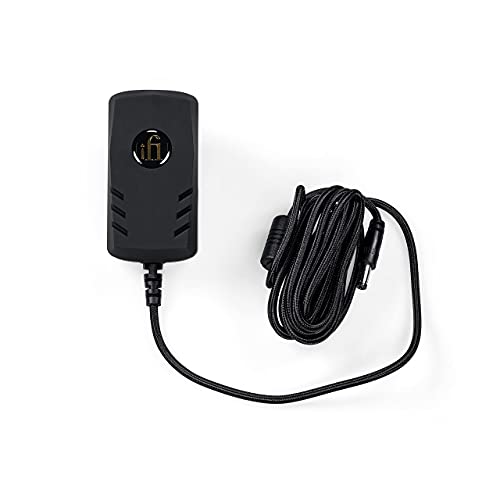
iFi SilentPower iPower2
Someone who owns a 5V DAC, streamer, router, or USB powered device and wants a quieter power supply, not a headphone buyer.
Read the iFi SilentPower iPower2 review →Questions Buyers Ask
iFi GO
See the current listing, price and included accessories.
About This Review
Mandrillis Team
The Mandrillis editorial team researches and compares audio and music gear using manufacturer documentation, verified specs and real buyer feedback, so you can make a confident purchase without wading through marketing claims.
Read our full research methodology.