Headphones Review
Yamaha HPH MT7 Studio Monitor Headphones Review: Accurate Wired Monitoring
The Yamaha HPH MT7 is a budget wired studio monitor headphone with closed back isolation and 40mm custom drivers. It includes a 6.3mm adaptor and carrying bag. This review covers sound, comfort, features and alternatives based on the published listing.
Our Verdict
Research Score 68/100The Yamaha HPH MT7 Studio Monitor Headphones are a focused budget option for wired monitoring. The listing describes a closed back circumaural design with 40 mm custom drivers and CCAW voice coils, which suggests accurate sound and good isolation. Comfort features like synthetic leather cushions and a three dimensional arm pivot are practical for long sessions. The absence of Bluetooth, ANC, a microphone and app support limits its versatility, but this keeps the price low and the design simple. The included 6.3 mm adaptor and carrying bag add value for studio use. For a budget headphone from a trusted brand, the HPH MT7 appears to be a solid choice for recording and mixing.
Editorial research score based on published specifications and documented features, not a customer rating or lab test.

Yamaha
Yamaha HPH MT7 Studio Monitor Headphones
Best for: Budget minded musicians and home studio owners who need a wired closed back monitoring headphone with passive isolation.
Skip it if: You need wireless connectivity, active noise cancelling, a built in microphone or app based features.
Check Price on AmazonWe may earn a commission at no extra cost to you.
Listing verified: October 2026
Who Should Buy It
Buy it if
- Home studio musicians on a budget
- Podcasters and content creators needing isolation
- Users with audio interfaces or mixing consoles
- Buyers who prefer wired headphones for zero latency monitoring
Skip it if
- You want Bluetooth wireless or ANC
- You need a headset for phone calls
- You require a lightweight travel headphone
Key Specifications
| Type | Closed back circumaural (over ear) |
| Driver | 40 mm custom drivers with CCAW voice coils |
| Noise cancelling | Passive noise isolation only; no active noise cancelling |
| Bluetooth and codecs | No Bluetooth; wired only, no codecs |
| Battery life | Not applicable (wired only) |
| Wired option | Wired only |
| Controls and app | No inline controls or app mentioned |
| Water resistance | Not published in listing |
| Weight | Not published in listing |
| Included accessories | 6.3 mm standard stereo plug adaptor and carrying bag |
Overview
The Yamaha HPH MT7 Studio Monitor Headphones are a budget wired option aimed at recording and mixing tasks. The listing describes a closed back circumaural design that provides excellent passive isolation for tracking and critical listening. This is not a wireless lifestyle headphone; instead it targets users who need a straightforward monitoring tool. The product listing positions it as an affordable entry into Yamaha's professional audio lineup.
The headline feature is a pair of 40 mm custom drivers with CCAW voice coils. The listing claims these drivers deliver a broad frequency range and accurate response, which suggests a neutral tuning suitable for studio work. Because the listing does not publish specific frequency response numbers, the exact bass and treble extension remains unknown. Buyers should treat the published description as a general statement of intent rather than a measured specification.
This review is based solely on the published listing data and general knowledge of headphone design. It does not include in-person testing or measurements. We evaluate the product on paper using the specifications and feature bullets provided by the manufacturer. Any unspecified detail is clearly noted as not published in the listing.
Sound Quality
The sound quality of the Yamaha HPH MT7 hinges on its 40 mm custom drivers with CCAW voice coils. CCAW stands for copper clad aluminum wire, which is often used to reduce weight in the voice coil while maintaining conductivity. The listing claims a broad frequency range and accurate response, which is typical for studio monitor headphones. Without published frequency response graphs or numerical ranges, we cannot confirm the exact tonal balance.
The closed back circumaural design also contributes to the sonic character by isolating the listener from outside noise. This isolation can improve the perception of low frequencies and reduce bleed into microphones during recording. The listing emphasizes accuracy, so buyers can reasonably expect a more neutral or flat sound signature rather than a boosted consumer curve. However, the lack of published specifications means that fine details such as distortion or impedance are not known.
On paper, the Yamaha HPH MT7 appears well suited for tracking, mixing and casual listening where accurate reproduction matters. It likely competes with other budget wired studio headphones from established brands. The driver design and Yamaha's heritage in professional audio give some confidence, but without measured data we remain cautious about making definitive claims.
Comfort and Fit
Comfort is a strong selling point in the listing. The headphones use smooth synthetic leather for the ear cushions and headband, which should feel soft against the skin. The large low resistance cushions are designed to provide a high level of isolation without excessive clamping force. This combination aims to reduce pressure points during long sessions.
The three dimensional arm pivot construction and adjustable slider length are meant to accommodate a variety of head shapes. The listing says these features alleviate fatigue when working for extended periods. The ability to adjust the fit in multiple dimensions can help distribute weight more evenly. However, the listing does not publish the total weight of the headphones, so we cannot evaluate how heavy they feel.
For users who need to wear headphones for hours in a studio, comfort is critical. The synthetic leather may trap heat over time, but the large cushions should allow some airflow. Without in-person testing we rely on the design description, which suggests Yamaha prioritized ergonomics for professional use.
Noise Control and Features
The Yamaha HPH MT7 does not include active noise cancelling. Instead, the closed back circumaural design provides passive isolation by physically blocking external sound. The listing calls it excellent isolation, which is important for monitoring in loud environments or preventing headphone bleed into microphones. This is a simpler approach than ANC but can be very effective for mid and high frequencies.
In terms of features, the headphone is minimal. There is no Bluetooth, no companion app, no touch controls and no built in microphone. The listing does not mention any inline remote or volume controls. The only included accessories are a 6.3 mm standard stereo plug adaptor and a carrying bag. This makes the HPH MT7 a straightforward wired monitoring tool.
The lack of modern conveniences is not a flaw for a studio headphone; it keeps the design focused and often improves reliability. Users who want wireless or ANC should look elsewhere. For recording and mixing, the simple feature set can be an advantage.
- Passive noise isolation from closed back circumaural earcups
- No active noise cancelling
- No Bluetooth or wireless connectivity
- No app support or customizable EQ
- Wired connection only with a 6.3 mm adaptor included
- Includes carrying bag for storage and transport
Battery, Bluetooth and Connectivity
The Yamaha HPH MT7 is a wired headphone, so it has no battery and no need for charging. This eliminates concerns about battery life degradation or running out of power during a session. The listing does not mention any wireless capability or Bluetooth codec support. The headphone connects via a standard cable, though the listing does not specify the cable length or whether it is detachable.
Connectivity is limited to analog audio through the included 6.3 mm stereo plug adaptor. This allows connection to professional audio interfaces, mixing consoles and headphone amplifiers. Users with portable devices that only have 3.5 mm jacks would need to remove the adaptor, assuming the cable originally terminates in 3.5 mm. The listing does not clarify this, so buyers should check before purchasing.
For studio use, wired connectivity is often preferred because it provides a low latency stable signal with no compression. The lack of Bluetooth means no audio delay, which is crucial for monitoring while recording. The trade off is reduced mobility, but that is generally acceptable for a device designed to be used at a desk or in a rack.
Build, Design and Portability
The build quality of the Yamaha HPH MT7 appears durable based on the listing's description. The synthetic leather and large cushions suggest a focus on long term comfort. The three dimensional arm pivot is a structural feature that may improve durability by reducing stress on the headband. However, the listing does not specify the frame material or hinge construction details.
Design wise, the headphone is a full size circumaural model with a closed back. This design is not as compact as on ear or in ear options, so portability is moderate. The included carrying bag helps protect the headphones during transport. The listing does not mention whether the headphones fold or rotate flat, which would affect how easily they pack down.
The weight is not published in the listing, which makes it hard to judge long term comfort and portability. A carrying bag is a welcome inclusion for a budget headphone, as it protects against scratches and dust. Overall, the design prioritizes function over style, consistent with a monitoring tool.
Call Quality and Daily Use
The Yamaha HPH MT7 does not have a built in microphone, so it is not suitable for phone calls or video conferencing. The listing makes no mention of a mic or inline controls, which is typical for studio monitoring headphones. Call quality is therefore not applicable.
Daily use for this headphone would revolve around music production, mixing, tracking and critical listening. It can also be used for general music enjoyment with a wired source such as a computer, audio interface or portable player. The passive isolation helps in noisy environments, though it is not as effective as ANC for low frequency rumble.
For users who need a headphone for both studio and casual listening, the Yamaha HPH MT7 could serve as a single wired option. Its lack of wireless features means it is best used in one location rather than on the go. The included carrying bag makes it easier to bring to a session.
Who Should Buy It
This headphone is best for budget minded musicians, podcasters and home studio owners who need a reliable monitoring headphone. The closed back design and passive isolation make it well suited for tracking vocals or instruments. The 40 mm drivers and CCAW voice coils are a step above typical budget earbuds.
Users who already own audio interfaces or mixing consoles with 6.3 mm headphone outputs will appreciate the included adaptor. Those who prefer wired connections for zero latency monitoring will find this headphone fits their workflow. The simple no frills design also appeals to buyers who do not want to pay for features they will not use.
If you are looking for a first pair of studio headphones and want a recognizable brand without spending a lot, the Yamaha HPH MT7 is a strong candidate. The carrying bag adds practical value for transport. However, if you need wireless or ANC, this is not the right product.
Alternatives Worth Considering
In the budget wired studio monitor category, there are several well known alternatives. The Sennheiser HD 280 Pro is a long standing choice with similar closed back isolation. The Audio Technica ATH M20x and ATH M30x are also popular entry level monitors. The Sony MDR 7506 has been a staple in broadcast and recording for decades. Each has its own tuning and comfort characteristics.
If you need active noise cancelling or wireless convenience, the Anker Soundcore Space One or Sony WH 1000XM5 are popular mid range and premium options, though they cost more and are not designed specifically for studio monitoring. For those who want a balanced open back sound for mixing, the Sennheiser HD 560S is another alternative, but it leaks sound and requires a quiet room.
Choosing between these depends on your priorities. The Yamaha HPH MT7 is distinguished by its Yamaha brand, 40 mm custom drivers and included carrying bag at a budget price. Without in-person comparisons, the best advice is to check return policies and try a few models if possible.
Verdict
The Yamaha HPH MT7 Studio Monitor Headphones are a focused budget option for wired monitoring. The listing describes a closed back circumaural design with 40 mm custom drivers and CCAW voice coils, which suggests accurate sound and good isolation. Comfort features like synthetic leather cushions and a three dimensional arm pivot are practical for long sessions.
The absence of Bluetooth, ANC, a microphone and app support limits its versatility, but this keeps the price low and the design simple. The included 6.3 mm adaptor and carrying bag add value for studio use. For a budget headphone from a trusted brand, the HPH MT7 appears to be a solid choice for recording and mixing.
The Yamaha HPH MT7 is best for users who prioritize accurate wired monitoring and passive isolation on a budget. It is not a versatile lifestyle headphone, but it fills a specific role well. The overall score reflects its strengths and limitations.
Strengths and Limitations
Strengths
- Closed back circumaural design provides excellent passive isolation
- 40 mm custom drivers with CCAW voice coils for accurate response
- Smooth synthetic leather cushions and adjustable pivot for long sessions
- Includes 6.3 mm adaptor and carrying bag
- Budget friendly price tier
- Yamaha brand heritage in professional audio
Limitations
- Wired only, no Bluetooth or wireless connectivity
- No active noise cancelling
- No built in microphone or inline controls
- No app support or customizable EQ
- Weight and frequency response not published in listing
How We Scored It
Scores reflect published specifications, documented features and value against the alternatives below. They are editorial research scores, not laboratory measurements.
Alternatives to Consider

Audio Technica ATH M50x LAB Professional
Tracking, mixing, and critical listening where a flat, detailed wired headphone is preferred and no wireless or noise cancelling is required.
Read the Audio Technica ATH M50x LAB Professional review →
Rode NTH 100 Professional Studio Headphones
Content creators and music producers who want a budget wired over ear headphone with comfort focused features for long sessions.
Read the Rode NTH 100 Professional Studio Headphones review →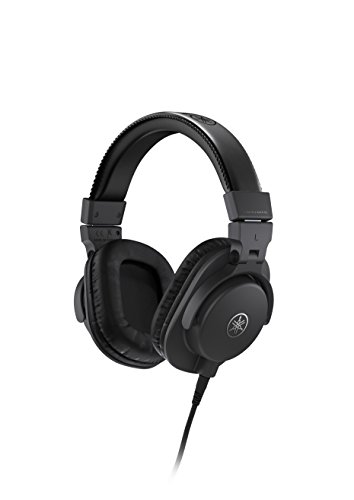
Yamaha HPH MT5 Studio Monitor Headphones
Home studio producers, musicians, and listeners who want a flat wired monitoring headphone with a long cable and foldable travel design.
Read the Yamaha HPH MT5 Studio Monitor Headphones review →Questions Buyers Ask
Yamaha HPH MT7 Studio Monitor Headphones
See the current listing, price and included accessories.
About This Review
Mandrillis Team
The Mandrillis editorial team researches and compares audio and music gear using manufacturer documentation, verified specs and real buyer feedback, so you can make a confident purchase without wading through marketing claims.
Read our full research methodology.